
Preserving Your Memories and Online Life for Future Generations
What Is a Digital Legacy and Why Does It Matter?
In today’s world, much of our lives exist digitally. Family photographs are stored on smartphones. Personal stories are shared through social media. Important documents are saved in cloud storage. Videos, emails, voice messages, family histories, and personal memories increasingly live online rather than in physical albums or filing cabinets.
While technology has made it easier than ever to create and store memories, it has also created a new challenge: ensuring that these digital assets are preserved, organized, and accessible for future generations.
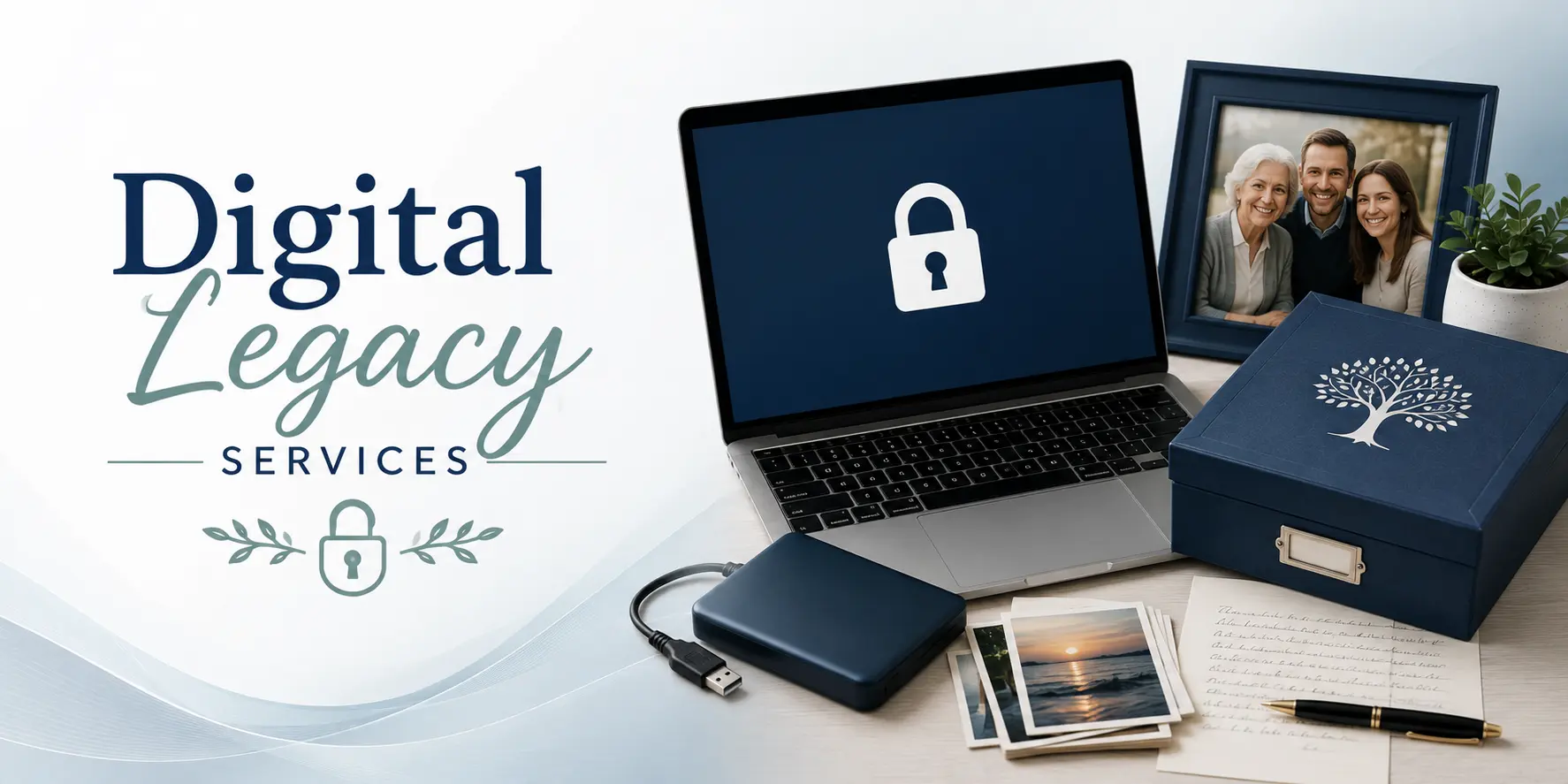
A digital legacy is the collection of digital information, memories, records, stories, and online assets that remain after a person is no longer able to manage them or has passed away. Digital legacy planning helps individuals preserve not only their online accounts but also the personal stories, family history, values, wisdom, and experiences that define their identity.
For families affected by dementia, Alzheimer’s disease, aging, serious illness, or caregiving responsibilities, digital legacy preservation can provide peace of mind while protecting irreplaceable memories and important information.
Research suggests that preserving personal narratives and life stories supports identity continuity, psychological well-being, and intergenerational connection (Westerhof & Bohlmeijer, 2014). Digital tools now allow these stories to be preserved in ways previous generations could never imagine.
What Is a Digital Legacy?
A digital legacy encompasses all the digital content and information associated with an individual’s life.
Examples include:
- Family photographs
- Videos and home movies
- Audio recordings
- Personal emails
- Social media accounts
- Family history records
- Digital journals
- Cloud storage files
- Personal websites
- Genealogy records
- Online photo albums
- Digital documents
- Recorded interviews
- Legacy messages
A comprehensive digital legacy includes both practical information and meaningful personal content.
Why Digital Legacy Planning Is Becoming Essential
Many people spend decades creating digital content without considering what will happen to it in the future.
Without planning:
- Family photographs may become inaccessible.
- Passwords may be lost.
- Important documents may disappear.
- Social media accounts may remain unmanaged.
- Valuable family history may be forgotten.
- Personal stories may never be preserved.
Digital legacy planning helps families organize, preserve, and share important information before it is lost.
As society becomes increasingly digital, preserving online memories and records becomes as important as preserving physical heirlooms.
Beyond Accounts: Preserving Identity in the Digital Age
Many people assume digital legacy planning focuses only on passwords and online accounts. While account management is important, identity preservation is often the most meaningful component.
Identity includes:
- Personal stories
- Family relationships
- Values and beliefs
- Life experiences
- Professional accomplishments
- Traditions and heritage
- Lessons learned
- Personal reflections
A thoughtfully preserved digital legacy helps future generations understand not only what someone owned but who they were.
This aligns with person-centered approaches that emphasize preserving identity throughout life transitions, aging, and cognitive decline (Brooker, 2004).
Digital Legacy Planning for Families Affected by Dementia
For families facing dementia or Alzheimer’s disease, digital legacy preservation becomes especially important.
Cognitive decline may eventually affect the ability to:
- Recall memories
- Organize information
- Manage accounts
- Communicate personal stories
- Share life experiences
Early digital legacy planning helps preserve:
- Personal memories
- Family traditions
- Life stories
- Recorded interviews
- Family photographs
- Personal values
Research on life story work suggests that preserving personal history supports identity continuity and person-centered dementia care (McKeown et al., 2010).
Capturing stories before significant cognitive decline helps ensure that memories remain available to future generations.
Digital Legacy Planning for Family Caregivers
Caregivers often become responsible for organizing and protecting family information.
Digital legacy services help caregivers:
- Preserve family memories
- Organize important documents
- Record personal stories
- Protect family history
- Reduce future stress
- Support legacy preservation
Many caregivers report wishing they had documented more stories and memories while loved ones were still able to share them.
Digital preservation allows families to safeguard those experiences permanently.
Digital Legacy Planning for Healthcare Professionals
Healthcare professionals dedicate their lives to serving others and often possess valuable personal and professional experiences worth preserving.
Digital legacy planning helps healthcare workers document:
- Career accomplishments
- Professional philosophies
- Patient care experiences
- Leadership lessons
- Community contributions
- Personal reflections
These materials can inspire future healthcare providers while preserving important aspects of personal identity.
Digital Legacy Planning for Educators
Educators frequently influence generations of students through teaching, mentoring, and leadership.
Digital legacy preservation allows educators to capture:
- Educational philosophies
- Teaching experiences
- Personal stories
- Professional accomplishments
- Family traditions
- Life lessons
Future generations gain insight into the experiences and wisdom that shaped these contributions.
Digital Legacy Planning for Self-Employed Professionals
Entrepreneurs, consultants, tradespeople, and business owners often create extensive digital content throughout their careers.
Digital legacy planning can preserve:
- Business histories
- Professional knowledge
- Leadership experiences
- Industry insights
- Personal achievements
- Family business records
For many self-employed individuals, preserving these assets protects both family and professional legacies.
Components of a Digital Legacy Plan
A comprehensive digital legacy plan may include several important elements.
Digital Memory Archives
Collections of photographs, videos, recordings, and documents are preserved for future generations.
Life Story Recordings
Recorded interviews and personal narratives that preserve experiences and identity.
Family History Collections
Genealogy records, family stories, and historical materials are organized digitally.
Legacy Letters
Personal messages intended for children, grandchildren, and future family members.
Account Management Planning
Documentation of online accounts, access information, and digital asset instructions.
Digital Estate Organization
Plans for managing online assets and digital property.
The Role of Life Story Preservation in Digital Legacy Planning
One of the most meaningful components of a digital legacy is the preservation of personal stories.
Life story preservation helps document:
- Childhood memories
- Family experiences
- Career achievements
- Relationships
- Personal values
- Life lessons
- Significant milestones
Research suggests that life review and reminiscence activities support meaning-making and emotional well-being throughout later life (Westerhof & Bohlmeijer, 2014).
Digital platforms provide an effective way to preserve and share these stories across generations.
Benefits of Digital Legacy Preservation
Protects Family Memories
Photographs, recordings, and stories remain accessible.
Preserves Identity
Future generations gain a deeper understanding of family members.
Supports Dementia Care
Life story materials assist caregivers and healthcare professionals.
Strengthens Family Connections
Shared digital archives encourage intergenerational engagement.
Reduces Future Stress
Families have organized access to important information.
Creates a Lasting Legacy
Experiences, wisdom, and values continue influencing future generations.
Protects Important Information
Critical records and documents remain secure and accessible.
How Our Digital Legacy Services Help
Our digital legacy services focus on preserving identity, memories, stories, family history, and important digital assets in accessible and meaningful formats.
We assist with:
- Life story recording
- Digital memory archives
- Family history preservation
- Legacy interviews
- Biography development
- Memory organization
- Caregiver reference systems
- Digital preservation planning
- Family storytelling projects
- Identity preservation initiatives
Our mission is to help families ensure that memories, values, and life experiences remain available long after they are created.
Frequently Asked Questions
What is a digital legacy?
A digital legacy consists of the digital information, memories, records, stories, and online assets associated with an individual’s life.
Why is digital legacy planning important?
It helps preserve memories, family history, personal stories, and important digital information for future generations.
What should be included in a digital legacy plan?
Photographs, videos, recordings, family history materials, life stories, legacy messages, important documents, and digital account information.
How does digital legacy planning help families affected by dementia?
It allows memories and personal stories to be preserved before cognitive decline affects communication and recall.
Can caregivers benefit from digital legacy services?
Yes. Organized memory archives and life story materials support caregiving and identity preservation.
What is a digital memory archive?
A digital memory archive is a collection of photographs, recordings, stories, documents, and family history materials stored electronically.
How do life stories fit into digital legacy planning?
Life stories preserve identity, values, experiences, and wisdom that future generations can learn from and appreciate.
Is digital legacy planning only for older adults?
No. Adults of all ages can benefit from preserving important memories and organizing digital information.
How does digital legacy preservation strengthen families?
Shared stories and accessible memories help create stronger intergenerational connections.
When should someone begin digital legacy planning?
The best time is now. Early planning provides the greatest opportunity to preserve meaningful memories and important information.
Key Takeaways
Digital legacy planning is about far more than managing online accounts. It is about preserving identity, protecting family history, documenting life stories, safeguarding memories, and ensuring that future generations inherit the wisdom, experiences, and values that shaped a person’s life. Whether supporting dementia care, preserving family heritage, documenting professional accomplishments, or creating a lasting legacy, digital legacy services help families maintain continuity and connection in an increasingly digital world. The stories, memories, and lessons preserved today become tomorrow’s most meaningful inheritance.
References
Brooker, D. (2004). What is person-centred care in dementia? Reviews in Clinical Gerontology, 13(3), 215–222. https://doi.org/10.1017/S095925980400108X
McKeown, J., Clarke, A., Ingleton, C., Ryan, T., & Repper, J. (2010). The use of life story work with people with dementia to enhance person-centred care. International Journal of Older People Nursing, 5(2), 148–158. https://doi.org/10.1111/j.1748-3743.2010.00219.x
Westerhof, G. J., & Bohlmeijer, E. T. (2014). Celebrating fifty years of research and applications in reminiscence and life review: State of the art and new directions. Journal of Aging Studies, 29, 107–114. https://doi.org/10.1016/j.jaging.2014.02.003
Conway, M. A., Singer, J. A., & Tagini, A. (2004). The self and autobiographical memory: Correspondence and coherence. Social Cognition, 22(5), 491–529. https://doi.org/10.1521/soco.22.5.491.50768