
Meaningful Prompts
Preserve Memories, Family History, and Personal Legacy
Why Life Story Questions Matter
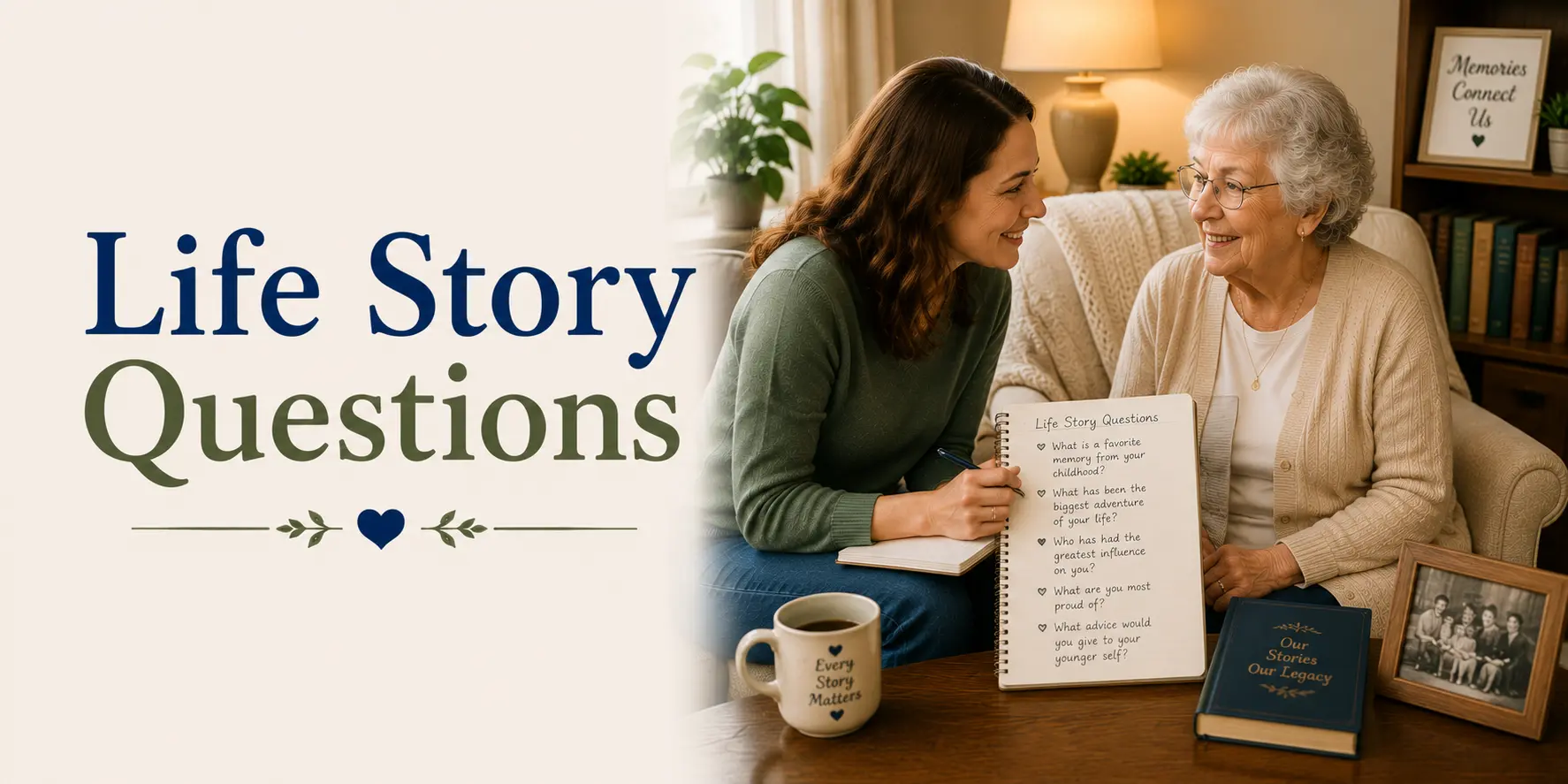
Every person has a story worth preserving. Yet many families discover too late that they never asked the questions that could have captured a loved one’s memories, wisdom, experiences, and personal history. As parents age, grandparents grow older, or loved ones face dementia, Alzheimer’s disease, or serious illness, opportunities to record important stories may become increasingly limited.
Life story questions provide a structured way to uncover memories, document family history, preserve identity, and create meaningful conversations across generations. Whether used in caregiving, memory preservation projects, oral history interviews, genealogy research, legacy planning, or family storytelling initiatives, thoughtful questions help individuals share experiences that might otherwise remain untold.
Research suggests that life review and reminiscence activities support psychological well-being, strengthen identity, and promote meaningful social connections among older adults (Westerhof & Bohlmeijer, 2014). Life story interviews can also contribute to person-centered dementia care by helping caregivers better understand the individual behind the diagnosis (McKeown et al., 2010).
What Are Life Story Questions?
Life story questions are prompts designed to encourage individuals to reflect on and share meaningful experiences from different stages of life.
These questions may explore:
- Childhood memories
- Family traditions
- Educational experiences
- Career accomplishments
- Relationships
- Parenting experiences
- Military service
- Faith and spirituality
- Personal values
- Life lessons
- Hopes for future generations
The goal is not simply to collect facts but to preserve the stories, emotions, perspectives, and wisdom that define a person’s identity.
Why Families Should Ask Life Story Questions
Families often inherit photographs, documents, and heirlooms but lose the stories behind them.
Life story interviews help preserve:
- Family history
- Cultural heritage
- Personal experiences
- Family traditions
- Important life lessons
- Personal values
- Historical perspectives
These conversations create opportunities for connection while ensuring future generations understand the people who came before them.
Life Story Questions for Families Affected by Dementia
For families living with dementia or Alzheimer’s disease, life story questions can become especially meaningful.
Research on life story work suggests that documenting personal experiences supports identity preservation and person-centered care (McKeown et al., 2010).
Questions asked early may help preserve:
- Childhood memories
- Family relationships
- Personal achievements
- Favorite traditions
- Important milestones
- Personal beliefs
The resulting information can assist caregivers while creating lasting family resources.
Benefits of Life Story Interviews
Preserve Family History
Stories often contain details unavailable in official records.
Strengthen Relationships
Meaningful conversations encourage deeper emotional connections.
Support Caregiving
Life story information helps caregivers provide individualized support.
Protect Personal Identity
Recorded stories preserve how individuals see themselves and their lives.
Create Lasting Legacy Resources
Future generations gain direct access to family wisdom and experiences.
Reduce Future Regret
Families frequently wish they had asked more questions while they still had the opportunity.
100 Life Story Questions to Ask Parents, Grandparents, and Loved Ones
Childhood Questions
- Where were you born?
- What was your childhood home like?
- What are your earliest memories?
- Who influenced you most growing up?
- What games did you play as a child?
- What was your favorite family tradition?
- What was school like when you were young?
- Who was your best friend growing up?
- What did your parents teach you?
- What childhood memory makes you smile?
Family History Questions
- What do you know about your grandparents?
- Where did our family originate?
- What family stories were passed down to you?
- What traditions were important in your family?
- How did previous generations make a living?
- Were there any family hardships that shaped your family?
- What values were emphasized in your household?
- What family members had the greatest influence on you?
- What cultural traditions should future generations know about?
- What family stories should never be forgotten?
Education Questions
- What was your favorite subject in school?
- Who was your most memorable teacher?
- What educational opportunities shaped your life?
- Did you face challenges during your education?
- What advice would you give students today?
- What accomplishments are you proud of?
- How did education affect your future?
- What lessons did school teach beyond academics?
- What was college or vocational training like?
- What would you study if you could start over?
Career Questions
- What was your first job?
- How did you choose your career?
- What professional accomplishment are you most proud of?
- What challenges did you overcome at work?
- What career lessons would you share?
- What did your work mean to you?
- How did your profession change over time?
- Who mentored you?
- What advice would you give young professionals?
- What legacy do you hope to leave through your work?
Relationship Questions
- How did you meet your spouse or partner?
- What was your wedding day like?
- What makes a strong relationship?
- What relationship taught you the most about life?
- What friendships have been most meaningful?
- What advice do you have about marriage?
- How have relationships changed throughout your life?
- What family moments mean the most to you?
- What qualities do you value most in others?
- What relationship lessons should future generations know?
Parenting and Family Questions
- What was your experience becoming a parent?
- What family traditions did you create?
- What parenting lessons did you learn?
- What family memory is most meaningful?
- What values did you try to teach your children?
- What family accomplishment makes you proud?
- What challenges strengthened your family?
- What advice would you give future parents?
- What family stories should continue?
- What do you hope future generations remember?
Life Lessons Questions
- What is the most important lesson you learned?
- What challenge changed you the most?
- What mistakes taught you valuable lessons?
- What advice would you give your younger self?
- What achievement are you most proud of?
- What would you do differently?
- What brings meaning to your life?
- What values matter most to you?
- What helped you through difficult times?
- What does success mean to you?
Faith and Values Questions
- What beliefs have guided your life?
- How has faith influenced your decisions?
- What values are most important?
- What traditions bring you comfort?
- What gives you hope?
- How do you define a meaningful life?
- What spiritual lessons have you learned?
- What principles should future generations follow?
- How have your beliefs changed over time?
- What do you want your family to remember about your values?
Legacy Questions
- How would you like to be remembered?
- What life lessons do you want to pass on?
- What family traditions should continue?
- What wisdom would you share with grandchildren?
- What accomplishments matter most to you?
- What are you most grateful for?
- What personal values should survive future generations?
- What stories define your life?
- What message would you leave for your family?
- What does legacy mean to you?
Reflection Questions
- What has surprised you most about life?
- What are you most thankful for?
- What brought you the greatest joy?
- What historical events shaped your life?
- What memories do you revisit often?
- What dreams did you fulfill?
- What dreams remain important?
- What do you hope future generations understand about your life?
- What story have you never shared but would like preserved?
- What final advice would you offer your family?
How Our Life Story Services Help
Our life story recording and memory preservation services help families transform these conversations into lasting legacy resources.
We assist with:
- Guided life story interviews
- Recorded oral histories
- Family memory preservation
- Biography development
- Digital memory archives
- Family history documentation
- Legacy projects
- Caregiver reference systems
By asking meaningful questions today, families can preserve stories, wisdom, and identity for generations to come.
Frequently Asked Questions
Why are life story questions important?
They help preserve memories, family history, identity, values, and personal experiences before they are lost.
When should families start asking life story questions?
As early as possible. Waiting often results in missed opportunities to capture important memories.
Can life story questions help people with dementia?
Yes. Early life story interviews can preserve memories and support person-centered caregiving.
What are the best life story questions?
Questions about childhood, family history, relationships, career experiences, values, and life lessons often produce meaningful responses.
How can recorded interviews help future generations?
They provide direct access to personal stories, family history, wisdom, and cultural traditions.
References
McKeown, J., Clarke, A., Ingleton, C., Ryan, T., & Repper, J. (2010). The use of life story work with people with dementia to enhance person-centred care. International Journal of Older People Nursing, 5(2), 148–158. https://doi.org/10.1111/j.1748-3743.2010.00219.x
Westerhof, G. J., & Bohlmeijer, E. T. (2014). Celebrating fifty years of research and applications in reminiscence and life review: State of the art and new directions. Journal of Aging Studies, 29, 107–114. https://doi.org/10.1016/j.jaging.2014.02.003
Brooker, D. (2004). What is person-centred care in dementia? Reviews in Clinical Gerontology, 13(3), 215–222. https://doi.org/10.1017/S095925980400108X