
Discovering Family History, Identity, & Connecting Generations
Why Genealogy Research Matters
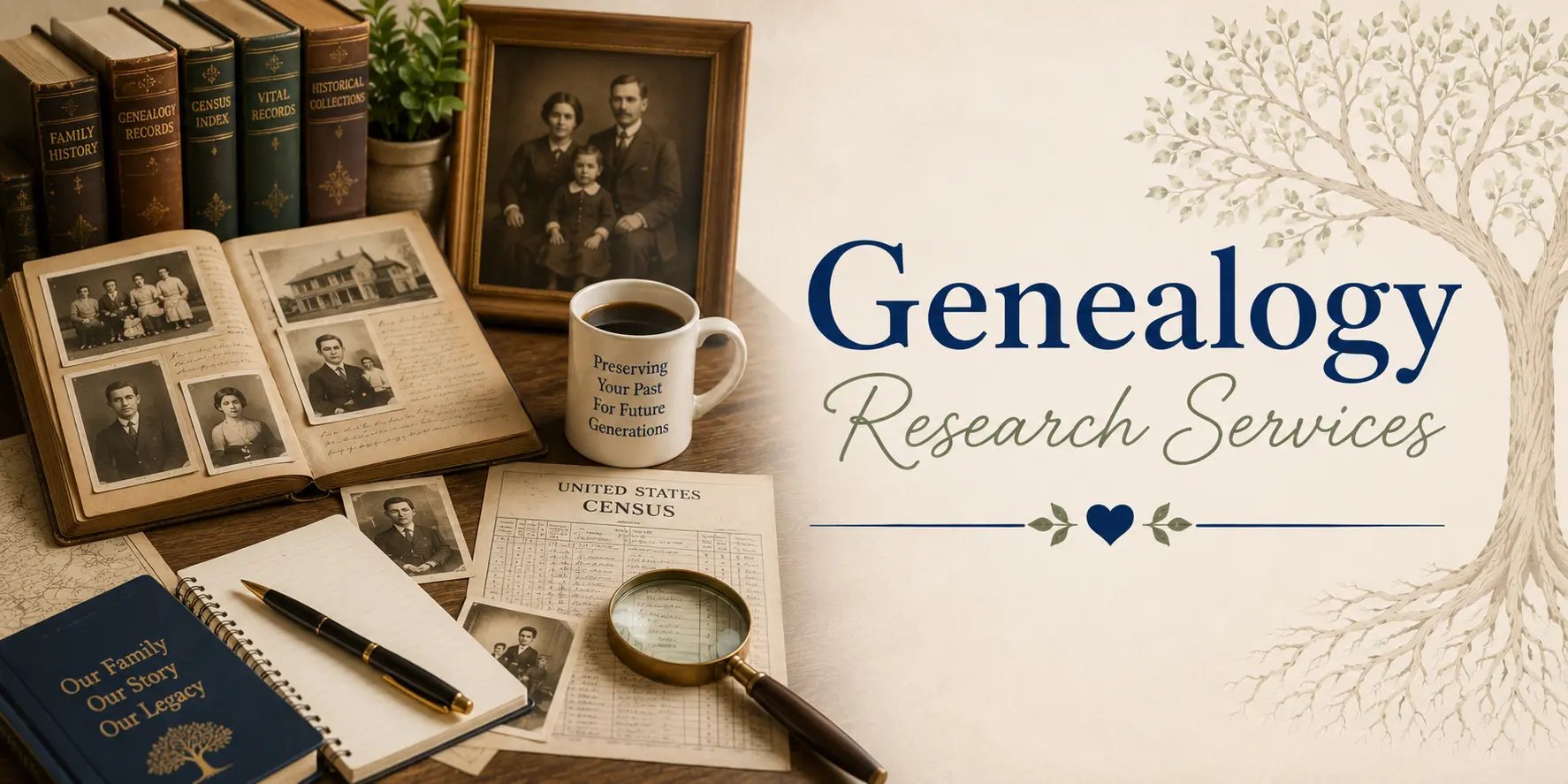
Every family has a story that stretches across generations. Behind every surname, family photograph, immigration record, military document, and family tradition lies a rich history of people whose lives shaped the present. Yet for many families, large portions of that story remain unknown. Names are forgotten, records are misplaced, and personal experiences disappear as generations pass.
Genealogy research helps uncover those missing pieces. It allows individuals and families to discover their ancestry, understand their heritage, document family connections, and preserve the stories that define who they are. Beyond tracing names and dates, genealogy research creates a deeper understanding of identity, resilience, cultural traditions, and family legacy.
For healthcare professionals, educators, self-employed professionals, family caregivers, aging adults, and future generations, genealogy research offers an opportunity to connect personal history with a broader family narrative. It transforms fragmented information into meaningful stories that preserve identity across generations.
Research suggests that knowledge of family history contributes to stronger identity development, emotional resilience, and a greater sense of belonging (Fivush, Bohanek, & Duke, 2008). Understanding where we come from often helps us better understand who we are.
What Is Genealogy Research?
Genealogy research is the systematic investigation of family ancestry, relationships, and historical records to document family connections across generations.
Genealogy research may involve:
- Family tree development
- Birth and death records
- Marriage records
- Census records
- Immigration records
- Military service records
- Church and parish records
- Land and property records
- Newspaper archives
- Obituaries
- Family photographs
- Oral histories
The goal is to reconstruct family relationships while preserving the stories and experiences that accompany them.
Why Families Pursue Genealogy Research
People begin genealogy research for many different reasons.
Common motivations include:
- Preserving family history
- Understanding cultural heritage
- Learning about ancestors
- Connecting generations
- Supporting legacy projects
- Preserving stories before they are lost
- Understanding family migrations
- Exploring military service history
- Recording family traditions
- Strengthening family identity
Genealogy often begins with curiosity but becomes a meaningful journey of discovery and connection.
Genealogy Research and Identity
Family history provides context for personal identity.
Questions genealogy research helps answer include:
- Where did our family originate?
- What challenges did previous generations overcome?
- How did our family arrive where we are today?
- What traditions shaped our heritage?
- What values have been passed down?
Research indicates that family narratives and ancestral knowledge contribute to stronger self-understanding and family continuity (Fivush et al., 2008).
Genealogy research helps transform historical records into meaningful personal connections.
Genealogy Research for Families Affected by Dementia
Families affected by dementia or Alzheimer’s disease often discover that genealogy research serves an additional purpose: preserving identity.
As memory changes occur, family history projects help preserve:
- Personal stories
- Family relationships
- Cultural traditions
- Life experiences
- Significant family events
Research on life story work suggests that personal history supports person-centered care and improves communication between caregivers and individuals living with dementia (McKeown et al., 2010).
Family history becomes a valuable caregiving resource as well as a legacy project.
Genealogy Research for Family Caregivers
Caregivers frequently become family historians.
Genealogy research helps caregivers:
- Preserve family memories
- Create meaningful conversations
- Support identity-centered care
- Strengthen emotional connections
- Build family archives
- Reduce future regret
Many caregivers find that family history projects create opportunities for positive interaction and shared reflection.
Genealogy Research for Healthcare Professionals
Healthcare providers increasingly recognize the importance of understanding a person’s life history and family background.
Genealogy and family history information can help healthcare professionals:
- Deliver person-centered care
- Understand cultural influences
- Improve communication
- Support emotional well-being
- Strengthen patient relationships
Knowing a person’s story often enhances care quality and trust.
Genealogy Research for Educators
Educators often appreciate the educational value of family history research.
Genealogy projects help preserve:
- Family narratives
- Historical experiences
- Community involvement
- Educational achievements
- Cultural heritage
These stories provide valuable lessons for future generations while enriching personal identity.
Genealogy Research for Self-Employed Professionals
Entrepreneurs, tradespeople, consultants, and business owners frequently discover fascinating family histories that influence their professional identity.
Research may uncover:
- Family businesses
- Entrepreneurial traditions
- Immigration stories
- Military service records
- Leadership histories
- Professional accomplishments
Documenting these discoveries strengthens both family and personal legacy.
The Difference Between Genealogy and Family History
Although often used interchangeably, genealogy and family history are not identical.
Genealogy
Focuses primarily on:
- Family relationships
- Ancestral connections
- Historical records
- Family trees
Family History
Focuses on:
- Personal stories
- Life experiences
- Traditions
- Values
- Memories
The most meaningful projects combine both approaches, connecting documented records with personal narratives.
Sources Used in Genealogy Research
Professional genealogy research often involves multiple record types.
Vital Records
- Birth certificates
- Marriage records
- Death certificates
Census Records
Census records provide household information and family relationships.
Immigration Records
Passenger lists and naturalization documents help trace migration histories.
Military Records
Military documents often reveal significant personal and family history.
Newspaper Archives
Newspapers frequently contain obituaries, announcements, and community stories.
Oral Histories
Interviews with relatives preserve personal memories that official records cannot capture.
The Importance of Oral History in Genealogy
Records provide facts, but stories provide meaning.
Oral history interviews help preserve:
- Family traditions
- Personal memories
- Emotional experiences
- Historical perspectives
- Life lessons
Combining genealogy research with oral history creates a richer and more complete family narrative.
Digital Genealogy and Family Heritage Preservation
Technology has transformed genealogy research.
Digital tools now allow families to:
- Build online family trees
- Preserve photographs
- Create digital archives
- Record interviews
- Share family history globally
- Protect important records
Digital preservation helps ensure family history remains accessible for future generations.
Benefits of Genealogy Research
Preserves Family Identity
Future generations gain a stronger sense of belonging.
Strengthens Family Connections
Shared discoveries encourage meaningful conversations.
Supports Dementia Care
Family history materials support person-centered caregiving.
Protects Cultural Heritage
Traditions and heritage remain accessible.
Creates Legacy Resources
Research findings become valuable family assets.
Encourages Intergenerational Learning
Younger generations learn from previous generations’ experiences.
Preserves Stories Behind the Records
Personal experiences remain connected to historical facts.
How Our Genealogy Research Services Help
Our genealogy research services combine traditional family history research with identity preservation, memory documentation, and legacy planning.
We assist with:
- Family tree development
- Ancestral research
- Oral history interviews
- Family history documentation
- Digital family archives
- Life story preservation
- Memory recording projects
- Legacy preservation planning
- Caregiver reference systems
Our mission is to help families uncover, preserve, and share the stories that define their heritage and identity.
Frequently Asked Questions
What is genealogy research?
Genealogy research is the process of investigating family ancestry, relationships, and historical records to document family history.
Why is genealogy research important?
It helps preserve family heritage, strengthen identity, and connect generations through shared history.
What records are used in genealogy research?
Birth, marriage, death, census, immigration, military, church, and newspaper records are commonly used.
What is the difference between genealogy and family history?
Genealogy focuses on ancestral relationships and records, while family history includes stories, experiences, traditions, and personal narratives.
Can genealogy research support dementia care?
Yes. Family history materials help preserve identity and support person-centered caregiving.
How do oral histories complement genealogy research?
Oral histories provide personal stories, emotions, and experiences that official records cannot capture.
When should families begin preserving family history?
As early as possible to maximize opportunities to capture firsthand stories and memories.
Can digital archives help preserve genealogy research?
Yes. Digital archives help organize, protect, and share family history materials.
How does genealogy strengthen family identity?
Understanding family origins, traditions, and experiences helps individuals develop a stronger sense of belonging.
What legacy can genealogy research create?
Genealogy preserves family connections, stories, cultural heritage, and historical knowledge for future generations.
Key Takeaways
Genealogy research is about more than building a family tree. It is about discovering the people, stories, experiences, and traditions that shaped your family’s journey. Whether preserving memories for future generations, supporting dementia care, documenting cultural heritage, or creating a lasting family legacy, genealogy research provides a powerful way to strengthen identity and maintain continuity across generations. The names and dates found in records become truly meaningful when connected to the lives, stories, and values of the people behind them.
References
Fivush, R., Bohanek, J. G., & Duke, M. P. (2008). The intergenerational self: Subjective perspective and family history. In F. Sani (Ed.), Individual and Collective Self-Continuity. Psychology Press.
McKeown, J., Clarke, A., Ingleton, C., Ryan, T., & Repper, J. (2010). The use of life story work with people with dementia to enhance person-centred care. International Journal of Older People Nursing, 5(2), 148–158. https://doi.org/10.1111/j.1748-3743.2010.00219.x
Westerhof, G. J., & Bohlmeijer, E. T. (2014). Celebrating fifty years of research and applications in reminiscence and life review: State of the art and new directions. Journal of Aging Studies, 29, 107–114. https://doi.org/10.1016/j.jaging.2014.02.003
Brooker, D. (2004). What is person-centred care in dementia? Reviews in Clinical Gerontology, 13(3), 215–222. https://doi.org/10.1017/S095925980400108X