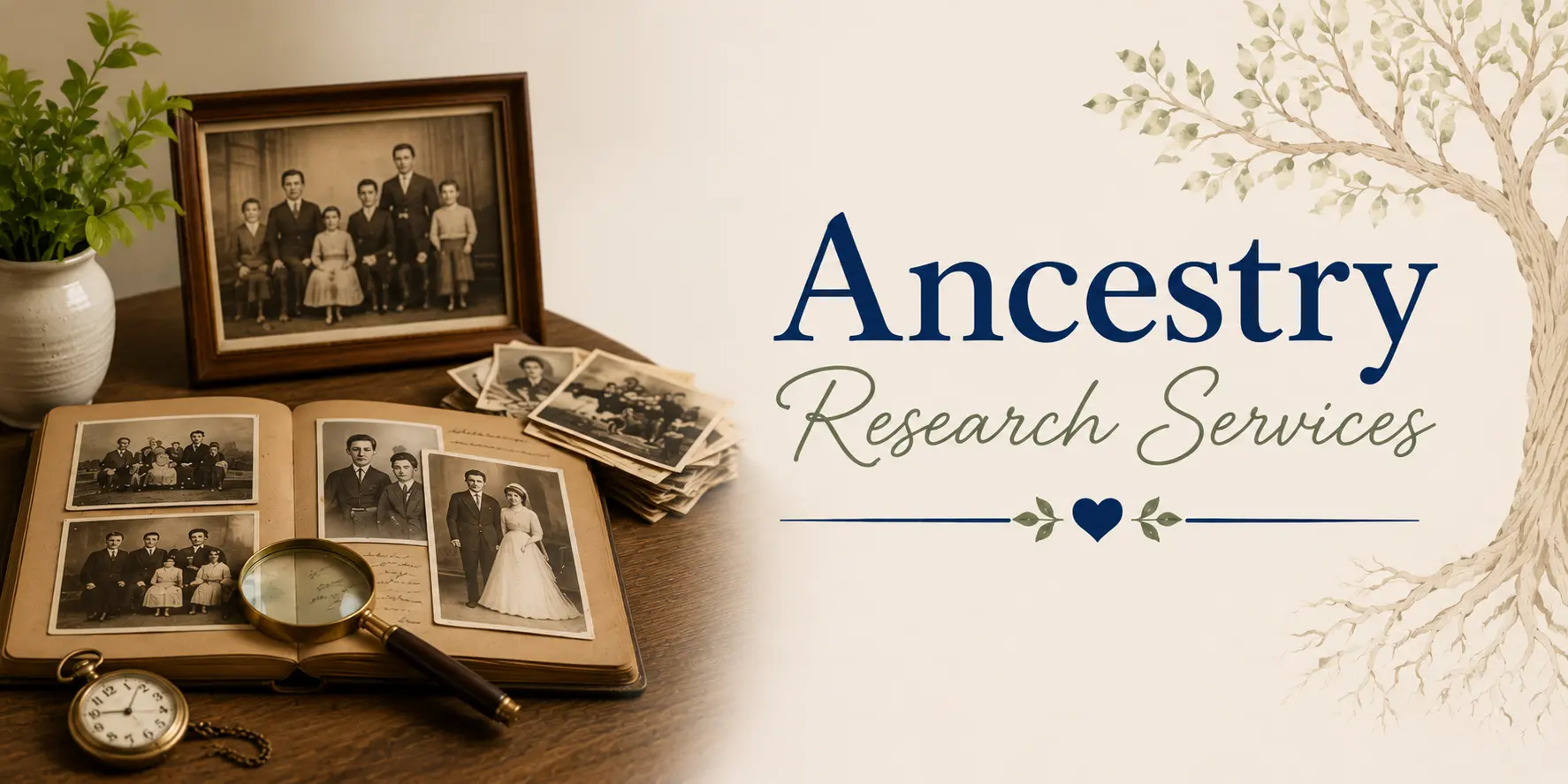

Discover Your Roots, Preserve Family Heritage, and Connect Generations
Why Ancestry Research Matters
Every family has a history that stretches across generations, continents, cultures, and life-changing events. Behind every surname is a story of people who overcame challenges, built communities, raised families, served their countries, pursued careers, practiced traditions, and shaped the lives of future generations.
Yet many people know surprisingly little about their ancestors. Family stories may be incomplete. Important records may be missing. Photographs often lose their context. Grandparents and older relatives may pass away before their stories are documented. As a result, valuable pieces of family identity can disappear over time.
Ancestry research helps individuals and families uncover those missing pieces. It combines historical records, family documents, oral histories, and genealogical investigation to reveal where families came from, how they lived, and the experiences that shaped their descendants.
Beyond curiosity, ancestry research supports identity, strengthens family connections, preserves cultural heritage, and creates meaningful legacy resources for future generations. Research suggests that knowledge of family history contributes to stronger emotional resilience, greater self-understanding, and a deeper sense of belonging (Fivush, Bohanek, & Duke, 2008).
What Is Ancestry Research?
Ancestry research is the process of investigating family origins, ancestral connections, and historical records to reconstruct family lineage and heritage.
Research may include:
- Family tree development
- Birth, marriage, and death records
- Census records
- Immigration and naturalization records
- Military service records
- Church and parish records
- Land and property records
- Historical newspapers
- Family photographs
- Oral history interviews
- DNA genealogy integration
- Cultural heritage documentation
The goal is to connect individuals with their ancestral roots while preserving the stories that define family identity.
Why People Seek Ancestry Research
Families pursue ancestry research for many reasons.
Common motivations include:
- Understanding family origins
- Preserving family heritage
- Learning about ancestors
- Discovering immigration stories
- Exploring cultural identity
- Documenting family traditions
- Building family trees
- Preserving stories before they are lost
- Supporting genealogy projects
- Creating legacy resources
Ancestry research often begins with a simple question but evolves into a meaningful journey of personal discovery.
The Connection Between Ancestry and Identity
Understanding ancestry provides important context for personal identity.
People often ask:
- Where did my family come from?
- What cultures shaped my heritage?
- What challenges did my ancestors overcome?
- What traditions were passed down?
- How did my family arrive where they are today?
Research on family narratives suggests that knowledge of ancestral history contributes to stronger self-identity and resilience (Fivush et al., 2008).
Ancestry research helps individuals see themselves as part of a larger family story.
Ancestry Research for Families Affected by Dementia
Families facing dementia or Alzheimer’s disease frequently discover that ancestry research serves as both a historical and caregiving resource.
As memory changes occur, ancestry projects help preserve:
- Family relationships
- Cultural traditions
- Historical experiences
- Personal stories
- Family values
- Identity across generations
Research on life story work indicates that family history materials support person-centered dementia care and improve communication between caregivers and individuals living with dementia (McKeown et al., 2010).
Family heritage can become a powerful tool for maintaining connection and dignity.
Ancestry Research for Family Caregivers
Caregivers often become family historians while helping aging relatives preserve memories and stories.
Ancestry research can help caregivers:
- Record family stories
- Create meaningful conversations
- Support identity preservation
- Build family archives
- Strengthen emotional connections
- Preserve family heritage
Many caregivers discover family information that would otherwise have been lost forever.
Ancestry Research for Healthcare Professionals
Healthcare providers increasingly recognize the value of understanding a person’s cultural background, family experiences, and identity.
Family heritage information can help healthcare professionals:
- Deliver person-centered care
- Improve communication
- Understand cultural traditions
- Support emotional well-being
- Build stronger relationships
Understanding family history often enhances caregiving and patient trust.
Ancestry Research for Educators
Educators frequently appreciate the educational value of family history and ancestry exploration.
Research projects may help preserve:
- Immigration experiences
- Community histories
- Educational achievements
- Family traditions
- Cultural heritage
These stories enrich both family and community understanding.
Ancestry Research for Self-Employed Professionals
Entrepreneurs and business owners often uncover fascinating stories of previous generations who built businesses, migrated for opportunity, or demonstrated resilience in challenging circumstances.
Ancestry research may reveal:
- Family business histories
- Entrepreneurial traditions
- Leadership examples
- Occupational histories
- Migration patterns
- Community contributions
These discoveries often strengthen personal identity and family pride.
Types of Records Used in Ancestry Research
Professional ancestry research typically incorporates multiple record sources.
Vital Records
- Birth certificates
- Marriage records
- Death certificates
Census Records
Census records reveal household structures, occupations, and family relationships.
Immigration Records
Passenger manifests and naturalization records help trace migration journeys.
Military Records
Military documents often contain valuable historical information and personal details.
Church Records
Baptism, marriage, and burial records may predate civil registration systems.
Newspaper Archives
Newspapers frequently provide obituaries, announcements, and local history.
Oral Histories
Family interviews preserve stories unavailable through official documents.
The Role of Oral History in Ancestry Research
Documents provide facts. Stories provide meaning.
Oral history interviews help preserve:
- Personal memories
- Family traditions
- Historical experiences
- Cultural practices
- Emotional connections
- Life lessons
Combining ancestry research with oral history creates a more complete picture of family heritage.
DNA and Modern Ancestry Research
Advances in DNA testing have transformed ancestry research.
DNA results may help individuals:
- Identify ethnic origins
- Discover distant relatives
- Confirm family connections
- Explore migration patterns
- Support traditional genealogy research
While DNA can provide valuable insights, it is most meaningful when combined with historical records and family stories.
Digital Ancestry Preservation
Modern technology allows families to preserve ancestry research in accessible and shareable formats.
Digital preservation may include:
- Online family trees
- Digital family archives
- Scanned historical records
- Audio interviews
- Video storytelling
- Interactive heritage collections
Digital tools help protect family history while making it easier to share across generations.
Benefits of Ancestry Research
Strengthens Personal Identity
Understanding ancestry provides a stronger sense of belonging.
Preserves Family Heritage
Traditions and cultural history remain accessible.
Supports Dementia Care
Family history materials assist person-centered caregiving.
Creates Legacy Resources
Research findings become valuable family assets.
Protects Historical Information
Important records are preserved and organized.
Encourages Intergenerational Learning
Younger generations gain insight into family experiences.
Builds Family Connections
Shared discoveries strengthen relationships.
How Our Ancestry Research Services Help
Our ancestry research services combine professional genealogical investigation with family storytelling, memory preservation, and identity-centered legacy planning.
We assist with:
- Family tree development
- Ancestral research
- Heritage documentation
- Oral history interviews
- Family history preservation
- Digital archive creation
- Legacy preservation projects
- Life story documentation
- Caregiver reference systems
Our mission is to help families discover, preserve, and share the stories that connect generations.
Frequently Asked Questions
What is ancestry research?
Ancestry research is the process of investigating family origins, ancestral relationships, and historical records to understand family heritage.
How is ancestry research different from genealogy?
Ancestry research often focuses on heritage, origins, and family identity, while genealogy emphasizes documenting family relationships and lineage.
Why is ancestry research important?
It helps preserve family history, strengthen identity, and connect generations through shared heritage.
What records are used in ancestry research?
Birth, marriage, death, census, immigration, military, church, and newspaper records are commonly used.
Can ancestry research support dementia care?
Yes. Family history and life story materials help preserve identity and support person-centered care.
What role does DNA testing play in ancestry research?
DNA testing can provide information about ethnic origins and family connections while complementing traditional genealogical research.
How do oral histories support ancestry research?
Oral histories preserve personal experiences and family stories that official records cannot capture.
Can ancestry research preserve family traditions?
Yes. Family traditions, cultural practices, and personal stories are often important components of ancestry projects.
When should families begin ancestry research?
The best time is now, especially while older relatives are available to share memories and family knowledge.
What legacy does ancestry research create?
Ancestry research preserves identity, family heritage, cultural traditions, and historical knowledge for future generations.
Key Takeaways
Ancestry research is about more than tracing family lines. It is about discovering the people, experiences, traditions, and values that shaped your family’s journey across generations. Whether preserving family history, supporting dementia care, documenting cultural heritage, or creating a lasting legacy, ancestry research helps families maintain connection, identity, and continuity. By combining historical records with personal stories, families can ensure that their heritage remains meaningful, accessible, and inspiring for generations to come.
References
Fivush, R., Bohanek, J. G., & Duke, M. P. (2008). The intergenerational self: Subjective perspective and family history. In F. Sani (Ed.), Individual and Collective Self-Continuity. Psychology Press.
McKeown, J., Clarke, A., Ingleton, C., Ryan, T., & Repper, J. (2010). The use of life story work with people with dementia to enhance person-centred care. International Journal of Older People Nursing, 5(2), 148–158. https://doi.org/10.1111/j.1748-3743.2010.00219.x
Westerhof, G. J., & Bohlmeijer, E. T. (2014). Celebrating fifty years of research and applications in reminiscence and life review: State of the art and new directions. Journal of Aging Studies, 29, 107–114. https://doi.org/10.1016/j.jaging.2014.02.003
Brooker, D. (2004). What is person-centred care in dementia? Reviews in Clinical Gerontology, 13(3), 215–222. https://doi.org/10.1017/S095925980400108X