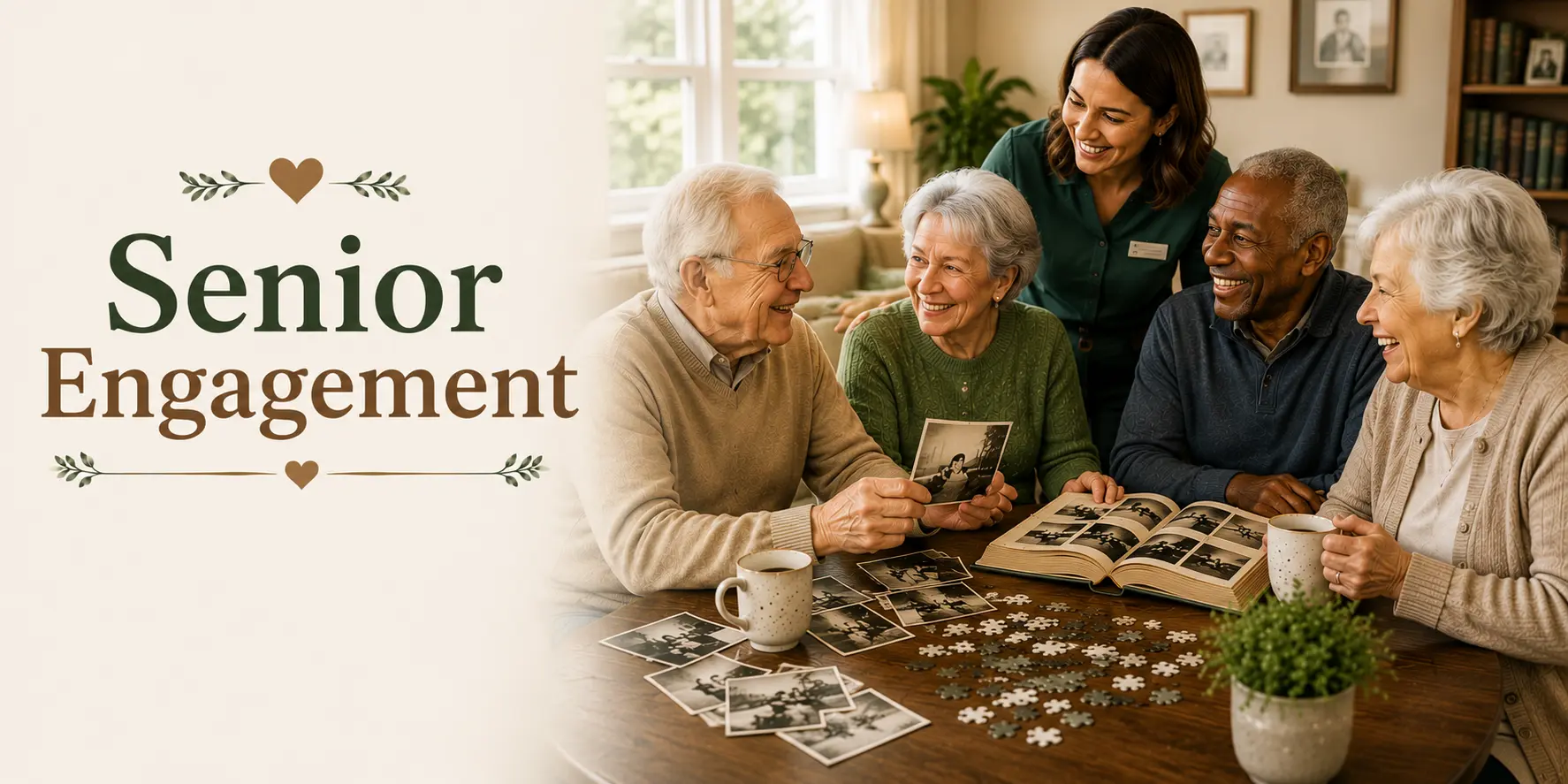

Meaningful Activities, Social Connection, & Identity Preservation
Why Senior Engagement Matters
As people age, maintaining meaningful engagement becomes increasingly important for emotional well-being, cognitive health, social connection, and overall quality of life. Senior engagement goes beyond simply keeping older adults occupied. It involves creating opportunities for purpose, participation, connection, and self-expression that honor the individual’s experiences, interests, values, and identity.
Unfortunately, many older adults experience social isolation, loneliness, reduced mobility, retirement transitions, health challenges, or cognitive changes that can limit participation in activities they once enjoyed. Without meaningful engagement, seniors may experience declines in emotional well-being, confidence, social connection, and life satisfaction.
Research consistently demonstrates that social participation and meaningful activity contribute to healthy aging, improved mental health, and greater quality of life among older adults (World Health Organization, 2022). Engagement supports not only physical and cognitive functioning but also the deeply human need for connection and purpose.
For families, caregivers, healthcare professionals, educators, and senior living organizations, fostering meaningful engagement helps ensure that older adults continue to be recognized for who they are—not simply their age, diagnosis, or care needs.
What Is Senior Engagement?
Senior engagement refers to activities, relationships, programs, and experiences that encourage older adults to remain socially connected, mentally stimulated, emotionally fulfilled, and actively involved in life.
Senior engagement may include:
- Social activities
- Family storytelling
- Volunteer opportunities
- Creative arts
- Life story projects
- Educational programs
- Physical activity
- Community participation
- Faith-based involvement
- Memory preservation activities
- Intergenerational programs
- Hobbies and recreational activities
The goal is to support purpose, belonging, and meaningful participation.
Why Engagement Is Important for Older Adults
Meaningful engagement supports multiple aspects of healthy aging.
Benefits may include:
- Improved emotional well-being
- Reduced loneliness
- Greater life satisfaction
- Increased social connection
- Cognitive stimulation
- Enhanced self-esteem
- Stronger sense of purpose
- Better overall quality of life
Research suggests that maintaining social engagement is associated with improved health outcomes and successful aging (Rowe & Kahn, 1997).
Senior Engagement and Identity
One of the most overlooked aspects of engagement is identity.
Older adults remain:
- Parents
- Grandparents
- Veterans
- Educators
- Healthcare professionals
- Entrepreneurs
- Caregivers
- Community leaders
- Storytellers
- Family historians
Meaningful engagement should reflect these identities rather than focusing solely on age or limitations.
Research on person-centered approaches emphasizes understanding the individual behind the diagnosis or care plan (Brooker, 2004).
Senior Engagement for Families Affected by Dementia
Individuals living with dementia continue to benefit from meaningful engagement throughout the progression of the disease.
Research suggests that individualized, person-centered activities can improve emotional well-being and quality of life (McKeown et al., 2010).
Effective dementia engagement activities may include:
- Reminiscence sessions
- Family storytelling
- Music activities
- Memory books
- Life story projects
- Gentle exercise
- Creative arts
- Sensory experiences
Activities should focus on remaining abilities rather than losses.
Life Story Engagement Activities
One of the most meaningful engagement strategies involves life-story preservation.
Life-story activities may include:
- Oral history interviews
- Biography projects
- Memory journals
- Family history documentation
- Legacy letters
- Story recording sessions
Research suggests that life story work supports identity continuity, person-centered care, and meaningful social interaction (McKeown et al., 2010).
These activities allow seniors to share experiences while preserving family history.
Family Storytelling as Senior Engagement
Family storytelling creates opportunities for connection across generations.
Benefits include:
Preserving Family History
Stories remain available for future generations.
Strengthening Relationships
Family members learn more about one another.
Supporting Identity
Personal experiences remain visible and valued.
Encouraging Cognitive Engagement
Recalling memories stimulates conversation and reflection.
Research suggests that family narratives contribute to resilience, identity development, and intergenerational connection (Fivush, Bohanek, & Duke, 2008).
Social Engagement Activities for Seniors
Meaningful social activities may include:
- Group discussions
- Community events
- Volunteer opportunities
- Book clubs
- Faith-based gatherings
- Senior center programs
- Family celebrations
- Intergenerational programs
Maintaining social relationships remains a critical component of healthy aging.
Creative Engagement Activities
Creative activities provide opportunities for self-expression and accomplishment.
Examples include:
- Painting
- Photography
- Writing
- Crafts
- Music
- Gardening
- Scrapbooking
- Storytelling
Creative engagement supports emotional well-being while encouraging continued growth and exploration.
Educational Engagement Opportunities
Many older adults enjoy lifelong learning.
Educational opportunities may include:
- Workshops
- Online courses
- Community lectures
- Historical research
- Genealogy projects
- Technology classes
Learning promotes cognitive stimulation and personal fulfillment.
Physical Engagement Activities
Physical activity supports both physical and mental health.
Examples include:
- Walking groups
- Stretching programs
- Dance classes
- Chair exercises
- Gardening
- Recreational sports
Physical activity can also create valuable social opportunities.
Senior Engagement in Healthcare Settings
Healthcare professionals increasingly recognize engagement as an essential component of person-centered care.
Engagement programs may support:
- Emotional well-being
- Social connection
- Cognitive stimulation
- Identity preservation
- Quality of life
Research suggests that person-centered approaches improve care experiences for older adults (Brooker, 2004).
Senior Engagement in Retirement and Senior Living Communities
Retirement communities often prioritize engagement programs designed to:
- Build friendships
- Encourage participation
- Support wellness
- Preserve independence
- Foster purpose
The most successful programs reflect resident interests, experiences, and personal histories.
Senior Engagement for Healthcare Professionals
Healthcare workers approaching retirement often seek opportunities to preserve professional identity and life experiences.
Meaningful engagement may include:
- Mentorship programs
- Legacy projects
- Professional storytelling
- Volunteer service
- Educational contributions
These activities help preserve purpose and professional legacy.
Senior Engagement for Educators
Retired educators often remain passionate about teaching and mentoring.
Engagement opportunities may include:
- Tutoring
- Storytelling programs
- Educational volunteering
- Writing projects
- Community involvement
These activities allow educators to continue contributing their expertise.
Senior Engagement for Self-Employed Professionals
Entrepreneurs and business owners often benefit from engagement activities that preserve both personal and professional legacy.
Examples include:
- Business storytelling
- Mentorship
- Family business documentation
- Legacy interviews
- Community leadership
Purpose-driven engagement remains important throughout retirement.
Benefits of Senior Engagement
Reduced Social Isolation
Meaningful relationships help combat loneliness.
Improved Emotional Well-Being
Purposeful activities support mental health.
Enhanced Cognitive Stimulation
Engagement encourages learning and memory use.
Preservation of Identity
Personal experiences and accomplishments remain visible.
Stronger Family Connections
Storytelling and shared activities strengthen relationships.
Increased Sense of Purpose
Meaningful participation contributes to life satisfaction.
Better Quality of Life
Engaged seniors often report greater happiness and fulfillment.
How Our Senior Engagement Services Help
Our senior engagement services focus on preserving identity, strengthening family connections, and promoting meaningful participation.
We assist with:
- Life story recording
- Family storytelling projects
- Memory journals
- Biography development
- Oral history interviews
- Family history preservation
- Legacy planning
- Digital memory archives
- Caregiver engagement resources
Our mission is to help older adults remain connected, valued, and recognized for the unique experiences, wisdom, and contributions they bring to their families and communities.
Frequently Asked Questions
What is senior engagement?
Senior engagement refers to meaningful activities, relationships, and experiences that support social connection, purpose, and well-being among older adults.
Why is senior engagement important?
It supports emotional health, social connection, cognitive stimulation, identity preservation, and quality of life.
What are the best engagement activities for seniors?
Life-story projects, family storytelling, volunteering, creative arts, social activities, and educational programs are highly effective.
Can senior engagement help individuals with dementia?
Yes. Person-centered engagement activities can improve emotional well-being and support quality of life.
How does storytelling support senior engagement?
Storytelling preserves identity, strengthens family relationships, and encourages meaningful conversation.
What is life story work?
Life story work involves documenting memories, experiences, and personal history to support identity and person-centered care.
How can families encourage engagement?
By involving seniors in conversations, activities, decision-making, memory preservation projects, and family traditions.
Can engagement reduce loneliness?
Research suggests that social participation and meaningful relationships help reduce feelings of loneliness and isolation.
How does engagement support healthy aging?
It promotes emotional, social, cognitive, and physical well-being.
What role does identity play in engagement?
Activities become more meaningful when they reflect the individual’s experiences, interests, accomplishments, and personal history.
Key Takeaways
Senior engagement is about more than staying busy. It is about helping older adults remain connected to their identity, relationships, experiences, and purpose. Through social participation, family storytelling, life-story preservation, creative activities, education, and meaningful community involvement, seniors can continue contributing their wisdom and experiences while enjoying greater quality of life. The most effective engagement strategies recognize that every older adult has a unique story worth sharing, preserving, and celebrating.
References
Brooker, D. (2004). What is person-centred care in dementia? Reviews in Clinical Gerontology, 13(3), 215–222. https://doi.org/10.1017/S095925980400108X
Fivush, R., Bohanek, J. G., & Duke, M. P. (2008). The intergenerational self: Subjective perspective and family history. In F. Sani (Ed.), Individual and Collective Self-Continuity. Psychology Press.
McKeown, J., Clarke, A., Ingleton, C., Ryan, T., & Repper, J. (2010). The use of life story work with people with dementia to enhance person-centred care. International Journal of Older People Nursing, 5(2), 148–158. https://doi.org/10.1111/j.1748-3743.2010.00219.x
Rowe, J. W., & Kahn, R. L. (1997). Successful aging. The Gerontologist, 37(4), 433–440. https://doi.org/10.1093/geront/37.4.433
World Health Organization. (2022). Decade of Healthy Ageing: Baseline report. World Health Organization.