
Preserving Life Stories, Family Heritage, & Personal Legacy
What Is Oral History?
Every person carries a lifetime of experiences, memories, lessons, relationships, and stories that deserve to be preserved. Unfortunately, many of these stories disappear when they are never recorded. Family memories, historical experiences, cultural traditions, personal wisdom, and life lessons are often lost within a generation if they are not intentionally documented.
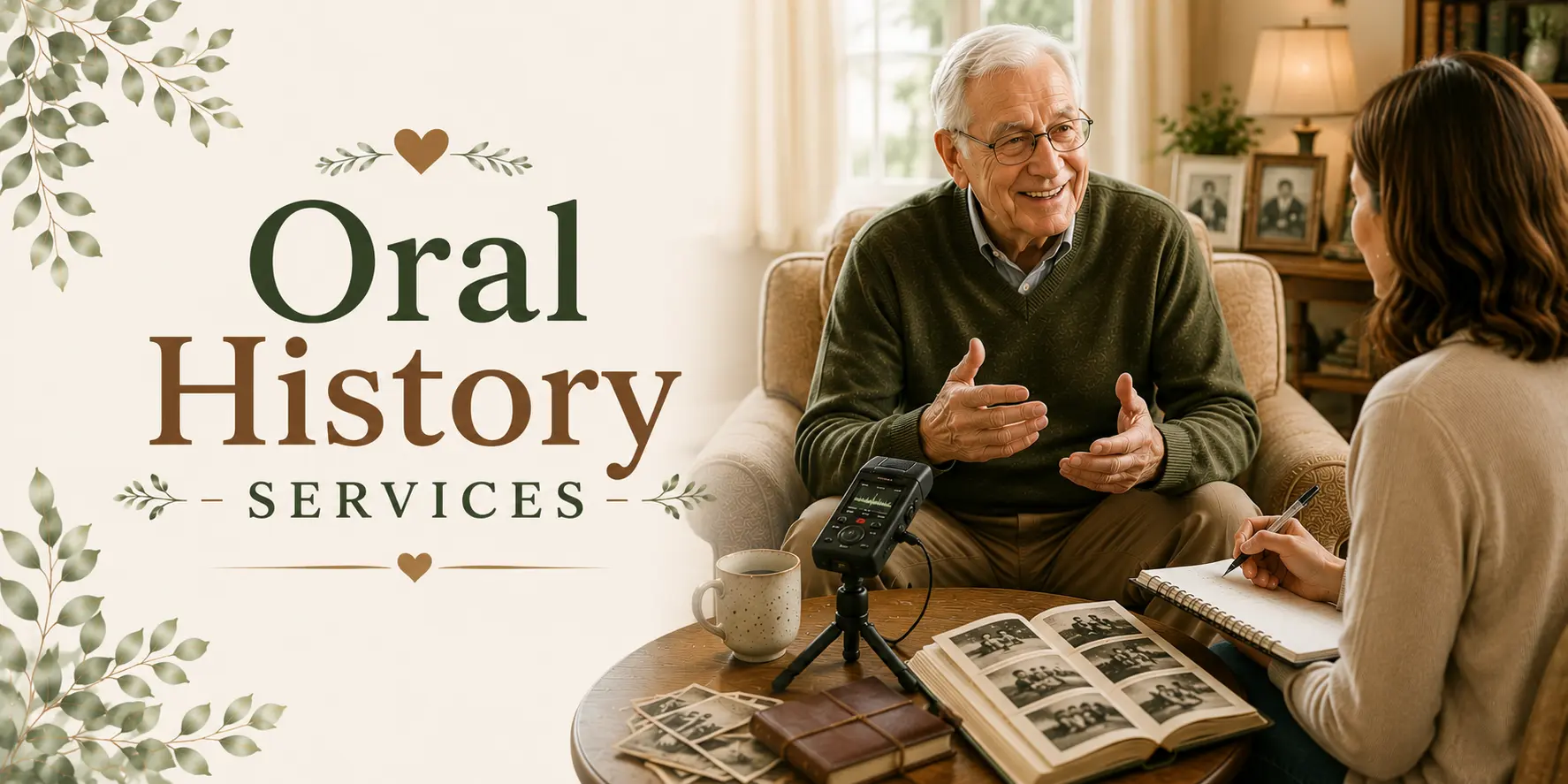
Oral history is the practice of recording personal memories, experiences, reflections, and stories through structured interviews. Unlike traditional historical records that focus on dates and events, oral history captures the human experience behind those events. It preserves voice, emotion, perspective, and meaning in a way that written records alone often cannot.
Oral history projects help individuals and families document personal journeys while creating valuable resources for future generations. Whether preserving the memories of a parent, grandparent, veteran, educator, healthcare professional, entrepreneur, caregiver, or community leader, oral history ensures that important stories remain accessible and meaningful.
Research suggests that sharing personal narratives contributes to identity continuity, emotional well-being, and intergenerational connection (Conway, Singer, & Tagini, 2004). Oral history allows families to preserve not only information but also the unique perspectives that shape personal and family identity.
Why Oral History Matters
Many families discover too late that important stories were never recorded.
Common regrets include:
- Not asking enough questions
- Losing family stories
- Forgetting names and relationships
- Missing historical details
- Losing cultural traditions
- Not preserving a loved one’s voice
Oral history helps prevent these losses by creating a permanent record of personal experiences and family heritage.
Every interview becomes a bridge between generations.
What Makes Oral History Different From Genealogy?
Genealogy focuses on documenting family relationships and lineage.
Oral history focuses on:
- Personal experiences
- Family memories
- Historical perspectives
- Life lessons
- Emotional experiences
- Individual stories
A family tree may show who your ancestors were.
Oral history helps explain who they were as people.
Combining genealogy and oral history creates a richer understanding of family identity.
Why Families Choose Oral History Projects
Families often begin oral history projects to:
- Preserve family stories
- Record personal experiences
- Capture historical memories
- Protect family heritage
- Strengthen family connections
- Create legacy resources
- Support dementia care
- Preserve cultural traditions
Many families consider oral history one of the most meaningful legacy projects they have ever undertaken.
Oral History and Identity Preservation
Personal identity is shaped by life experiences, relationships, values, and memories.
Oral history helps preserve:
- Childhood memories
- Family traditions
- Career experiences
- Military service
- Community involvement
- Faith journeys
- Personal accomplishments
- Life lessons
Research on autobiographical memory suggests that personal narratives help individuals maintain a coherent sense of self across the lifespan (Conway et al., 2004).
Recording these stories preserves identity for future generations.
Oral History for Families Living With Dementia
For families affected by dementia or Alzheimer’s disease, oral history projects are especially valuable.
Early recording efforts may help preserve:
- Personal memories
- Family relationships
- Career achievements
- Cultural heritage
- Personal preferences
- Life experiences
Research on life story work suggests that documenting personal history supports person-centered dementia care and identity preservation (McKeown et al., 2010).
Oral histories often become treasured resources for caregivers and family members.
Oral History for Family Caregivers
Caregivers frequently discover stories they never knew while conducting oral history interviews.
Benefits include:
- Stronger emotional connections
- Better understanding of loved ones
- Family memory preservation
- Reduced future regret
- Identity-centered caregiving
Oral history projects often create meaningful opportunities for connection during caregiving journeys.
Oral History for Healthcare Professionals
Healthcare providers increasingly recognize the value of understanding a person’s life story.
Oral histories can help preserve:
- Professional experiences
- Healthcare philosophies
- Leadership lessons
- Patient care insights
- Community contributions
These stories provide valuable perspectives for future generations of healthcare workers.
Oral History for Educators
Teachers, professors, and educational leaders often possess experiences that deserve preservation.
Oral history projects can document:
- Educational philosophies
- Classroom experiences
- Historical perspectives
- Mentorship stories
- Professional accomplishments
These interviews preserve educational legacies while inspiring future educators.
Oral History for Self-Employed Professionals
Entrepreneurs and business owners often have remarkable stories of resilience, innovation, and leadership.
Oral histories may capture:
- Business journeys
- Entrepreneurial lessons
- Leadership experiences
- Family business traditions
- Community involvement
These stories become valuable family and professional legacy resources.
Oral History for Veterans
Veterans possess firsthand accounts of historical events that may not exist elsewhere.
Oral history projects help preserve:
- Military service experiences
- Historical perspectives
- Leadership lessons
- Personal reflections
- Family impacts of service
Veteran oral histories are valuable for both families and future generations.
Oral History and Family History Preservation
Family history involves more than names and dates.
Oral history helps preserve:
- Family traditions
- Immigration stories
- Cultural heritage
- Historical experiences
- Personal memories
Research suggests that family narratives contribute to resilience, identity development, and intergenerational connection (Fivush, Bohanek, & Duke, 2008).
These stories become part of a family’s shared identity.
Common Oral History Topics
Meaningful oral history interviews often explore:
Childhood Memories
- Early family life
- Schools attended
- Favorite traditions
- Important influences
Family Relationships
- Parents and grandparents
- Siblings
- Marriage
- Parenting experiences
Career Experiences
- Professional achievements
- Challenges overcome
- Lessons learned
Historical Events
- Community experiences
- National events
- Social changes
Values and Beliefs
- Faith traditions
- Personal principles
- Advice for future generations
Legacy Reflections
- Life lessons
- Hopes for descendants
- Personal wisdom
Oral History Interview Questions
Examples include:
- What is your earliest memory?
- What family traditions were most important to you?
- What life lesson would you like future generations to remember?
- What accomplishment are you most proud of?
- What historical event most affected your life?
- What advice would you give your grandchildren?
- How would you like to be remembered?
Thoughtful questions often lead to powerful stories.
Digital Oral History Preservation
Modern technology makes oral history preservation easier than ever.
Digital projects may include:
- Audio recordings
- Video interviews
- Transcriptions
- Digital archives
- Family websites
- Legacy collections
Digital preservation helps ensure stories remain accessible across generations.
Benefits of Oral History
Preserves Personal Identity
Life experiences remain accessible and meaningful.
Protects Family History
Stories survive beyond a single generation.
Strengthens Family Relationships
Shared memories encourage connection.
Supports Dementia Care
Personal histories improve person-centered caregiving.
Creates Lasting Legacy Resources
Recorded interviews become treasured family heirlooms.
Preserves Cultural Heritage
Traditions and historical experiences remain available.
Reduces Future Regret
Families capture stories before opportunities are lost.
How Our Oral History Services Help
Our oral history services help individuals and families preserve personal experiences, family heritage, and life stories in meaningful and accessible formats.
We assist with:
- Oral history interviews
- Life story recording
- Biography development
- Family history preservation
- Memory journals
- Legacy projects
- Digital memory archives
- Veteran history projects
- Caregiver reference systems
Our mission is to help families preserve identity, protect memories, and ensure that important stories continue inspiring future generations.
Frequently Asked Questions
What is oral history?
Oral history is the recording of personal memories, experiences, reflections, and stories through structured interviews.
Why is oral history important?
It preserves personal experiences, family history, cultural traditions, and life lessons that may otherwise be lost.
How is oral history different from genealogy?
Genealogy focuses on family relationships, while oral history captures personal stories and experiences.
Can oral history help families affected by dementia?
Yes. Recording life stories early can preserve personal history and support person-centered care.
What topics are covered in oral history interviews?
Childhood, family, career, historical experiences, personal values, and life lessons are common topics.
Who should participate in oral history projects?
Parents, grandparents, veterans, educators, healthcare professionals, caregivers, entrepreneurs, and community leaders are excellent candidates.
How are oral histories preserved?
Through audio recordings, video interviews, transcripts, digital archives, and legacy collections.
Can oral history strengthen family relationships?
Yes. Shared storytelling encourages understanding and connection across generations.
Why are oral histories valuable for future generations?
They provide firsthand accounts of experiences, values, traditions, and historical events.
When should families begin oral history projects?
The best time is now. Every story preserved today protects family heritage for tomorrow.
Key Takeaways
Oral history is one of the most powerful tools for preserving identity, family heritage, and personal legacy. Through recorded conversations, life-story interviews, and family storytelling, individuals can share experiences, wisdom, and memories that might otherwise be lost. Whether preserving the voice of a parent, documenting a veteran’s service, recording a caregiver’s journey, or capturing family traditions, oral history helps ensure that future generations understand not only what happened, but the people and stories behind those events.
References
Conway, M. A., Singer, J. A., & Tagini, A. (2004). The self and autobiographical memory: Correspondence and coherence. Social Cognition, 22(5), 491–529. https://doi.org/10.1521/soco.22.5.491.50768
Fivush, R., Bohanek, J. G., & Duke, M. P. (2008). The intergenerational self: Subjective perspective and family history. In F. Sani (Ed.), Individual and Collective Self-Continuity. Psychology Press.
McKeown, J., Clarke, A., Ingleton, C., Ryan, T., & Repper, J. (2010). The use of life story work with people with dementia to enhance person-centred care. International Journal of Older People Nursing, 5(2), 148–158. https://doi.org/10.1111/j.1748-3743.2010.00219.x
Ritchie, D. A. (2014). Doing Oral History (3rd ed.). Oxford University Press.