
Conversations That Preserve Memories, Family History, & Legacy
Why Interviewing Seniors Matters
Every senior carries a lifetime of stories, experiences, lessons, and memories that can enrich future generations. Yet many families discover too late that important stories were never recorded. Family traditions, personal wisdom, historical experiences, and treasured memories often disappear when they are not intentionally preserved.
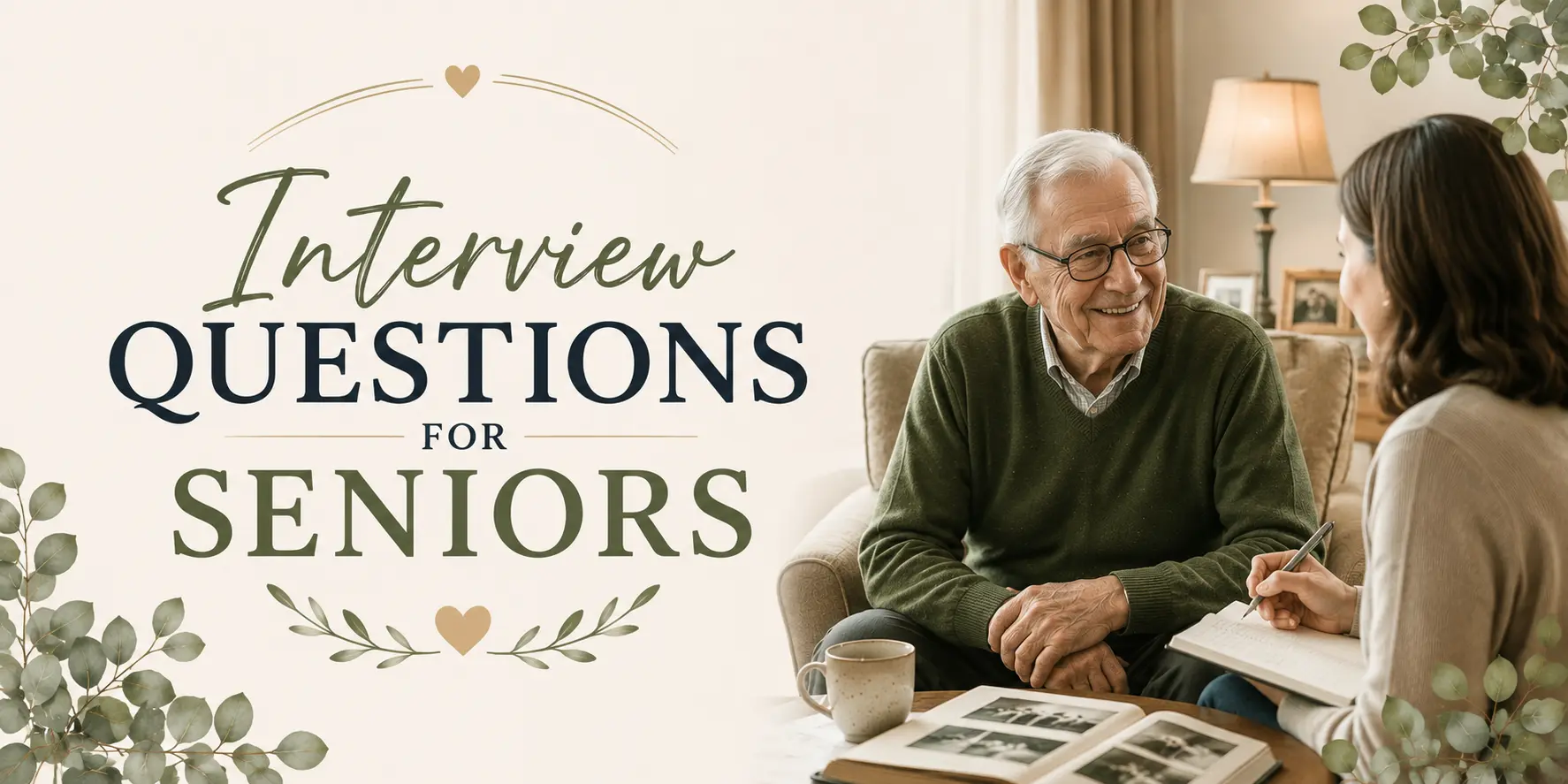
Interviewing seniors is one of the most meaningful ways to capture family history, strengthen relationships, preserve identity, and create lasting legacy resources. Whether conducted by family members, caregivers, healthcare professionals, educators, students, genealogists, or community organizations, senior interviews provide opportunities to document stories that might otherwise be lost forever.
Research suggests that sharing personal narratives contributes to identity continuity, emotional well-being, and intergenerational connection (Conway, Singer, & Tagini, 2004). Storytelling also helps families better understand their roots, values, and shared history.
For seniors themselves, life-story conversations often provide opportunities for reflection, validation, and meaningful social engagement.
Benefits of Interviewing Seniors
Conducting life-story interviews can:
- Preserve family history
- Strengthen family relationships
- Capture personal wisdom
- Support dementia care
- Document historical experiences
- Create legacy resources
- Reduce future regret
- Preserve cultural traditions
- Support identity preservation
- Encourage meaningful conversations
Research on reminiscence and life review suggests that reflecting on life experiences can support emotional well-being and personal meaning in later life (Westerhof & Bohlmeijer, 2014).
How to Conduct a Successful Senior Interview
Before beginning:
Choose a Comfortable Setting
Select a quiet, familiar environment.
Allow Plenty of Time
Avoid rushing conversations.
Listen More Than You Speak
Follow interesting stories and unexpected memories.
Use Open-Ended Questions
Encourage storytelling rather than simple yes-or-no answers.
Record the Conversation
With permission, audio or video recordings help preserve stories accurately.
Preserve Photos and Documents
Photographs often trigger valuable memories and stories.
Childhood Interview Questions for Seniors
Childhood memories often reveal important family history and cultural traditions.
Questions may include:
- What is your earliest memory?
- What was your childhood home like?
- What were your parents like?
- What games did you enjoy as a child?
- What family traditions do you remember most?
- What was school like when you were growing up?
- Who had the greatest influence on you as a child?
- What did you want to become when you grew up?
- What historical events do you remember from your childhood?
- What lessons did your parents teach you?
Family History Interview Questions
These questions help preserve family heritage.
- What do you know about your grandparents?
- Where did your family originate?
- What family stories have been passed down through generations?
- What traditions were important in your family?
- What family values were emphasized growing up?
- Are there family stories you never want forgotten?
- What family member influenced you most?
- How did your family celebrate holidays?
- What family recipes or customs should continue?
- What would future generations benefit from knowing about our family?
Education and School Memories
- What was your favorite subject in school?
- Who was your most memorable teacher?
- What school activities did you enjoy?
- What educational opportunities shaped your life?
- What lessons did you learn outside the classroom?
Career and Professional Life Questions
For healthcare workers, educators, business owners, and other professionals, career experiences often contain valuable wisdom.
- What was your first job?
- How did you choose your career?
- What accomplishment are you most proud of?
- What challenges taught you the most?
- What advice would you give young professionals?
- What leadership lessons did you learn?
- How did your profession change over time?
- What career decision had the greatest impact on your life?
- What did you enjoy most about your work?
- What professional achievement means the most to you?
Marriage and Relationship Questions
- How did you meet your spouse or partner?
- What made your relationship special?
- What relationship advice would you share?
- What lessons have you learned about love?
- What memories bring you the greatest joy?
Parenting and Grandparenting Questions
- What was your greatest joy as a parent?
- What parenting lesson stands out most?
- How has family life changed across generations?
- What do you hope your children remember about you?
- What advice would you give future parents?
- What is your favorite family memory?
- What does being a grandparent mean to you?
- What traditions should continue?
- What family value is most important?
- What would you like future generations to know?
Historical Event Questions
Seniors often possess firsthand accounts of historical events.
- What major historical events affected your life?
- How did your community change over time?
- What social changes stand out most?
- What historical event had the greatest impact on your generation?
- What lessons should younger generations learn from history?
Military Service Questions
For veterans:
- Why did you choose military service?
- What lessons did service teach you?
- What experiences shaped your life most?
- What friendships from service remain important?
- What would you like future generations to understand about your service?
Faith, Values, and Personal Beliefs
- What values have guided your life?
- What role has faith played in your journey?
- What principles matter most to you?
- What life lesson do you wish everyone understood?
- What are you most grateful for?
Life Reflection Questions
These questions often produce the most meaningful conversations.
- What accomplishment are you most proud of?
- What challenge taught you the most?
- What would you do differently if given the chance?
- What advice would you give your younger self?
- What has brought the most meaning to your life?
Legacy and Future Generations Questions
- How would you like to be remembered?
- What wisdom would you like to pass on?
- What family stories should never be forgotten?
- What legacy do you hope to leave?
- What message would you like future generations to hear?
Interview Questions for Seniors Living With Dementia
When interviewing individuals living with dementia, focus on comfort and positive memories.
Helpful questions include:
- Tell me about your childhood home.
- What games did you enjoy growing up?
- Who was someone special in your life?
- What music did you enjoy?
- What family traditions were important?
- What was your favorite holiday memory?
Research suggests that reminiscence-based conversations can support communication, identity preservation, and emotional well-being (Woods et al., 2018).
Why Life Story Interviews Preserve Identity
A senior’s identity includes far more than dates and milestones.
Interviews help preserve:
- Personal values
- Relationships
- Experiences
- Cultural heritage
- Family traditions
- Personal wisdom
Research on life story work suggests that preserving personal narratives supports person-centered care and identity continuity, particularly for older adults living with dementia (McKeown et al., 2010).
How Our Life Story Interview Services Help
Our services help families preserve personal stories, family history, and legacy through professionally guided life-story interviews.
We assist with:
- Oral history interviews
- Life story recording
- Biography development
- Family storytelling projects
- Memory journals
- Legacy preservation
- Family history documentation
- Digital memory archives
- Caregiver reference systems
Our mission is to ensure that every individual’s experiences, wisdom, values, and stories remain accessible and meaningful for future generations.
Frequently Asked Questions
Why interview seniors?
Senior interviews preserve family history, wisdom, personal experiences, and cultural heritage.
What questions should I ask my parents or grandparents?
Focus on childhood, family history, relationships, career experiences, values, and life lessons.
How long should a senior interview last?
Most interviews range from 30 minutes to two hours, depending on comfort and interest.
Should interviews be recorded?
Yes. Audio and video recordings help preserve stories accurately.
Can interviews support dementia care?
Yes. Life-story conversations can support reminiscence, identity preservation, and person-centered care.
What if a senior says they have no interesting stories?
Most people underestimate the value of their experiences. Simple questions often uncover remarkable memories.
How do interviews strengthen family relationships?
They create opportunities for deeper understanding, storytelling, and meaningful conversation.
What is the best age to begin life-story interviews?
As early as possible. Every year, preservation increases the likelihood that stories will survive.
Can interview questions support genealogy research?
Yes. Personal stories often provide details unavailable in historical records.
Why are life-story interviews important?
They preserve identity, family history, wisdom, and personal experiences that might otherwise be lost.
Key Takeaways
Interviewing seniors is one of the most meaningful ways to preserve family history, personal identity, cultural heritage, and life lessons. Through thoughtful questions and attentive listening, families can capture stories that connect generations, strengthen relationships, and create lasting legacy resources. Every senior has experiences worth preserving, and every interview represents an opportunity to ensure those stories continue inspiring future generations.
References
Conway, M. A., Singer, J. A., & Tagini, A. (2004). The self and autobiographical memory: Correspondence and coherence. Social Cognition, 22(5), 491–529. https://doi.org/10.1521/soco.22.5.491.50768
McKeown, J., Clarke, A., Ingleton, C., Ryan, T., & Repper, J. (2010). The use of life story work with people with dementia to enhance person-centred care. International Journal of Older People Nursing, 5(2), 148–158. https://doi.org/10.1111/j.1748-3743.2010.00219.x
Westerhof, G. J., & Bohlmeijer, E. T. (2014). Celebrating fifty years of research and applications in reminiscence and life review: State of the art and new directions. Journal of Aging Studies, 29, 107–114. https://doi.org/10.1016/j.jaging.2014.02.003
Woods, B., O’Philbin, L., Farrell, E. M., Spector, A. E., & Orrell, M. (2018). Reminiscence therapy for dementia. Cochrane Database of Systematic Reviews, 3(3), CD001120. https://doi.org/10.1002/14651858.CD001120.pub3