
Preserving Family History, Strengthening Connections, & Wisdom
Why Multigenerational Stories Matter
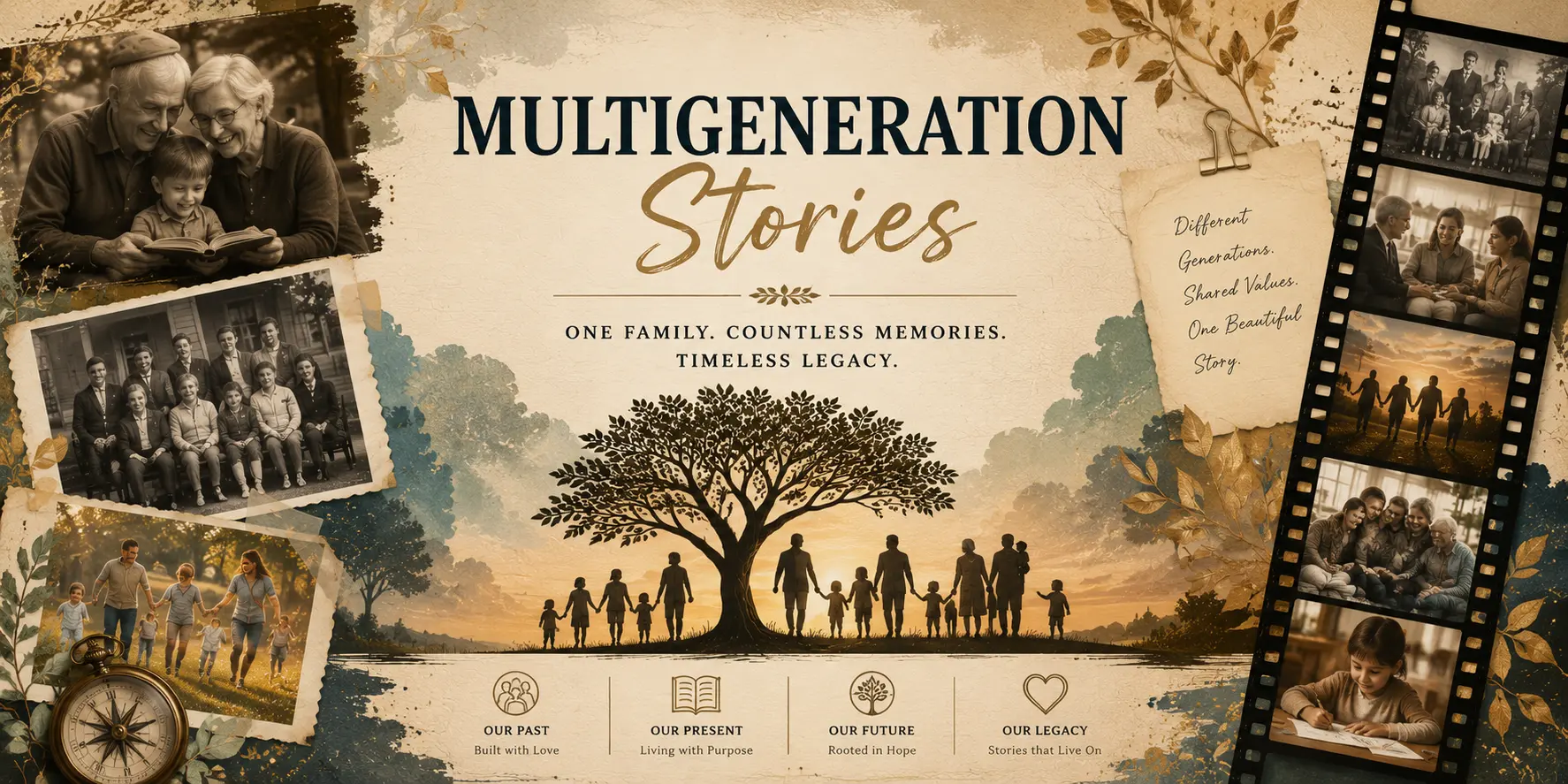
Every family is built upon generations of experiences, traditions, values, sacrifices, triumphs, and lessons. Grandparents, parents, children, and grandchildren each contribute unique chapters to a shared family story. Yet many of these stories are never documented, leaving future generations without a clear understanding of where they came from or the experiences that shaped their family.
Multigenerational stories help bridge that gap. They connect past, present, and future generations through shared memories, personal experiences, cultural traditions, and family wisdom. More than simple storytelling, these narratives help preserve identity, strengthen relationships, and create a sense of belonging that extends across decades.
Research suggests that children and families who understand their family history often develop stronger resilience, greater emotional well-being, and a deeper sense of identity (Fivush, Bohanek, & Duke, 2008). Knowing family stories provides context, perspective, and continuity during life’s challenges.
In an increasingly fast-paced and digital world, preserving multigenerational stories has become one of the most meaningful ways to ensure that family history, values, and identity are not lost.
What Are Multigenerational Stories?
Multigenerational stories are narratives that connect experiences across multiple generations of a family.
These stories may include:
- Family traditions
- Immigration journeys
- Military service
- Career experiences
- Parenting lessons
- Historical events
- Cultural heritage
- Family challenges
- Personal achievements
- Community involvement
- Faith traditions
- Life lessons
Unlike isolated memories, multigenerational stories show how one generation influences the next.
They help explain not only what happened, but why it matters.
Why Families Need Multigenerational Stories
Many families discover that important stories disappear when they are not intentionally preserved.
Common losses include:
- Forgotten family traditions
- Lost photographs
- Unrecorded life lessons
- Missing historical experiences
- Unidentified ancestors
- Cultural heritage gaps
Multigenerational storytelling helps preserve these connections before they are lost.
Every story captured today becomes a gift to future generations.
The Science Behind Family Stories
Research has demonstrated that family narratives play an important role in identity development and resilience.
Children who understand family history often show:
- Greater emotional resilience
- Stronger family identity
- Increased self-confidence
- Better coping skills
- Stronger sense of belonging
The “intergenerational self” concept suggests that understanding family stories helps individuals see themselves as part of a larger family narrative (Fivush et al., 2008).
These connections can be especially important during periods of stress and transition.
Multigenerational Stories Preserve Identity
Identity is shaped not only by personal experiences but also by family history.
Family stories help preserve:
- Values
- Traditions
- Cultural heritage
- Family relationships
- Historical experiences
- Personal beliefs
- Community contributions
Research on autobiographical memory suggests that narratives help maintain continuity and meaning across generations (Conway, Singer, & Tagini, 2004).
By preserving stories, families preserve identity.
Multigenerational Stories and Dementia Care
Families affected by dementia often discover the importance of preserving stories early.
Life-story preservation can help document:
- Personal experiences
- Family relationships
- Cultural traditions
- Career accomplishments
- Personal preferences
Research on life story work suggests that documenting personal history supports person-centered dementia care and identity preservation (McKeown et al., 2010).
Multigenerational storytelling ensures that family history remains accessible even when memory changes occur.
Family Caregivers and Multigenerational Stories
Caregivers often become the custodians of family memories.
Story preservation can help caregivers:
- Strengthen relationships
- Understand loved ones more deeply
- Preserve family heritage
- Reduce future regret
- Create meaningful interactions
Many caregivers report discovering new stories and family insights during life-story projects.
Multigenerational Stories for Healthcare Professionals
Healthcare providers increasingly recognize the importance of understanding a person’s story.
Family narratives can provide insight into:
- Personal values
- Cultural background
- Life experiences
- Family relationships
- Care preferences
Person-centered care begins with understanding the individual behind the diagnosis (Brooker, 2004).
Multigenerational Stories for Educators
Educators often understand the value of storytelling in identity development and learning.
Family story projects can help students:
- Explore heritage
- Strengthen family relationships
- Build communication skills
- Preserve history
- Develop self-understanding
Intergenerational storytelling can become a powerful educational tool.
Multigenerational Stories for Self-Employed Professionals
Business owners and entrepreneurs often possess stories of perseverance, innovation, and leadership.
Preserving these experiences allows future generations to learn from:
- Business successes
- Challenges overcome
- Family business traditions
- Leadership lessons
- Community contributions
These stories often become part of a family’s broader legacy.
Common Types of Multigenerational Stories
Immigration Stories
Experiences of relocation, adaptation, and cultural transition.
Military Service Stories
Accounts of service, sacrifice, leadership, and resilience.
Family Tradition Stories
Holiday customs, recipes, celebrations, and rituals.
Career and Professional Stories
Lessons learned through work and service.
Historical Event Stories
Personal experiences during significant local, national, or global events.
Faith and Spiritual Stories
Religious traditions, beliefs, and values.
Family Resilience Stories
Challenges overcome and lessons learned.
How to Preserve Multigenerational Stories
Oral History Interviews
Structured conversations preserve memories in a person’s own voice.
Life Story Recording
Recorded interviews create lasting family resources.
Biography Projects
Written narratives organize family experiences.
Family Storytelling Sessions
Shared conversations encourage participation across generations.
Memory Journals
Written reflections preserve stories and lessons.
Digital Archives
Technology allows families to store and share stories for future generations.
Questions That Inspire Multigenerational Stories
Examples include:
- What family tradition means the most to you?
- What challenge shaped your life?
- What lesson did your parents teach you?
- What historical event affected your family the most?
- What advice would you give future generations?
- What family story should never be forgotten?
- What values have guided your life?
- How would you like to be remembered?
These conversations often reveal powerful family insights.
Benefits of Multigenerational Storytelling
Strengthens Family Bonds
Shared stories encourage understanding and connection.
Preserves Family History
Important experiences remain accessible.
Supports Identity Development
Family members gain a stronger sense of belonging.
Protects Cultural Heritage
Traditions and values are passed forward.
Enhances Dementia Care
Life stories support person-centered caregiving.
Creates Lasting Legacy Resources
Future generations gain access to personal wisdom and history.
Reduces Future Regret
Families preserve stories before opportunities disappear.
Digital Preservation of Family Stories
Modern technology allows families to preserve:
- Audio interviews
- Video recordings
- Digital biographies
- Family photographs
- Oral histories
- Memory journals
Digital preservation helps ensure that stories remain available for generations to come.
How Our Multigenerational Story Services Help
Our services help families preserve identity, strengthen connections, and protect family history through professionally guided storytelling and legacy preservation.
We assist with:
- Life story recording
- Oral history interviews
- Family storytelling projects
- Biography development
- Family history documentation
- Digital memory archives
- Legacy preservation planning
- Memory journals
- Caregiver reference systems
Our mission is to help families preserve the experiences, wisdom, traditions, and values that make every family unique.
Frequently Asked Questions
What are multigenerational stories?
They are family narratives that connect experiences, memories, traditions, and lessons across multiple generations.
Why are multigenerational stories important?
They preserve identity, strengthen family relationships, and protect family history.
How do family stories help children?
Research suggests that understanding family history supports resilience, confidence, and emotional well-being.
Can storytelling support dementia care?
Yes. Life-story preservation supports person-centered care and identity continuity.
What is the best way to preserve family stories?
Oral history interviews, life-story recordings, biographies, memory journals, and digital archives are all effective options.
How can families involve multiple generations?
Through interviews, storytelling sessions, shared memory projects, and collaborative family history activities.
What types of stories should be preserved?
Family traditions, life lessons, historical experiences, career journeys, relationships, and cultural heritage are all valuable.
Can multigenerational stories support genealogy research?
Yes. Personal narratives often provide context unavailable in historical records.
When should families begin preserving stories?
As soon as possible. Every story recorded today protects family history for tomorrow.
What legacy do multigenerational stories create?
They provide future generations with wisdom, identity, historical context, and meaningful connections to their family heritage.
Key Takeaways
Multigenerational stories are among the most valuable gifts families can preserve. They connect generations through shared experiences, personal wisdom, family traditions, and cultural heritage. Through oral histories, life-story recording, family storytelling, biography projects, and digital preservation, families can ensure that important memories remain accessible and meaningful. More than historical records, multigenerational stories help preserve identity, strengthen relationships, and create a lasting sense of continuity across generations.
References
Brooker, D. (2004). What is person-centred care in dementia? Reviews in Clinical Gerontology, 13(3), 215–222. https://doi.org/10.1017/S095925980400108X
Conway, M. A., Singer, J. A., & Tagini, A. (2004). The self and autobiographical memory: Correspondence and coherence. Social Cognition, 22(5), 491–529. https://doi.org/10.1521/soco.22.5.491.50768
Fivush, R., Bohanek, J. G., & Duke, M. P. (2008). The intergenerational self: Subjective perspective and family history. In F. Sani (Ed.), Individual and Collective Self-Continuity. Psychology Press.
McKeown, J., Clarke, A., Ingleton, C., Ryan, T., & Repper, J. (2010). The use of life story work with people with dementia to enhance person-centred care. International Journal of Older People Nursing, 5(2), 148–158. https://doi.org/10.1111/j.1748-3743.2010.00219.x