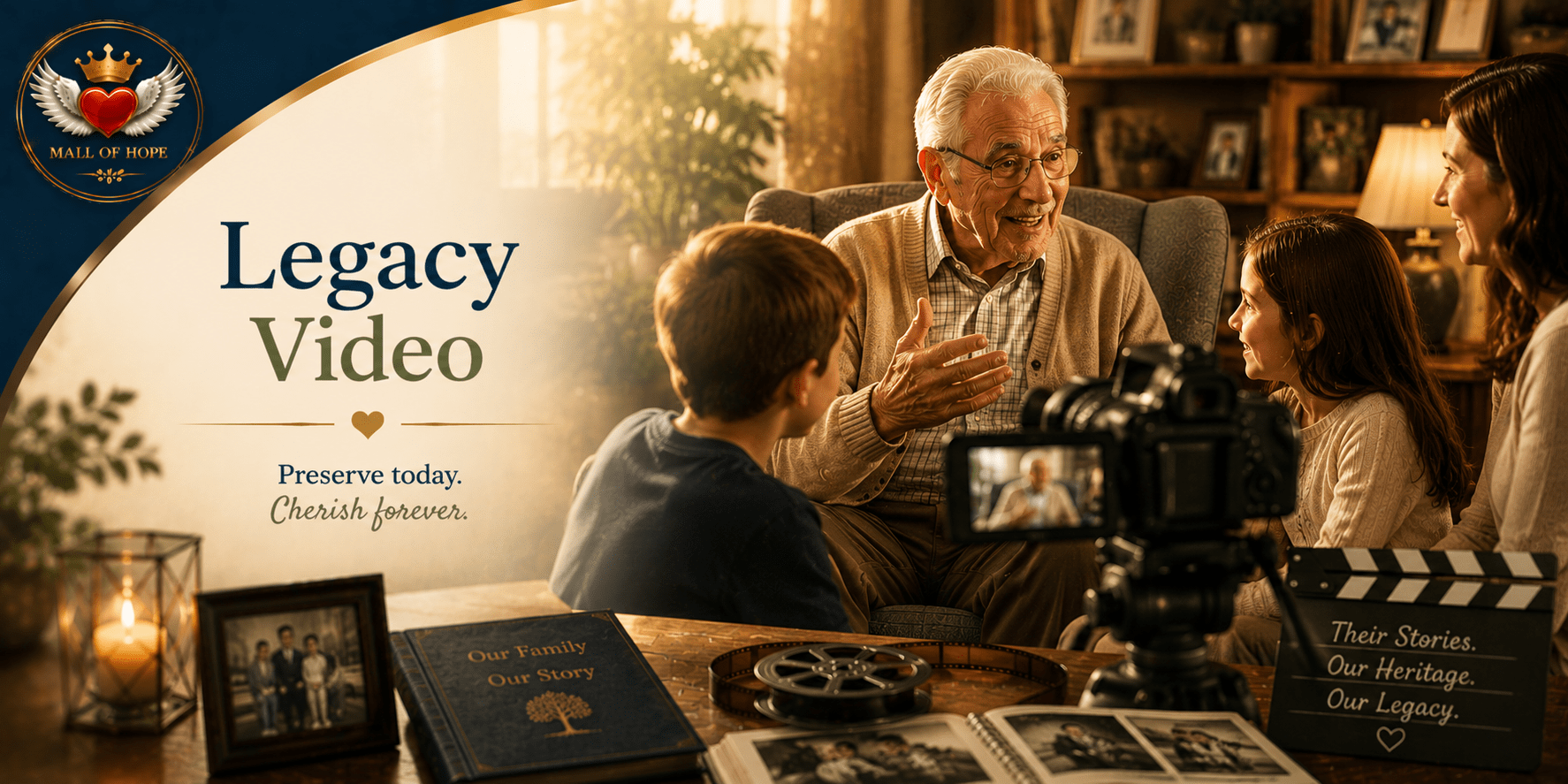

Every life leaves an imprint on the people and communities it touches. While photographs capture moments and written records preserve facts, a legacy video preserves something far more personal—a person’s voice, facial expressions, laughter, emotions, wisdom, and unique personality. A legacy video is a professionally or personally recorded visual history that documents an individual’s life story, memories, beliefs, values, and messages for future generations. It transforms memories into a lasting family heirloom that can educate, comfort, and inspire loved ones for decades to come.
Legacy videos have become increasingly valuable as families recognize the importance of preserving identity before memories are lost to time, illness, or aging. They are especially meaningful for individuals living with dementia, Alzheimer’s disease, serious illness, or those who simply wish to leave a lasting message for children, grandchildren, and future descendants. Unlike traditional biographies or written memoirs, video captures the authenticity of human interaction, allowing future generations to experience a loved one’s personality in a deeply personal way.
Research supports the value of life review and reminiscence as meaningful activities that promote psychological well-being, strengthen identity, and encourage intergenerational connection (Butler, 1963; McAdams, 2008). Legacy videos combine these benefits with modern technology, creating enduring digital archives that preserve family history, cultural heritage, and personal wisdom for generations yet to come.
Why Legacy Videos Matter for Families and Future Generations
Families often inherit photographs, official documents, letters, and treasured possessions, yet many wish they had preserved something even more meaningful—the opportunity to hear a loved one’s voice, watch them smile, or listen as they share their life experiences in their own words. A legacy video fills this gap by preserving the human qualities that define a person’s identity.
Every individual possesses unique stories about childhood, education, marriage, parenthood, military service, careers, faith, friendships, community involvement, travel, hardships, and accomplishments. These stories reveal values, resilience, humor, compassion, and lessons learned throughout life. When recorded on video, they become living family history rather than static historical information.
Legacy videos also strengthen family identity. Research suggests that children who know more about their family’s history often demonstrate greater resilience, emotional security, and self-confidence because they understand themselves as part of a continuing family story (Duke et al., 2008). Watching grandparents describe family traditions, overcoming adversity, or celebrating life’s milestones helps younger generations appreciate their heritage while preserving cultural and family values.
For many families, creating a legacy video becomes an opportunity to reconnect. Adult children, grandchildren, siblings, and extended relatives often gather to ask meaningful questions, share photographs, and reflect on memories together. These conversations frequently deepen relationships while preserving stories that may otherwise disappear.
Legacy videos also preserve community history. Veterans, educators, healthcare professionals, business owners, artists, clergy, first responders, and community leaders often possess firsthand accounts of historical events, cultural traditions, and social changes that contribute to collective memory. Recording these experiences helps preserve local history while honoring individual contributions.
Unlike written memoirs, video communicates emotion through facial expressions, tone of voice, body language, and spontaneous reactions. These qualities make future viewing especially meaningful because loved ones experience not only the story but also the person telling it.
Creating a Meaningful Legacy Video
A successful legacy video is built on authenticity rather than perfection. While professional production can enhance visual quality, the true value lies in preserving honest conversations, genuine emotions, and personal reflections.
Preparation begins by identifying the purpose of the recording. Some individuals wish to create a comprehensive life history that follows their life chronologically, while others focus on themes such as family traditions, military experiences, career accomplishments, faith, cultural heritage, personal values, or messages for future generations. Establishing these goals provides structure while allowing natural storytelling to emerge.
Choosing a comfortable environment encourages relaxed conversation. Familiar surroundings, meaningful family photographs, treasured heirlooms, favorite music, awards, military memorabilia, or childhood keepsakes often stimulate memory and provide visual context during filming. Natural lighting and minimal background distractions improve video quality while maintaining a warm and inviting atmosphere.
Interview questions should encourage storytelling rather than simple factual responses. Examples include:
- What are your earliest childhood memories?
- Who influenced your life the most?
- What family traditions do you hope continue?
- What challenges shaped your character?
- What accomplishments make you most proud?
- What advice would you give your children and grandchildren?
- How would you like to be remembered?
- What values have guided your life?
Rather than rushing through questions, interviewers should allow thoughtful pauses and follow-up discussions. Many of the most meaningful moments occur when memories emerge naturally through conversation.
Legacy videos may include much more than interviews alone. Families often incorporate photographs, home movies, letters, certificates, newspaper clippings, music, genealogy charts, historical documents, family recipes, military records, travel footage, and narrated timelines to create comprehensive multimedia biographies.
After recording, videos should be carefully edited without removing authentic emotion or personality. The goal is to create a timeless family archive that remains engaging while accurately representing the individual’s life and character.
Legacy Videos in Dementia Care and Identity Preservation
Legacy videos play an increasingly important role in dementia care because they preserve identity even as memory changes over time. Dementia affects memory and communication, but person-centered care recognizes that individuals remain defined by their relationships, values, experiences, occupations, and personal history rather than by their diagnosis alone (Kitwood, 1997).
Recording a legacy video soon after a dementia diagnosis allows individuals to document memories while communication abilities remain relatively strong. They can describe their childhood, family, education, career, military service, favorite traditions, hobbies, faith, friendships, and hopes for future generations in their own words. These recordings become irreplaceable keepsakes for spouses, children, grandchildren, and future descendants.
Legacy videos also provide practical benefits for caregivers and healthcare professionals. Learning about an individual’s occupations, favorite music, meaningful places, lifelong interests, religious beliefs, and family relationships helps caregivers provide compassionate, individualized support. This information may guide recreational activities, communication approaches, environmental design, and care planning that respect the person’s identity and preferences.
Watching portions of a legacy video may also encourage reminiscence and emotional connection. Familiar voices, photographs, family stories, and meaningful life events can stimulate conversation while reinforcing a sense of continuity and belonging. Although dementia progresses differently for each individual, preserving personal stories helps ensure that identity remains central throughout care.
Professional caregivers frequently report that understanding a resident’s life story improves empathy and strengthens relationships. Rather than viewing someone only through medical records, caregivers gain insight into the remarkable life experiences that shaped the individual they are supporting.
Technology has further expanded opportunities for preserving identity. Secure cloud storage, digital storytelling platforms, family archives, and interactive memory systems allow legacy videos to be shared with relatives across generations while protecting them for long-term preservation.
Building an Enduring Legacy Through Video
A legacy is not measured solely by financial inheritance or professional accomplishments. It is reflected in the lives touched through kindness, perseverance, service, faith, love, generosity, and the values passed from one generation to the next. Legacy videos preserve these intangible gifts in ways that written records alone cannot achieve.
Many families create legacy videos to accompany genealogy research. While family trees establish relationships and historical records confirm important events, video interviews explain the stories behind those records. Future generations gain not only names and dates but also an understanding of family traditions, cultural heritage, immigration journeys, military service, community involvement, and personal philosophies.
Legacy videos can also preserve practical knowledge. Parents and grandparents often record favorite recipes, craftsmanship, gardening techniques, family customs, holiday celebrations, business advice, or spiritual reflections that become treasured educational resources for descendants.
Proper preservation is essential for ensuring long-term accessibility. Families should maintain multiple digital backups, including encrypted cloud storage and external hard drives, while updating file formats periodically to prevent technological obsolescence. Organizing videos with descriptive titles, interview dates, locations, and accompanying transcripts improves future accessibility and searchability.
Sharing legacy videos during family gatherings, reunions, anniversaries, birthdays, memorial services, and milestone celebrations encourages ongoing conversations about family history and identity. Rather than remaining forgotten on a hard drive, these recordings become living documents that continue to educate and inspire each new generation.
Ultimately, every person’s life contains experiences worth preserving. Whether documenting extraordinary achievements or celebrating everyday moments of love, sacrifice, resilience, and hope, a legacy video honors the individual behind the memories. It allows future generations to hear a familiar voice, see a comforting smile, and experience the enduring presence of someone whose influence continues long after they are gone. In doing so, legacy videos preserve not only memories but also the identity, wisdom, and humanity that define a family’s story across generations.
Frequently Asked Questions
What is a legacy video?
A legacy video is a professionally or personally recorded video that preserves an individual’s life story, memories, values, advice, family history, and personal messages for future generations.
Who should create a legacy video?
Anyone can benefit from creating a legacy video, including parents, grandparents, veterans, community leaders, individuals living with dementia or serious illness, and anyone who wishes to preserve their personal history and family legacy.
How does a legacy video support dementia care?
Legacy videos preserve identity by documenting personal stories, preferences, relationships, and life experiences before memory loss progresses. They also help caregivers provide more compassionate, person-centered care.
What should be included in a legacy video?
A legacy video may include childhood memories, family traditions, career experiences, military service, faith, marriage, parenting, personal values, life lessons, advice for future generations, photographs, home videos, and meaningful keepsakes.
How should legacy videos be preserved?
Store multiple digital copies using secure cloud storage, external hard drives, and archival-quality backups. Adding transcripts, descriptive file names, and regular file updates helps ensure long-term accessibility for future generations.
References
Butler, R. N. (1963). The life review: An interpretation of reminiscence in the aged. Psychiatry, 26(1), 65–76.
Duke, M. P., Lazarus, A., & Fivush, R. (2008). Knowledge of family history as a clinically useful index of psychological well-being and prognosis. Journal of Family Life, 7(2), 133–140.
Kitwood, T. (1997). Dementia reconsidered: The person comes first. Open University Press.
McAdams, D. P. (2008). Personal narratives and the life story. In O. P. John, R. W. Robins, & L. A. Pervin (Eds.), Handbook of personality: Theory and research (3rd ed., pp. 242–262). Guilford Press.
National Institute on Aging. (2024). Alzheimer’s disease fact sheet. https://www.nia.nih.gov/health/alzheimers-and-dementia/alzheimers-disease-fact-sheet
World Health Organization. (2023). Dementia. https://www.who.int/news-room/fact-sheets/detail/dementia