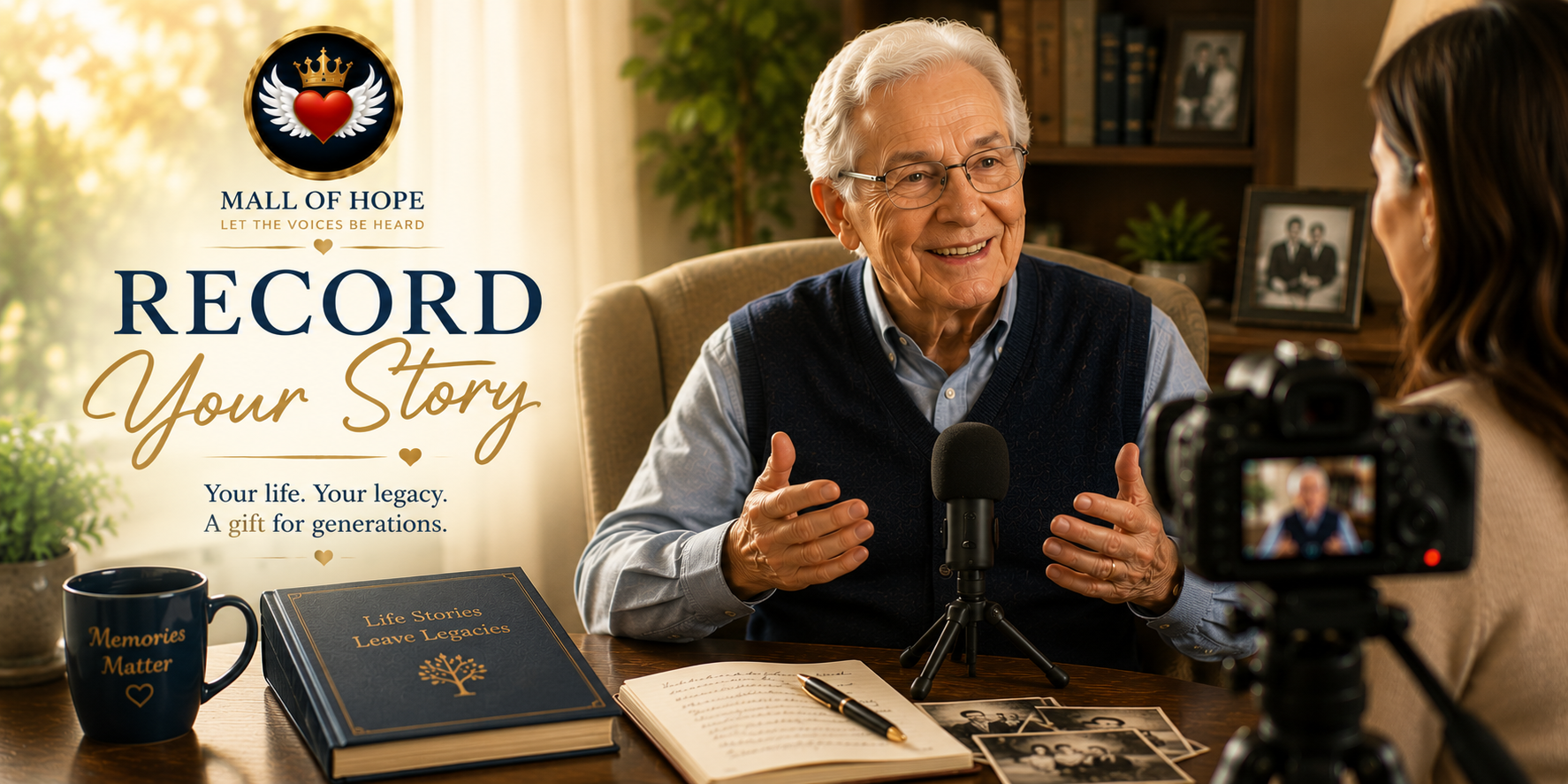

Every person has a story worth telling. Your life is more than a collection of dates, milestones, and accomplishments—it is a unique journey shaped by experiences, relationships, values, challenges, and moments that define who you are. When you record your story, you create a lasting legacy that allows future generations to hear your voice, understand your perspective, and learn from the experiences that shaped your life. Rather than allowing memories to fade over time, recording your story preserves your identity and ensures your family history continues for generations.
Many people believe they need to have lived an extraordinary life before sharing their story. In reality, the most meaningful stories often come from ordinary people whose everyday acts of love, resilience, sacrifice, service, and kindness profoundly impacted their families and communities. Whether you are documenting childhood memories, family traditions, military service, professional achievements, faith, immigration experiences, or lessons learned through adversity, your story contributes to a richer understanding of your family’s history and identity.
Recording your story also provides emotional benefits. Research on life review and reminiscence suggests that reflecting on personal experiences promotes psychological well-being, supports meaning-making, and strengthens a sense of identity throughout adulthood (Butler, 1963). For families affected by dementia or Alzheimer’s disease, preserving stories early creates an invaluable record that maintains connection long after memory changes begin. Through audio recordings, video interviews, written memoirs, or digital storytelling, recording your story becomes one of the most meaningful gifts you can leave for future generations.
Why Recording Your Story Matters
Stories connect generations in ways that photographs and official documents cannot. While birth certificates, marriage records, military files, and family trees establish important facts, they rarely explain what life was actually like or how experiences shaped an individual’s beliefs and character. Recording your story fills this gap by preserving the emotions, reflections, humor, and wisdom that define your personal identity.
Families frequently discover that they know very little about the lives of parents or grandparents beyond basic historical facts. Questions about childhood, friendships, first jobs, military service, faith, marriage, parenting, community involvement, or personal struggles often remain unanswered because they were never asked. Recording your story ensures these memories are preserved before they are lost to time.
Research indicates that children and young adults who understand their family history often develop greater resilience, stronger self-esteem, and a deeper sense of belonging because they recognize themselves as part of a continuing family narrative (Duke et al., 2008). Stories about perseverance during difficult times, acts of courage, family traditions, and shared values help younger generations understand where they come from and the qualities that have shaped their family across generations.
Recording your story also strengthens relationships in the present. Family members frequently gather to ask questions, share old photographs, and revisit meaningful experiences while creating recordings together. These conversations often reveal unknown stories that foster appreciation and deepen family connections.
Beyond the family, personal stories preserve community history. Individuals who have experienced war, migration, economic hardship, social change, technological innovation, or cultural traditions contribute valuable firsthand perspectives that enrich historical understanding. Recording these experiences helps preserve cultural heritage while ensuring important lessons remain available for future generations.
How to Record Your Story
Recording your story does not require expensive equipment or professional filmmaking experience. What matters most is authenticity. Your voice, memories, and reflections are far more valuable than perfect production quality because they preserve who you are rather than creating a polished performance.
Begin by considering the purpose of your recording. Some people choose to tell their life story chronologically, beginning with childhood and progressing through adulthood. Others organize their stories around important themes such as family traditions, military service, career experiences, marriage, parenting, travel, faith, volunteer work, or life lessons. There is no single correct approach. The best structure is the one that feels natural to you.
A comfortable environment encourages relaxed conversation. Recording at home or in a familiar location surrounded by meaningful photographs, heirlooms, awards, journals, recipes, or keepsakes often stimulates memories and makes storytelling feel more personal. Many individuals find it easier to speak conversationally with a trusted family member or interviewer than to record alone.
Helpful prompts include:
- What are your earliest childhood memories?
- Who had the greatest influence on your life?
- What challenges changed you the most?
- What traditions do you hope your family continues?
- What accomplishments make you proudest?
- What advice would you give your children or grandchildren?
- What moments taught you the greatest lessons about life?
- How would you like future generations to remember you?
There are many ways to preserve your story. Audio recordings capture the warmth and emotion of your voice. Video recordings preserve facial expressions, gestures, and personality, allowing future generations to feel as though they are sitting with you. Written memoirs provide opportunities to organize memories into chapters while incorporating historical context. Digital storytelling combines photographs, family trees, letters, videos, scanned documents, timelines, and recorded interviews into a comprehensive family archive.
Regardless of the format, authenticity should always take priority over perfection. Honest reflections, spontaneous laughter, emotional moments, and thoughtful pauses often become the most meaningful parts of a recorded story because they capture the true essence of the individual.
Recording Your Story for Dementia Care and Identity Preservation
Recording your story is particularly valuable for individuals living with dementia, Alzheimer’s disease, or other conditions that may affect memory over time. While these diagnoses can change how memories are accessed, they do not erase the identity, values, relationships, or life experiences that define a person. Recording personal stories early helps preserve those experiences while communication abilities remain relatively strong.
Person-centered dementia care emphasizes understanding the whole person rather than focusing solely on medical symptoms (Kitwood, 1997). A recorded life story provides caregivers, healthcare professionals, and family members with meaningful insight into an individual’s background, interests, career, cultural traditions, favorite music, spiritual beliefs, and personal preferences. This information supports individualized care that honors dignity while strengthening emotional connection.
For families, hearing a loved one’s voice long after memory changes have progressed can provide profound comfort. Recordings preserve personality, humor, wisdom, and affection that written documents cannot fully communicate. Children and grandchildren gain opportunities to hear family stories directly from the individual, creating an enduring connection that extends beyond illness.
Life story recordings also enhance communication between family caregivers and professional caregivers. Understanding an individual’s history allows care teams to develop personalized activities, conversation topics, and routines that reflect lifelong interests rather than generic care approaches. A former teacher may enjoy discussing education, while a veteran may find comfort in sharing military memories or listening to familiar music associated with important periods of life.
Technology has made preserving identity easier than ever. Secure digital archives, cloud storage, genealogy platforms, interactive memory books, and multimedia storytelling tools enable families to organize interviews, photographs, home videos, documents, and written narratives into comprehensive legacy collections that remain accessible for future generations.
Importantly, recording your story is not limited to older adults. Adults of every age have experiences worth preserving. Recording memories throughout life creates a richer and more complete family history while reducing the possibility that important stories will be forgotten.
Your Story Is Your Legacy
Legacy is often misunderstood as something reserved for public figures or individuals with remarkable accomplishments. In reality, every person leaves a legacy through the relationships they build, the values they teach, and the lives they influence. Recording your story ensures that this legacy is preserved intentionally rather than relying on fading memories or incomplete recollections.
Your story may include family traditions passed down through generations, lessons learned from adversity, career experiences, military service, volunteer work, spiritual beliefs, cultural heritage, immigration journeys, parenting experiences, favorite recipes, memorable holidays, travel adventures, or reflections on love and loss. These memories become invaluable resources for descendants seeking to understand their family history and personal identity.
Genealogists increasingly recognize oral history as an essential companion to documentary research. Census records, birth certificates, marriage licenses, photographs, and newspaper articles establish historical facts, but recorded stories reveal the meaning behind those facts. Together, these resources create a more complete picture of family history while preserving voices that might otherwise be lost forever.
Maintaining your recorded story requires thoughtful preservation. Families should store multiple copies using secure cloud services, external hard drives, and archival storage solutions. Clearly labeling recordings with names, dates, locations, and subjects improves accessibility while ensuring future generations can easily locate important memories. Creating written transcripts further enhances long-term preservation by making recordings searchable and accessible to individuals with hearing impairments.
Sharing your story can also become a cherished family tradition. Birthdays, anniversaries, reunions, holiday gatherings, and memorial celebrations provide opportunities to revisit recordings together, encouraging conversations that strengthen family identity and honor previous generations.
Ultimately, your story is one of your greatest gifts. Long after possessions have been distributed and milestones have passed, your words, experiences, wisdom, and love can continue guiding future generations. Recording your story preserves not only memories but also the identity that makes your family unique. It reminds those who come after you that they are part of something larger than themselves—a continuing story built upon courage, hope, resilience, compassion, and enduring human connection.
Frequently Asked Questions
Why should I record my story?
Recording your story preserves your memories, experiences, values, and life lessons for future generations. It strengthens family connections, supports genealogy research, and ensures your identity is remembered long after memories begin to fade.
What is the best way to record my story?
There is no single best method. Audio recordings, video interviews, written memoirs, and digital storytelling are all effective ways to preserve your personal history. The most important factor is choosing a format that feels comfortable and authentic.
Do I need to be elderly to record my story?
No. Adults of every age have meaningful experiences worth preserving. Recording your story throughout life allows you to capture memories while they are fresh and create a more complete legacy over time.
How does recording my story help someone living with dementia?
Recording stories early preserves personal memories, personality, and life experiences while communication abilities remain strong. These recordings help caregivers provide person-centered care and give family members lasting memories of their loved one.
Can my recorded story become part of my family’s genealogy?
Yes. Personal stories complement family trees and historical documents by providing context, emotions, and lived experiences that cannot be found in official records, creating a richer understanding of your family’s history.
References
Butler, R. N. (1963). The life review: An interpretation of reminiscence in the aged. Psychiatry, 26(1), 65–76.
Duke, M. P., Lazarus, A., & Fivush, R. (2008). Knowledge of family history as a clinically useful index of psychological well-being and prognosis. Journal of Family Life, 7(2), 133–140.
Kitwood, T. (1997). Dementia reconsidered: The person comes first. Open University Press.
McAdams, D. P. (2008). Personal narratives and the life story. In O. P. John, R. W. Robins, & L. A. Pervin (Eds.), Handbook of personality: Theory and research (3rd ed., pp. 242–262). Guilford Press.
National Institute on Aging. (2024). Alzheimer’s disease fact sheet. https://www.nia.nih.gov/health/alzheimers-and-dementia/alzheimers-disease-fact-sheet
World Health Organization. (2023). Dementia. https://www.who.int/news-room/fact-sheets/detail/dementia