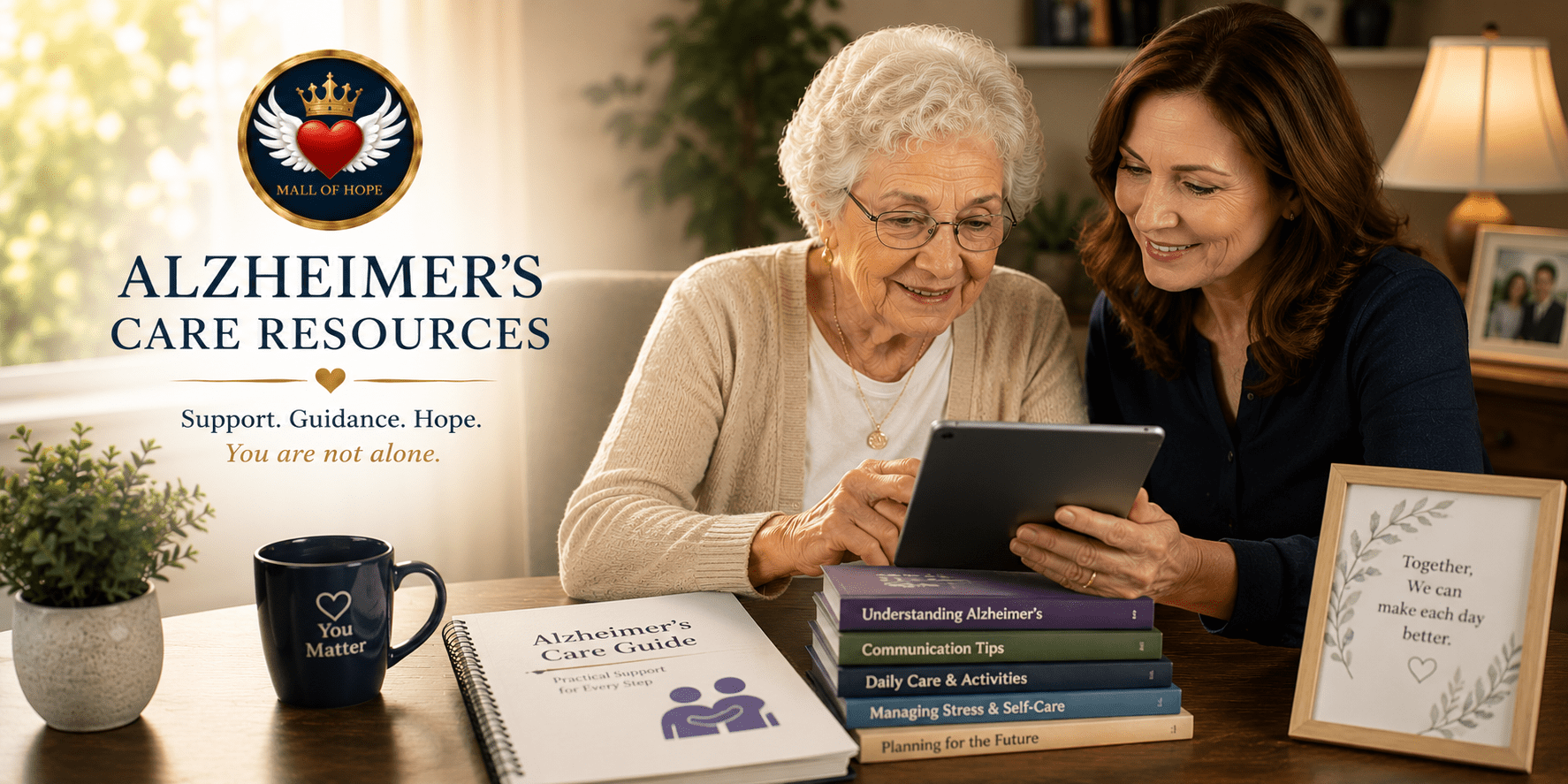

An Alzheimer’s disease diagnosis affects far more than memory. It changes family relationships, daily routines, future planning, and the emotional well-being of everyone involved. While the diagnosis may feel overwhelming, families do not have to navigate the journey alone. Alzheimer’s care resources provide education, guidance, community support, healthcare coordination, and practical tools that empower individuals living with Alzheimer’s disease and those who care for them.
Alzheimer’s disease is the most common cause of dementia, accounting for approximately 60–70% of dementia cases worldwide (World Health Organization [WHO], 2023). It is a progressive neurodegenerative disorder that gradually affects memory, thinking, communication, reasoning, and the ability to perform everyday activities. Although there is currently no cure, research continues to improve understanding of the disease while emphasizing the importance of early diagnosis, person-centered care, caregiver education, and comprehensive support services (National Institute on Aging [NIA], 2024).
Quality Alzheimer’s care extends beyond medical treatment. It includes preserving dignity, maintaining meaningful relationships, supporting emotional well-being, protecting personal identity, and helping families prepare for future challenges. Access to trusted Alzheimer’s care resources enables individuals and caregivers to make informed decisions while improving quality of life throughout every stage of the disease.
Understanding Alzheimer’s Disease and Accessing Early Resources
Alzheimer’s disease develops gradually, often beginning with subtle changes in memory, problem-solving, language, or judgment. While occasional forgetfulness is a normal part of aging, persistent memory loss that interferes with daily life should be evaluated by a healthcare professional. Early diagnosis allows individuals to access treatment options, participate in clinical planning, and make important legal, financial, and personal decisions while they remain actively involved.
Following a diagnosis, families often experience a range of emotions, including fear, uncertainty, grief, and confusion. Reliable Alzheimer’s care resources help answer common questions while reducing misinformation and providing practical guidance. Healthcare providers, neurologists, geriatricians, memory clinics, social workers, and nonprofit organizations all play important roles in educating families about disease progression and available support services.
Education is one of the most valuable resources available. Understanding how Alzheimer’s affects the brain helps caregivers recognize that changes in memory, communication, and behavior result from neurological disease rather than intentional actions. This knowledge encourages patience, empathy, and realistic expectations while improving communication between caregivers and individuals living with Alzheimer’s (Alzheimer’s Association, 2024).
Early planning should also include legal and financial preparation. Establishing advance directives, durable powers of attorney, healthcare proxies, wills, and estate planning documents protects the individual’s wishes while reducing future uncertainty for family members. Financial planning may involve reviewing insurance coverage, government assistance programs, long-term care options, and available community services.
Another essential resource is life story preservation. Recording personal memories, family traditions, career experiences, military service, favorite hobbies, spiritual beliefs, and meaningful relationships helps preserve identity while providing valuable information for future caregivers. Creating life story books, legacy videos, and family history archives ensures that personal identity remains central throughout the progression of Alzheimer’s disease.
Resources That Support Individuals Living with Alzheimer’s Disease
Although Alzheimer’s disease gradually affects cognitive function, individuals continue to benefit from meaningful activities, supportive relationships, and opportunities to participate in daily life. Comprehensive Alzheimer’s care resources focus on maximizing independence while promoting dignity, comfort, and emotional well-being.
Person-centered care remains the foundation of effective Alzheimer’s support. Rather than concentrating exclusively on symptoms, caregivers and healthcare professionals seek to understand the individual’s history, preferences, cultural background, relationships, values, and lifelong interests (Kitwood, 1997). This approach recognizes that a diagnosis does not define the person.
Structured daily routines help reduce confusion and anxiety. Consistent schedules for meals, medication, exercise, social interaction, and personal care provide familiarity while supporting independence. Simple environmental modifications, including improved lighting, clearly labeled rooms, reduced clutter, and safety adaptations, can further enhance confidence and reduce fall risks.
Meaningful engagement is another critical resource. Music therapy, gardening, art, storytelling, reading, spiritual activities, family photographs, cooking familiar recipes, and gentle physical exercise encourage cognitive stimulation while supporting emotional health. Reminiscence therapy, which uses familiar memories and personal history to encourage conversation, has demonstrated positive effects on mood, communication, and quality of life for many individuals living with dementia (Woods et al., 2018).
Technology has also expanded available resources. Medication reminders, GPS safety devices, emergency response systems, digital calendars, memory aids, and video communication platforms help individuals remain connected with family members while supporting independence whenever appropriate. Digital life story archives allow caregivers to access personal information that improves individualized care and strengthens meaningful interactions.
Healthcare professionals may also recommend occupational therapy, speech-language therapy, nutritional counseling, physical therapy, and cognitive assessments to address changing needs throughout disease progression. These services contribute to a comprehensive care plan that supports both physical and emotional well-being.
Supporting Family Caregivers Through Education and Community Resources
Family caregivers provide the majority of Alzheimer’s care worldwide. Spouses, adult children, siblings, grandchildren, and close friends often coordinate medical appointments, medication management, transportation, personal care, household responsibilities, financial oversight, and emotional support. While caregiving can be deeply rewarding, it also places significant physical, emotional, and financial demands on caregivers.
The Alzheimer’s Association (2024) reports that caregivers frequently experience elevated stress, depression, anxiety, sleep disruption, and social isolation. Accessing caregiver resources early helps families develop sustainable care strategies while reducing burnout.
Educational programs teach caregivers effective communication techniques, behavior management strategies, safety planning, nutrition, fall prevention, and approaches for responding to memory loss with compassion. Understanding disease progression helps caregivers adapt to changing needs while maintaining realistic expectations.
Support groups remain among the most valuable caregiver resources. Whether offered in person or online, support groups provide opportunities to connect with others facing similar experiences, exchange practical advice, and receive emotional encouragement. Many caregivers report that peer support reduces feelings of isolation while increasing confidence in their caregiving abilities.
Respite care is equally important. Adult day programs, in-home care providers, short-term residential care, volunteer services, and assistance from family members allow caregivers to rest, attend appointments, maintain employment, or simply recharge. Regular respite reduces caregiver fatigue while supporting long-term caregiving capacity.
Professional care managers and social workers help families navigate healthcare systems, identify community resources, coordinate services, and plan for future care needs. Faith communities, nonprofit organizations, senior centers, and local aging agencies often provide additional educational workshops, counseling, transportation assistance, meal programs, and volunteer support.
Caregivers should also prioritize their own health. Maintaining regular medical appointments, physical activity, healthy nutrition, adequate sleep, and meaningful social relationships strengthens resilience while improving the quality of care they can provide. Self-care is not selfish—it is an essential component of effective caregiving.
Planning Ahead While Preserving Identity and Legacy
Planning for the future is one of the most compassionate gifts families can give one another after an Alzheimer’s diagnosis. Early planning allows individuals to participate in decisions regarding healthcare, finances, legal matters, living arrangements, and end-of-life preferences while preserving personal autonomy and dignity.
Advance care planning should include discussions about healthcare wishes, living preferences, financial management, powers of attorney, and long-term care options. Involving the individual in these conversations whenever possible ensures their values remain central to future decision-making.
Preserving identity is equally important. Alzheimer’s disease affects memory, but it does not erase the life experiences, accomplishments, relationships, beliefs, and values that define an individual. Recording life stories, conducting family interviews, creating memory books, digitizing photographs, preserving home videos, documenting family recipes, and building digital legacy archives help ensure future generations understand the individual beyond the diagnosis.
Genealogy and family history projects can also become meaningful activities after diagnosis. Organizing family trees, identifying historical photographs, labeling heirlooms, and recording oral histories encourage conversation while preserving valuable family knowledge for children and grandchildren.
Technology offers additional opportunities for long-term preservation. Secure digital archives allow families to organize photographs, documents, interviews, videos, genealogy records, military service information, and personal reflections into searchable collections that remain accessible across generations. These resources support caregivers today while becoming treasured family heirlooms tomorrow.
No family should face Alzheimer’s disease alone. By combining medical expertise with education, community support, caregiver resources, and identity preservation, families can navigate the challenges of Alzheimer’s with greater confidence and compassion. While the disease changes memory over time, it does not diminish the value of the individual or the importance of preserving their story. Every conversation, every photograph, every recorded memory, and every act of compassionate care contributes to a lasting legacy built on dignity, love, and human connection.
Frequently Asked Questions
What are Alzheimer’s care resources?
Alzheimer’s care resources include educational materials, caregiver support, healthcare services, respite care, support groups, legal and financial planning tools, community programs, and person-centered care guidance that help individuals and families manage Alzheimer’s disease.
When should families begin using Alzheimer’s care resources?
Families should seek resources as soon as Alzheimer’s disease is suspected or diagnosed. Early education and planning improve decision-making, preserve independence, and help families prepare for future care needs.
How can caregivers find support while caring for someone with Alzheimer’s disease?
Caregivers can access support through healthcare providers, Alzheimer’s organizations, local aging agencies, caregiver education programs, respite care services, counseling, and support groups that provide emotional encouragement and practical guidance.
Why is preserving personal history important after an Alzheimer’s diagnosis?
Recording life stories, family traditions, photographs, and personal memories preserves identity while helping caregivers provide person-centered care. These resources also become treasured keepsakes for future generations.
What community resources are available for families living with Alzheimer’s disease?
Many communities offer memory clinics, adult day programs, respite care, transportation services, caregiver support groups, educational workshops, home health services, nonprofit assistance, and counseling programs designed specifically for individuals living with Alzheimer’s disease and their caregivers.
References
Alzheimer’s Association. (2024). 2024 Alzheimer’s disease facts and figures. https://www.alz.org/alzheimers-dementia/facts-figures
Brooker, D. (2007). Person-centred dementia care: Making services better. Jessica Kingsley Publishers.
Butler, R. N. (1963). The life review: An interpretation of reminiscence in the aged. Psychiatry, 26(1), 65–76.
Kitwood, T. (1997). Dementia reconsidered: The person comes first. Open University Press.
National Institute on Aging. (2024). Alzheimer’s disease fact sheet. https://www.nia.nih.gov/health/alzheimers-and-dementia/alzheimers-disease-fact-sheet
Woods, B., O’Philbin, L., Farrell, E. M., Spector, A., & Orrell, M. (2018). Reminiscence therapy for dementia. Cochrane Database of Systematic Reviews, 3, CD001120.
World Health Organization. (2023). Dementia. https://www.who.int/news-room/fact-sheets/detail/dementia