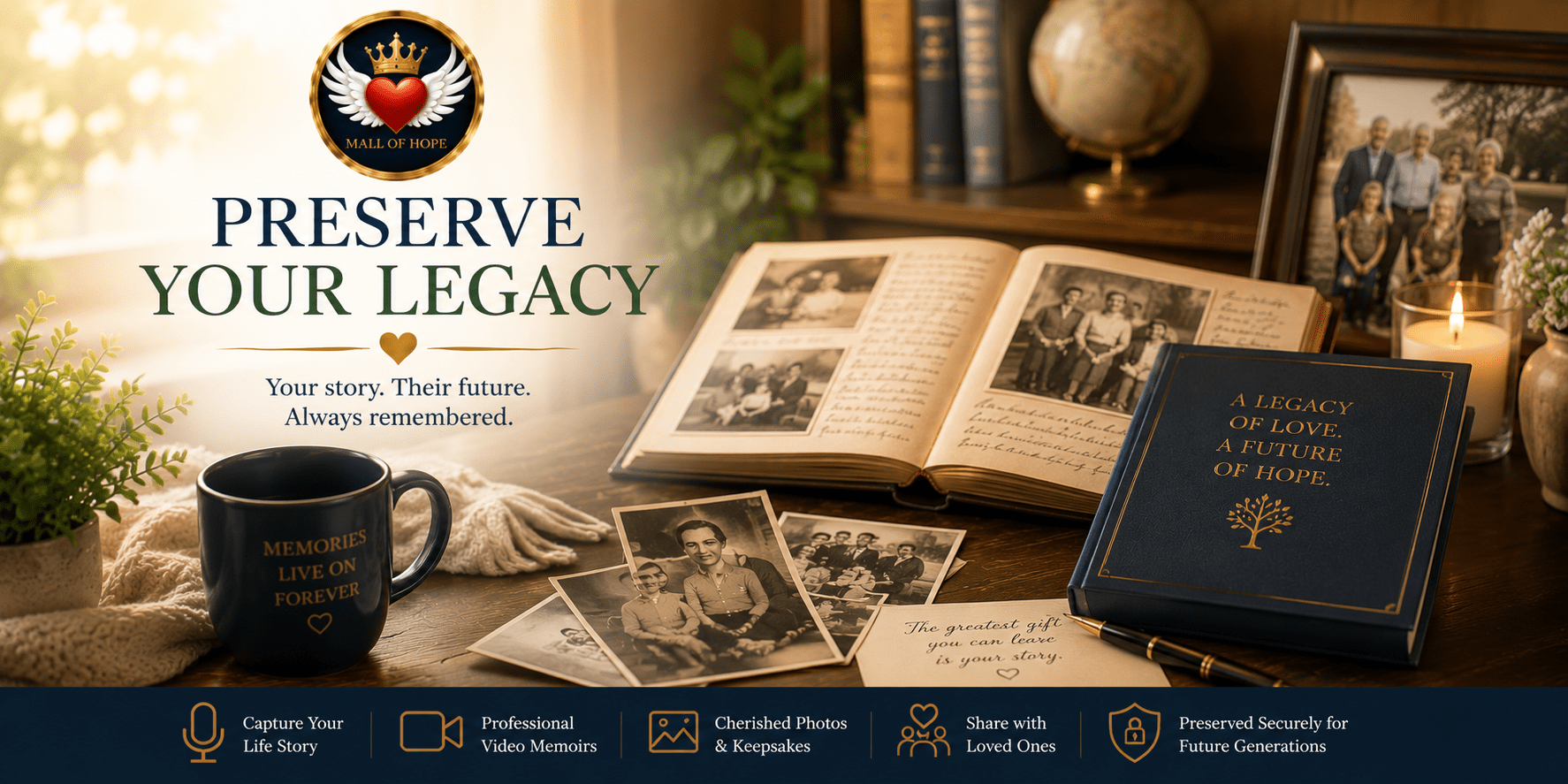

Every life leaves a legacy. While many people think of legacy as wealth, property, or accomplishments, the most meaningful inheritance is often something far more personal—the stories we tell, the values we share, the relationships we build, and the memories we leave behind. Preserving your legacy means intentionally documenting the experiences, wisdom, traditions, and personal history that define who you are so that future generations can understand not only what you accomplished, but how you lived and what mattered most.
A legacy is built throughout a lifetime. It is reflected in childhood memories, family traditions, acts of kindness, career achievements, military service, faith, resilience, volunteer work, parenting, friendships, and the countless everyday moments that shape a person’s character. Unfortunately, many of these stories disappear when they are never recorded. Family photographs may survive for generations, but without the accompanying stories, names, emotions, and personal reflections, much of their meaning can be lost.
Preserving your legacy ensures that future generations inherit more than historical facts. Through life story interviews, legacy videos, written memoirs, family history recording, genealogy projects, and digital archives, individuals can preserve their voices, personalities, values, and life lessons in their own words. Research suggests that life review and reminiscence promote emotional well-being while helping individuals find meaning in their experiences (Butler, 1963). For families affected by Alzheimer’s disease or dementia, preserving a legacy before memory changes progress also supports person-centered care while protecting identity for future generations.
Whether you want to leave guidance for your children, preserve your family’s history, document your life’s journey, or ensure your grandchildren know the person behind the photographs, preserving your legacy is one of the most meaningful gifts you can leave behind.
Why Preserving Your Legacy Matters
Every generation inherits stories that shape its identity. Some stories are about extraordinary achievements, while others celebrate simple acts of love, perseverance, sacrifice, and compassion. These experiences become the foundation upon which families build traditions, values, and a shared sense of belonging. Without intentional preservation, however, many of these stories disappear within a single generation.
Preserving your legacy protects the experiences that make your life unique. Future generations often wish they had asked more questions of parents or grandparents about childhood, military service, immigration, careers, marriage, parenting, faith, and family traditions. Recording these memories ensures they remain available long after they can no longer be shared in person.
Research indicates that individuals who understand their family history often demonstrate greater resilience, stronger emotional well-being, and a deeper sense of identity because they recognize themselves as part of an ongoing family narrative (Duke et al., 2008). Stories of overcoming adversity, pursuing education, serving others, raising families, and navigating life’s challenges become valuable lessons that continue inspiring descendants.
Legacy preservation also benefits the individual sharing their story. Reflecting on a lifetime of experiences encourages gratitude, self-understanding, and emotional integration. Butler (1963) described life review as a natural developmental process that supports psychological well-being in later adulthood by allowing individuals to recognize the meaning and purpose within their lives.
Families often find that the process of preserving a legacy strengthens relationships in the present. Conversations between parents, grandparents, children, and grandchildren create opportunities for meaningful connection while uncovering stories that may never have been shared before. These interviews frequently become treasured family experiences in their own right.
Beyond individual families, preserving a legacy contributes to community and cultural history. Veterans, educators, healthcare professionals, business owners, artists, first responders, immigrants, clergy, and community leaders preserve firsthand accounts that enrich historical understanding while celebrating diverse life experiences.
Ways to Preserve Your Legacy
There is no single way to preserve a legacy. Every individual has different goals, preferences, and stories to share. The most effective legacy projects often combine multiple methods to create a rich and lasting record of a person’s life.
One of the most meaningful approaches is a life story interview. Guided conversations allow individuals to reflect on childhood, family traditions, education, careers, marriage, parenting, military service, travel, community involvement, personal challenges, achievements, and lessons learned throughout life. Open-ended questions encourage authentic storytelling while capturing the individual’s voice and personality.
Legacy videos preserve much more than words. They record facial expressions, laughter, gestures, emotions, and the warmth of human interaction. For many families, hearing a loved one’s voice and seeing their smile becomes one of the most treasured parts of their legacy.
Written memoirs and autobiographies provide structured narratives that organize memories into chapters while incorporating historical context. These written works often include photographs, letters, journals, newspaper articles, family recipes, military records, certificates, and genealogy research that enrich the personal story.
Family history recording expands beyond the individual to document multiple generations. Recording interviews with parents, grandparents, siblings, aunts, uncles, and extended relatives creates a broader understanding of family traditions, cultural heritage, and shared experiences. These recordings complement genealogy research by adding personality and meaning to historical records.
Digital legacy preservation has become increasingly important in today’s world. Secure online archives allow families to organize interviews, videos, scanned documents, family trees, photographs, home movies, timelines, and important records into searchable collections that remain accessible across generations.
Regardless of the format, authenticity matters more than perfection. Honest conversations, spontaneous memories, emotional reflections, and everyday stories often become the most meaningful parts of a preserved legacy because they capture the individual exactly as they are.
Preserving Your Legacy Before Memory Changes
One of the most compelling reasons to preserve your legacy is to protect your identity before memory changes occur. Alzheimer’s disease and other forms of dementia affect millions of individuals worldwide, gradually impacting memory, communication, and cognitive abilities (World Health Organization [WHO], 2023). Although these conditions change how memories are accessed, they do not diminish the value of a person’s life or the importance of preserving their story.
Recording your legacy early allows you to document your experiences while memories remain vivid and communication is strong. Childhood recollections, career accomplishments, military service, family traditions, favorite recipes, spiritual beliefs, friendships, parenting experiences, travel adventures, and personal reflections can all be preserved in your own words.
Person-centered dementia care emphasizes understanding the individual behind the diagnosis (Kitwood, 1997). Legacy recordings provide caregivers with valuable information about occupations, hobbies, cultural traditions, favorite music, meaningful relationships, religious practices, and lifelong interests. This knowledge supports compassionate, individualized care while preserving dignity throughout the progression of dementia.
Families frequently describe legacy recordings as priceless after a dementia diagnosis. Hearing a loved one’s voice, watching recorded interviews, and revisiting personal stories provides comfort while preserving emotional connection for spouses, children, grandchildren, and future descendants.
Research supports life story work and reminiscence as evidence-based interventions that encourage meaningful engagement and may improve quality of life for many individuals living with dementia (Woods et al., 2018). Recording memories before cognitive decline progresses ensures these valuable resources remain available throughout every stage of care.
Importantly, preserving your legacy should not wait until retirement or advanced age. Adults of every generation have experiences worth documenting. Beginning early allows your legacy to grow alongside your life while reducing the risk that important memories will be forgotten.
Your Legacy Is More Than What You Leave Behind
Many people believe a legacy begins at the end of life, but in reality, it is created every day through relationships, choices, values, and acts of compassion. Preserving your legacy simply ensures that these contributions continue influencing others long into the future.
Your legacy may include stories of perseverance through hardship, cherished family traditions, military service, professional achievements, volunteer work, spiritual beliefs, cultural heritage, favorite recipes, parenting wisdom, travel experiences, and lessons learned from both success and failure. These memories become lasting gifts that educate, comfort, and inspire future generations.
Genealogists increasingly recognize oral history as an essential companion to historical documentation. Birth certificates, census records, marriage licenses, military records, and family trees establish facts, but legacy recordings explain the people behind those facts. Together, documentary evidence and personal storytelling create a richer and more meaningful understanding of family history.
Long-term preservation requires thoughtful planning. Families should maintain multiple digital backups using encrypted cloud storage and external hard drives while periodically updating file formats to ensure future accessibility. Written transcripts, descriptive file names, interview dates, and organized digital archives further strengthen long-term preservation.
Sharing preserved legacies during birthdays, anniversaries, family reunions, memorial services, and holiday gatherings transforms recorded memories into living family traditions. Future generations not only learn about their ancestors but also experience their voices, personalities, humor, and wisdom in deeply personal ways.
Ultimately, preserving your legacy is an act of love. It tells future generations, “This is who I was. These are the people I loved. These are the lessons I learned. These are the values I hope you carry forward.” Long after possessions have been passed on, your story remains a source of strength, guidance, and connection. By preserving your legacy today, you ensure that your identity, your memories, and your influence continue shaping the lives of those who come after you.
Frequently Asked Questions
What does it mean to preserve your legacy?
Preserving your legacy means documenting your life story, personal values, family history, memories, wisdom, and experiences so they can be shared with future generations through interviews, videos, written memoirs, photographs, and digital archives.
Why is preserving a legacy important?
A preserved legacy helps future generations understand who you were, what you believed, the challenges you overcame, and the values that shaped your life. It also strengthens family identity and preserves cultural and family history.
When should I begin preserving my legacy?
The best time is now. Recording your story while memories are clear ensures important experiences and personal reflections are preserved before illness, aging, or life changes make documentation more difficult.
How does legacy preservation support dementia care?
Legacy preservation documents personal history, preferences, relationships, and values before memory changes progress. These resources help caregivers provide person-centered care while preserving identity and creating lasting keepsakes for loved ones.
What are the best ways to preserve a legacy?
Many families combine life story interviews, legacy videos, written memoirs, family history recording, genealogy research, digitized photographs, memory books, and secure digital archives to create a comprehensive and enduring family legacy.
References
Brooker, D. (2007). Person-centred dementia care: Making services better. Jessica Kingsley Publishers.
Butler, R. N. (1963). The life review: An interpretation of reminiscence in the aged. Psychiatry, 26(1), 65–76.
Duke, M. P., Lazarus, A., & Fivush, R. (2008). Knowledge of family history as a clinically useful index of psychological well-being and prognosis. Journal of Family Life, 7(2), 133–140.
Kitwood, T. (1997). Dementia reconsidered: The person comes first. Open University Press.
McAdams, D. P. (2008). Personal narratives and the life story. In O. P. John, R. W. Robins, & L. A. Pervin (Eds.), Handbook of personality: Theory and research (3rd ed., pp. 242–262). Guilford Press.
National Institute on Aging. (2024). Alzheimer’s disease fact sheet. https://www.nia.nih.gov/health/alzheimers-and-dementia/alzheimers-disease-fact-sheet
Woods, B., O’Philbin, L., Farrell, E. M., Spector, A., & Orrell, M. (2018). Reminiscence therapy for dementia. Cochrane Database of Systematic Reviews, 3, CD001120.
World Health Organization. (2023). Dementia. https://www.who.int/news-room/fact-sheets/detail/dementia