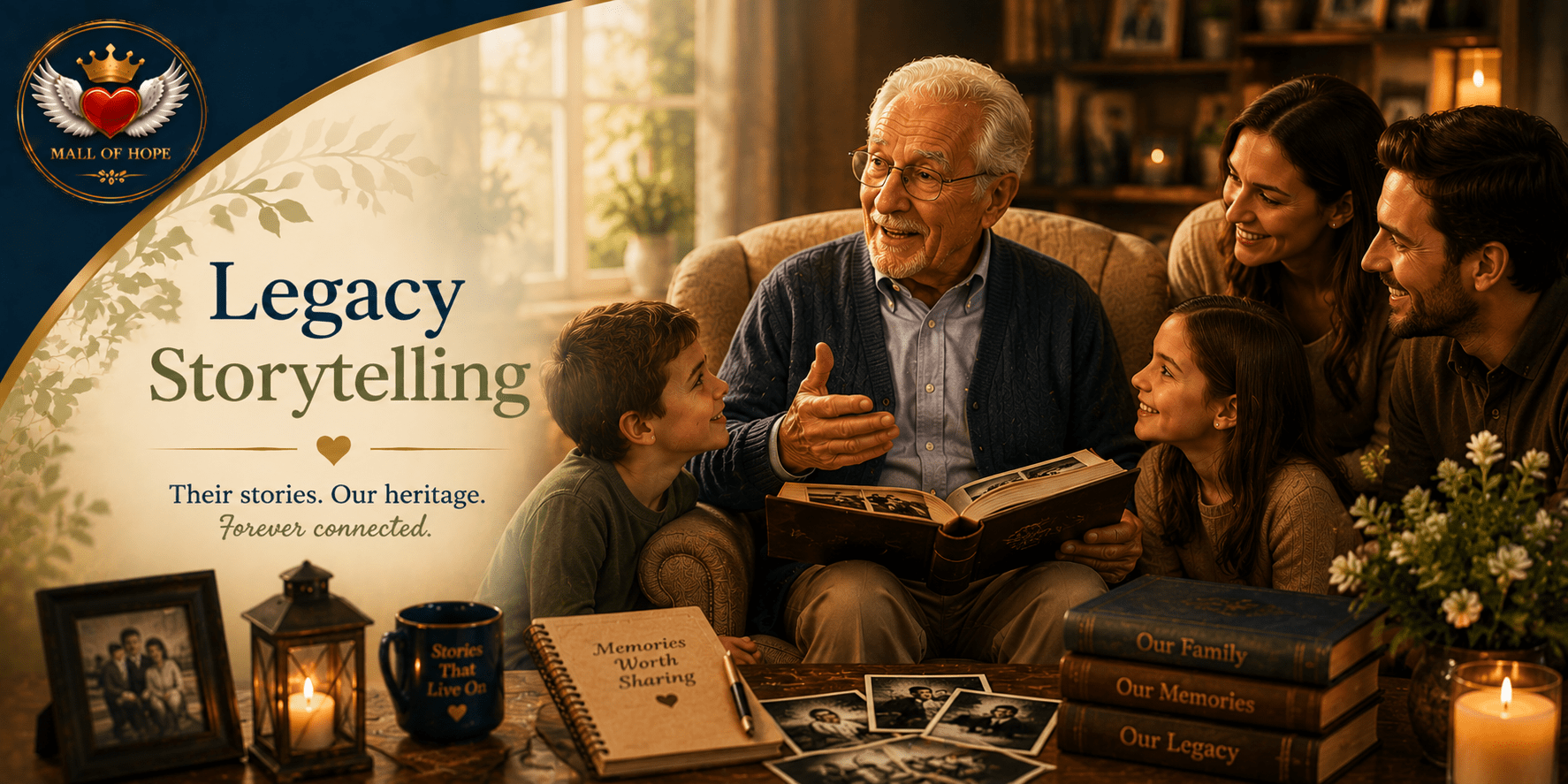

Every person leaves behind a legacy, but not every legacy is preserved. While photographs, heirlooms, and official documents tell part of a family’s history, they rarely capture the stories, emotions, values, and life lessons that truly define a person. Legacy storytelling is the intentional practice of preserving these experiences through meaningful conversations, recorded interviews, written narratives, video biographies, and digital archives. It transforms memories into enduring family treasures that strengthen identity, preserve history, and connect generations.
Stories have always been central to human culture. Long before books, photographs, or digital technology existed, families passed their history from one generation to the next through storytelling. These stories taught values, preserved traditions, celebrated resilience, and reminded future generations where they came from. Today, legacy storytelling continues that tradition while using modern technology to ensure those memories are protected from time, illness, and loss.
Legacy storytelling has become especially meaningful for families affected by Alzheimer’s disease, dementia, and other conditions that affect memory. Recording stories before cognitive changes progress preserves the individual’s voice, personality, and identity while creating valuable resources for family members and caregivers. Research suggests that life review and reminiscence contribute to emotional well-being, reinforce identity, and promote meaningful reflection throughout later adulthood (Butler, 1963). Whether documenting childhood memories, preserving cultural traditions, recording military service, or sharing wisdom with grandchildren, legacy storytelling creates an enduring gift that continues shaping families for generations.
Every story matters. Every life deserves to be remembered. Legacy storytelling ensures that the people we love are known not only for the milestones they achieved but for the lives they lived, the relationships they built, and the values they shared.
Why Legacy Storytelling Matters
Stories are the foundation of family identity. They explain where families came from, how previous generations overcame adversity, why traditions exist, and what values have been passed from one generation to the next. Without these stories, future descendants inherit names and dates but lose the personal experiences that give those facts meaning.
Legacy storytelling preserves the human side of history. It captures childhood memories, friendships, military service, careers, marriage, parenting, volunteer work, faith, cultural heritage, and everyday experiences that reveal a person’s character. These stories become living history that future generations can revisit whenever they wish to reconnect with their family’s past.
Research demonstrates that children and young adults who know more about their family history often experience stronger resilience, greater emotional security, and a deeper sense of belonging because they understand themselves as part of an ongoing family narrative (Duke et al., 2008). Legacy storytelling strengthens these connections by preserving authentic experiences rather than simply documenting historical facts.
For older adults, storytelling also provides emotional benefits. Reflecting on a lifetime of experiences encourages gratitude, perspective, and psychological well-being. Butler (1963) described life review as an important developmental process that allows individuals to integrate life experiences while recognizing their personal growth and accomplishments.
Families often discover that the storytelling process itself becomes a treasured experience. Conversations between parents, grandparents, children, and grandchildren create opportunities to ask meaningful questions, share family photographs, revisit important milestones, and strengthen emotional bonds. Many stories that emerge during these conversations have never been shared before, making the experience valuable for every generation involved.
Beyond individual families, legacy storytelling preserves community history. Veterans, healthcare professionals, educators, entrepreneurs, artists, immigrants, clergy, and community leaders possess firsthand accounts of historical events and cultural traditions that enrich collective understanding while celebrating diverse life experiences.
How Legacy Storytelling Preserves Identity
Legacy storytelling is about much more than recording events. It preserves identity by capturing the values, beliefs, personality, relationships, humor, and wisdom that define each individual. Official records can tell us when someone was born or where they lived, but stories reveal what inspired them, what challenged them, what they believed, and how they influenced the lives of others.
Professional legacy storytelling often begins with guided conversations that encourage natural reflection. Rather than focusing only on chronological events, interviewers invite individuals to explore meaningful themes that shaped their lives. These may include:
- Childhood memories and family traditions
- Influential people and lifelong friendships
- Education, careers, and military service
- Marriage, parenting, and family relationships
- Faith, spirituality, and personal values
- Cultural heritage and immigration stories
- Challenges overcome and lessons learned
- Community involvement and volunteer work
- Favorite memories and defining moments
- Advice for children, grandchildren, and future generations
These conversations can be preserved through video interviews, audio recordings, written memoirs, family history books, digital archives, or multimedia documentaries that combine storytelling with photographs, home movies, genealogy records, letters, recipes, newspaper articles, and treasured heirlooms.
Authenticity remains the most important aspect of legacy storytelling. Families value genuine conversations far more than polished performances. Laughter, emotion, thoughtful pauses, and spontaneous memories often become the most meaningful parts of a recorded story because they preserve the individual’s true personality.
Legacy storytelling also encourages individuals to reflect on the values they hope future generations will continue. Conversations about kindness, perseverance, faith, generosity, resilience, compassion, and gratitude often become some of the most enduring aspects of a family’s legacy.
Legacy Storytelling and Dementia Care
Legacy storytelling has become an essential component of person-centered dementia care because it preserves identity before memory changes progress. Although Alzheimer’s disease and other forms of dementia affect memory and communication, they do not erase a person’s life experiences, relationships, accomplishments, or emotional needs. Recording these stories early ensures they remain available throughout the caregiving journey.
Person-centered care emphasizes understanding the whole person rather than focusing solely on the disease (Kitwood, 1997). Legacy storytelling provides caregivers with valuable insight into occupations, hobbies, military service, favorite music, religious beliefs, cultural traditions, family relationships, and lifelong interests. This information supports individualized care that respects dignity while strengthening emotional connection.
For example, understanding that someone was a teacher, musician, nurse, veteran, artist, engineer, or farmer allows caregivers to create meaningful conversations and activities based on familiar experiences. Favorite songs, cherished recipes, treasured photographs, and beloved family traditions often encourage reminiscence while promoting comfort and emotional well-being.
Families frequently choose to begin legacy storytelling soon after a diagnosis of mild cognitive impairment or early-stage dementia. Recording memories while communication remains strong preserves the individual’s voice, humor, personality, and wisdom for spouses, children, grandchildren, and future descendants.
Professional caregivers also benefit from life story resources. Rather than relying solely on medical records, they gain a richer understanding of the individual’s identity, preferences, and life experiences. This knowledge encourages empathy while improving communication and personalized care planning.
Research supports life story work and reminiscence as evidence-based approaches that may improve mood, communication, and quality of life for many individuals living with dementia (Woods et al., 2018). Legacy storytelling provides the foundation for these interventions while preserving the individual’s identity long after memory changes occur.
Importantly, legacy storytelling is valuable for everyone—not only those facing dementia. Every adult possesses meaningful experiences worth preserving, and beginning early creates a richer, more complete family archive for future generations.
Creating a Lasting Legacy Through Storytelling
A legacy is not defined by wealth or recognition alone. It is reflected in the lives we influence, the values we teach, the traditions we preserve, and the stories we leave behind. Legacy storytelling transforms these intangible gifts into lasting family treasures that continue inspiring generations.
Many families combine legacy storytelling with genealogy research, creating comprehensive family histories that include interviews, photographs, military records, family trees, written memoirs, recipes, home movies, historical documents, journals, and digital archives. While genealogy establishes family relationships, storytelling explains the people behind those records, creating a richer understanding of family history.
Digital technology has expanded opportunities for preserving legacy stories. Secure cloud storage, multimedia storytelling platforms, searchable digital archives, and interactive family history collections allow families to organize interviews alongside photographs, videos, genealogy records, and historical documents. These archives remain accessible regardless of geographic distance while protecting memories from physical deterioration.
Long-term preservation requires thoughtful planning. Families should maintain multiple digital backups using encrypted cloud storage and external hard drives while creating written transcripts to improve accessibility and searchability. Organizing files with descriptive names, interview dates, and family relationships ensures future generations can easily explore their family’s history.
Legacy storytelling should also become an ongoing tradition rather than a one-time project. Birthdays, anniversaries, reunions, retirements, holidays, and major life milestones provide meaningful opportunities to record additional stories and preserve new family memories. Every generation contributes experiences that deserve to be remembered.
Ultimately, legacy storytelling is an act of love. It preserves the voices, wisdom, traditions, values, and experiences that define who we are as individuals and as families. It allows future generations to hear the laughter of a grandparent, understand the sacrifices of their ancestors, learn from life’s challenges, and carry forward the principles that shaped those who came before them. By preserving stories today, we ensure that identity, memory, and human connection continue to live across generations, reminding every descendant that they are part of a much larger and deeply meaningful family story.
Frequently Asked Questions
What is legacy storytelling?
Legacy storytelling is the process of preserving personal memories, family history, values, traditions, and life experiences through interviews, videos, audio recordings, written narratives, and digital archives for future generations.
Why is legacy storytelling important?
Legacy storytelling protects family memories before they are lost, strengthens intergenerational relationships, preserves identity, supports genealogy research, and allows future generations to understand the people behind their family history.
Who should participate in legacy storytelling?
Anyone can participate, including parents, grandparents, veterans, community leaders, caregivers, and individuals who want to preserve their personal story, wisdom, and experiences for future generations.
How does legacy storytelling support dementia care?
Legacy storytelling preserves personal history, relationships, values, and preferences before memory changes progress. These recordings help caregivers provide person-centered care while creating lasting memories for family members.
What is the best way to preserve legacy stories?
Many families combine video interviews, audio recordings, written memoirs, digitized photographs, genealogy research, family history books, and secure digital archives to create a comprehensive and enduring family legacy.
References
Brooker, D. (2007). Person-centred dementia care: Making services better. Jessica Kingsley Publishers.
Butler, R. N. (1963). The life review: An interpretation of reminiscence in the aged. Psychiatry, 26(1), 65–76.
Duke, M. P., Lazarus, A., & Fivush, R. (2008). Knowledge of family history as a clinically useful index of psychological well-being and prognosis. Journal of Family Life, 7(2), 133–140.
Kitwood, T. (1997). Dementia reconsidered: The person comes first. Open University Press.
McAdams, D. P. (2008). Personal narratives and the life story. In O. P. John, R. W. Robins, & L. A. Pervin (Eds.), Handbook of personality: Theory and research (3rd ed., pp. 242–262). Guilford Press.
National Institute on Aging. (2024). Alzheimer’s disease fact sheet. https://www.nia.nih.gov/health/alzheimers-and-dementia/alzheimers-disease-fact-sheet
Woods, B., O’Philbin, L., Farrell, E. M., Spector, A., & Orrell, M. (2018). Reminiscence therapy for dementia. Cochrane Database of Systematic Reviews, 3, CD001120.
World Health Organization. (2023). Dementia. https://www.who.int/news-room/fact-sheets/detail/dementia