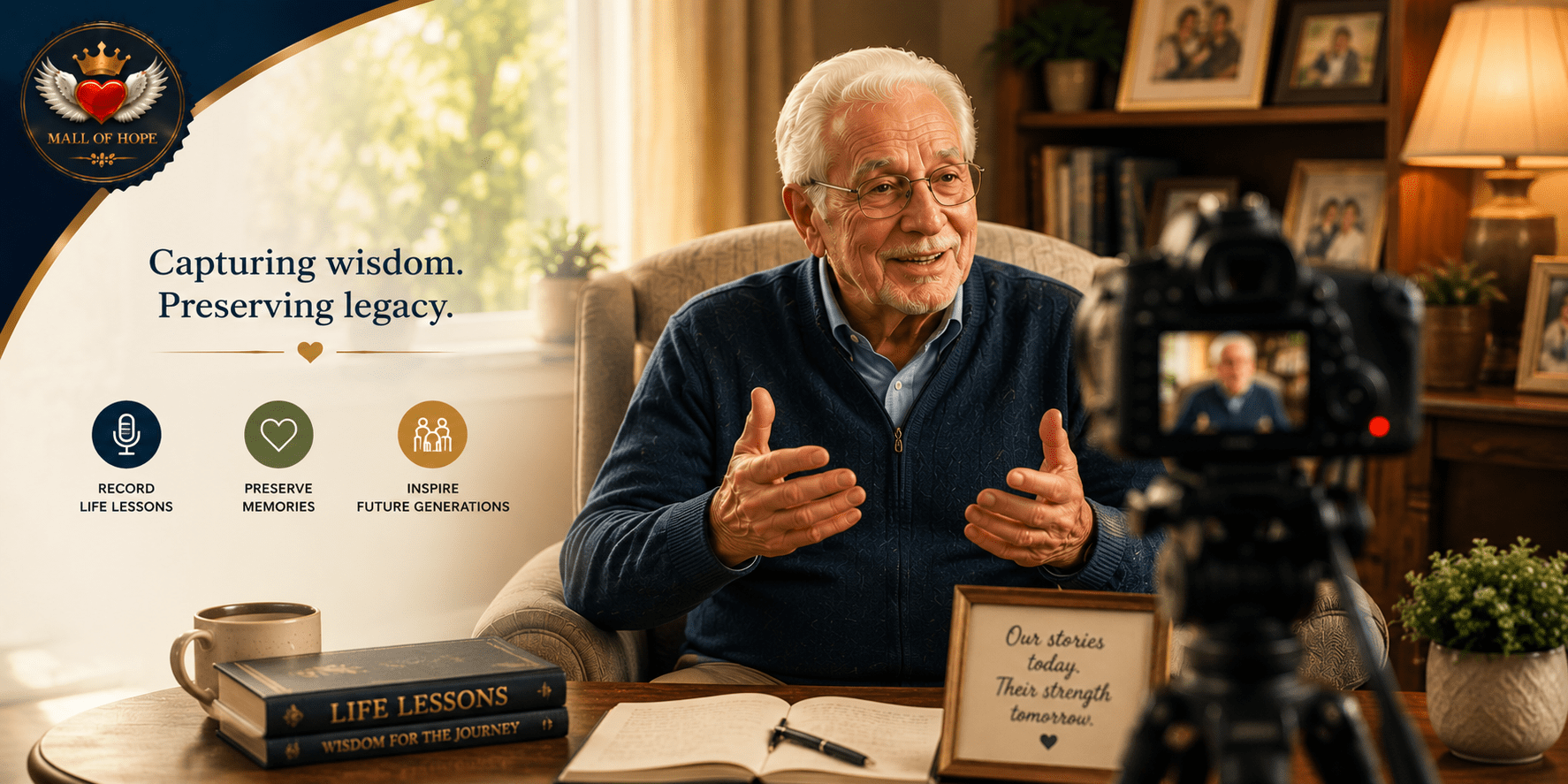

Every person gains wisdom through a lifetime of experiences. Some lessons come from success, while others emerge through hardship, perseverance, relationships, faith, and personal growth. These lessons often become the most valuable inheritance we leave behind because they provide guidance, encouragement, and perspective for future generations. Life lessons recording is the intentional process of preserving this wisdom through interviews, video recordings, audio conversations, written memoirs, and digital archives so that the knowledge gained throughout a lifetime continues to inspire long after we are gone.
Unlike traditional biographies that focus primarily on chronological events, life lessons recording emphasizes the meaning behind life’s experiences. It captures the values, beliefs, decisions, mistakes, achievements, and reflections that shaped a person’s character. These recordings allow children, grandchildren, and future descendants to learn directly from the experiences of those who came before them, creating a personal connection that cannot be found in books or historical records.
Life lessons recording is particularly meaningful for aging adults, veterans, parents, grandparents, community leaders, and individuals living with Alzheimer’s disease or other forms of dementia. Recording wisdom before memory changes occur ensures that personal insights, family traditions, and lived experiences are preserved in the individual’s own voice. Research suggests that life review and reminiscence contribute to emotional well-being, strengthen personal identity, and encourage psychological integration throughout later adulthood (Butler, 1963). At the same time, preserving life lessons strengthens family identity by passing values and experiences from one generation to the next.
Whether your goal is to leave guidance for your children, preserve family traditions, document professional knowledge, or share the lessons that shaped your life, recording your life lessons creates an enduring legacy that extends far beyond material inheritance.
Why Recording Life Lessons Matters
Every family inherits more than genetics. Values, beliefs, traditions, resilience, compassion, and wisdom are often passed from one generation to another through stories and conversations. Unfortunately, many of these lessons disappear because they were never intentionally preserved. Families frequently realize too late that they never asked parents or grandparents about the experiences that shaped their character or the advice they wished to leave behind.
Recording life lessons ensures that wisdom gained through decades of experience continues benefiting future generations. Lessons about perseverance during difficult times, maintaining healthy relationships, raising children, serving others, managing adversity, practicing faith, building a career, or finding purpose become lasting gifts that continue teaching long after an individual is no longer present.
Research indicates that individuals who understand their family history often demonstrate greater resilience, emotional well-being, and confidence because they recognize themselves as part of an ongoing family narrative (Duke et al., 2008). Recording life lessons strengthens these narratives by preserving the meaning behind important family experiences rather than simply documenting historical events.
The recording process also benefits the storyteller. Reflecting on a lifetime of accomplishments, challenges, and personal growth allows individuals to recognize how their experiences contributed to the person they became. Butler (1963) described life review as a developmental process that supports emotional well-being by helping individuals integrate life’s successes, disappointments, and meaningful relationships into a coherent personal narrative.
Recording life lessons encourages meaningful family conversations as well. Parents, grandparents, children, and grandchildren often discover previously untold stories while discussing family traditions, historical events, personal struggles, and defining moments. These conversations strengthen relationships while preserving knowledge that might otherwise disappear within a single generation.
Beyond individual families, life lessons recording contributes to community heritage. Veterans, educators, healthcare professionals, entrepreneurs, artists, first responders, clergy, and community leaders all possess practical wisdom that benefits future generations while preserving valuable historical perspectives.
What Should Be Included in a Life Lessons Recording?
Every person’s wisdom is unique because every life follows a different path. Rather than focusing solely on achievements, life lessons recording explores the experiences that shaped personal growth, character, and understanding. Professional interviews encourage reflection while allowing authentic stories to emerge naturally.
Common topics include:
- Childhood experiences that shaped personal values
- Important mentors and lifelong influences
- Lessons learned through success and failure
- Marriage, parenting, and family relationships
- Faith, spirituality, and personal beliefs
- Career experiences and professional wisdom
- Military or public service reflections
- Financial lessons and responsible decision-making
- Acts of kindness that changed your perspective
- Challenges overcome through resilience and hope
- Advice for children, grandchildren, and future generations
- Personal definitions of happiness, purpose, and success
Many life lessons recordings also include family photographs, journals, letters, military medals, awards, recipes, genealogy records, newspaper articles, and cherished heirlooms that provide visual context while enriching the storytelling experience.
There are many formats available for preserving life lessons. Video recordings capture facial expressions, body language, and emotion alongside spoken words. Audio recordings preserve the warmth of a person’s voice and conversational style. Written memoirs organize lessons into thematic chapters, while digital archives combine interviews with multimedia resources to create comprehensive family legacy collections.
Regardless of format, authenticity remains the most valuable aspect of the recording. Honest reflections, vulnerability, humor, emotional moments, and thoughtful pauses often become the most meaningful parts of a preserved legacy because they reveal genuine humanity rather than rehearsed responses.
Life Lessons Recording and Person-Centered Dementia Care
Recording life lessons before memory changes occur has become an increasingly valuable component of person-centered dementia care. Alzheimer’s disease and other forms of dementia gradually affect memory and communication, but they do not erase a person’s values, accomplishments, relationships, or identity. Preserving these life lessons early allows individuals to continue sharing their wisdom even as cognitive changes progress.
Person-centered care emphasizes understanding the whole person rather than focusing exclusively on medical symptoms (Kitwood, 1997). Life lessons recordings provide caregivers with meaningful insight into the individual’s beliefs, priorities, occupations, family traditions, coping strategies, spiritual values, and lifelong interests. This knowledge supports individualized care that respects personal dignity while strengthening emotional connection.
For families, hearing a loved one’s advice and reflections after a dementia diagnosis becomes deeply meaningful. Recordings preserve the individual’s personality, voice, humor, compassion, and wisdom, creating lasting keepsakes that provide comfort throughout the progression of the disease and after the individual’s passing.
Professional caregivers also benefit from understanding the person’s life lessons and experiences. Learning that someone valued education, military service, creativity, volunteerism, faith, or family relationships helps caregivers create conversations and activities that reinforce identity while promoting meaningful engagement.
Research supports life story work and reminiscence as evidence-based person-centered interventions that may improve communication, mood, and quality of life for many individuals living with dementia (Woods et al., 2018). Recording life lessons before significant cognitive decline creates valuable resources that remain useful throughout every stage of care.
Importantly, life lessons recording is valuable for people of every age. Adults do not need to wait until retirement or advanced age to begin documenting their experiences. Recording lessons throughout life creates a living legacy that grows alongside each new chapter.
Leaving Wisdom as Your Greatest Legacy
Many people think of legacy in terms of financial inheritance or professional accomplishments. While these achievements may be important, the wisdom passed from one generation to the next often has an even greater and more lasting impact. Life lessons shape decisions, strengthen resilience, encourage compassion, and help future generations navigate challenges with greater confidence.
Recording your life lessons ensures that future descendants benefit from experiences they never personally witnessed. Stories about overcoming hardship, building meaningful relationships, practicing forgiveness, pursuing education, serving others, maintaining hope, and finding purpose become timeless resources that continue inspiring families for generations.
Life lessons recordings also complement genealogy and family history projects. Birth certificates, census records, military documents, family trees, and photographs establish historical facts, while recorded wisdom explains the values, decisions, and character behind those facts. Together, they create a richer understanding of family identity.
Long-term preservation requires thoughtful planning. Families should maintain multiple digital backups using encrypted cloud storage and external hard drives while creating written transcripts to improve accessibility and searchability. Organizing files with descriptive names, interview dates, and family relationships ensures future generations can easily explore these valuable resources.
Families should also continue recording life lessons throughout changing seasons of life. Retirement, milestone birthdays, anniversaries, reunions, career changes, military service, parenthood, and grandparenthood each offer opportunities to reflect on new experiences and preserve additional wisdom. A family’s legacy grows stronger when every generation contributes its own voice.
Ultimately, recording your life lessons is one of the most meaningful gifts you can leave behind. Your wisdom, values, experiences, and reflections become a guide for those who follow, reminding them not only of what you accomplished but also of how you lived, what you believed, and what you hoped they would carry forward. By preserving your life lessons today, you ensure that your voice continues teaching, encouraging, and inspiring future generations long after today’s conversations have become tomorrow’s treasured memories.
Frequently Asked Questions
What is life lessons recording?
Life lessons recording is the process of preserving an individual’s wisdom, personal experiences, values, and advice through interviews, video recordings, audio conversations, written memoirs, or digital archives for future generations.
Why should I record my life lessons?
Recording your life lessons allows your children, grandchildren, and future descendants to learn from your experiences, values, and personal growth while preserving your voice, personality, and identity.
What topics should be included in a life lessons recording?
Common topics include childhood experiences, family values, career advice, marriage, parenting, overcoming challenges, faith, financial lessons, leadership, community service, personal beliefs, and advice for future generations.
How does life lessons recording support dementia care?
Recording life lessons before memory changes occur preserves personal identity and provides caregivers with valuable insight into an individual’s values, experiences, relationships, and preferences, supporting person-centered dementia care.
How should life lessons recordings be preserved?
Families should securely store recordings using cloud storage and external hard drives, create written transcripts, organize digital files with descriptive labels, and include them in family history and digital legacy archives for long-term preservation.
References
Brooker, D. (2007). Person-centred dementia care: Making services better. Jessica Kingsley Publishers.
Butler, R. N. (1963). The life review: An interpretation of reminiscence in the aged. Psychiatry, 26(1), 65–76.
Duke, M. P., Lazarus, A., & Fivush, R. (2008). Knowledge of family history as a clinically useful index of psychological well-being and prognosis. Journal of Family Life, 7(2), 133–140.
Kitwood, T. (1997). Dementia reconsidered: The person comes first. Open University Press.
McAdams, D. P. (2008). Personal narratives and the life story. In O. P. John, R. W. Robins, & L. A. Pervin (Eds.), Handbook of personality: Theory and research (3rd ed., pp. 242–262). Guilford Press.
National Institute on Aging. (2024). Alzheimer’s disease fact sheet. https://www.nia.nih.gov/health/alzheimers-and-dementia/alzheimers-disease-fact-sheet
Woods, B., O’Philbin, L., Farrell, E. M., Spector, A., & Orrell, M. (2018). Reminiscence therapy for dementia. Cochrane Database of Systematic Reviews, 3, CD001120.
World Health Organization. (2023). Dementia. https://www.who.int/news-room/fact-sheets/detail/dementia