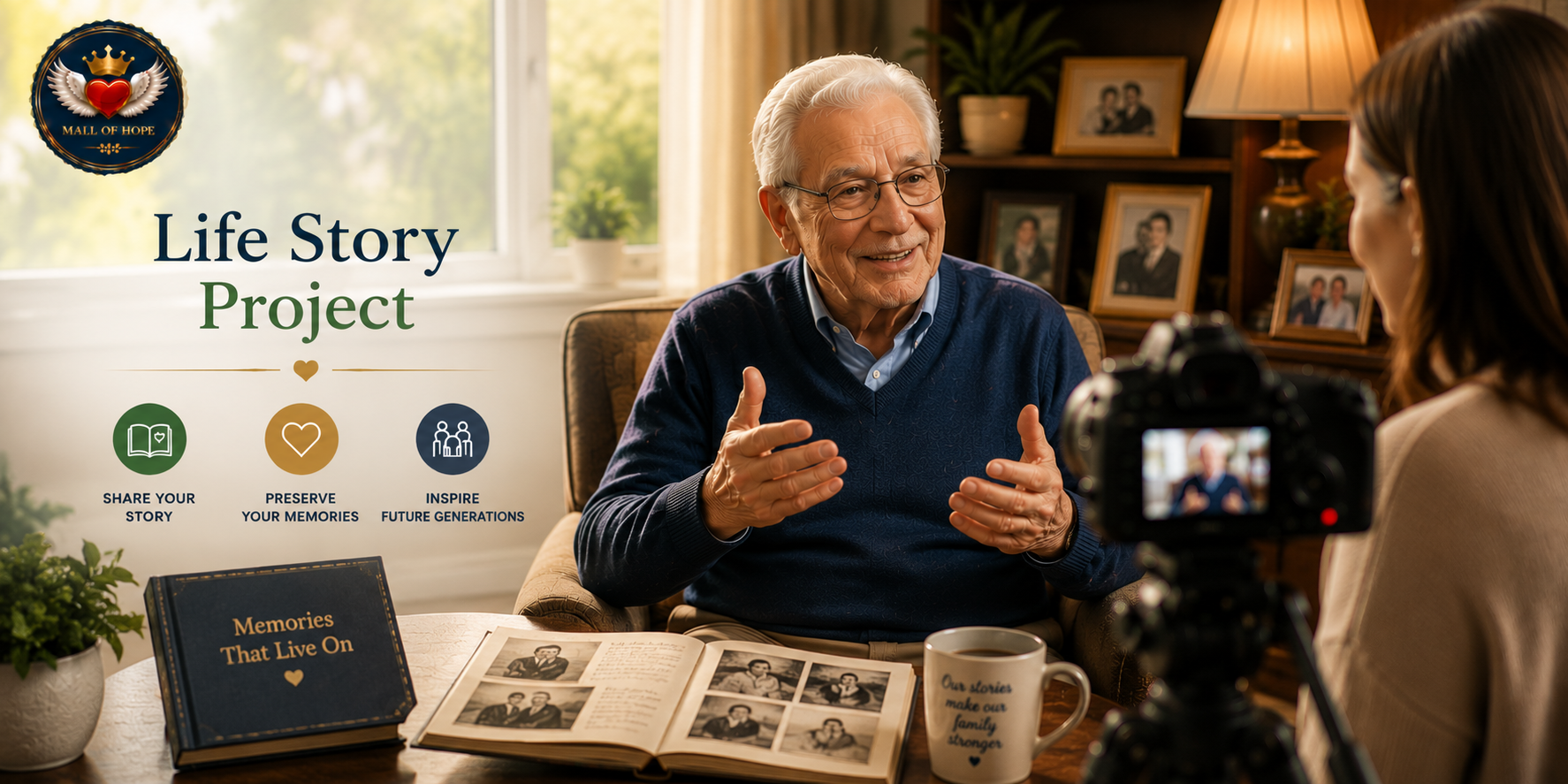

Every person has a unique journey worth preserving. The experiences we live, the people we love, the challenges we overcome, and the values we pass on become part of our family’s identity. Yet many of these stories are never documented, leaving future generations with unanswered questions about the people who came before them. A Life Story Project provides a meaningful way to preserve personal history, family memories, life lessons, and individual identity through interviews, photographs, videos, documents, and written narratives that can be shared for generations.
A life story project is much more than creating a memoir or recording a conversation. It is a comprehensive process of documenting an individual’s life through carefully guided storytelling, professional interviews, historical research, photographs, family records, and multimedia preservation. The goal is to capture not only the events of a person’s life but also the emotions, values, relationships, wisdom, and experiences that shaped who they became.
For many families, a life story project becomes one of the most treasured possessions they own. It allows children, grandchildren, and future descendants to hear a familiar voice, see a warm smile, understand family traditions, and learn directly from the person who lived those experiences. Rather than relying solely on family folklore or historical documents, future generations gain access to authentic first-person stories that preserve both personal identity and family heritage.
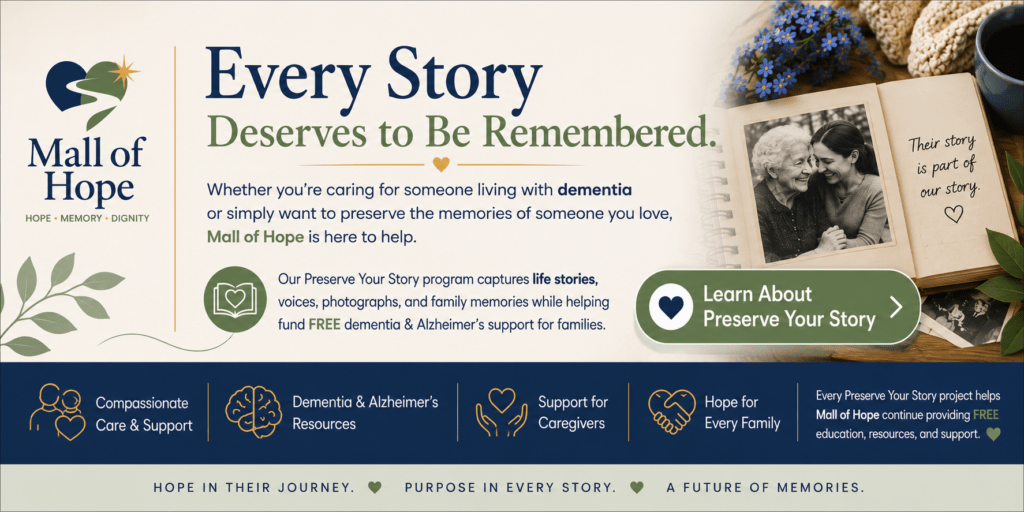
Life story projects have become increasingly important as awareness of Alzheimer’s disease and other forms of dementia continues to grow. Recording stories while communication remains strong helps preserve memories before cognitive decline progresses. Research indicates that life review and reminiscence support emotional well-being, strengthen identity, and promote psychological integration throughout later adulthood (Butler, 1963). These projects also become valuable resources for caregivers, supporting person-centered care while preserving a lasting connection between generations.
Whether documenting your own life, preserving the memories of a parent or grandparent, or creating a comprehensive family history, a life story project transforms memories into a permanent legacy that will continue educating, inspiring, and connecting your family long into the future.
Why Create a Life Story Project?
Many families inherit photographs, heirlooms, military medals, letters, and official documents, yet they often discover that the stories behind these treasured items have disappeared. Future generations may know names and dates but never understand the personalities, relationships, sacrifices, values, and life lessons that truly defined the people in their family tree. A life story project preserves those stories before they are lost.
Unlike informal conversations, a professionally guided life story project encourages thoughtful reflection through carefully planned interviews and meaningful questions. Participants often remember forgotten experiences, childhood adventures, family traditions, immigration journeys, military service, careers, acts of kindness, and defining moments that even close family members have never heard before.
The process itself is also deeply rewarding. Reflecting on a lifetime of experiences encourages gratitude, personal insight, and emotional integration. Butler (1963) described life review as a natural developmental process that helps older adults organize life experiences into a meaningful narrative while promoting psychological well-being.
Research demonstrates that individuals who know more about their family history often experience stronger resilience, improved emotional well-being, and a greater sense of identity because they understand themselves as part of a continuing family narrative (Duke et al., 2008). A life story project strengthens this narrative by preserving firsthand accounts rather than relying solely on secondhand recollections.
Families frequently discover that the project itself becomes a treasured memory. Sitting together to identify old photographs, share forgotten stories, discuss family traditions, and ask meaningful questions strengthens relationships while creating new memories during the preservation process.
Beyond preserving individual families, life story projects contribute to community history. Veterans, teachers, healthcare professionals, entrepreneurs, artists, clergy, immigrants, farmers, first responders, and civic leaders all preserve firsthand accounts that enrich historical understanding while documenting social and cultural change.
What Is Included in a Life Story Project?
Every life story project is unique because every person’s life follows a different path. Professional life story services create customized projects that reflect the individual’s experiences, personality, family history, and legacy goals.
Most projects begin with professionally guided interviews that encourage natural storytelling while documenting important milestones and personal reflections.
Common topics include:
- Childhood memories and family traditions
- Parents, grandparents, and family heritage
- Education and career experiences
- Military service and community involvement
- Marriage, parenting, and family relationships
- Immigration stories and cultural traditions
- Faith, spirituality, and personal beliefs
- Challenges overcome and life lessons learned
- Hobbies, travel, and meaningful accomplishments
- Advice and messages for future generations
A comprehensive life story project often includes much more than interviews. Families frequently contribute photographs, journals, handwritten letters, military records, certificates, genealogy charts, newspaper articles, recipes, artwork, awards, home movies, and treasured heirlooms. These materials provide historical context while helping preserve memories that may otherwise fade with time.
Completed projects may include professionally edited legacy videos, written biographies, printed memory books, documentary films, searchable transcripts, audio memoirs, family history timelines, digital archives, or interactive online legacy collections. Combining multiple formats ensures the preserved story remains accessible to future generations regardless of technological changes.
Authenticity remains central throughout the project. Emotional reflections, spontaneous laughter, thoughtful pauses, and genuine conversations preserve personality in ways that formal biographies cannot. These moments often become the most meaningful parts of the finished project because they reveal the individual’s true character.
Life Story Projects and Person-Centered Dementia Care
Life story projects have become an important part of person-centered dementia care because they preserve identity before memory changes become more significant. Alzheimer’s disease and other forms of dementia gradually affect memory and communication, but they do not erase a person’s values, accomplishments, relationships, beliefs, or emotional life. Recording these experiences while communication remains strong helps preserve those essential parts of identity.
Person-centered dementia care focuses on understanding the individual beyond the diagnosis (Kitwood, 1997). Life story projects provide caregivers with valuable information about occupations, hobbies, favorite music, military service, religious beliefs, cultural traditions, family relationships, and lifelong interests. This knowledge supports compassionate, individualized care while strengthening dignity and emotional connection.
For example, knowing that someone spent decades as a teacher, musician, nurse, veteran, engineer, artist, entrepreneur, or farmer allows caregivers to create conversations and activities that reinforce identity. Familiar songs, treasured recipes, family photographs, military memorabilia, and cherished traditions often encourage reminiscence while reducing anxiety and promoting emotional comfort.
Many families begin a life story project shortly after a diagnosis of mild cognitive impairment or early-stage dementia. Recording memories during this stage preserves detailed stories, humor, wisdom, and personality while communication remains relatively strong. These recordings become invaluable resources throughout the progression of the disease and after the individual’s passing.
Professional caregivers also benefit from life story projects because they gain a deeper understanding of the person’s communication style, values, coping strategies, preferences, and relationships. This understanding improves person-centered care planning while strengthening empathy and communication.
Research supports life story work and reminiscence as evidence-based interventions that may improve communication, mood, and quality of life for many individuals living with dementia (Woods et al., 2018). A life story project provides a lasting foundation for these approaches while preserving personal identity across generations.
Building a Legacy That Continues Through Future Generations
A life story project becomes one of the most meaningful gifts a family can create because it preserves more than memories—it preserves identity. Long after photographs have faded and written records have aged, future generations will still be able to hear familiar voices, understand family values, appreciate personal sacrifices, and learn directly from those who shaped their family’s history.
Life story projects complement genealogy by adding emotional depth to historical records. Birth certificates, census records, marriage licenses, military documents, and family trees establish important historical facts, while interviews, memoirs, and legacy videos reveal the personalities, motivations, relationships, and life lessons behind those records. Together, they create a complete portrait of family heritage.
Many families include life story projects within broader legacy preservation efforts that combine autobiography recordings, legacy films, oral history interviews, genealogy research, memory books, family photographs, journals, home movies, recipes, historical documents, and secure digital archives. These multimedia collections create living family histories that continue growing with each generation.
Long-term preservation requires thoughtful planning. Families should maintain multiple secure digital backups using encrypted cloud storage and external hard drives while creating written transcripts to improve accessibility and historical research. Organizing recordings with descriptive file names, interview dates, family relationships, and historical references ensures descendants can easily explore the archive for decades to come.
A life story project should also be viewed as an ongoing family tradition rather than a one-time event. Recording milestone birthdays, anniversaries, retirements, reunions, graduations, and significant life events allows every generation to contribute its own experiences while expanding the family’s collective story.
Ultimately, a life story project is an investment in the future. It preserves voices, personalities, resilience, traditions, faith, wisdom, and the everyday moments that define a lifetime. It ensures that future generations inherit not only family names but also family values, personal experiences, and authentic stories told by the people who lived them. By beginning a life story project today, you create a lasting legacy that will continue educating, inspiring, comforting, and connecting your family for generations to come.
Frequently Asked Questions
What is a life story project?
A life story project is a comprehensive effort to preserve an individual’s memories, family history, values, life experiences, photographs, documents, and personal reflections through interviews, videos, memoirs, and digital archives.
Who should create a life story project?
Anyone can benefit from a life story project, including parents, grandparents, veterans, retirees, community leaders, individuals living with Alzheimer’s disease or dementia, and families who wish to preserve their history for future generations.
What can be included in a life story project?
Projects may include life story interviews, legacy videos, written memoirs, memory books, genealogy research, family photographs, journals, historical documents, audio recordings, documentary films, and secure digital archives.
How do life story projects support dementia care?
Life story projects preserve identity, relationships, values, occupations, and preferences before memory changes progress. These resources support person-centered dementia care while giving families lasting memories of their loved one’s voice and personality.
How should a life story project be preserved?
Families should maintain multiple secure digital backups using encrypted cloud storage and external hard drives, create written transcripts, organize files with descriptive names and dates, and preserve printed materials using archival-quality storage to ensure long-term accessibility.
References
Brooker, D. (2007). Person-centred dementia care: Making services better. Jessica Kingsley Publishers.
Butler, R. N. (1963). The life review: An interpretation of reminiscence in the aged. Psychiatry, 26(1), 65–76.
Duke, M. P., Lazarus, A., & Fivush, R. (2008). Knowledge of family history as a clinically useful index of psychological well-being and prognosis. Journal of Family Life, 7(2), 133–140.
Kitwood, T. (1997). Dementia reconsidered: The person comes first. Open University Press.
McAdams, D. P. (2008). Personal narratives and the life story. In O. P. John, R. W. Robins, & L. A. Pervin (Eds.), Handbook of Personality: Theory and Research (3rd ed., pp. 242–262). Guilford Press.
National Institute on Aging. (2024). Alzheimer’s disease fact sheet. https://www.nia.nih.gov/health/alzheimers-and-dementia/alzheimers-disease-fact-sheet
Woods, B., O’Philbin, L., Farrell, E. M., Spector, A., & Orrell, M. (2018). Reminiscence therapy for dementia. Cochrane Database of Systematic Reviews, 3, CD001120.
World Health Organization. (2023). Dementia. https://www.who.int/news-room/fact-sheets/detail/dementia