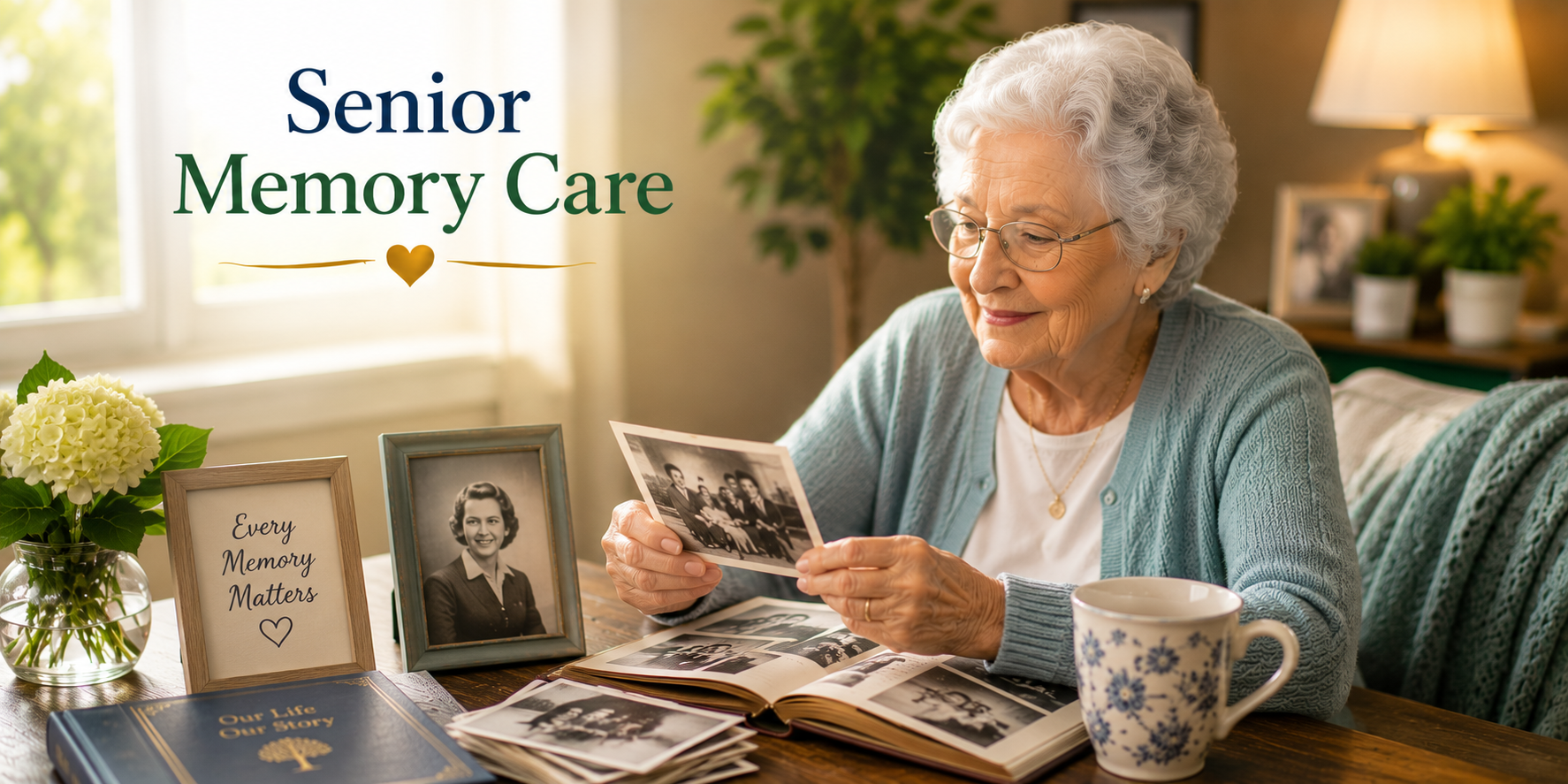

Memory is one of the foundations of personal identity. It connects us to our families, our life experiences, our values, and the relationships that define who we are. As people age, some experience changes in memory that go beyond normal aging, including Alzheimer’s disease and other forms of dementia. Senior memory care is a specialized approach that supports older adults experiencing memory impairment while preserving dignity, independence, identity, and quality of life through compassionate, person-centered care.
Memory care is much more than providing supervision or assistance with daily tasks. Effective senior memory care recognizes that every individual has lived a unique life shaped by family, culture, work, faith, friendships, achievements, and personal experiences. Understanding these life stories allows caregivers to provide individualized support that respects the whole person rather than focusing only on cognitive decline.
As the global population ages, the need for quality memory care continues to grow. According to the World Health Organization (2023), more than 55 million people worldwide are living with dementia, with nearly 10 million new cases diagnosed each year. Alzheimer’s disease accounts for approximately 60–70% of dementia cases. These numbers highlight the importance of evidence-based, person-centered memory care that supports both individuals and their families.
Research demonstrates that person-centered care, life story work, and meaningful engagement improve communication, emotional well-being, and quality of life for many people living with dementia (Fazio et al., 2018; Woods et al., 2018). By combining compassionate caregiving with identity preservation, senior memory care helps older adults continue living with purpose while giving families confidence that their loved ones are known, respected, and valued.
Whether care is provided at home, in assisted living, memory care communities, adult day programs, or skilled nursing facilities, senior memory care focuses on preserving what matters most—the person behind the diagnosis.
Understanding Senior Memory Care
Senior memory care refers to specialized support for older adults experiencing Alzheimer’s disease, vascular dementia, Lewy body dementia, frontotemporal dementia, mild cognitive impairment, or other conditions affecting memory and thinking. Unlike traditional elder care, memory care addresses the unique cognitive, emotional, behavioral, and communication needs associated with progressive memory loss.
A person-centered memory care approach begins by learning who the individual has always been. Rather than asking only about symptoms, caregivers explore important aspects of the person’s life, including:
- Childhood memories and family history
- Occupations and career accomplishments
- Military service and community involvement
- Cultural heritage and traditions
- Religious or spiritual beliefs
- Hobbies and lifelong interests
- Favorite music, foods, and activities
- Family relationships and important life events
- Personal routines and daily preferences
- Individual communication styles
This information becomes the foundation for individualized care planning. Understanding that someone spent decades as a teacher, nurse, musician, farmer, engineer, artist, entrepreneur, or veteran allows caregivers to create familiar conversations, meaningful activities, and supportive routines that reinforce identity.
Memory care also emphasizes maintaining remaining abilities rather than focusing exclusively on limitations. Encouraging participation in daily routines, hobbies, social interactions, and meaningful activities helps preserve confidence, independence, and emotional well-being for as long as possible.
Families play an essential role by sharing personal history, photographs, favorite songs, recipes, traditions, and stories that help caregivers understand the individual’s life beyond medical records.
Person-Centered Memory Care Improves Quality of Life
Modern dementia care has shifted away from task-focused care toward person-centered approaches that emphasize dignity, individuality, and meaningful relationships. Tom Kitwood’s work transformed dementia care by recognizing that preserving personhood is just as important as managing symptoms (Kitwood, 1997).
Person-centered memory care recognizes that although memory changes occur, individuals continue to experience emotions, relationships, creativity, spirituality, humor, and the desire for meaningful connection. Care plans should therefore reflect the person’s life history rather than relying on standardized routines.
Important components of person-centered memory care include:
- Individualized life story profiles
- Consistent daily routines
- Meaningful activities based on lifelong interests
- Family involvement in care planning
- Familiar music and reminiscence activities
- Personalized communication strategies
- Respect for cultural and religious traditions
- Opportunities for social interaction
- Safe environments that encourage independence
- Emotional support for both individuals and caregivers
Research suggests that individualized care may reduce agitation, improve communication, and enhance emotional well-being while strengthening relationships between caregivers and individuals living with dementia (Fazio et al., 2018).
Families often find reassurance when caregivers understand who their loved one was before dementia. Knowing favorite hobbies, occupations, traditions, and relationships allows staff to build trust more naturally while creating opportunities for meaningful conversation throughout the day.
Person-centered memory care also supports healthcare teams by improving communication, reducing misunderstandings, and helping professionals respond compassionately to behavioral changes by considering the individual’s personal history and emotional needs.
Memory Preservation and Meaningful Engagement
Preserving memory is not only about recalling facts—it is about preserving identity. Life story work, reminiscence therapy, and legacy preservation have become important components of senior memory care because they encourage meaningful engagement while documenting personal history for future generations.
Many families begin preserving memories shortly after a diagnosis of mild cognitive impairment or early-stage dementia. Recording stories while communication remains strong allows individuals to share childhood memories, career experiences, family traditions, life lessons, military service, faith, travel, and personal values in their own words.
Memory preservation tools commonly include:
- Life story interviews
- Legacy video recordings
- Audio memoirs
- Memory books
- Family photo albums with captions
- Written autobiographies
- Digital family archives
- Personal history profiles
- Music playlists connected to important memories
- Family genealogy projects
These resources benefit both families and professional caregivers. Memory books encourage conversation during visits, while personal history profiles help new caregivers understand preferences, routines, relationships, and important life experiences.
Research supports reminiscence therapy as an evidence-based intervention that may improve communication, mood, and quality of life for individuals living with dementia (Woods et al., 2018). Activities centered around familiar photographs, music, traditions, recipes, and meaningful conversations often create moments of joy while reducing anxiety.
Meaningful engagement should always reflect the individual’s interests rather than generic recreational programming. A retired gardener may enjoy caring for plants, while a former teacher may enjoy reading aloud or helping grandchildren with homework. Familiar activities reinforce identity and promote emotional comfort.
Supporting Families Throughout the Journey
A diagnosis of Alzheimer’s disease or another form of dementia affects the entire family. Adult children often become caregivers while balancing careers, parenting responsibilities, and their own emotional well-being. Spouses may experience grief as roles change, and grandchildren may struggle to understand why someone they love is behaving differently. Senior memory care extends beyond the individual by supporting the family throughout every stage of the journey.
Education helps families understand disease progression, communication strategies, safety planning, legal preparation, and available community resources. Support groups provide opportunities to connect with others facing similar challenges, reducing isolation while sharing practical caregiving advice.
Advance care planning is another important part of comprehensive memory care. Recording healthcare preferences, financial plans, legal documents, and personal wishes early allows individuals to participate in decisions while they retain decision-making capacity. Equally important is documenting personal history through life story interviews, legacy videos, and memory preservation projects so identity remains central throughout future care.
Technology has also expanded opportunities for supporting families. Secure digital platforms can organize medical information, emergency contacts, medication lists, life story interviews, family photographs, advance directives, and communication guides in one accessible location. This improves coordination among family members and professional caregivers while ensuring important personal information is never lost.
Ultimately, the goal of senior memory care is not simply to manage symptoms but to preserve humanity. Every older adult deserves compassionate care that recognizes their experiences, relationships, beliefs, and lifelong contributions. By combining evidence-based dementia care with life story preservation, meaningful engagement, and family partnership, senior memory care helps individuals continue living with dignity while strengthening the bonds that connect generations.
Frequently Asked Questions
What is senior memory care?
Senior memory care is specialized support for older adults living with Alzheimer’s disease, dementia, or other forms of cognitive impairment. It combines medical care, person-centered support, meaningful activities, and safety measures to improve quality of life.
Who benefits from memory care services?
Individuals living with Alzheimer’s disease, vascular dementia, Lewy body dementia, frontotemporal dementia, mild cognitive impairment, and other memory-related conditions benefit from specialized memory care. Families and caregivers also receive education, support, and guidance.
How is memory care different from assisted living?
While assisted living primarily supports daily activities, memory care provides additional specialized services, including dementia-trained staff, secure environments, individualized care plans, structured activities, behavioral support, and person-centered approaches designed specifically for cognitive impairment.
How does person-centered memory care improve quality of life?
Person-centered care focuses on each individual’s life history, preferences, relationships, routines, and interests. This approach strengthens communication, preserves identity, encourages meaningful engagement, and supports dignity throughout the progression of dementia.
Why is preserving life stories important in memory care?
Life story interviews, memory books, photographs, and legacy recordings help caregivers understand the individual beyond the diagnosis. They support reminiscence, improve communication, strengthen family relationships, and preserve identity for future generations.
References
Alzheimer’s Association. (2024). 2024 Alzheimer’s disease facts and figures. Alzheimer’s & Dementia, 20(5), 3708–3821.
Brooker, D. (2007). Person-centred dementia care: Making services better. Jessica Kingsley Publishers.
Butler, R. N. (1963). The life review: An interpretation of reminiscence in the aged. Psychiatry, 26(1), 65–76.
Fazio, S., Pace, D., Flinner, J., & Kallmyer, B. (2018). The fundamentals of person-centered care for individuals with dementia. The Gerontologist, 58(Suppl. 1), S10–S19.
Kitwood, T. (1997). Dementia reconsidered: The person comes first. Open University Press.
National Institute on Aging. (2024). Alzheimer’s disease fact sheet. https://www.nia.nih.gov/health/alzheimers-and-dementia/alzheimers-disease-fact-sheet
Woods, B., O’Philbin, L., Farrell, E. M., Spector, A., & Orrell, M. (2018). Reminiscence therapy for dementia. Cochrane Database of Systematic Reviews, 3, CD001120.
World Health Organization. (2023). Dementia. https://www.who.int/news-room/fact-sheets/detail/dementia