
Every person receiving care has lived a life that extends far beyond their medical diagnosis. They have families, careers, traditions, accomplishments, favorite memories, lifelong friendships, hobbies, beliefs, and personal preferences that continue to shape who they are. A Get to Know Me Profile for Care is a person-centered tool that helps caregivers understand the individual behind the health condition, ensuring that care is compassionate, respectful, and tailored to the person’s unique identity.
Whether someone is living independently with support, receiving home care, residing in assisted living, or living in a memory care community, a Get to Know Me profile provides essential information that helps professional caregivers, healthcare teams, and family members deliver individualized care. Rather than relying solely on medical records, caregivers learn what truly matters to the person—what brings them comfort, what makes them smile, how they prefer to communicate, and what experiences have shaped their life.
This type of personal profile is especially valuable for individuals living with Alzheimer’s disease and other forms of dementia. As memory and communication change, a documented life story helps preserve identity while guiding caregivers toward meaningful conversations, personalized activities, and compassionate care. Research supports person-centered care as one of the most effective approaches for improving quality of life among people living with dementia because it recognizes the individual’s history, preferences, and personhood (Fazio et al., 2018; Kitwood, 1997).
A Get to Know Me profile also benefits families by providing reassurance that the people caring for their loved one understand them as a whole person. It transforms caregiving from simply completing daily tasks into building genuine human relationships grounded in respect, dignity, and empathy.
Why a Get-to-Know-Me Profile Is Important
Healthcare records contain valuable clinical information, but they rarely explain who someone is beyond their diagnosis. They do not describe a person’s favorite music, proudest accomplishments, family traditions, lifelong hobbies, spiritual beliefs, or the routines that help them feel safe and comfortable. A Get to Know Me profile fills this gap by preserving the personal details that make individualized care possible.
When caregivers understand an individual’s background, communication becomes more natural and meaningful. Instead of relying on generic conversation, they can discuss familiar places, occupations, family members, hobbies, or cherished memories that encourage connection and reduce anxiety.
For example, learning that someone spent forty years as a teacher may inspire conversations about education, books, or former students. Knowing that another person loves gardening may encourage outdoor activities, flower arranging, or conversations about favorite plants. A veteran may respond positively to military history or patriotic music, while someone who raised a large family may enjoy looking through family photographs with visitors.
Research demonstrates that person-centered approaches improve emotional well-being, communication, and overall quality of life by recognizing each individual’s identity rather than defining them by illness (Kitwood, 1997). Life review and reminiscence also promote psychological well-being by helping individuals reflect upon meaningful experiences throughout their lives (Butler, 1963).
Families frequently report that creating a Get to Know Me profile becomes an important experience in itself. Gathering stories, identifying photographs, discussing traditions, and remembering favorite activities often strengthen family relationships while preserving valuable information that might otherwise be forgotten.
These profiles also improve continuity of care. When individuals transition between hospitals, rehabilitation centers, assisted living communities, home care agencies, or hospice services, caregivers have immediate access to meaningful personal information that supports compassionate care from the very beginning.
What Should Be Included in a Get-to-Know-Me Profile?
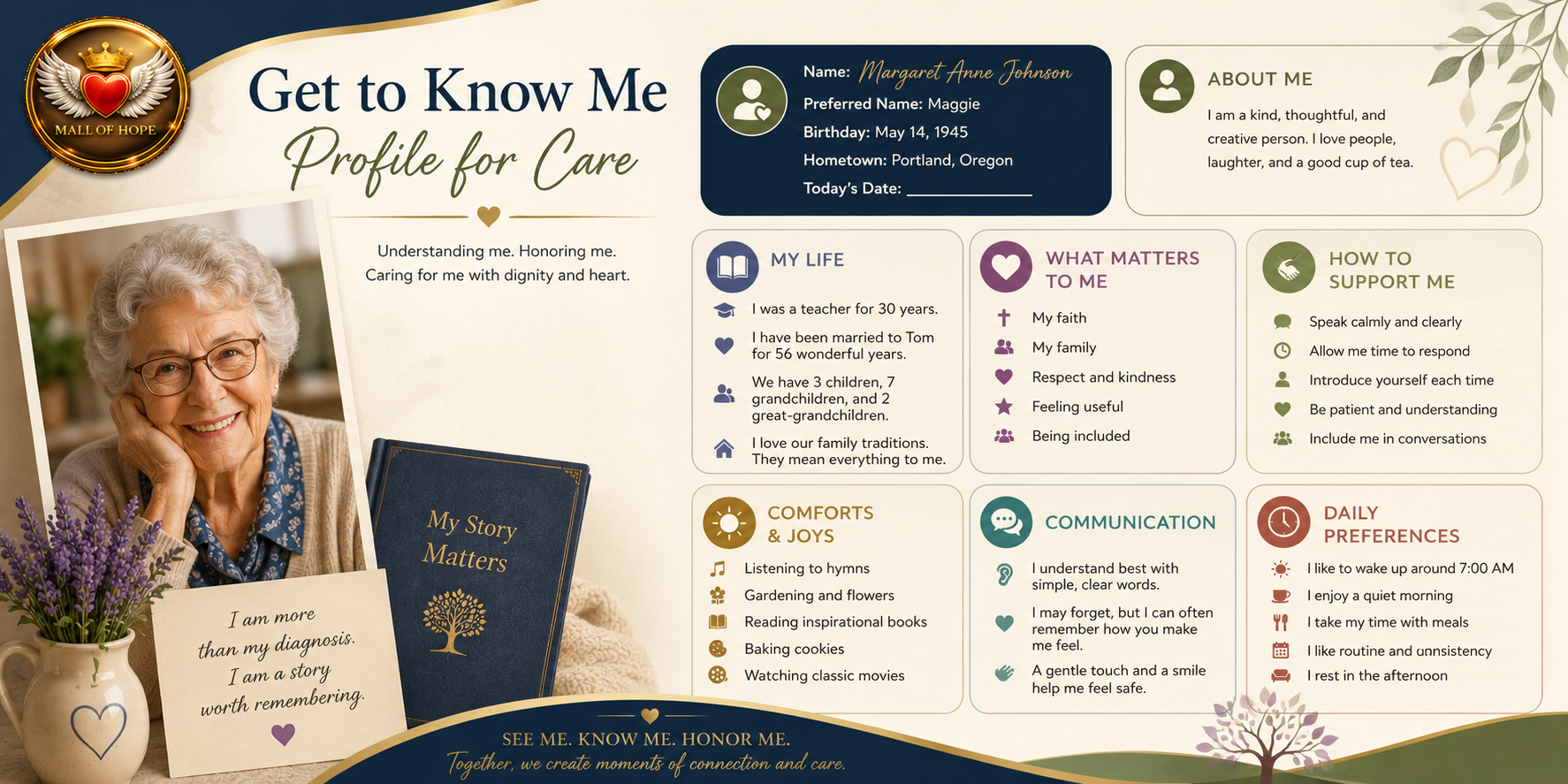
Every Get to Know Me profile should reflect the uniqueness of the individual. There is no single template that fits everyone because every life story is different. The goal is to provide caregivers with practical information that supports communication, comfort, meaningful engagement, and individualized care.
Common sections include:
- Preferred name and pronunciation
- Family members and important relationships
- Childhood memories and hometown
- Career and professional accomplishments
- Military service or volunteer work
- Hobbies, interests, and favorite activities
- Favorite music, books, television programs, and sports
- Religious beliefs, spiritual practices, and cultural traditions
- Favorite meals, snacks, beverages, and routines
- Daily preferences for waking, bathing, dressing, and bedtime
- Communication preferences, including hearing or vision needs
- Things that create comfort, joy, or relaxation
- Situations that may cause stress, fear, or frustration
- Personal achievements and proudest life moments
- Advice, values, or messages important to the individual
Many families also include photographs, family trees, memory books, recipes, letters, certificates, awards, military records, travel memories, pets, favorite quotes, and meaningful keepsakes. Visual materials often encourage reminiscence while helping new caregivers quickly become familiar with the individual’s life story.
Digital versions of Get to Know Me profiles may include recorded interviews, voice messages, legacy videos, music playlists, and links to secure family archives. These multimedia resources provide even greater insight into personality, communication style, and family relationships.
The profile should remain a living document that evolves as new memories are recorded or preferences change over time.
Get to Know Me Profiles and Dementia Care
A Get to Know Me profile is particularly valuable for individuals living with Alzheimer’s disease or another form of dementia because it preserves identity as memory changes occur. Although dementia gradually affects memory, language, and thinking, it does not erase a person’s life experiences, relationships, values, accomplishments, or emotional needs. Documenting these aspects of identity helps caregivers provide individualized support that respects the person beyond the diagnosis.
Person-centered dementia care emphasizes understanding the individual’s history before planning care (Kitwood, 1997). A well-developed profile allows caregivers to tailor conversations, activities, routines, and environments to the person’s unique background.
For example, someone who loves gardening may enjoy watering plants or arranging flowers. A retired musician may respond positively to familiar songs, while a former nurse may enjoy conversations about helping others. Knowing these details creates opportunities for meaningful engagement that generic activity programs cannot provide.
Families are encouraged to complete a Get to Know Me profile soon after a diagnosis of mild cognitive impairment or early-stage dementia while communication remains relatively strong. Recording personal preferences, favorite stories, family traditions, and important relationships early ensures these details remain available even if communication becomes more difficult later.
Professional caregivers also benefit because they gain a deeper understanding of the person’s communication style, coping strategies, cultural background, spiritual beliefs, routines, and personal values. This information improves care planning while strengthening empathy and trust.
Research supports life story work and reminiscence as evidence-based person-centered interventions that may improve communication, mood, and quality of life for many individuals living with dementia (Woods et al., 2018). A Get to Know Me profile provides an accessible and practical foundation for implementing these approaches every day.
Creating a Culture of Person-Centered Care
A Get to Know Me profile is more than a document-it represents a philosophy of care that places the individual at the center of every decision. It reminds healthcare professionals, family caregivers, and support staff that every person has lived a meaningful life deserving of recognition, respect, and dignity.
Many organizations now incorporate personal profiles into broader person-centered care systems that include life story interviews, communication guides, advance care planning documents, memory books, legacy videos, family photographs, medication records, emergency contacts, and individualized activity plans. Together, these resources improve continuity across home care, hospitals, rehabilitation facilities, assisted living communities, memory care programs, and hospice services.
Technology has expanded opportunities for sharing these profiles securely with authorized caregivers through encrypted digital platforms. Families can update information as life circumstances change while ensuring that everyone involved in care has access to current personal preferences and important background information.
Families should also review and update the profile regularly. New grandchildren, changing hobbies, favorite songs, health needs, or personal preferences may become important additions over time. A living document remains far more valuable than one completed once and forgotten.
Ultimately, a Get to Know Me profile is one of the simplest yet most powerful tools for improving care. It transforms clinical information into human understanding, allowing caregivers to see the individual behind the diagnosis. By preserving personal history, celebrating lifelong achievements, and documenting meaningful preferences, the profile helps ensure that every person continues to be known, respected, and valued throughout every stage of aging and care. It strengthens relationships, supports better communication, and preserves identity—the foundation of truly person-centered care.
Frequently Asked Questions
What is a Get to Know Me profile for care?
A Get to Know Me profile is a personalized document that summarizes an individual’s life history, preferences, relationships, routines, interests, values, and communication needs to help caregivers provide person-centered care.
Who should have a Get to Know Me profile?
Older adults, individuals living with Alzheimer’s disease or other forms of dementia, people receiving home care, assisted living residents, hospice patients, and anyone receiving long-term care can benefit from having a personal care profile.
What information should be included in the profile?
A profile should include preferred name, family relationships, career history, hobbies, favorite music, cultural traditions, daily routines, communication preferences, spiritual beliefs, comforting activities, favorite foods, meaningful memories, and personal achievements.
How does a Get to Know Me profile support dementia care?
The profile helps caregivers understand the person’s identity, preferences, relationships, and life history, making communication easier, supporting reminiscence, encouraging meaningful activities, and improving individualized care.
How often should a Get to Know Me profile be updated?
Families should review and update the profile regularly to reflect changes in preferences, routines, relationships, health needs, or important life events so caregivers always have the most accurate information.
References
Brooker, D. (2007). Person-centred dementia care: Making services better. Jessica Kingsley Publishers.
Butler, R. N. (1963). The life review: An interpretation of reminiscence in the aged. Psychiatry, 26(1), 65–76.
Fazio, S., Pace, D., Flinner, J., & Kallmyer, B. (2018). The fundamentals of person-centered care for individuals with dementia. The Gerontologist, 58(Suppl. 1), S10–S19.
Kitwood, T. (1997). Dementia reconsidered: The person comes first. Open University Press.
McCormack, B., & McCance, T. (2017). Person-centred practice in nursing and health care: Theory and practice (2nd ed.). Wiley-Blackwell.
National Institute on Aging. (2024). Caring for a person with Alzheimer’s disease. https://www.nia.nih.gov/health/alzheimers-and-dementia/caring-person-alzheimers-disease
Woods, B., O’Philbin, L., Farrell, E. M., Spector, A., & Orrell, M. (2018). Reminiscence therapy for dementia. Cochrane Database of Systematic Reviews, 3, CD001120.
World Health Organization. (2023). Dementia. https://www.who.int/news-room/fact-sheets/detail/dementia