
Every caregiver wants to provide compassionate, respectful, and individualized care. While medical records explain a person’s diagnoses, medications, and treatment plans, they rarely tell the story of who that individual truly is. A personal history for caregivers bridges this gap by documenting the experiences, relationships, values, routines, and preferences that define a person’s identity. It gives caregivers the knowledge they need to provide care that honors the whole person—not just their health condition.
Every older adult has lived a unique life. They have careers they were proud of, families they nurtured, traditions they celebrated, challenges they overcame, hobbies they enjoyed, and values that guided their decisions. These experiences continue to shape who they are, even when aging, illness, or dementia affects memory and communication. Understanding personal history allows caregivers to build trust, improve communication, reduce anxiety, and create meaningful daily interactions that preserve dignity and emotional well-being.
Personal history is particularly valuable in dementia care. Alzheimer’s disease and other forms of dementia may gradually change memory, language, and thinking, but they do not erase a person’s identity, emotional needs, or lifelong experiences. By learning about the individual’s background, caregivers can create personalized routines, meaningful activities, and supportive environments that encourage comfort and familiarity.
Person-centered care has become the international standard for high-quality dementia care because it emphasizes individuality, dignity, and relationships (Fazio et al., 2018; Kitwood, 1997). Research also supports life story work and reminiscence as evidence-based approaches that improve communication, emotional well-being, and quality of life for many individuals living with dementia (Woods et al., 2018). A well-developed personal history gives caregivers the practical information needed to apply these principles every day.
Whether supporting someone at home, in assisted living, memory care, rehabilitation, hospice, or a long-term care community, a personal history helps caregivers provide care that reflects the person’s life rather than their diagnosis.
Why Personal History Matters in Caregiving
No two people experience aging or illness in exactly the same way. Even individuals with similar medical conditions may have completely different personalities, cultural backgrounds, family structures, coping strategies, routines, and preferences. Personal history helps caregivers understand these differences so they can adapt care to each individual’s unique needs.
Without personal history, caregivers may unintentionally overlook important aspects of the person’s identity. Understanding someone’s occupation, family traditions, favorite music, hobbies, religious beliefs, or lifelong routines creates opportunities for meaningful conversations and individualized support.
For example, a former teacher may enjoy discussing books or helping children read. A retired nurse may appreciate conversations about caring for others. Someone who spent decades gardening may feel calmer while tending flowers or sitting outdoors. A military veteran may respond positively to patriotic music or conversations about service.
Research has demonstrated that recognizing an individual’s life experiences contributes to stronger emotional well-being and helps maintain personhood throughout dementia care (Kitwood, 1997). Instead of focusing on what has been lost, caregivers recognize remaining strengths, meaningful relationships, and lifelong accomplishments.
Personal history also helps families feel more confident that professional caregivers truly know their loved one. Sharing stories, photographs, traditions, and important milestones creates continuity between family life and professional care while strengthening collaboration between caregivers and relatives.
For caregivers themselves, understanding personal history often makes caregiving more rewarding. Rather than simply completing daily tasks, they build authentic human relationships grounded in empathy, respect, and shared understanding.
What Should a Personal History Include?
A comprehensive personal history should provide caregivers with practical information that supports communication, individualized activities, daily routines, and emotional well-being. Every profile is unique because every life story is different.
Important sections often include:
- Preferred name and how the person likes to be addressed
- Family members and important relationships
- Childhood memories and hometown
- Cultural heritage and traditions
- Education, career, and military service
- Religious beliefs and spiritual practices
- Hobbies, interests, and favorite activities
- Favorite music, books, films, and television programs
- Daily routines and preferred schedules
- Favorite foods, recipes, and beverages
- Communication preferences and sensory needs
- Personal strengths and proudest accomplishments
- Comforting routines and meaningful memories
- Situations that may cause stress or anxiety
- Personal goals, values, and advice for future generations
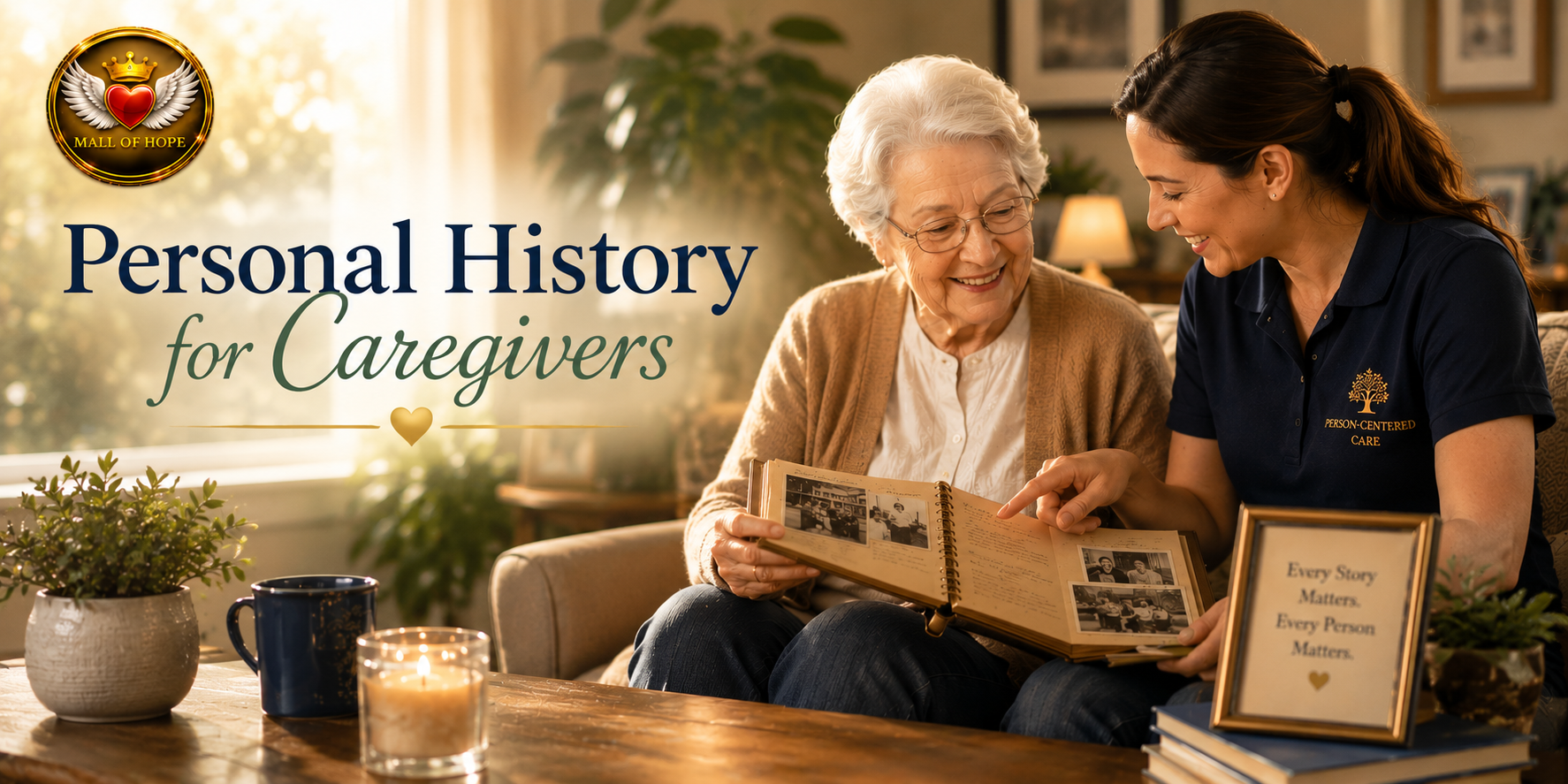
Many caregivers also benefit from access to photographs, family trees, journals, handwritten letters, recipes, military records, awards, travel memories, legacy videos, and recorded life story interviews. Visual and audio materials provide valuable context while encouraging meaningful conversations.
Digital personal history profiles may also include voice recordings, autobiography interviews, memory books, and secure family archives that caregivers can access with family permission. These resources become especially valuable when communication becomes more difficult over time.
Personal history should remain a living document that evolves as health needs, routines, and preferences change.
Personal History and Dementia Care
Personal history plays a central role in person-centered dementia care because it helps preserve identity despite changes in memory and cognition. While Alzheimer’s disease and other forms of dementia gradually affect memory, they do not erase a person’s values, relationships, emotions, or need for dignity and meaningful connection.
Tom Kitwood’s model of person-centered care emphasizes understanding the individual beyond the diagnosis (Kitwood, 1997). Personal history gives caregivers insight into the experiences that shaped the person’s identity and helps explain behaviors that might otherwise be misunderstood.
For example, someone who worked as a farmer may become calmer while spending time in a garden. A lifelong musician may respond positively to familiar songs, while a parent who enjoyed cooking may find comfort helping prepare simple meals or discussing family recipes. These activities reinforce identity because they connect to meaningful long-term memories.
Families are encouraged to begin documenting personal history shortly after a diagnosis of mild cognitive impairment or early-stage dementia. Recording memories while communication remains relatively strong preserves valuable information that future caregivers can use throughout the progression of the disease.
Professional caregivers benefit because personal history improves individualized care planning. Instead of relying only on standardized routines, caregivers can tailor conversations, activities, and environments to reflect the person’s interests, cultural traditions, communication style, and emotional needs.
Research supports reminiscence therapy and life story work as evidence-based interventions that may improve mood, communication, and quality of life for many individuals living with dementia (Woods et al., 2018). Personal history provides the foundation for these interventions by identifying meaningful memories and experiences that caregivers can revisit together.
Building Better Care Through Personal History
A personal history is not simply a document to complete during admission. It is an ongoing resource that supports compassionate care throughout every stage of aging and illness. When combined with medical care plans, it helps create a holistic understanding of the individual that benefits families, healthcare professionals, and caregivers alike.
Many organizations now integrate personal history into broader person-centered care systems that include life story interviews, memory books, communication guides, advance care planning documents, digital legacy archives, individualized activity plans, and family profiles. Together, these resources improve continuity across home care, hospitals, rehabilitation centers, assisted living communities, memory care facilities, and hospice services.
Technology has further strengthened personal history preservation. Secure digital platforms allow families to store life story interviews, photographs, videos, genealogy records, favorite music, emergency contacts, medication lists, and caregiving notes in one centralized location. Authorized caregivers can quickly access this information, helping maintain continuity of care even when care settings change.
Families should review and update personal history profiles regularly. New family members, changing interests, health needs, communication preferences, or meaningful milestones may all become important additions over time. Keeping the profile current ensures caregivers always have accurate information that reflects the individual’s present circumstances.
Ultimately, personal history reminds caregivers that every person has lived a meaningful life before becoming a patient or care recipient. Understanding that history transforms caregiving from completing clinical tasks into building authentic relationships based on respect, compassion, and dignity. By preserving life experiences, honoring personal preferences, and recognizing lifelong achievements, caregivers provide support that strengthens identity while improving quality of life. This person-centered approach not only benefits today’s care but also preserves a lasting legacy for future generations.
Frequently Asked Questions
What is a personal history for caregivers?
A personal history is a document that records an individual’s life experiences, family relationships, career, hobbies, values, routines, preferences, and communication style to help caregivers provide personalized, person-centered care.
Who should create a personal history profile?
Families, older adults, individuals living with Alzheimer’s disease or other forms of dementia, home care providers, assisted living communities, memory care facilities, and healthcare professionals all benefit from creating a personal history profile.
What information should be included in a personal history?
Important information includes family background, education, occupation, hobbies, favorite music, daily routines, cultural traditions, spiritual beliefs, communication preferences, meaningful memories, favorite foods, and personal accomplishments.
How does personal history improve dementia care?
Personal history helps caregivers understand the person’s identity, preferences, relationships, and life experiences, allowing them to provide individualized communication, meaningful activities, emotional support, and person-centered care.
How often should a personal history be updated?
Personal history should be reviewed regularly and updated whenever health needs, routines, relationships, preferences, or significant life events change to ensure caregivers have accurate and current information.
References
Brooker, D. (2007). Person-centred dementia care: Making services better. Jessica Kingsley Publishers.
Butler, R. N. (1963). The life review: An interpretation of reminiscence in the aged. Psychiatry, 26(1), 65–76.
Fazio, S., Pace, D., Flinner, J., & Kallmyer, B. (2018). The fundamentals of person-centered care for individuals with dementia. The Gerontologist, 58(Suppl. 1), S10–S19.
Kitwood, T. (1997). Dementia reconsidered: The person comes first. Open University Press.
McCormack, B., & McCance, T. (2017). Person-centred practice in nursing and health care: Theory and practice (2nd ed.). Wiley-Blackwell.
National Institute on Aging. (2024). Caring for a person with Alzheimer’s disease. https://www.nia.nih.gov/health/alzheimers-and-dementia/caring-person-alzheimers-disease
Woods, B., O’Philbin, L., Farrell, E. M., Spector, A., & Orrell, M. (2018). Reminiscence therapy for dementia. Cochrane Database of Systematic Reviews, 3, CD001120.
World Health Organization. (2023). Dementia. https://www.who.int/news-room/fact-sheets/detail/dementia