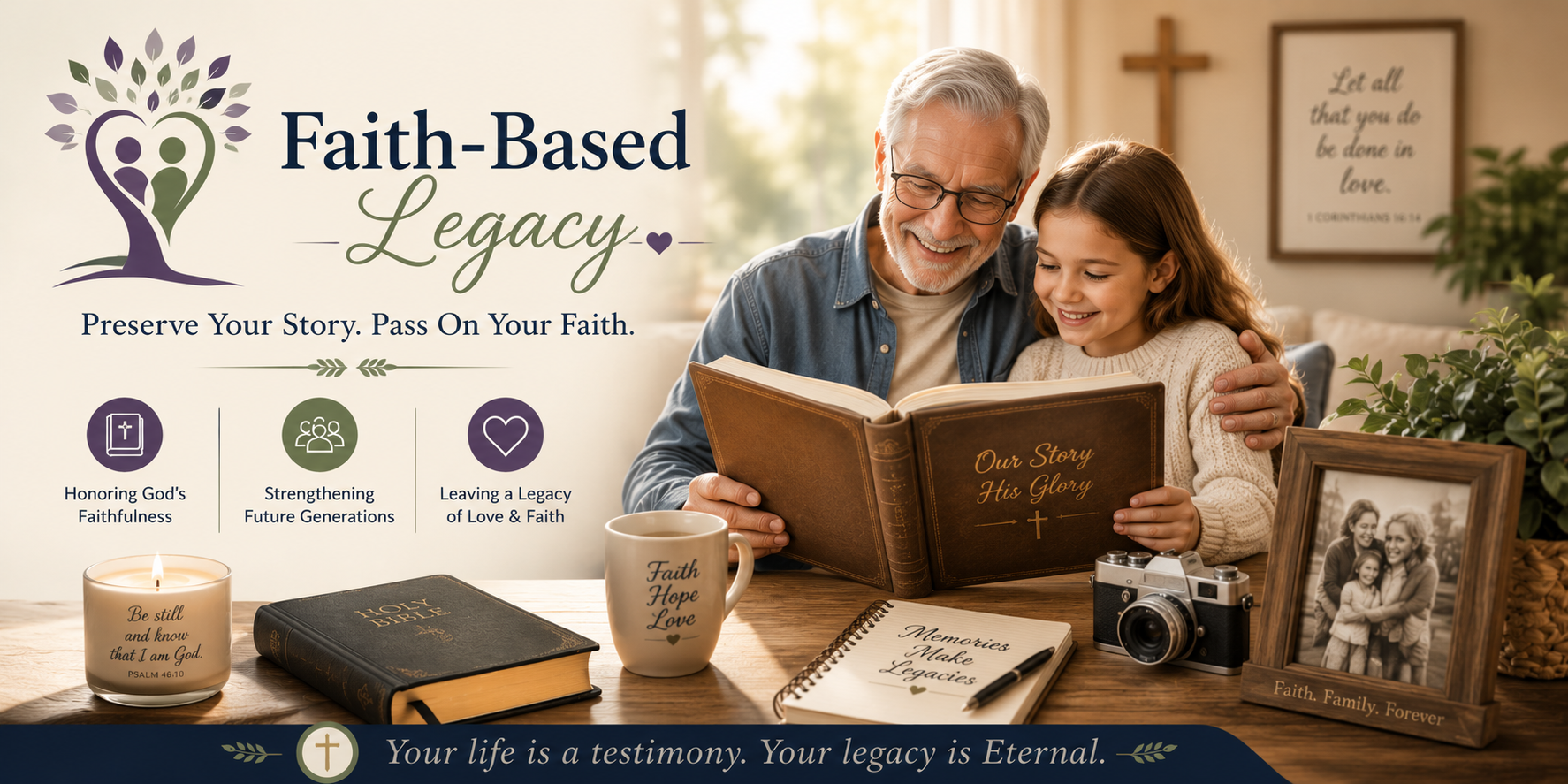

A legacy is often measured by the possessions, achievements, or financial resources a person leaves behind. Yet for many people of faith, the most meaningful inheritance is not material wealth but the spiritual values, beliefs, character, and wisdom that continue influencing future generations. A faith-based legacy is the intentional preservation of a person’s relationship with God, life experiences, family values, and testimony so that children, grandchildren, and future descendants understand not only who their ancestors were but also the faith that guided their lives.
Throughout history, families have passed faith from one generation to the next through stories, traditions, prayer, worship, and personal example. Long before books or digital technology, faith communities preserved their spiritual heritage through oral storytelling that celebrated God’s faithfulness across generations. Today, families have even greater opportunities to record these stories through professional life story interviews, legacy videos, memoirs, family history projects, audio recordings, and digital archives.
A faith-based legacy extends beyond documenting religious beliefs. It captures the experiences that shaped a person’s spiritual journey, including answered prayers, moments of doubt, seasons of suffering, acts of service, community involvement, marriage, parenting, forgiveness, and the lessons learned while trusting God. These stories become lasting testimonies that strengthen families while encouraging future generations to develop their own faith.
Research suggests that life review contributes to emotional well-being by helping older adults integrate their life experiences into a meaningful narrative (Butler, 1963). Person-centered care also emphasizes understanding an individual’s beliefs, values, and life history because these factors influence identity and improve compassionate caregiving (Fazio et al., 2018). For families affected by Alzheimer’s disease or other forms of dementia, preserving faith stories before significant memory changes occur helps protect both personal identity and spiritual heritage.
Whether you are recording your own life story, interviewing parents or grandparents, or creating a legacy project for future generations, preserving a faith-based legacy ensures that your values and beliefs continue inspiring those who come after you.
Why a Faith-Based Legacy Matters
Faith influences every area of life. It shapes the way people respond to hardship, celebrate blessings, raise families, build relationships, serve others, and make important decisions. While future generations may inherit family photographs, heirlooms, and historical documents, they often know very little about the faith that sustained previous generations through life’s greatest joys and challenges.
A faith-based legacy fills that gap by preserving personal stories of hope, resilience, and spiritual growth. It records how faith influenced daily life rather than simply documenting religious affiliation. Children and grandchildren often want to know:
- What gave you hope during difficult times?
- How did your faith influence your marriage and parenting?
- Which prayers were answered in unexpected ways?
- What Bible passages sustained you during hardship?
- What values did you hope to pass to future generations?
- How did your faith shape the choices you made?
Answering these questions creates a living spiritual history that becomes part of a family’s identity.
Research demonstrates that individuals who know more about their family’s history often develop greater resilience and a stronger sense of identity because they understand themselves as part of a continuing family narrative (Duke et al., 2008). When that narrative includes stories of faith, perseverance, forgiveness, and hope, it becomes a powerful source of encouragement during future challenges.
Creating a faith-based legacy also strengthens relationships today. Conversations about beliefs, answered prayers, family traditions, and personal experiences often become some of the deepest and most meaningful discussions families ever share. These moments preserve far more than information—they strengthen trust, understanding, and love between generations.
Ultimately, preserving a faith-based legacy reminds future family members that their spiritual heritage was built through everyday acts of faithfulness lived out over many years.
Building a Faith-Based Legacy Through Life Stories
One of the most meaningful ways to preserve a faith-based legacy is through intentional storytelling. Recording a personal life story allows individuals to explain how their beliefs developed and how faith influenced different stages of life.
Important topics may include:
- Childhood faith experiences
- Parents, grandparents, and spiritual mentors
- Places of worship that shaped your life
- Personal beliefs and values
- Marriage and family traditions
- Marriage and family traditions
- Raising children with Faith
- Community service and volunteering
- Challenges that strengthened your faith
- Experiences of hope, healing, and forgiveness
- Favorite Scriptures or inspirational readings
- Advice for future generations
- Hopes and prayers for your family
Many families also preserve handwritten journals, prayer books, devotional reflections, letters, favorite hymns, photographs, family traditions, recipes shared during celebrations, and meaningful keepsakes connected to important moments of faith.
Professional life story interviews provide an opportunity to capture these memories naturally while preserving the storyteller’s voice, personality, humor, and emotion. Legacy videos allow future generations to hear faith expressed directly in the individual’s own words, creating a much deeper emotional connection than written records alone.
Some families choose to create ethical wills that focus on spiritual values rather than financial inheritance. These documents include personal blessings, life lessons, hopes for future generations, and reflections on the values that guided the individual’s life.
Combining personal stories with family history, genealogy, photographs, and digital archives creates a comprehensive faith legacy that preserves both family identity and spiritual heritage.
Faith-Based Legacy in Aging and Person-Centered Care
As people grow older, many naturally reflect upon the meaning of their lives and the beliefs that have guided them through changing seasons. Recording these reflections not only preserves family history but also supports emotional well-being by helping individuals recognize purpose and continuity throughout their lives.
This process becomes particularly valuable for individuals living with Alzheimer’s disease or other forms of dementia. Although dementia may gradually affect memory and communication, spiritual beliefs often remain an important source of comfort, identity, and emotional stability. Familiar prayers, hymns, worship practices, and sacred texts may continue providing reassurance even when recent memories become more difficult to access.
Person-centered care recognizes that spiritual beliefs form an essential part of many individuals’ identities (Fazio et al., 2018). Understanding a person’s faith background helps caregivers provide individualized support that respects their beliefs, traditions, and preferences.
Examples include:
- Incorporating prayer into daily routines when desired
- Playing meaningful worship music or hymns
- Reading favorite passages from sacred texts
- Supporting attendance at worship services or virtual services
- Respecting religious holidays and family traditions
- Encouraging conversations about faith and hope
- Including spiritual practices in care planning when requested
Families are encouraged to begin recording life stories and faith experiences soon after a diagnosis of mild cognitive impairment or early-stage dementia. Preserving these memories while communication remains relatively strong helps ensure that important beliefs, values, and personal reflections remain available to future caregivers and family members.
Research supports life review and reminiscence as approaches that strengthen emotional well-being and reinforce identity among older adults (Butler, 1963). For people of faith, reflecting on spiritual experiences often becomes one of the most meaningful aspects of this process.
Faith communities also contribute by visiting older adults, offering pastoral care, encouraging social connection, and helping preserve spiritual practices throughout the aging journey.
Leaving a Legacy That Inspires Future Generations
A faith based legacy is not created in a single conversation. It is built through a lifetime of relationships, service, compassion, forgiveness, and faithful living. Recording these experiences ensures that future generations inherit not only stories but also the values that gave those stories meaning.
Many families create comprehensive legacy collections that include life story interviews, memoirs, legacy videos, family history books, photographs, journals, genealogy research, recorded prayers, personal letters, memory books, and secure digital archives. Together, these resources preserve the family’s history while documenting the beliefs and principles that shaped each generation.
Modern technology makes long-term preservation easier than ever. High-quality video interviews, searchable transcripts, encrypted cloud storage, and secure digital archives help families organize and protect their stories while making them accessible to relatives around the world. Maintaining multiple backups and preserving printed copies of important documents further protects these invaluable resources.
A faith-based legacy should also continue growing with each generation. Parents can encourage children to record their own stories, preserve meaningful family traditions, discuss personal values, and reflect on important moments of gratitude, service, and hope. These conversations create an ongoing legacy that evolves while remaining rooted in enduring beliefs.
Ultimately, a faith-based legacy is one of the greatest gifts a person can leave behind. It preserves more than memories—it captures purpose, compassion, resilience, hope, forgiveness, and love. It reminds future generations that faith is not simply something to believe but something to live. By preserving your life story, your values, and your spiritual journey today, you create a lasting inheritance that will continue strengthening families, encouraging future generations, and honoring the principles that guided your life.
Frequently Asked Questions
What is a faith-based legacy?
A faith-based legacy is the lasting spiritual inheritance a person leaves through their beliefs, values, life story, service, traditions, wisdom, and personal testimony. It focuses on preserving the principles that shaped a person’s life for future generations.
How can I preserve a faith-based legacy?
You can preserve your legacy by recording life story interviews, writing memoirs, creating legacy videos, documenting personal values, preserving family traditions, keeping journals, writing letters to loved ones, and organizing family history with meaningful stories.
Why is preserving faith stories important?
Faith stories help future generations understand the beliefs, values, and experiences that shaped their family. They encourage resilience, strengthen identity, and preserve wisdom that can continue guiding children and grandchildren.
How does a faith-based legacy help someone living with dementia?
Recording faith experiences early preserves an important part of personal identity. It helps caregivers understand meaningful spiritual practices, preferred worship traditions, values, and beliefs that can provide comfort throughout the progression of dementia.
What should be included in a faith-based legacy project?
A comprehensive legacy project may include life story interviews, family history, personal testimony, journals, letters, photographs, meaningful traditions, favorite Scriptures or inspirational readings, recorded prayers, memory books, and messages for future generations.
References
Butler, R. N. (1963). The life review: An interpretation of reminiscence in the aged. Psychiatry, 26(1), 65–76.
Duke, M. P., Lazarus, A., & Fivush, R. (2008). Knowledge of family history is a clinically useful index of psychological well-being and prognosis. Journal of Family Life, 7(2), 133–140.
Fazio, S., Pace, D., Flinner, J., & Kallmyer, B. (2018). The fundamentals of person-centered care for individuals with dementia. The Gerontologist, 58(Suppl. 1), S10–S19.
Kitwood, T. (1997). Dementia reconsidered: The person comes first. Open University Press.
McAdams, D. P. (2008). Personal narratives and the life story. In O. P. John, R. W. Robins, & L. A. Pervin (Eds.), Handbook of personality: Theory and research (3rd ed., pp. 242–262). Guilford Press.
Pargament, K. I. (2013). Spiritually integrated psychotherapy: Understanding and addressing the sacred. Guilford Press.
Woods, B., O’Philbin, L., Farrell, E. M., Spector, A., & Orrell, M. (2018). Reminiscence therapy for dementia. Cochrane Database of Systematic Reviews, 3, CD001120.
World Health Organization. (2023). Dementia. https://www.who.int/news-room/fact-sheets/detail/dementia