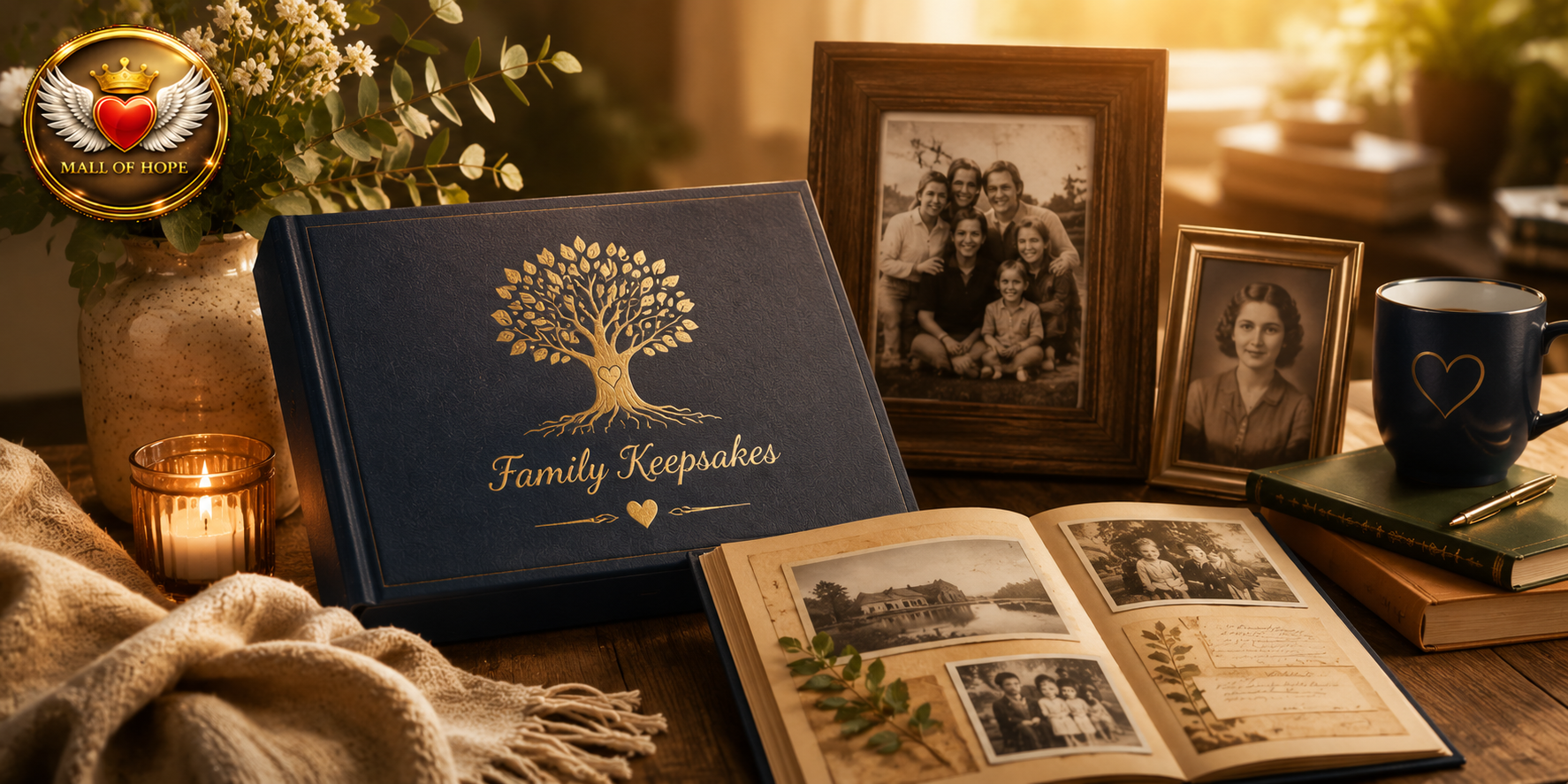

Every family treasures certain possessions that carry memories far beyond their material value. A handwritten recipe passed down through generations, a grandfather’s watch, a child’s drawing, a wedding photograph, or a letter written decades ago can become priceless reminders of the people and experiences that shaped a family. Yet the most meaningful family keepsakes are often more than physical objects—they are the stories, voices, traditions, and life lessons connected to those cherished items. Preserving both the keepsakes and the stories behind them ensures that future generations inherit not only family heirlooms but also the memories and values that give them meaning.
A family keepsake serves as a bridge between generations. It connects children, grandchildren, and future descendants with the people who came before them, helping them understand their family history, cultural heritage, traditions, and identity. While photographs and heirlooms preserve moments in time, recording the stories behind those treasures transforms them into living pieces of family history.
Today’s families have more opportunities than ever to preserve keepsakes. Professional life story interviews, legacy videos, memoirs, audio recordings, digital archives, genealogy projects, memory books, and documentary films allow families to combine treasured objects with personal stories that explain their significance. Rather than leaving future generations to guess the meaning of an old photograph or heirloom, families can preserve firsthand accounts that bring these keepsakes to life.
Creating family keepsakes is also especially valuable for older adults and families affected by Alzheimer’s disease or other forms of dementia. Recording stories while communication remains strong helps preserve identity, family history, and cherished memories before cognitive changes progress. Research suggests that life review contributes to emotional well-being while reinforcing personal identity throughout later adulthood (Butler, 1963). Person-centered care likewise recognizes that understanding an individual’s life history, values, and treasured possessions improves compassionate caregiving (Fazio et al., 2018).
Whether you are preserving your own family history, documenting the memories of your parents or grandparents, or creating meaningful keepsakes for your children, these projects become lasting expressions of love that continue connecting generations for decades to come.
Why Family Keepsakes Matter
Family keepsakes are valuable because they preserve both memory and identity. While financial inheritances may eventually be spent and possessions may change hands, meaningful keepsakes continue telling stories that strengthen family relationships across generations.
Many families own treasured items without knowing their history. A military medal, wedding ring, family Bible, handmade quilt, recipe card, childhood toy, immigration document, or old photograph may hold extraordinary significance that is lost if no one records the story behind it.
Research demonstrates that individuals who know more about their family history often develop greater resilience, stronger emotional well-being, and a deeper sense of identity because they understand themselves as part of an ongoing family narrative (Duke et al., 2008). Family keepsakes strengthen that narrative by connecting physical objects with personal experiences.
Keepsakes also create opportunities for meaningful conversations. Looking through photographs, reading old letters, preparing family recipes, or discussing heirlooms often encourages older relatives to share stories that might otherwise remain untold. These conversations strengthen relationships while preserving historical knowledge that cannot be replaced.
For parents and grandparents, creating keepsakes also provides an opportunity to intentionally pass along values, traditions, wisdom, and life lessons. Rather than simply leaving behind possessions, they leave behind meaning.
Ultimately, the true value of a keepsake lies not in its age or monetary worth but in the memories, relationships, and identity it preserves.
Meaningful Family Keepsake Ideas
Every family is different, so the most meaningful keepsakes are those that reflect its unique history, traditions, and experiences. Combining physical objects with personal stories often creates the richest family legacy.
Popular family keepsake ideas include:
- Professional life story interviews
- Legacy videos
- Memory books with photographs and captions
- Family history books
- Written autobiographies or memoirs
- Audio recordings of family stories
- Handwritten letters to future generations
- Family recipe collections with personal memories
- Genealogy research and family trees
- Digitized home movies and photographs
- Children’s artwork preserved with stories
- Military memorabilia accompanied by interviews
- Wedding albums with recorded memories
- Anniversary books
- Family journals
- Recorded holiday traditions
- Grandparent question-and-answer books
- Time capsules for future generations
One of the most meaningful keepsakes is a professionally recorded life story interview. Hearing a loved one’s voice, laughter, expressions, and reflections creates a powerful emotional connection that written documents alone cannot provide.
Families often enrich keepsake collections by preserving supporting materials such as certificates, diplomas, military records, newspaper articles, journals, recipes, postcards, travel souvenirs, heirloom jewelry, family Bibles, awards, artwork, and handwritten notes. Recording the stories behind each item ensures that future generations understand why those objects mattered.
Modern keepsakes frequently combine traditional and digital formats. A printed memory book may include QR codes linking to video interviews, audio recordings, or digital family archives, creating a multimedia legacy that preserves both information and personality.
Family Keepsakes in Aging and Person-Centered Care
Family keepsakes become especially meaningful as loved ones age. Looking through photographs, handling familiar objects, listening to recorded stories, or discussing treasured memories often encourages meaningful conversation and strengthens emotional connection.
For individuals living with Alzheimer’s disease or other forms of dementia, keepsakes play an important role in person-centered care. Familiar photographs, family heirlooms, favorite music, recipes, letters, and personal memorabilia often stimulate reminiscence while helping preserve a sense of identity.
Person-centered care emphasizes understanding the individual beyond medical diagnoses (Kitwood, 1997). Family keepsakes provide caregivers with valuable insight into the person’s life history, occupations, relationships, hobbies, cultural traditions, military service, faith, and personal values. This information supports individualized care while promoting dignity and meaningful engagement.
Families are encouraged to begin preserving keepsakes and recording the stories behind them soon after a diagnosis of mild cognitive impairment or early-stage dementia. Capturing memories while communication remains relatively strong preserves detailed stories, humor, wisdom, and personal reflections before cognitive changes become more significant.
Research supports life story work and reminiscence as evidence-based interventions that may improve communication, emotional well-being, and quality of life for many individuals living with dementia (Woods et al., 2018). Memory books, legacy videos, and labeled family photographs become valuable resources for both family members and professional caregivers.
Keepsakes also provide comfort during times of transition. Moving into assisted living, receiving home care, or adjusting to changing health needs often becomes easier when familiar objects and meaningful memories remain close at hand.
Creating Keepsakes That Last for Generations
A meaningful family keepsake should be preserved with the future in mind. Physical objects require protection from damage, while digital memories need secure storage and organization to remain accessible over time.
Many families create comprehensive legacy collections that combine keepsakes with life story interviews, memoirs, genealogy research, photographs, journals, family recipes, legacy videos, audio recordings, historical documents, and secure digital archives. Together, these materials preserve both the objects and the stories that make them meaningful.
Digital preservation has expanded opportunities for sharing keepsakes with relatives around the world. High-resolution scanning, searchable transcripts, encrypted cloud storage, interactive family websites, and digital family archives help ensure that precious memories remain available even if original items become damaged or lost. Families should also maintain offline backups using external hard drives and archival-quality storage for important printed materials.
Creating keepsakes should become an ongoing family tradition rather than a one-time project. Recording annual interviews, preserving milestone celebrations, labeling photographs, collecting recipes, documenting family traditions, and encouraging each generation to contribute their own stories allow the family’s history to continue growing over time.
Ultimately, a family keepsake is about much more than preserving an object. It preserves identity, relationships, traditions, values, and love. Every photograph with a handwritten caption, every recorded interview, every treasured heirloom, and every family recipe becomes a connection between generations. By preserving these keepsakes today, families create an enduring legacy that allows future children, grandchildren, and descendants to know not only what their family owned but also who they were, what they believed, and how they lived.
Frequently Asked Questions
What is a family keepsake?
A family keepsake is a meaningful object, story, recording, or document that preserves memories, family history, traditions, and personal connections across generations.
What are some meaningful family keepsake ideas?
Popular keepsakes include life story interviews, legacy videos, memory books, handwritten letters, family recipes, genealogy projects, photo albums, audio recordings, heirlooms, and family history books.
Why are family keepsakes important?
Family keepsakes preserve identity, strengthen family relationships, document traditions, and help future generations understand the stories, values, and experiences that shaped their family.
How do family keepsakes help people living with dementia?
Keepsakes encourage reminiscence, reinforce identity, support person-centered care, stimulate meaningful conversations, and help caregivers better understand the individual’s life history and preferences.
How can I preserve family keepsakes for future generations?
Protect physical items using archival storage, digitize photographs and documents, record the stories behind treasured objects, create secure digital backups, and organize family archives so they remain accessible for generations.
References
Brooker, D. (2007). Person-centred dementia care: Making services better. Jessica Kingsley Publishers.
Butler, R. N. (1963). The life review: An interpretation of reminiscence in the aged. Psychiatry, 26(1), 65–76.
Duke, M. P., Lazarus, A., & Fivush, R. (2008). Knowledge of family history is a clinically useful index of psychological well-being and prognosis. Journal of Family Life, 7(2), 133–140.
Fazio, S., Pace, D., Flinner, J., & Kallmyer, B. (2018). The fundamentals of person-centered care for individuals with dementia. The Gerontologist, 58(Suppl. 1), S10–S19.
Kitwood, T. (1997). Dementia reconsidered: The person comes first. Open University Press.
McAdams, D. P. (2008). Personal narratives and the life story. In O. P. John, R. W. Robins, & L. A. Pervin (Eds.), Handbook of personality: Theory and research (3rd ed., pp. 242–262). Guilford Press.
Woods, B., O’Philbin, L., Farrell, E. M., Spector, A., & Orrell, M. (2018). Reminiscence therapy for dementia. Cochrane Database of Systematic Reviews, 3, CD001120.
World Health Organization. (2023). Dementia. https://www.who.int/news-room/fact-sheets/detail/dementia