
Our lives are increasingly captured in digital form. Family photographs are stored on smartphones, milestone celebrations are recorded on video, conversations happen through text messages, and memories are shared across social media. While technology has made it easier than ever to document life’s important moments, it has also created a new challenge: ensuring these digital memories remain organized, protected, and meaningful for future generations.
Digital memories are far more than electronic files. They represent birthdays, weddings, graduations, family vacations, everyday conversations, treasured photographs, voice recordings, handwritten letters that have been scanned, genealogy research, and personal stories that collectively preserve a family’s identity. When thoughtfully organized and combined with personal storytelling, digital memories become a lasting legacy that helps future generations understand not only what happened, but who their family members were as people.
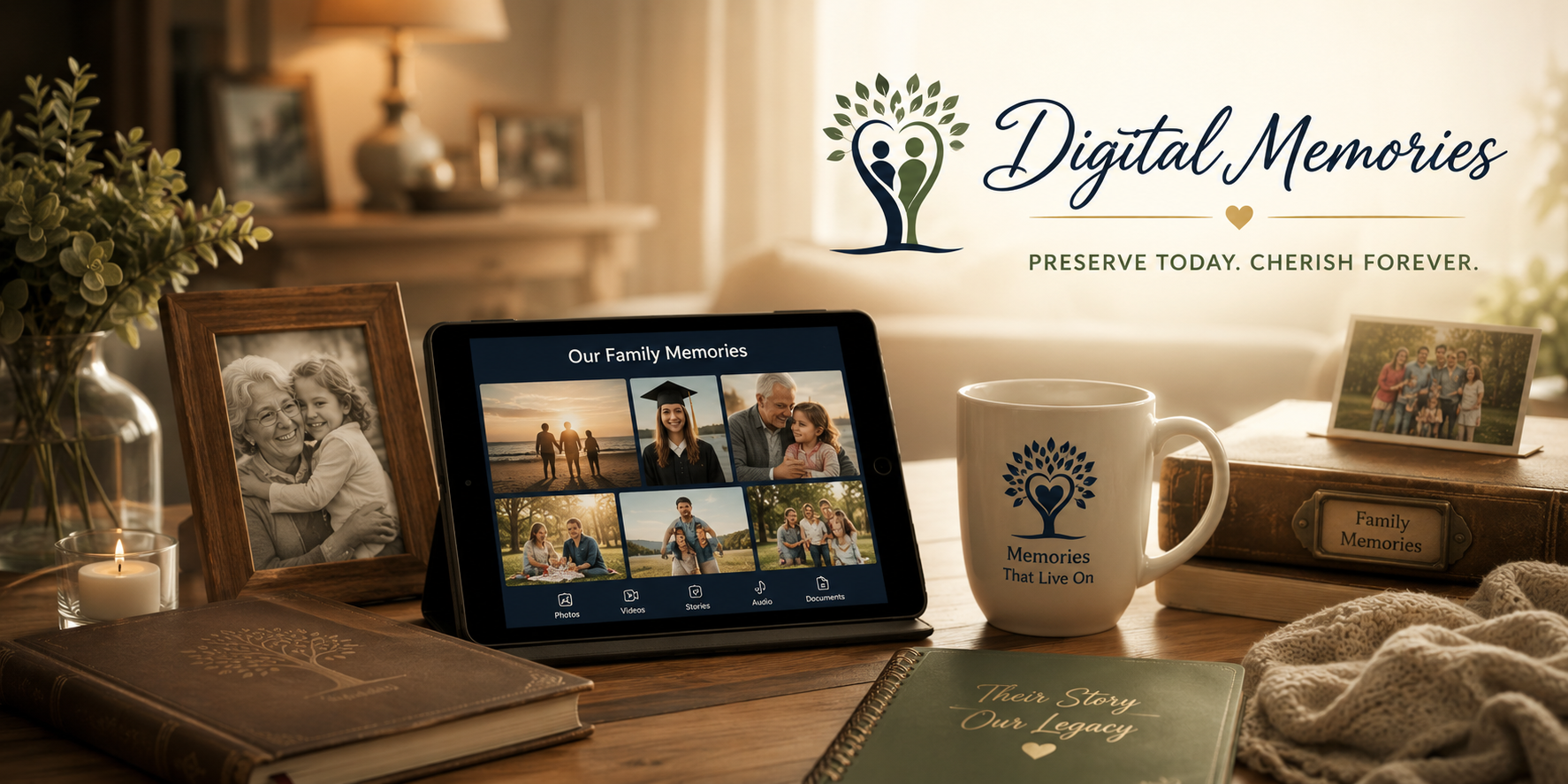
Unlike traditional photo albums or boxes of letters, digital collections allow families to preserve voice, video, documents, photographs, and written memories in one accessible archive. Professional life story interviews, legacy videos, autobiography recordings, digital memory books, and family history collections create rich multimedia experiences that preserve personality, humor, emotion, and wisdom alongside historical records. These resources transform ordinary digital files into meaningful family history.
Digital memory preservation has become especially important as populations age and awareness of Alzheimer’s disease and other forms of dementia continues to grow. Recording life stories while communication remains strong helps preserve identity before memory changes progress. Research suggests that life review promotes emotional well-being while helping individuals integrate their experiences into a meaningful life narrative (Butler, 1963). Person-centered care also recognizes that preserving an individual’s personal history improves communication, strengthens relationships, and supports compassionate caregiving (Fazio et al., 2018).
Whether you are organizing family photographs, recording grandparents’ stories, preserving childhood videos, or creating a comprehensive digital legacy, protecting digital memories ensures that the experiences, voices, and values of your family continue connecting generations for years to come.
Why Digital Memories Matter
Every family creates thousands of digital files throughout life. Smartphones capture birthdays, graduations, holidays, family gatherings, vacations, and everyday moments that previous generations rarely had the opportunity to preserve. However, simply storing these files does not guarantee they will remain meaningful or accessible in the future.
Without organization, photographs become anonymous, videos lose context, and important documents disappear among thousands of digital files. Future generations may recognize faces but have no understanding of the relationships, locations, traditions, or stories connected to those images.
Digital memories become truly valuable when they are accompanied by context. Adding names, dates, locations, captions, voice recordings, and personal reflections transforms simple photographs into historical records that future descendants can understand and appreciate.
Research demonstrates that individuals who know more about their family’s history often develop greater resilience, stronger emotional well-being, and a deeper sense of identity because they understand themselves as part of an ongoing family narrative (Duke et al., 2008). Digital memories preserve that narrative while making it easier to share across multiple generations and geographic locations.
Recording voices also adds extraordinary value. Hearing a grandparent laugh while telling a childhood story or watching a parent describe their wedding day preserves personality in ways that photographs alone cannot. Voice and video create emotional connections that continue long after the recording was made.
Digital memories also protect history from physical deterioration. Old photographs fade, videotapes degrade, paper documents become damaged, and handwritten letters can be lost. Digitization helps preserve these irreplaceable materials while making secure backups possible.
What Should Be Included in a Digital Memory Archive?
A meaningful digital memory archive goes far beyond photographs. It brings together every aspect of a family’s history into a single, organized collection that reflects both historical information and personal identity.
Common materials include:
- Family photographs
- Professional life story interviews
- Legacy videos
- Audio recordings
- Home movies
- Family history books
- Genealogy research
- Scanned handwritten letters
- Journals and diaries
- Family recipes
- Military records
- Diplomas and certificates
- Newspaper articles
- Children’s artwork
- Wedding videos
- Anniversary celebrations
- Voice messages
- Family documents
- Personal memoirs
Each file should be labeled with names, dates, locations, and brief descriptions whenever possible. Future generations will appreciate knowing not only who appears in a photograph but also why the moment was significant.
Many families also organize digital memories by themes such as childhood, military service, careers, holidays, weddings, travel, family traditions, community service, faith, or milestone celebrations. Organizing collections this way makes them easier to explore while encouraging meaningful storytelling.
Professional life story interviews often become the centerpiece of digital archives because they preserve voice, facial expressions, humor, values, and personality alongside factual family history.
Modern digital archives may also include searchable transcripts, interactive family trees, timelines, photo galleries, and QR codes that connect printed memory books to recorded interviews, creating a multimedia family history experience.
Digital Memories in Dementia Care and Healthy Aging
Digital memories play an increasingly important role in supporting older adults and individuals living with Alzheimer’s disease or other forms of dementia. Familiar photographs, recorded voices, favorite music, home videos, and family stories often encourage reminiscence while reinforcing identity and strengthening emotional connection.
Person-centered dementia care emphasizes understanding the individual beyond medical diagnoses (Kitwood, 1997). Digital memory collections help caregivers learn about occupations, hobbies, military service, favorite traditions, family relationships, cultural heritage, religious beliefs, and important life experiences.
For example, a digital archive might reveal that someone spent decades as a teacher, musician, nurse, engineer, farmer, artist, entrepreneur, or volunteer. Knowing this allows caregivers to create conversations and activities that reflect familiar experiences and personal interests.
Families are encouraged to begin creating digital memory collections soon after a diagnosis of mild cognitive impairment or early-stage dementia. Recording stories while communication remains relatively strong preserves detailed memories, humor, values, and personality that may later become more difficult to express.
Research supports life story work and reminiscence as evidence-based interventions that may improve communication, mood, and quality of life for many individuals living with dementia (Woods et al., 2018). Digital memory archives provide practical resources that families and professional caregivers can use throughout the caregiving journey.
Beyond dementia care, digital memory projects promote healthy aging by encouraging reflection, creativity, social interaction, and meaningful family conversations that strengthen relationships across generations.
Preserving Digital Memories for Future Generations
Creating digital memories is only the first step. Long-term preservation requires thoughtful organization, secure storage, and regular maintenance to ensure files remain accessible as technology changes over time.
Families should maintain multiple copies of important files using encrypted cloud storage, external hard drives, and additional offline backups stored in separate locations. Original photographs, letters, and printed materials should also be preserved using archival-quality storage while digital copies provide convenient access and protection against accidental loss.
Consistent file organization is equally important. Using descriptive filenames, recording dates, identifying family members, and adding written captions makes archives easier for future generations to understand. Written transcripts of recorded interviews also improve accessibility while making family stories searchable.
Many families create comprehensive digital legacy collections that combine life story interviews, autobiography recordings, genealogy research, legacy videos, memory books, family recipes, journals, historical documents, photographs, and secure digital archives. Together, these resources preserve both historical information and the personal stories that give it meaning.
Digital memory preservation should also become an ongoing family tradition. Annual interviews, birthday reflections, family reunions, holiday celebrations, milestone anniversaries, and everyday moments all provide opportunities to continue documenting the family’s evolving story. Encouraging each generation to contribute photographs, videos, and personal reflections ensures that the archive continues growing over time.
Ultimately, digital memories preserve far more than images or files. They capture relationships, laughter, traditions, wisdom, resilience, love, and identity. They allow future generations to hear familiar voices, see genuine expressions, and understand the experiences that shaped their family. By preserving digital memories today, you create an enduring legacy that connects generations and ensures your family’s stories remain accessible, meaningful, and alive for decades to come.
Frequently Asked Questions
What are digital memories?
Digital memories include photographs, videos, voice recordings, life story interviews, scanned documents, journals, family history records, and other electronic files that preserve personal experiences and family history.
Why is it important to preserve digital memories?
Preserving digital memories protects family history, strengthens identity, prevents data loss, preserves personal stories, and allows future generations to experience the voices, personalities, and values of those who came before them.
What should be included in a digital memory archive?
A complete archive may include family photographs, legacy videos, audio interviews, genealogy records, memoirs, recipes, journals, scanned letters, certificates, home movies, and personal documents organized with descriptions and dates.
How do digital memories help people living with dementia?
Digital memories support reminiscence, reinforce identity, encourage meaningful conversations, and help caregivers understand the individual’s life history, relationships, interests, and personal preferences.
How can I safely preserve digital memories for the future?
Maintain multiple backups using encrypted cloud storage, external hard drives, and offline copies. Organize files with names, dates, and descriptions, and regularly update storage methods to keep pace with changing technology.
References
Brooker, D. (2007). Person-centred dementia care: Making services better. Jessica Kingsley Publishers.
Butler, R. N. (1963). The life review: An interpretation of reminiscence in the aged. Psychiatry, 26(1), 65–76.
Duke, M. P., Lazarus, A., & Fivush, R. (2008). Knowledge of family history is a clinically useful index of psychological well-being and prognosis. Journal of Family Life, 7(2), 133–140.
Fazio, S., Pace, D., Flinner, J., & Kallmyer, B. (2018). The fundamentals of person-centered care for individuals with dementia. The Gerontologist, 58(Suppl. 1), S10–S19.
Kitwood, T. (1997). Dementia reconsidered: The person comes first. Open University Press.
McAdams, D. P. (2008). Personal narratives and the life story. In O. P. John, R. W. Robins, & L. A. Pervin (Eds.), Handbook of personality: Theory and research (3rd ed., pp. 242–262). Guilford Press.
Woods, B., O’Philbin, L., Farrell, E. M., Spector, A., & Orrell, M. (2018). Reminiscence therapy for dementia. Cochrane Database of Systematic Reviews, 3, CD001120.
World Health Organization. (2023). Dementia. https://www.who.int/news-room/fact-sheets/detail/dementia