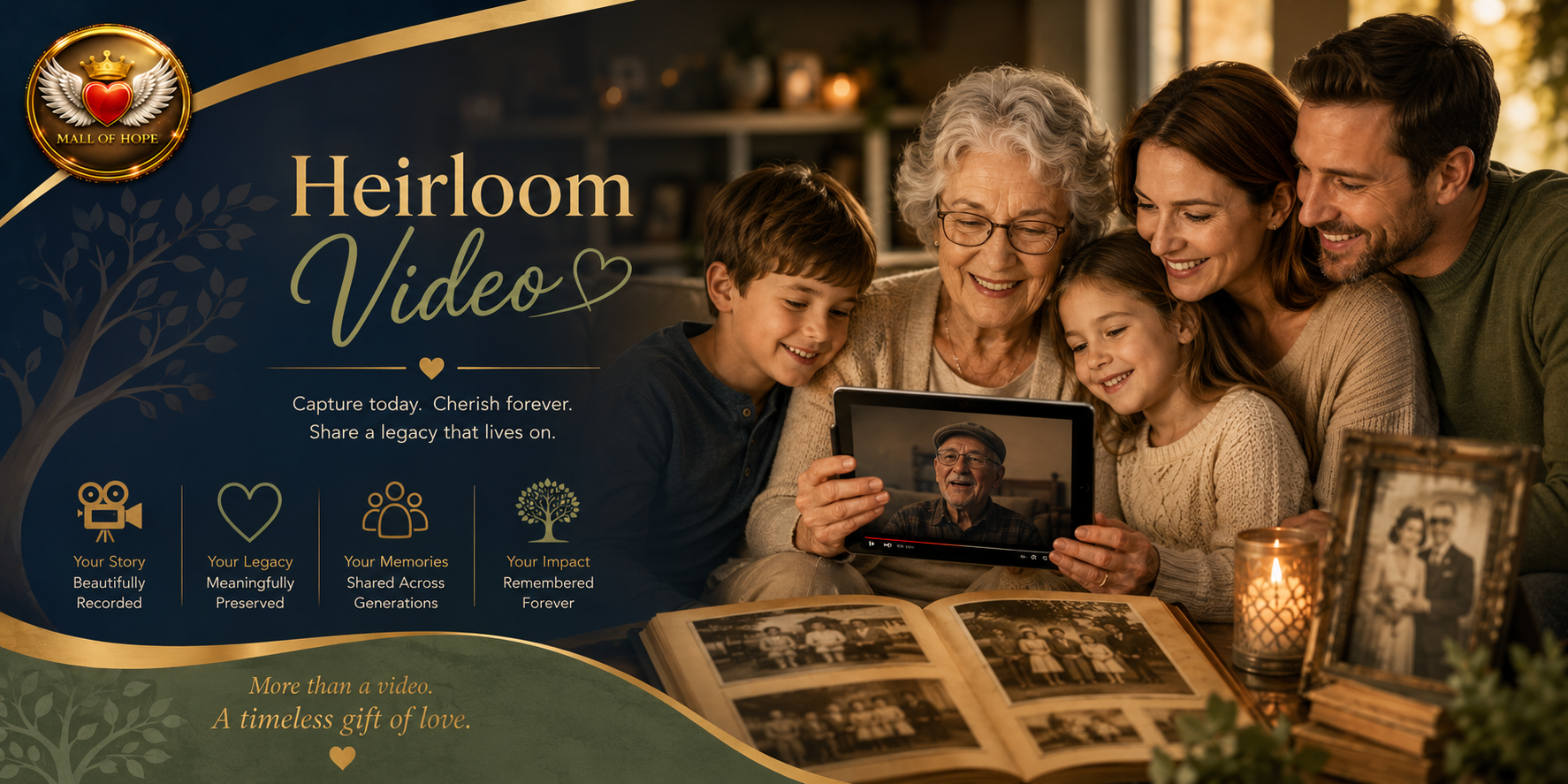

Families have long passed treasured heirlooms from one generation to the next. Jewelry, quilts, family Bibles, military medals, handwritten recipes, photographs, and handwritten letters often become priceless reminders of the people who came before us. Yet while these physical objects hold tremendous sentimental value, they cannot fully preserve a person’s voice, personality, laughter, expressions, or the stories that gave those keepsakes meaning. An heirloom video bridges that gap by capturing not only memories but also the living presence of the storyteller, creating one of the most meaningful legacies a family can pass from generation to generation.
An heirloom video is much more than a home movie. It is a professionally or thoughtfully recorded life story that preserves an individual’s experiences, wisdom, family history, values, traditions, and personality through conversation. Whether presented as a documentary-style interview, a legacy film, a family history recording, or a collection of personal messages, an heirloom video allows future generations to see and hear loved ones exactly as they were.
Unlike written memoirs or photographs alone, video preserves facial expressions, tone of voice, laughter, emotion, gestures, and spontaneous storytelling. Children, grandchildren, and future descendants can experience conversations with parents, grandparents, and great-grandparents even decades after they were recorded. This emotional connection transforms an ordinary recording into a treasured family heirloom.
Creating heirloom videos has become increasingly important as families recognize the value of preserving identity before memories fade. Recording life stories while communication remains strong protects irreplaceable experiences from being lost through time, illness, or Alzheimer’s disease. Research suggests that life review supports emotional well-being by helping older adults integrate their experiences into a meaningful life narrative (Butler, 1963). Person-centered care likewise recognizes that understanding an individual’s life history, relationships, and personal values supports compassionate caregiving and preserves dignity (Fazio et al., 2018).
Whether you are recording your own story, preserving the memories of aging parents, documenting grandparents’ experiences, or creating a lasting gift for future generations, an heirloom video becomes a timeless expression of love that continues to strengthen family connections for decades to come.
Why an Heirloom Video Becomes a Family Treasure
Many families inherit photographs without knowing the stories behind them. Albums contain smiling faces, but future generations may not recognize the people, places, or events captured in those images. An heirloom video provides the missing context by allowing family members to explain those memories in their own words.
Unlike physical heirlooms, a video preserves living personality. Future generations can hear familiar laughter, watch facial expressions change as memories return, and experience authentic conversations that reveal character far more deeply than written records alone.
An heirloom video also captures qualities that cannot easily be described:
- Voice and natural conversation
- Facial expressions and smiles
- Humor and personality
- Emotional reflections
- Family traditions
- Personal values
- Life lessons
- Stories behind treasured photographs
- Advice for future generations
- Expressions of love and gratitude
Research has shown that individuals who know more about their family history often develop stronger resilience, emotional well-being, and a greater sense of identity because they recognize themselves as part of an ongoing family narrative (Duke et al., 2008). An heirloom video strengthens that narrative by preserving firsthand storytelling that future generations can experience repeatedly throughout their lives.
Many families also discover that creating the video becomes as meaningful as watching it later. The interview encourages conversations that may never have happened otherwise, giving parents, grandparents, and children an opportunity to ask thoughtful questions while memories are still available to share.
Unlike many material possessions, an heirloom video often increases in emotional value over time as future generations recognize the rarity of hearing and seeing loved ones tell their own stories.
What Should Be Included in an Heirloom Video?
Every heirloom video reflects the unique journey of the individual being recorded. Rather than following a rigid script, the most meaningful interviews encourage natural storytelling that allows authentic memories and personality to emerge.
Common topics include:
- Childhood memories
- Parents, grandparents, and family traditions
- Education and early life
- Career and professional accomplishments
- Military service
- Marriage and family life
- Raising children
- Faith and personal values
- Challenges overcome
- Favorite family stories
- Historical events experienced firsthand
- Hobbies and lifelong interests
- Lessons learned through life
- Advice for children and grandchildren
- Hopes for future generations
Many families enhance heirloom videos by incorporating historical photographs, home movies, scanned letters, recipes, military records, awards, newspaper articles, family Bibles, journals, genealogy research, and meaningful heirlooms. These visual elements enrich the storytelling while preserving additional family history.
Professional heirloom videos often include carefully edited interviews, historical timelines, music, captions, photographs, and written transcripts. Together, these materials create a complete legacy collection that future generations can both watch and study.
Some families also choose to record personal messages for future milestones such as graduations, weddings, anniversaries, births, or significant birthdays. These heartfelt messages often become among the most treasured parts of the final collection.
Heirloom Videos and Person-Centered Dementia Care
Recording an heirloom video becomes especially valuable as loved ones age. Many older adults naturally reflect on childhood, careers, relationships, accomplishments, and the values they hope to leave behind. Capturing these reflections preserves an important part of personal identity before memories begin to change.
For individuals living with Alzheimer’s disease or other forms of dementia, early recording is particularly important. Although dementia gradually affects memory and communication, it does not erase a person’s life experiences, character, achievements, or relationships. Recording these stories while communication remains relatively strong protects invaluable memories that may later become difficult to express.
Person-centered care emphasizes understanding the individual beyond their diagnosis (Kitwood, 1997). An heirloom video provides caregivers with meaningful insight into occupations, hobbies, military service, family relationships, cultural traditions, faith, favorite activities, and lifelong values.
Caregivers who understand these aspects of identity are better able to personalize conversations, activities, and daily routines. Familiar stories, photographs, favorite songs, recipes, and traditions often encourage reminiscence while strengthening emotional connection.
Research supports life story work and reminiscence as evidence-based approaches that may improve communication, emotional well-being, and quality of life for many individuals living with dementia (Woods et al., 2018). An heirloom video becomes both a treasured family legacy and a practical caregiving resource that helps preserve dignity and personhood throughout the progression of illness.
Families are encouraged to begin recording heirloom videos soon after a diagnosis of mild cognitive impairment or early-stage dementia to capture authentic memories while communication remains relatively strong.
Preserving an Heirloom Video for Future Generations
An heirloom video is designed to become a permanent part of a family’s history. Protecting that legacy requires thoughtful organization, secure storage, and long-term preservation strategies.
Families should maintain multiple copies using encrypted cloud storage, external hard drives, archival-quality digital storage, and offline backups stored in separate locations. Written transcripts should accompany recordings to improve accessibility and make family stories searchable for future genealogy research.
Many families create comprehensive legacy collections by combining heirloom videos with life story interviews, written memoirs, family history books, genealogy research, memory books, photographs, audio recordings, journals, scanned letters, family recipes, and digital archives. Together, these materials preserve both historical information and the voices that bring those stories to life.
Technology continues to evolve, making regular updates and file migration important for long-term preservation. Maintaining high-resolution master files while creating easily shareable versions for family members helps ensure the archive remains accessible across changing devices and platforms.
Creating heirloom videos should also become a continuing family tradition. Recording milestone birthdays, anniversaries, family reunions, new family stories, and annual interviews allows each generation to contribute to the family’s evolving history. Children who grow up watching these videos often become inspired to preserve their own stories for future descendants.
Ultimately, an heirloom video is one of the most meaningful family heirlooms anyone can create. It preserves far more than appearances—it captures voice, laughter, personality, wisdom, values, resilience, and love. Long after physical possessions have faded or changed hands, future generations will still be able to see familiar smiles, hear comforting voices, and learn directly from the people who shaped their family’s history. By creating an heirloom video today, you leave an enduring legacy that allows your story to continue connecting, teaching, and inspiring generations for many years to come.
Frequently Asked Questions
What is an heirloom video?
An heirloom video is a professionally or personally recorded life story that preserves an individual’s voice, personality, memories, family history, values, and life lessons for future generations.
What should be included in an heirloom video?
Most heirloom videos include childhood memories, family history, careers, marriage, parenting, military service, traditions, personal values, favorite stories, advice for descendants, and messages for future generations.
How is an heirloom video different from a home video?
A home video captures everyday moments, while an heirloom video is intentionally created to preserve a person’s life story, identity, experiences, and legacy through thoughtful interviews and storytelling.
How can an heirloom video help families affected by dementia?
Recording a loved one’s life story before significant memory changes occur preserves identity, personal history, communication style, and meaningful experiences while supporting person-centered dementia care.
How should an heirloom video be preserved?
Store the video in multiple secure locations, including encrypted cloud storage, external hard drives, and digital family archives. Keep written transcripts and update storage methods periodically to ensure long-term accessibility.
References
Brooker, D. (2007). Person-centred dementia care: Making services better. Jessica Kingsley Publishers.
Butler, R. N. (1963). The life review: An interpretation of reminiscence in the aged. Psychiatry, 26(1), 65–76.
Duke, M. P., Lazarus, A., & Fivush, R. (2008). Knowledge of family history is a clinically useful index of psychological well-being and prognosis. Journal of Family Life, 7(2), 133–140.
Fazio, S., Pace, D., Flinner, J., & Kallmyer, B. (2018). The fundamentals of person-centered care for individuals with dementia. The Gerontologist, 58(Suppl. 1), S10–S19.
Kitwood, T. (1997). Dementia reconsidered: The person comes first. Open University Press.
McAdams, D. P. (2008). Personal narratives and the life story. In O. P. John, R. W. Robins, & L. A. Pervin (Eds.), Handbook of personality: Theory and research (3rd ed., pp. 242–262). Guilford Press.
Woods, B., O’Philbin, L., Farrell, E. M., Spector, A., & Orrell, M. (2018). Reminiscence therapy for dementia. Cochrane Database of Systematic Reviews, 3, CD001120.
World Health Organization. (2023). Dementia. https://www.who.int/news-room/fact-sheets/detail/dementia