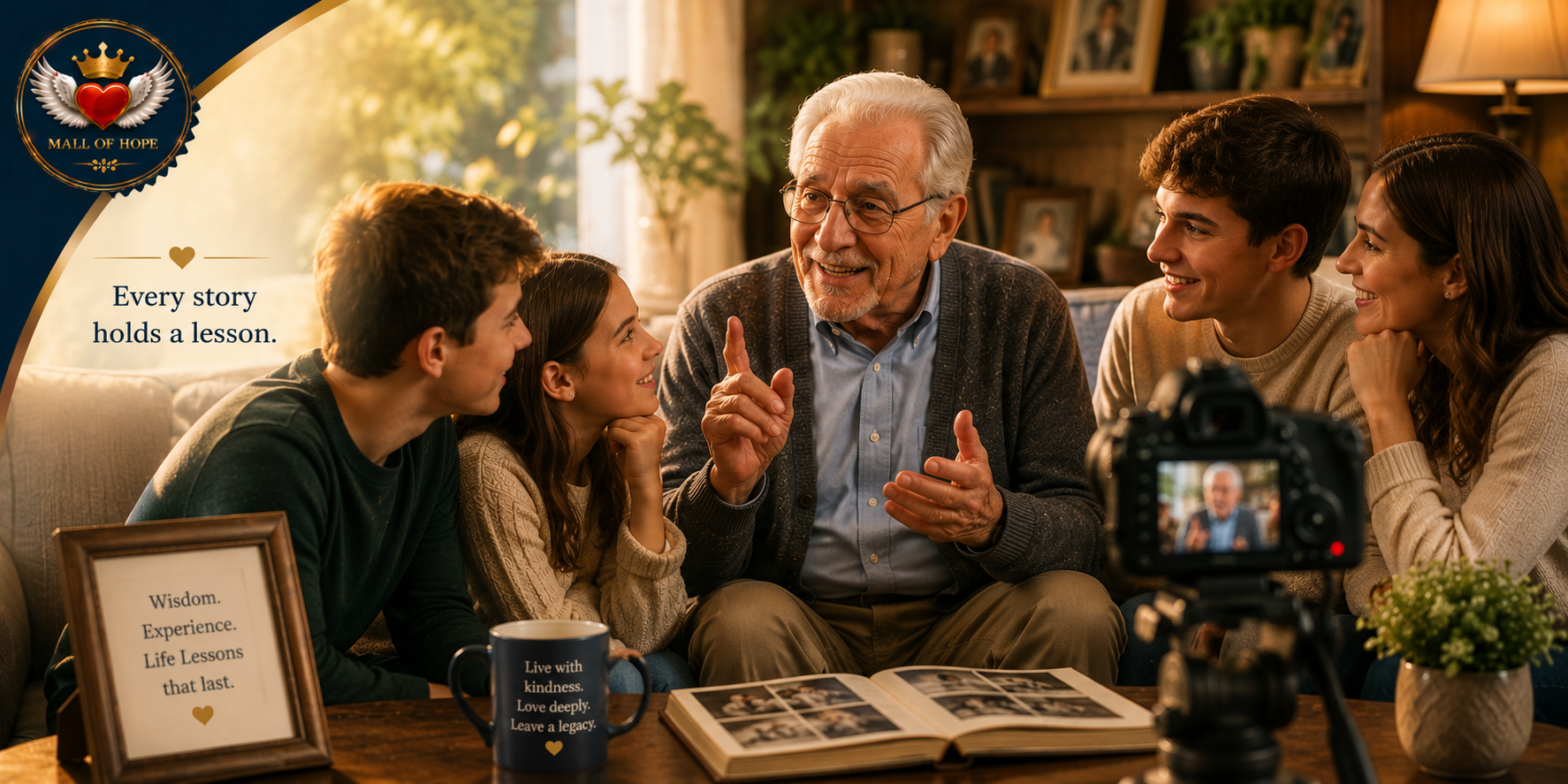

Every older adult carries a lifetime of knowledge that cannot be found in textbooks or online searches. Decades of raising families, building careers, overcoming challenges, nurturing relationships, serving communities, practicing faith, and adapting to change provide perspectives that only experience can teach. These life lessons from seniors become one of the greatest gifts they can share with children, grandchildren, caregivers, and future generations.
While photographs preserve faces and family heirlooms preserve history, life lessons preserve wisdom. They explain not only what happened throughout a person’s life but also what those experiences meant. They reveal how difficult decisions were made, how adversity was overcome, what truly mattered, and which values remained constant through changing seasons of life.
Many families wait too long to ask these important questions. As parents and grandparents age, memories may naturally become more difficult to recall, especially for individuals living with Alzheimer’s disease or other forms of dementia. Recording life lessons through professional interviews, legacy videos, memoirs, audio recordings, and family history projects ensures that this priceless wisdom remains available for future generations.
Research suggests that life review promotes emotional well-being by helping older adults reflect upon their experiences and integrate them into a meaningful life narrative (Butler, 1963). Person-centered care likewise recognizes that understanding an individual’s personal history, values, and beliefs strengthens relationships while supporting compassionate caregiving (Fazio et al., 2018).
Whether you are interviewing a parent, grandparent, mentor, church member, or recording your own reflections, preserving life’s lessons creates an enduring legacy that continues teaching long after the conversation ends.
Why Seniors’ Life Lessons Matter
Modern society often moves quickly, leaving little time to reflect on the experiences of previous generations. Yet seniors have lived through economic changes, technological revolutions, wars, social transformations, personal triumphs, family challenges, and decades of everyday life that offer remarkable perspective.
Their lessons are often grounded in experience rather than theory.
Many seniors have learned:
- The importance of family relationships
- How forgiveness brings peace
- Why integrity matters
- The value of hard work
- The importance of faith and hope
- How to overcome disappointment
- The significance of gratitude
- Why kindness leaves a lasting impact
- The importance of serving others
- How ordinary moments become life’s greatest memories
These insights help younger generations avoid repeating mistakes while gaining wisdom that would otherwise require decades to acquire personally.
Research has shown that people who know more about their family history often develop greater resilience, stronger emotional well-being, and a deeper sense of identity because they understand themselves as part of a continuing family narrative (Duke et al., 2008). Seniors’ life lessons strengthen that narrative by preserving not only family history but also the wisdom that emerged from it.
Listening to older adults also communicates dignity and respect. It affirms that their experiences continue to matter and that their contributions remain valuable regardless of age.
Common Life Lessons Shared by Seniors
Although every person’s experiences are unique, many older adults express remarkably similar reflections when asked what they have learned throughout life.
Relationships Matter Most
Many seniors emphasize that careers, possessions, and accomplishments eventually become less important than relationships. Time spent with family and friends often becomes life’s greatest treasure.
Time Is Precious
Older adults frequently encourage younger generations not to postpone meaningful experiences, important conversations, or expressions of love. They remind us that time passes more quickly than expected.
Character Outlasts Success
Integrity, honesty, kindness, humility, and compassion consistently appear among the qualities seniors hope future generations will value most.
Challenges Build Strength
Many seniors describe their greatest hardships as the experiences that ultimately shaped their resilience, empathy, and wisdom.
Forgiveness Brings Freedom
Older adults often reflect that holding onto resentment creates unnecessary burdens, while forgiveness allows healing and peace.
Faith Sustains Through Every Season
For many seniors, spiritual faith provided strength through illness, grief, uncertainty, parenting, career transitions, and aging. Their testimony often becomes one of the most enduring aspects of their legacy.
Ordinary Moments Become Extraordinary Memories
Many older adults remember simple family dinners, holiday traditions, conversations, neighborhood friendships, and everyday acts of love more vividly than major achievements.
These lessons become especially meaningful when accompanied by personal stories illustrating how those principles developed throughout a lifetime.
Recording Life Lessons Before Memories Fade
One of the greatest opportunities families have is preserving these reflections while loved ones can still share them comfortably.
As people age, communication and memory may naturally change. For individuals diagnosed with mild cognitive impairment, Alzheimer’s disease, or another form of dementia, recording life lessons early becomes especially valuable.
Life story interviews allow seniors to reflect on:
- Childhood experiences
- Marriage and parenting
- Careers
- Military or community service
- Faith journeys
- Personal values
- Challenges overcome
- Favorite memories
- Advice for children and grandchildren
- Hopes for future generations
Person-centered dementia care emphasizes understanding the individual beyond medical diagnoses (Kitwood, 1997). Recording life lessons helps caregivers understand the person’s identity, values, routines, beliefs, occupations, interests, and meaningful life experiences.
Research supports life story work and reminiscence as evidence-based approaches that may improve communication, emotional well-being, and quality of life for many individuals living with dementia (Woods et al., 2018). Listening to familiar stories, viewing photographs, and discussing meaningful experiences often reinforce identity while encouraging conversation.
Families are encouraged to begin recording these conversations as early as possible, particularly following a diagnosis of mild cognitive impairment or early-stage dementia, while communication remains relatively strong.
Professional life story interviews often provide a relaxed setting where seniors feel comfortable sharing experiences in their own words, preserving both wisdom and personality.
Preserving Wisdom for Future Generations
The value of seniors’ life lessons extends far beyond the present generation. Children, grandchildren, and descendants not yet born may one day seek guidance from the voices and stories preserved today.
Many families create comprehensive legacy collections that include:
- Professional life story interviews
- Legacy videos
- Audio recordings
- Written memoirs
- Family history books
- Genealogy research
- Memory books
- Voice recordings
- Journals
- Family photographs
- Handwritten letters
- Digital family archives
Together, these resources preserve not only historical events but also the wisdom that gives those events meaning.
Long-term preservation is equally important. Families should maintain multiple digital backups using encrypted cloud storage, external hard drives, and offline archival copies. Written transcripts improve accessibility while ensuring stories remain searchable even as technology evolves.
Recording life lessons should also become an ongoing family tradition. Birthdays, anniversaries, holidays, family reunions, and milestone celebrations provide natural opportunities to ask meaningful questions and continue documenting wisdom throughout the years.
Ultimately, life lessons from seniors are among the greatest inheritances any family can receive. They preserve resilience, compassion, faith, gratitude, courage, humor, and hope—qualities that continue guiding future generations long after material possessions have faded. By taking the time to listen, record, and preserve these lessons today, families create an enduring legacy that reminds future generations not only where they came from, but how to live with purpose, kindness, and wisdom.
Frequently Asked Questions
Why are life lessons from seniors important?
Life lessons preserve wisdom gained through decades of experience, helping future generations learn from family history, relationships, challenges, values, and personal growth.
What questions should I ask seniors about life lessons?
Ask about the happiest moments of their lives, biggest challenges, lessons learned, advice for younger generations, personal values, faith, family traditions, regrets, accomplishments, and hopes for the future.
How can I preserve a senior’s life lessons?
Many families preserve wisdom through professional life story interviews, legacy videos, memoirs, audio recordings, family history books, and secure digital archives.
How do life story interviews help people living with dementia?
Life story interviews preserve identity, support person-centered care, encourage reminiscence, strengthen family relationships, and help caregivers understand the individual’s personal history and values.
When is the best time to record life lessons?
The best time is now. Recording conversations while communication remains strong helps preserve authentic memories, wisdom, and personality before aging or illness affects recall.
References
Brooker, D. (2007). Person-centred dementia care: Making services better. Jessica Kingsley Publishers.
Butler, R. N. (1963). The life review: An interpretation of reminiscence in the aged. Psychiatry, 26(1), 65–76.
Duke, M. P., Lazarus, A., & Fivush, R. (2008). Knowledge of family history as a clinically useful index of psychological well-being and prognosis. Journal of Family Life, 7(2), 133–140.
Fazio, S., Pace, D., Flinner, J., & Kallmyer, B. (2018). The fundamentals of person-centered care for individuals with dementia. The Gerontologist, 58(Suppl. 1), S10–S19.
Kitwood, T. (1997). Dementia reconsidered: The person comes first. Open University Press.
McAdams, D. P. (2008). Personal narratives and the life story. In O. P. John, R. W. Robins, & L. A. Pervin (Eds.), Handbook of Personality: Theory and Research (3rd ed., pp. 242–262). Guilford Press.
Woods, B., O’Philbin, L., Farrell, E. M., Spector, A., & Orrell, M. (2018). Reminiscence therapy for dementia. Cochrane Database of Systematic Reviews, 3, CD001120.
World Health Organization. (2023). Dementia. https://www.who.int/news-room/fact-sheets/detail/dementia