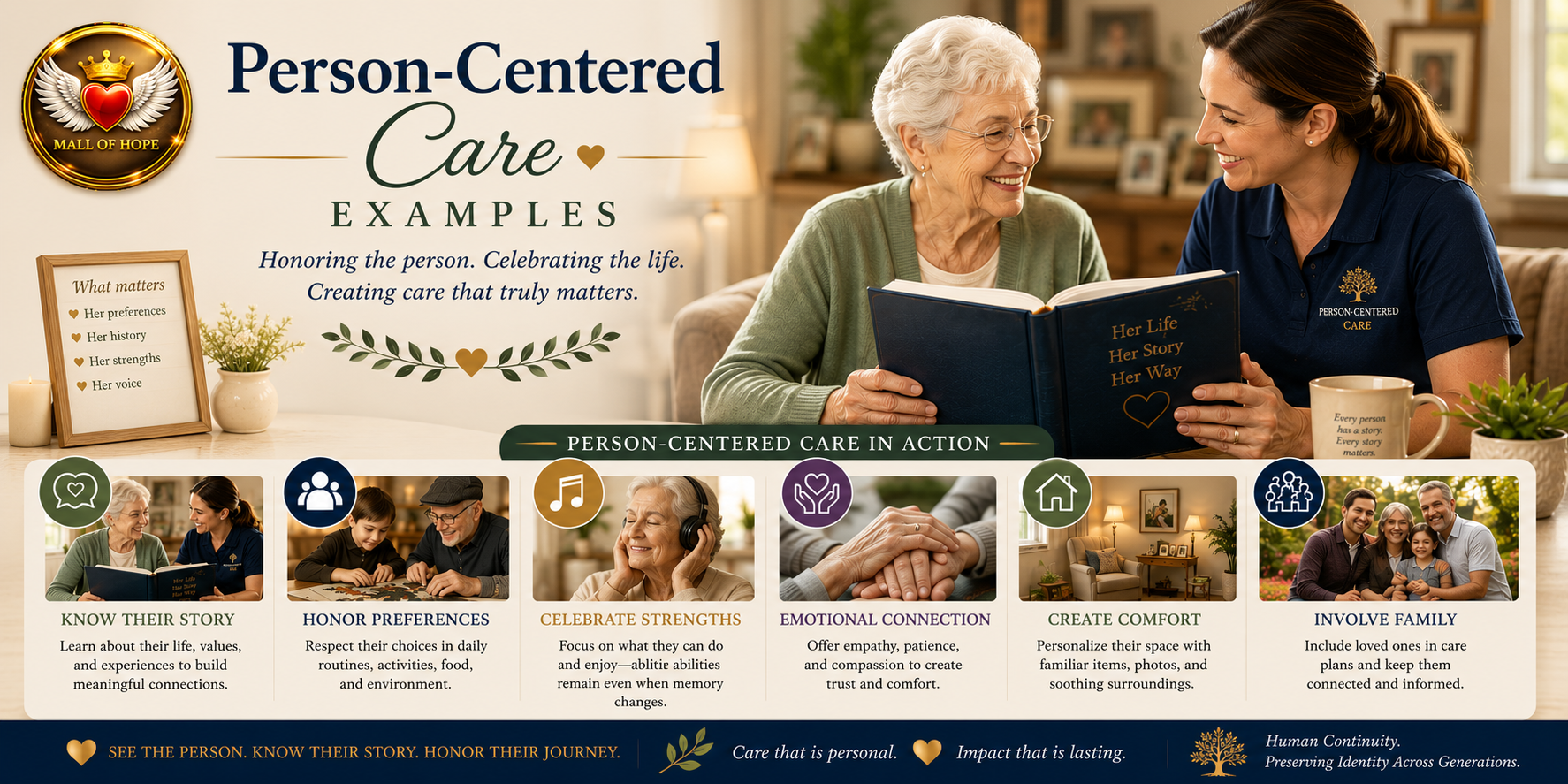

Every person has a unique life story that shapes who they are. Before becoming a patient, resident, or care recipient, they were parents, spouses, grandparents, teachers, veterans, business owners, artists, caregivers, neighbors, and friends. They developed routines, celebrated traditions, built careers, practiced their faith, and formed relationships that continue to define their identity. Person-centered care recognizes that quality care begins by understanding the individual—not simply their diagnosis or medical needs.
Rather than asking, “What is wrong with this person?” person-centered care asks, “Who is this person, and what matters most to them?” This approach is especially important for individuals living with Alzheimer’s disease and other forms of dementia, where preserving dignity, identity, and meaningful relationships becomes just as important as addressing physical health.
Research consistently identifies person-centered care as a best practice in dementia support because it improves communication, reduces distress, encourages meaningful engagement, and enhances quality of life (Fazio et al., 2018). Tom Kitwood, one of the pioneers of person-centered dementia care, emphasized that every individual retains personhood regardless of cognitive decline and deserves care that reflects their unique identity rather than focusing solely on disease (Kitwood, 1997).
The following examples illustrate how families, professional caregivers, home care providers, assisted living communities, and memory care teams can apply person-centered principles in everyday situations.
Example 1: Learning the Person’s Life Story
Instead of relying only on a medical chart, caregivers take time to understand the individual’s personal history.
For example, a caregiver learns that a resident spent 35 years as an elementary school teacher. Rather than offering generic activities, staff invite her to help organize books, read aloud to visiting children, or assist with simple educational activities. These familiar roles reinforce identity and create a sense of purpose.
Life story interviews, family conversations, memory books, and personal history profiles provide valuable information that helps caregivers understand the person beyond their diagnosis.
Example 2: Respecting Personal Routines
Many people develop routines over decades that provide comfort and stability.
Instead of requiring everyone to wake at the same time, caregivers ask:
- What time did you usually wake up?
- How did you begin your mornings?
- Did you enjoy coffee before breakfast?
- Were you an early riser or a night owl?
Allowing familiar routines whenever possible reduces anxiety and helps individuals feel more at home.
Example 3: Using Preferred Communication
Effective communication is highly personal.
One individual may appreciate gentle conversation and humor, while another prefers direct, simple instructions delivered calmly.
A person-centered caregiver learns:
- Preferred name or nickname
- Language preferences
- Hearing or vision needs
- Cultural customs
- Topics that encourage conversation
- Topics that create distress
Rather than correcting someone experiencing memory loss, caregivers focus on validating emotions and maintaining a meaningful connection.
Example 4: Meaningful Activities Based on Interests
Activities become far more engaging when they reflect lifelong interests.
Examples include:
- A retired gardener helping water plants.
- A former mechanic organizing simple tools.
- A lifelong homemaker folding towels or baking cookies.
- A musician listening to favorite hymns or familiar songs.
- An artist enjoying painting or drawing.
- A veteran sharing military stories during remembrance events.
Meaningful engagement promotes dignity because it reflects abilities that remain rather than focusing on limitations.
Example 5: Honoring Faith and Spiritual Practices
Faith often remains deeply meaningful throughout aging and dementia.
Person-centered care may include:
- Reading favorite Bible passages.
- Praying together.
- Playing familiar hymns.
- Watching church services.
- Celebrating religious holidays.
- Providing opportunities for pastoral visits.
- Respecting lifelong spiritual traditions.
Understanding a person’s spiritual beliefs can provide comfort during periods of confusion, illness, or transition.
Example 6: Supporting Family Relationships
Families possess valuable knowledge that enhances care.
Caregivers encourage family members to share:
- Childhood stories
- Favorite foods
- Important traditions
- Meaningful photographs
- Family recipes
- Music preferences
- Personal achievements
- Sources of comfort
This partnership strengthens communication while ensuring care reflects the individual’s lifelong identity.
Example 7: Using Reminiscence to Encourage Conversation
Instead of asking questions that rely on recent memory, caregivers encourage discussion about familiar experiences.
For example:
- Looking through family photo albums.
- Listening to favorite music from young adulthood.
- Talking about careers or military service.
- Discussing favorite holidays.
- Sharing family recipes.
- Watching legacy videos.
- Reading old letters or journals.
Research supports reminiscence therapy as an approach that may improve communication, mood, and quality of life for many people living with dementia (Woods et al., 2018).
Example 8: Creating Personalized Care Plans
Rather than using identical care plans for every resident, person-centered care includes individualized information such as:
- Preferred daily schedule
- Favorite meals
- Cultural traditions
- Hobbies and interests
- Family involvement
- Sleep routines
- Music preferences
- Religious practices
- Communication style
- Calming strategies during stressful moments
These details allow caregivers to respond thoughtfully instead of relying solely on standardized routines.
Example 9: Preserving Identity Through Legacy Projects
Life story preservation is an important example of person-centered care.
Families and caregivers may work together to create:
- Professional life story interviews
- Legacy videos
- Memory books
- Personal history profiles
- Voice recordings
- Family archives
- Digital memory collections
- Biography projects
- Family trees
- Autobiographies
These resources help caregivers understand the individual while preserving identity for future generations.
Example 10: Seeing the Person Before the Diagnosis
Perhaps the most important example is the mindset behind every interaction.
Instead of seeing:
- A dementia patient
Caregivers see:
- A mother.
- A grandfather.
- A teacher.
- A veteran.
- A musician.
- A business owner.
- A faithful church member.
- A devoted spouse.
- A lifelong friend.
This perspective changes how conversations begin, how care is delivered, and how dignity is preserved.
Benefits of Person-Centered Care
Research has shown that person-centered care offers significant benefits for individuals living with dementia, caregivers, and families.
Potential benefits include:
- Improved quality of life
- Greater emotional well-being
- Reduced anxiety and distress
- Better communication
- Stronger caregiver relationships
- Increased participation in meaningful activities
- Enhanced dignity and independence
- Greater family satisfaction with care
- More individualized care planning
- Improved understanding of personal preferences
When caregivers know the individual’s story, care becomes more compassionate, respectful, and effective.
Building a Culture of Person-Centered Care
Person-centered care is not a single activity—it is an ongoing philosophy that guides every interaction. Families, home care agencies, assisted living communities, skilled nursing facilities, hospice providers, and memory care teams all play an important role in preserving identity throughout the caregiving journey.
Many organizations now encourage families to complete life history questionnaires, create “About Me” profiles, record professional life story interviews, develop memory books, and preserve legacy videos before significant cognitive decline occurs. These resources help new caregivers quickly understand the individual while strengthening communication across the care team.
Ultimately, person-centered care means recognizing that every person is far more than a diagnosis. Each individual carries a lifetime of relationships, accomplishments, traditions, beliefs, and experiences that continue to deserve respect. By learning someone’s story, honoring their preferences, and preserving their identity, caregivers provide more than excellent clinical care—they provide compassionate care that reflects the dignity, humanity, and unique life of the person they support.
Frequently Asked Questions
What is person-centered care?
Person-centered care is an approach that focuses on the individual’s personal history, values, preferences, relationships, strengths, and goals rather than concentrating only on illness or medical treatment.
What are examples of person-centered dementia care?
Examples include learning the person’s life story, respecting daily routines, using preferred communication styles, encouraging meaningful activities, honoring faith traditions, involving family members, and creating individualized care plans.
Why is person-centered care important?
Person-centered care improves communication, supports emotional well-being, preserves dignity, encourages meaningful engagement, strengthens family relationships, and helps caregivers better understand the person they support.
How does life history support person-centered care?
Life history provides caregivers with valuable information about family relationships, careers, hobbies, values, traditions, occupations, and personal preferences, allowing care to become more individualized and respectful.
When should families create a life history profile?
Ideally, families should create a life history profile before significant memory changes occur or soon after a diagnosis of mild cognitive impairment or early-stage dementia so the individual can actively participate in telling their own story.
References
Brooker, D. (2007). Person-centred dementia care: Making services better. Jessica Kingsley Publishers.
Fazio, S., Pace, D., Flinner, J., & Kallmyer, B. (2018). The fundamentals of person-centered care for individuals with dementia. The Gerontologist, 58(Suppl. 1), S10–S19.
Kitwood, T. (1997). Dementia reconsidered: The person comes first. Open University Press.
McCormack, B., & McCance, T. (2021). Person-Centred Practice in Nursing and Health Care (3rd ed.). Wiley-Blackwell.
Woods, B., O’Philbin, L., Farrell, E. M., Spector, A., & Orrell, M. (2018). Reminiscence therapy for dementia. Cochrane Database of Systematic Reviews, 3, CD001120.
World Health Organization. (2023). Dementia. https://www.who.int/news-room/fact-sheets/detail/dementia