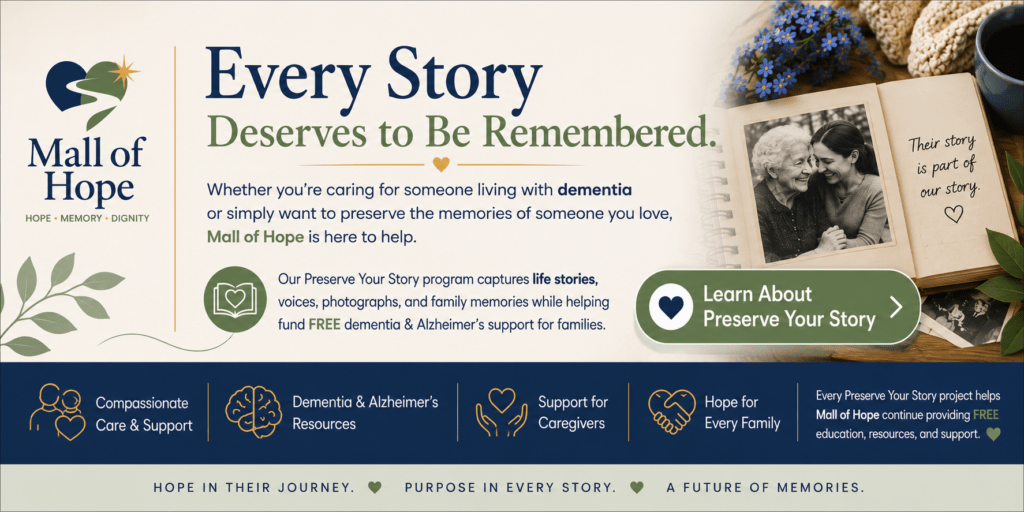

Compassionate Care, Family Guidance, & Identity
Preservation Throughout the Alzheimer’s Journey
Alzheimer’s Support: Helping Families Navigate One of Life’s Most Difficult Challenges
An Alzheimer’s disease diagnosis can be overwhelming for individuals and families alike. Questions about the future, caregiving responsibilities, safety, communication, financial planning, and quality of life often arise immediately after diagnosis. While Alzheimer’s disease progressively affects memory, thinking, and daily functioning, it does not erase a person’s identity, relationships, life experiences, values, or the impact they have had on those around them.
Alzheimer’s support services provide education, guidance, caregiver resources, emotional support, memory preservation tools, and person-centered planning to help families navigate the challenges associated with the disease. Effective support focuses not only on medical and caregiving needs but also on preserving dignity, maintaining meaningful connections, and honoring the unique life story of the individual living with Alzheimer’s.
Research consistently demonstrates that person-centered approaches improve care experiences, enhance quality of life, and support both individuals living with dementia and their caregivers (Brooker, 2004; Kitwood, 1997). Alzheimer’s support is most effective when it addresses the needs of the entire family while recognizing the importance of preserving identity across every stage of the disease.
What Is Alzheimer’s Disease?
Alzheimer’s disease is the most common cause of dementia, accounting for approximately 60% to 80% of dementia cases worldwide. It is a progressive neurological disorder characterized by the gradual decline of memory, cognitive abilities, communication skills, and independent functioning.
Early symptoms often include:
- Difficulty remembering recent events
- Misplacing items
- Challenges finding words
- Confusion about dates or appointments
- Trouble completing familiar tasks
As Alzheimer’s progresses, individuals may experience:
- Increased memory loss
- Difficulty recognizing loved ones
- Communication challenges
- Behavioral and personality changes
- Reduced ability to perform daily activities
- Dependence on caregivers
Although there is currently no cure, early intervention, support services, and person-centered care can significantly improve quality of life.
Why Alzheimer’s Support Is Essential
Alzheimer’s affects far more than memory. It impacts entire families, often creating emotional, practical, financial, and caregiving challenges that can last for years.
Support services help families:
- Understand disease progression
- Prepare for future care needs
- Reduce caregiver stress
- Improve communication
- Preserve meaningful memories
- Strengthen family relationships
- Maintain quality of life
According to Livingston et al. (2020), comprehensive dementia care and support are critical components of improving outcomes for individuals and caregivers.
Alzheimer’s Support for Family Caregivers
Family members often become primary caregivers following an Alzheimer’s diagnosis. Adult children, spouses, siblings, and other relatives may assume responsibilities that include:
- Medication management
- Appointment coordination
- Personal care assistance
- Financial oversight
- Household management
- Emotional support
Caregiver burden can become significant over time. Research shows that caregivers of individuals with Alzheimer’s disease frequently experience higher levels of stress, depression, anxiety, and physical health challenges compared to non-caregivers (Adelman et al., 2014).
Support services provide caregivers with the knowledge, tools, and resources necessary to navigate these responsibilities more effectively.
Alzheimer’s Support for Healthcare Professionals
Healthcare providers play an essential role in Alzheimer’s care. Nurses, physicians, therapists, social workers, home health aides, and memory care professionals often work closely with families throughout the disease process.
Person-centered Alzheimer’s care emphasizes understanding the individual beyond the diagnosis. Healthcare professionals who have access to life story information can better understand:
- Personal preferences
- Cultural traditions
- Family relationships
- Religious beliefs
- Career experiences
- Significant life events
Research suggests that life story work supports person-centered care and improves relationships between care providers and individuals living with dementia (McKeown et al., 2010).
Alzheimer’s Support for Self-Employed Professionals
Self-employed individuals diagnosed with Alzheimer’s or caring for a loved one with the disease face unique concerns.
These may include:
- Business continuity planning
- Knowledge transfer
- Client relationship management
- Financial planning
- Legal documentation
- Legacy preservation
Support services can help individuals organize critical information, preserve professional accomplishments, and document personal stories for future generations.
Alzheimer’s Support for Educators
Teachers, professors, administrators, and educational leaders often possess decades of valuable experience, wisdom, and personal stories that deserve preservation.
Alzheimer’s support services can assist educators in:
- Preserving professional legacies
- Documenting educational philosophies
- Recording personal histories
- Organizing important documents
- Creating family memory archives
By preserving these stories, educators continue to influence future generations long after retirement.
Preserving Identity Throughout Alzheimer’s Disease
One of the greatest fears associated with Alzheimer’s is the belief that a person will eventually be forgotten or lose their sense of self.
However, person-centered dementia care recognizes that identity extends far beyond memory.
Individuals living with Alzheimer’s remain:
- Parents
- Grandparents
- Spouses
- Veterans
- Teachers
- Business owners
- Community leaders
- Storytellers
Their experiences, values, achievements, and relationships continue to matter.
Preserving identity helps caregivers, healthcare providers, and future generations remember the person behind the diagnosis.
The Role of Life Story Work in Alzheimer’s Support
Life story work involves collecting, preserving, and sharing information about an individual’s life experiences.
Research has shown that life story interventions can enhance communication, support emotional well-being, and improve person-centered care (McKeown et al., 2010).
Life story projects may include:
- Personal biographies
- Memory books
- Family histories
- Recorded interviews
- Photo collections
- Legacy letters
- Audio storytelling
- Video memories
These resources become invaluable tools for caregivers and family members.
Memory Preservation Before Memories Fade
One of the most meaningful forms of Alzheimer’s support involves preserving memories before significant cognitive decline occurs.
Important memories that families often capture include:
- Childhood experiences
- Family traditions
- Career accomplishments
- Military service
- Faith journeys
- Marriage stories
- Parenting experiences
- Life lessons and wisdom
Documenting these memories creates a lasting legacy that benefits both current and future generations.
Supporting Communication in Alzheimer’s Care
Communication difficulties often emerge as Alzheimer’s progresses. Families may struggle with conversations that once felt natural and effortless.
Supportive communication strategies include:
- Using simple language
- Allowing extra time for responses
- Focusing on emotions rather than facts
- Using photographs and memory prompts
- Avoiding arguments about remembered details
Life story materials can provide valuable conversation starters and promote meaningful engagement.
How Our Alzheimer’s Support Services Help
Our Alzheimer’s support services focus on preserving identity, supporting caregivers, and creating lasting connections through memory preservation and person-centered planning.
We help families:
- Capture life stories
- Build memory archives
- Preserve family history
- Create caregiver reference systems
- Document personal values
- Record meaningful experiences
- Organize important information
Our approach recognizes that while Alzheimer’s may affect memory, it does not diminish the value of a person’s life story.
Benefits of Alzheimer’s Support Services
Families who seek support early often experience significant benefits.
Reduced Caregiver Stress
Educational resources and planning tools help reduce uncertainty.
Improved Communication
Life story information supports more meaningful interactions.
Enhanced Person-Centered Care
Care plans become more individualized and respectful.
Stronger Family Connections
Shared memories strengthen relationships across generations.
Preservation of Legacy
Stories, values, and experiences are protected for future family members.
Better Care Coordination
Organized information improves communication among family members and healthcare providers.
Frequently Asked Questions
What is Alzheimer’s support?
Alzheimer’s support includes educational resources, caregiver assistance, planning tools, emotional support, and memory preservation services designed to help individuals and families affected by Alzheimer’s disease.
When should families seek Alzheimer’s support?
Support should ideally begin as soon as possible after diagnosis, allowing families to plan proactively and preserve important memories.
Can Alzheimer’s support help caregivers?
Yes. Caregiver education, planning resources, and emotional support can significantly reduce stress and improve confidence.
What is person-centered Alzheimer’s care?
Person-centered care focuses on understanding the individual’s history, preferences, values, and identity rather than focusing solely on symptoms.
Why is memory preservation important in Alzheimer’s disease?
Capturing stories and memories early helps preserve family history, personal identity, and important life experiences before cognitive decline progresses.
How can life story work help individuals with Alzheimer’s?
Life story work can support communication, emotional well-being, and more personalized caregiving approaches.
Are Alzheimer’s support services only for families?
No. Healthcare professionals, professional caregivers, educators, self-employed individuals, and community organizations also benefit from Alzheimer’s support resources.
What should be included in a memory archive?
Photographs, family history, personal stories, audio recordings, videos, letters, achievements, traditions, and important life lessons.
How does preserving identity improve Alzheimer’s care?
Understanding who a person is helps caregivers provide more compassionate, individualized, and meaningful support.
Can Alzheimer’s support improve quality of life?
Research suggests that person-centered approaches and caregiver support contribute to improved well-being for both individuals living with Alzheimer’s and their caregivers.
Key Takeaways
Alzheimer’s disease affects memory, but it does not erase a person’s identity, relationships, values, or legacy. Comprehensive Alzheimer’s support combines education, caregiver assistance, person-centered care, memory preservation, and future planning. By documenting life stories, preserving family history, and creating meaningful caregiver resources, families can maintain connection, dignity, and continuity throughout every stage of the Alzheimer’s journey.
References
Adelman, R. D., Tmanova, L. L., Delgado, D., Dion, S., & Lachs, M. S. (2014). Caregiver burden: A clinical review. JAMA, 311(10), 1052–1060. https://doi.org/10.1001/jama.2014.304
Brooker, D. (2004). What is person-centred care in dementia? Reviews in Clinical Gerontology, 13(3), 215–222. https://doi.org/10.1017/S095925980400108X
Livingston, G., Huntley, J., Sommerlad, A., Ames, D., Ballard, C., Banerjee, S., Burns, A., Cohen-Mansfield, J., Cooper, C., Costafreda, S. G., Dias, A., Fox, N., Gitlin, L. N., Howard, R., Kales, H. C., Larson, E. B., Ritchie, K., Rockwood, K., Sampson, E. L., … Mukadam, N. (2020). Dementia prevention, intervention, and care: 2020 report of the Lancet Commission. The Lancet, 396(10248), 413–446. https://doi.org/10.1016/S0140-6736(20)30367-6
McKeown, J., Clarke, A., Ingleton, C., Ryan, T., & Repper, J. (2010). The use of life story work with people with dementia to enhance person-centred care. International Journal of Older People Nursing, 5(2), 148–158. https://doi.org/10.1111/j.1748-3743.2010.00219.x
Kitwood, T. (1997). Dementia Reconsidered: The Person Comes First. Open University Press.