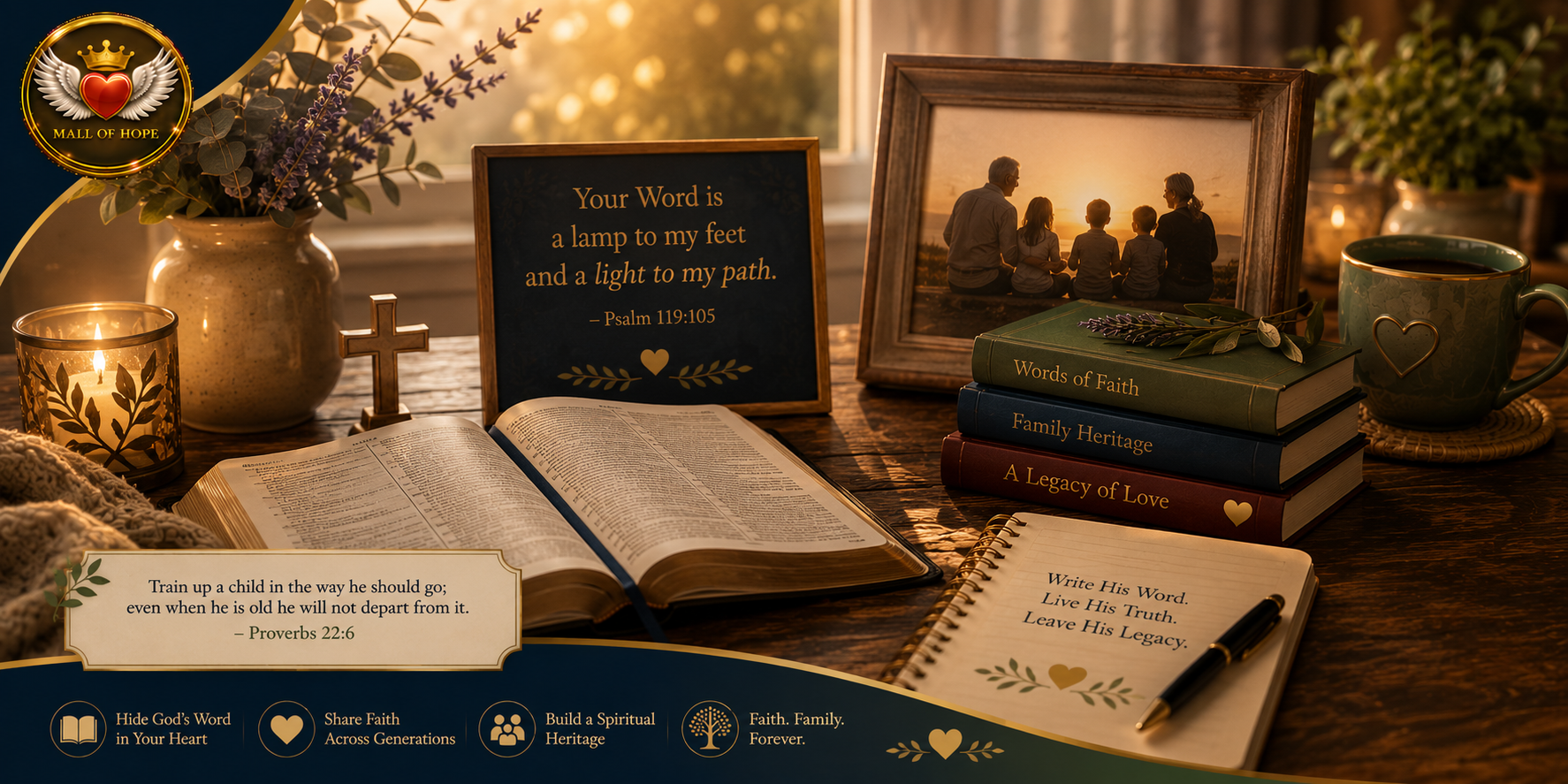

Throughout the Bible, God repeatedly calls His people to remember His faithfulness and to pass that knowledge from one generation to the next. While material inheritances may eventually fade, a legacy rooted in faith, love, wisdom, and obedience to God continues to influence families long after earthly possessions are gone. A Bible verse legacy reminds believers that one of the greatest gifts they can leave is a life that points future generations toward God through personal testimony, faithful living, and the preservation of family stories.
Scripture consistently emphasizes the importance of teaching children, honoring parents, remembering God’s mighty works, and sharing personal experiences of His provision. These biblical principles encourage families to intentionally preserve stories of faith alongside family history. Whether through written memoirs, legacy videos, professional life story interviews, journals, family Bibles, or recorded testimonies, documenting God’s work throughout a person’s life creates a spiritual inheritance that strengthens future generations.
Modern technology allows believers to preserve these stories in ways that were impossible only a generation ago. Families can record testimonies, digitize handwritten journals, preserve photographs, create family history books, and record grandparents sharing favorite Bible passages and life lessons. These projects ensure that children and grandchildren inherit not only biblical knowledge but also firsthand examples of faithful living.
For older adults, especially those living with Alzheimer’s disease or other forms of dementia, preserving faith stories also supports identity and person-centered care. Research has shown that life review promotes emotional well-being by helping individuals integrate their life experiences into a meaningful narrative (Butler, 1963). Understanding an individual’s spiritual beliefs and personal history also improves compassionate, person-centered caregiving by recognizing the whole person rather than focusing only on medical needs (Fazio et al., 2018).
Whether you are preserving your own testimony, recording your parents’ stories, or helping grandparents create a lasting family archive, Scripture provides timeless encouragement for leaving a legacy grounded in faith that will continue inspiring future generations.
Bible Verses About Leaving a Legacy
The Bible contains many passages that emphasize passing faith, wisdom, and God’s faithfulness from one generation to another. These verses remind believers that legacy is not simply about possessions but about preserving spiritual truth through both words and daily living.
Some of the most meaningful Bible verses about legacy include:
Deuteronomy 6:6–7 (NIV, 2011)
“These commandments that I give you today are to be on your hearts. Impress them on your children. Talk about them when you sit at home and when you walk along the road…”
This passage teaches that faith should become part of everyday family life. Legacy is built through consistent conversations, shared experiences, and intentional teaching across generations.
Psalm 78:4 (NIV, 2011)
“We will not hide them from their descendants; we will tell the next generation the praiseworthy deeds of the Lord…”
The psalmist encourages families to preserve stories of God’s faithfulness so future generations will know His power and continue trusting Him.
Psalm 145:4 (NIV, 2011)
“One generation commends your works to another; they tell of your mighty acts.”
Faith is designed to be shared across generations. Every testimony contributes to an ongoing story of God’s work throughout history.
Proverbs 13:22 (NIV, 2011)
“A good person leaves an inheritance for their children’s children…”
While often understood financially, many Christians recognize that wisdom, character, integrity, and faith are among the greatest inheritances anyone can leave.
2 Timothy 1:5 (NIV, 2011)
“I am reminded of your sincere faith, which first lived in your grandmother Lois and in your mother Eunice…”
Paul highlights the power of generational faith, demonstrating how one family’s spiritual influence shaped future ministry.
These passages encourage believers to intentionally preserve both biblical truth and personal testimony so future generations understand God’s faithfulness through real family experiences.
Building a Legacy Through Scripture and Story
Bible verses provide the foundation of faith, while personal stories demonstrate how those truths were lived out. Together they create a rich spiritual heritage that future generations can understand and apply to their own lives.
Many families preserve both Scripture and testimony through:
- Professional life story interviews
- Legacy videos
- Written memoirs
- Family Bibles with handwritten notes
- Prayer journals
- Letters to children and grandchildren
- Recorded testimonies
- Memory books
- Family history projects
- Digital legacy archives
Meaningful conversations often include questions such as:
- Which Bible verse has guided your life the most?
- When did you first experience God’s faithfulness?
- How has Scripture influenced your marriage or parenting?
- Which passages gave you strength during difficult seasons?
- What advice would you want future generations to remember?
Recording these reflections allows future descendants to hear how biblical truth shaped real decisions, relationships, hardships, and victories.
Many families also preserve favorite hymns, devotional readings, sermon notes, church bulletins, baptism certificates, photographs from mission trips, and handwritten prayers alongside Scripture. These materials provide historical context while illustrating how faith was practiced throughout everyday life.
Professional interviews often produce edited legacy videos, written transcripts, and digital archives that preserve voice, personality, emotion, and testimony together with cherished biblical passages.
Bible Verse Legacy and Person-Centered Care
Faith frequently becomes an even greater source of comfort during aging, illness, and caregiving. Many older adults find strength through familiar Bible verses, worship music, prayer, and lifelong spiritual practices. Recording these preferences helps preserve an important part of personal identity.
Person-centered care recognizes that spiritual beliefs contribute significantly to emotional well-being and should be respected throughout the caregiving journey (Fazio et al., 2018). Understanding someone’s favorite Scriptures, church traditions, prayer routines, and personal testimony allows caregivers to provide more individualized and compassionate support.
For individuals living with Alzheimer’s disease or other forms of dementia, familiar Bible verses often remain meaningful even when recent memories become more difficult to recall. Caregivers may find comfort in reading passages such as Psalm 23, John 14, Isaiah 41:10, Romans 8, or Philippians 4 alongside the individual’s own recorded reflections.
Families are encouraged to preserve faith stories and favorite Scriptures early, particularly following a diagnosis of mild cognitive impairment or early-stage dementia. Recording spiritual reflections while communication remains strong captures valuable memories, testimony, and encouragement that may later become difficult to express.
Research supports life review and reminiscence as approaches that strengthen emotional well-being and reinforce identity among older adults (Butler, 1963). For believers, revisiting Scripture alongside personal experiences of God’s faithfulness creates a meaningful connection between faith and memory.
Church communities also play an important role by visiting older adults, praying together, reading Scripture, singing familiar hymns, and helping preserve spiritual identity throughout the aging process.
Preserving Your Bible Verse Legacy for Future Generations
A Bible verse legacy extends beyond memorizing Scripture—it demonstrates how God’s Word transformed an individual’s life. Every testimony, recorded interview, handwritten prayer, and favorite Bible passage becomes part of a family’s spiritual heritage.
Many families create comprehensive legacy collections that include life story interviews, Scripture reflections, testimony videos, memoirs, genealogy research, family photographs, journals, recorded prayers, memory books, church histories, and secure digital archives. Together, these resources preserve both family history and the biblical values that shaped each generation.
Modern technology makes long-term preservation easier than ever. High-definition video recordings, searchable transcripts, encrypted cloud storage, external hard drives, and digital family archives help ensure these stories remain protected while allowing relatives around the world to access them.
Families can also establish traditions that continue the legacy by encouraging annual testimony recordings, Scripture discussions during family gatherings, intergenerational interviews, and written reflections on how God continues working in each generation. These practices strengthen family relationships while preserving an ongoing history of faith.
Ultimately, a Bible verse legacy is one of the greatest gifts a believer can leave behind. It reminds future generations that Scripture is not simply something to read—it is something to live. By preserving your favorite Bible verses alongside your personal story, you leave a testimony of God’s faithfulness that will continue encouraging children, grandchildren, and future descendants for generations to come.
Frequently Asked Questions
What is a Bible verse legacy?
A Bible verse legacy is the practice of preserving favorite Scriptures alongside personal testimony, life stories, family values, and faith experiences to encourage future generations.
What Bible verses are commonly associated with legacy?
Many families choose passages such as Deuteronomy 6:6–9, Psalm 78:4–7, Psalm 145:4, Proverbs 13:22, 2 Timothy 1:5, Joshua 24:15, and Colossians 3:16 because they emphasize generational faith and spiritual inheritance.
How can I preserve my Bible verse legacy?
You can preserve your legacy through life story interviews, testimony videos, memoirs, family Bibles, prayer journals, letters, memory books, digital archives, and recorded reflections on meaningful Scriptures.
How does preserving Scripture help families affected by dementia?
Recording favorite Bible verses, prayers, and personal reflections before memory changes progress helps preserve spiritual identity while giving caregivers meaningful ways to provide comfort and person-centered care.
Why should families record faith stories with Bible verses?
Combining Scripture with personal testimony helps future generations understand not only biblical teachings but also how those truths shaped the real lives, decisions, relationships, and values of their family members.
References
Butler, R. N. (1963). The life review: An interpretation of reminiscence in the aged. Psychiatry, 26(1), 65–76.
Duke, M. P., Lazarus, A., & Fivush, R. (2008). Knowledge of family history as a clinically useful index of psychological well-being and prognosis. Journal of Family Life, 7(2), 133–140.
Fazio, S., Pace, D., Flinner, J., & Kallmyer, B. (2018). The fundamentals of person-centered care for individuals with dementia. The Gerontologist, 58(Suppl. 1), S10–S19.
Holy Bible, New International Version. (2011). Zondervan. (Original work published 1973)
Kitwood, T. (1997). Dementia reconsidered: The person comes first. Open University Press.
McAdams, D. P. (2008). Personal narratives and the life story. In O. P. John, R. W. Robins, & L. A. Pervin (Eds.), Handbook of personality: Theory and research (3rd ed., pp. 242–262). Guilford Press.
Pargament, K. I. (2013). Spiritually integrated psychotherapy: Understanding and addressing the sacred. Guilford Press.
Woods, B., O’Philbin, L., Farrell, E. M., Spector, A., & Orrell, M. (2018). Reminiscence therapy for dementia. Cochrane Database of Systematic Reviews, 3, CD001120.
World Health Organization. (2023). Dementia. https://www.who.int/news-room/fact-sheets/detail/dementia