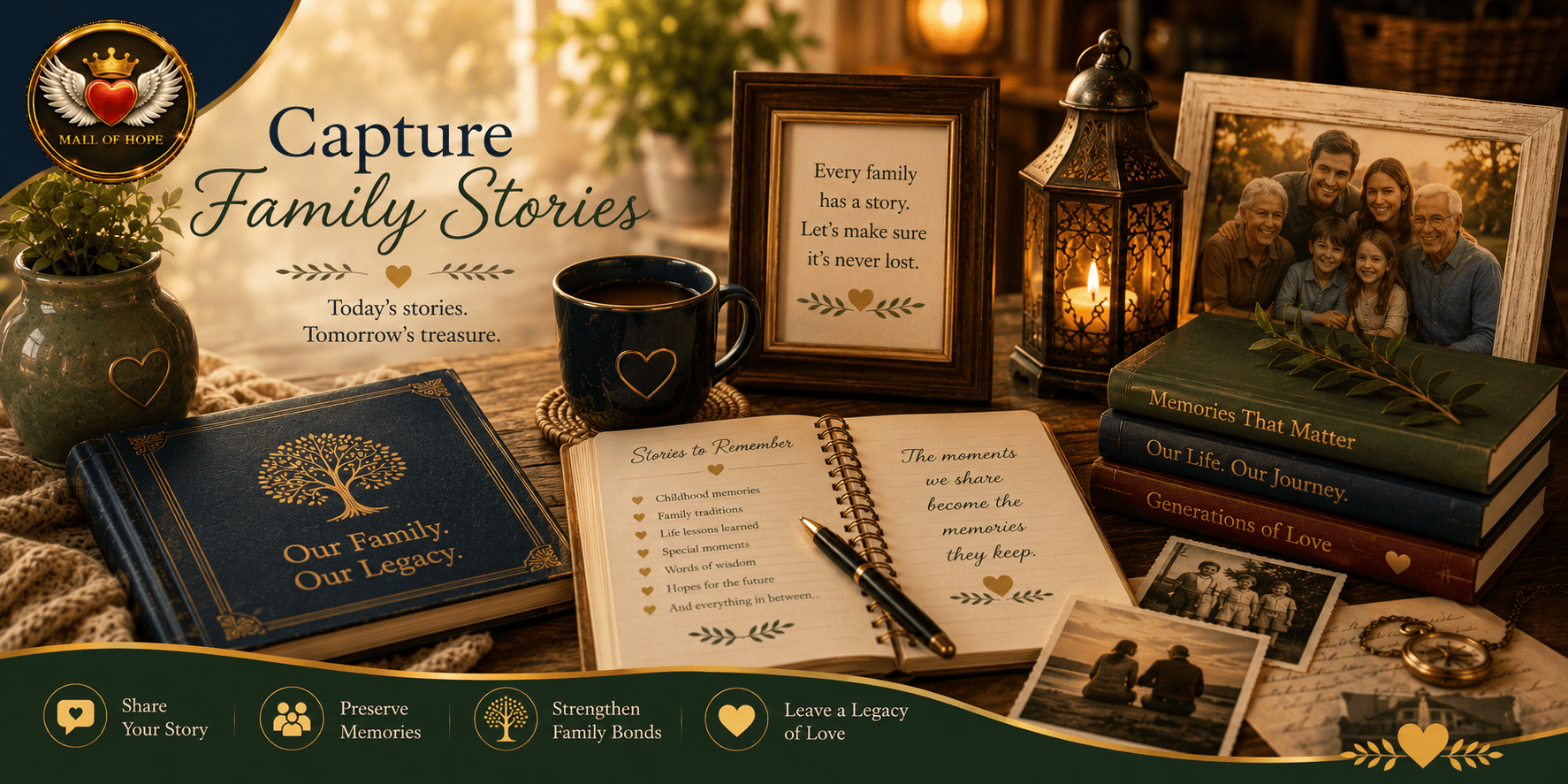

Every family has stories that deserve to be remembered. They are told around dinner tables, shared during holidays, recalled at family reunions, and passed from grandparents to grandchildren through conversation. These stories explain where a family came from, the challenges previous generations overcame, the traditions they created, and the values they hoped would continue long into the future. Yet without intentional preservation, many of these memories disappear within a single generation.
Capturing family stories is one of the most meaningful ways to preserve identity across generations. While family trees, birth certificates, and historical documents provide valuable genealogical information, they rarely capture the personalities, emotions, wisdom, humor, and experiences that bring family history to life. Recording these stories through interviews, video biographies, audio recordings, written memoirs, and digital archives creates an enduring legacy that allows future generations to know not only their ancestors’ names but also who they truly were.
Family storytelling has become increasingly important as populations age and more families experience Alzheimer’s disease and other forms of dementia. Recording memories before cognitive decline progresses helps preserve personal identity while creating valuable resources for caregivers and loved ones. Research suggests that reminiscence and life review strengthen psychological well-being, reinforce identity, and encourage meaningful reflection throughout later adulthood (Butler, 1963). These stories also become treasured keepsakes that help families remain connected even when memory changes occur.
Whether preserving childhood memories, documenting immigration stories, recording military service, celebrating cultural traditions, or sharing life lessons, capturing family stories creates a living history that continues educating, inspiring, and strengthening future generations.
Why Family Stories Matter
Every family’s history extends far beyond names and dates recorded in official documents. The real legacy of a family lives within the stories that explain how previous generations loved, struggled, celebrated, sacrificed, and persevered. These narratives help descendants understand where they came from while reinforcing a sense of belonging and identity.
Many people regret not asking parents or grandparents more questions before they passed away. They wish they had learned about childhood memories, first jobs, military experiences, family traditions, immigration journeys, marriage, parenting, faith, and the lessons learned throughout life. Once those individuals are gone, many of these memories disappear forever.
Research has shown that children and young adults who know more about their family’s history often demonstrate greater resilience, emotional well-being, and self-confidence because they understand themselves as part of a continuing family story (Duke et al., 2008). Family stories teach perseverance, gratitude, compassion, courage, and hope by showing how earlier generations navigated difficult times while building meaningful lives.
Capturing family stories also benefits the storytellers themselves. Reflecting on important memories encourages gratitude, strengthens identity, and provides opportunities to recognize personal growth. Butler (1963) described this process as life review, suggesting it supports emotional integration and psychological well-being throughout later adulthood.
The storytelling process also strengthens present-day relationships. Recording interviews creates opportunities for parents, grandparents, children, and grandchildren to spend meaningful time together asking thoughtful questions, looking through family photographs, and discovering stories that may never have been shared before. Many families find that the conversations themselves become treasured memories.
Beyond individual families, recorded stories preserve community and cultural heritage. Veterans, educators, healthcare professionals, farmers, business owners, artists, immigrants, clergy, and community leaders all contribute experiences that enrich local history while preserving traditions and firsthand perspectives on historical events.
Meaningful Ways to Capture Family Stories
Capturing family stories has never been easier. Modern technology allows families to preserve memories using a variety of formats that can be shared across generations. The most successful projects often combine several methods to create a rich and lasting family archive.
One of the most effective approaches is conducting life story interviews. Guided conversations encourage family members to share memories about childhood, parents and grandparents, education, careers, marriage, parenting, military service, travel, cultural traditions, faith, volunteer work, and defining life experiences. Open-ended questions invite authentic storytelling while preserving the speaker’s unique personality and perspective.
Video interviews are especially meaningful because they capture facial expressions, body language, laughter, and tone of voice alongside the stories themselves. Future generations often describe hearing a grandparent’s voice or seeing a familiar smile as one of the most treasured aspects of preserved family history. Audio recordings also provide an intimate and accessible way to document conversations while requiring only simple recording equipment.
Written memoirs, journals, and family history books organize stories into lasting narratives that can include photographs, letters, recipes, newspaper articles, military records, and family trees. These written collections become valuable resources for both genealogy research and future family storytelling.
Photograph preservation is another essential part of capturing family stories. Many families possess albums filled with unidentified images whose meaning gradually disappears because names, dates, and locations have been forgotten. Digitizing photographs and adding detailed captions ensures these visual memories remain valuable for future generations.
Digital legacy platforms allow families to organize interviews, videos, scanned documents, home movies, genealogy records, historical timelines, and multimedia collections into searchable online archives. Secure cloud storage helps protect these materials while making them accessible regardless of where family members live.
The most important ingredient in any family storytelling project is authenticity. Honest conversations, spontaneous memories, humor, emotion, and everyday experiences often become the stories that future generations treasure most because they reveal the true character of the people who came before them.
Family Stories and Person-Centered Dementia Care
Capturing family stories plays an important role in person-centered dementia care by preserving identity before memory changes become more significant. Alzheimer’s disease and other forms of dementia affect memory and communication, but they do not erase a person’s relationships, accomplishments, values, cultural traditions, or emotional life. Recording these stories early ensures they remain available throughout the caregiving journey.
Person-centered care emphasizes understanding the individual beyond their diagnosis (Kitwood, 1997). Family stories provide caregivers with valuable insight into occupations, hobbies, military service, favorite music, spiritual beliefs, family traditions, meaningful relationships, and lifelong interests. This information helps healthcare professionals provide individualized care that respects dignity while strengthening emotional connection.
For example, learning that someone was a teacher, nurse, veteran, artist, musician, engineer, farmer, or entrepreneur creates opportunities for meaningful conversations and activities that reinforce identity. Familiar songs, treasured recipes, family photographs, and beloved traditions often encourage reminiscence while reducing anxiety and promoting emotional comfort.
Families frequently begin recording stories shortly after a diagnosis of mild cognitive impairment or early-stage dementia while communication remains relatively strong. These interviews preserve the individual’s voice, humor, personality, and wisdom, becoming treasured keepsakes for spouses, children, grandchildren, and future descendants.
Professional caregivers also benefit from understanding personal histories. Life story resources help them see the person behind the medical diagnosis, improving communication while supporting compassionate, individualized care planning.
Research supports reminiscence therapy and life story work as evidence-based person-centered interventions that may improve mood, communication, and quality of life for many individuals living with dementia (Woods et al., 2018). Captured family stories become valuable tools that continue supporting emotional well-being throughout every stage of care.
Preserving Your Family Legacy for Future Generations
Every family story contributes to a larger legacy. Together, these memories explain how traditions began, why certain values remain important, and how each generation helped shape the next. Preserving these stories ensures that future descendants inherit not only historical facts but also the character, wisdom, resilience, and love that define their family.
Family storytelling complements genealogy by adding meaning to historical records. Birth certificates, census records, military documents, marriage licenses, and family trees establish important facts, while recorded stories reveal the people behind those records. They explain motivations, struggles, celebrations, and life lessons that official documents can never fully capture.
A complete family legacy often includes oral history interviews, legacy videos, written memoirs, family photographs, journals, home movies, military records, genealogy research, historical documents, recipes, and digital archives. Together, these resources create a multidimensional portrait of a family’s identity across generations.
Long-term preservation requires thoughtful planning. Families should maintain multiple digital backups using encrypted cloud storage and external hard drives while organizing files with descriptive names, interview dates, and written transcripts. Regularly updating storage formats helps ensure future accessibility as technology evolves.
Capturing family stories should become an ongoing tradition rather than a one-time project. Birthdays, anniversaries, holidays, reunions, retirements, and milestone celebrations provide natural opportunities to record additional conversations and preserve new memories. Each generation has experiences worth sharing, and every voice contributes to the continuing story of the family.
Ultimately, capturing family stories is an act of love and remembrance. It preserves laughter, wisdom, traditions, faith, resilience, and the countless moments that make every family unique. These stories remind future generations where they came from, strengthen their sense of identity, and inspire them to carry family values into the future. By taking time today to record the stories that matter most, families create a lasting legacy that continues connecting hearts across generations long after today’s conversations become tomorrow’s treasured memories.
Frequently Asked Questions
Why is it important to capture family stories?
Capturing family stories preserves memories, traditions, values, and personal experiences that might otherwise be lost. These stories strengthen family identity and create meaningful connections across generations.
What is the best way to record family stories?
Many families combine video interviews, audio recordings, written memoirs, family history books, digitized photographs, genealogy research, and secure digital archives to preserve family stories.
When should families begin recording their stories?
The best time is now. Recording stories before aging or health changes affect memory ensures that details, personality, and important life experiences are preserved while communication remains strong.
How do family stories help individuals living with dementia?
Recorded family stories preserve identity, support person-centered dementia care, encourage reminiscence, and help caregivers better understand an individual’s life, values, relationships, and preferences.
Can family stories become part of genealogy research?
Yes. Family stories complement genealogy by adding personal experiences, traditions, emotions, and historical context to official records, creating a richer understanding of family history.
References
Brooker, D. (2007). Person-centred dementia care: Making services better. Jessica Kingsley Publishers.
Butler, R. N. (1963). The life review: An interpretation of reminiscence in the aged. Psychiatry, 26(1), 65–76.
Duke, M. P., Lazarus, A., & Fivush, R. (2008). Knowledge of family history as a clinically useful index of psychological well-being and prognosis. Journal of Family Life, 7(2), 133–140.
Kitwood, T. (1997). Dementia reconsidered: The person comes first. Open University Press.
McAdams, D. P. (2008). Personal narratives and the life story. In O. P. John, R. W. Robins, & L. A. Pervin (Eds.), Handbook of personality: Theory and research (3rd ed., pp. 242–262). Guilford Press.
National Institute on Aging. (2024). Alzheimer’s disease fact sheet. https://www.nia.nih.gov/health/alzheimers-and-dementia/alzheimers-disease-fact-sheet
Woods, B., O’Philbin, L., Farrell, E. M., Spector, A., & Orrell, M. (2018). Reminiscence therapy for dementia. Cochrane Database of Systematic Reviews, 3, CD001120.
World Health Organization. (2023). Dementia. https://www.who.int/news-room/fact-sheets/detail/dementia