
Every person has a unique story that influences how they experience aging, illness, relationships, and care. While medical assessments provide essential information about physical health, they often do not explain the values, preferences, experiences, routines, and relationships that shape an individual’s daily life. A care plan based on life history combines clinical care with personal history to create a truly person-centered approach that respects identity while improving quality of life.
Rather than focusing solely on diagnoses and medical needs, life history-based care planning considers who the individual has been throughout their life. It incorporates childhood memories, occupations, family traditions, cultural background, military service, hobbies, spiritual beliefs, daily routines, favorite activities, communication preferences, and personal goals into every aspect of care. This holistic understanding allows caregivers to deliver support that is meaningful, individualized, and respectful.
Life history-based care planning has become particularly valuable for individuals living with Alzheimer’s disease and other forms of dementia. Although dementia gradually affects memory, language, and cognitive abilities, it does not erase a person’s identity, values, emotions, or lifelong experiences. Understanding these experiences enables caregivers to communicate more effectively, reduce distress, encourage meaningful engagement, and preserve dignity throughout every stage of care.
Person-centered care is recognized internationally as a best practice for dementia support. Kitwood (1997) argued that preserving personhood should remain central to care, while more recent research demonstrates that individualized care planning improves communication, emotional well-being, and quality of life for many people living with dementia (Fazio et al., 2018). Life story work and reminiscence also support identity and emotional health by helping individuals connect with meaningful memories and relationships (Woods et al., 2018).
Whether care is provided at home, in assisted living, memory care, skilled nursing, hospice, or community-based programs, a care plan based on life history helps ensure every individual continues to be recognized first as a person—not simply as a patient.
Why Life History Should Guide Care Planning
Traditional care plans often prioritize medications, diagnoses, physical limitations, and clinical interventions. While these elements remain essential, they represent only one part of a person’s overall well-being. Effective care also requires understanding what gives someone’s life meaning, what comforts them during difficult moments, and what helps them feel safe, respected, and connected.
Life history provides this essential context. Learning about someone’s childhood, career, family, military service, cultural heritage, faith, volunteer work, hobbies, and favorite routines allows caregivers to personalize daily support in ways that improve emotional well-being while strengthening trust.
For example, a former teacher may enjoy reading aloud or helping grandchildren with homework. A retired farmer may find comfort spending time outdoors or caring for plants. Someone who spent years cooking family meals may enjoy baking simple recipes or sharing traditional dishes. These familiar experiences reinforce identity while creating opportunities for meaningful engagement.
Research demonstrates that people who understand their family history often experience greater resilience and a stronger sense of identity because they recognize themselves as part of an ongoing life narrative (Duke et al., 2008). Similarly, care based on personal history reinforces continuity between the person’s past and present, helping preserve self-esteem and emotional security.
Families also benefit from life history-based care planning. Sharing stories, photographs, traditions, and personal preferences helps ensure that professional caregivers understand their loved one beyond medical records. This collaboration builds trust while creating more individualized and compassionate care.
Building a Care Plan Based on Life History
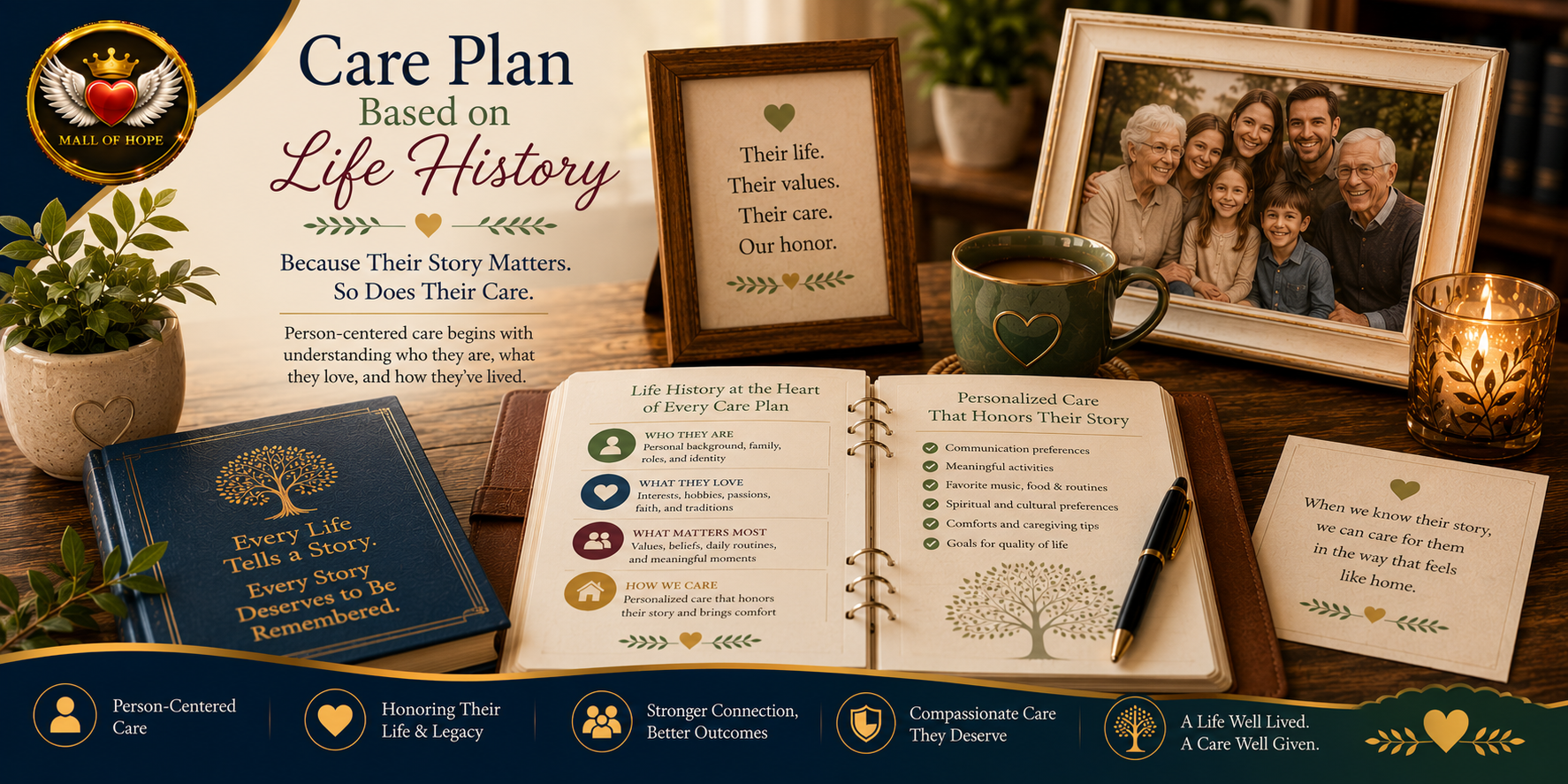
A comprehensive life history-based care plan combines clinical information with detailed knowledge about the individual’s personal experiences, preferences, and daily life. The goal is to provide caregivers with practical guidance that supports meaningful interactions while respecting the person’s individuality.
Key sections of a life history care plan often include:
- Personal biography and life story
- Family relationships and important support people
- Childhood memories and cultural heritage
- Education, occupation, and military service
- Religious beliefs and spiritual practices
- Hobbies, interests, and meaningful activities
- Favorite music, books, films, and sports
- Daily routines and preferred schedules
- Food preferences and family recipes
- Communication preferences and sensory needs
- Personal strengths, accomplishments, and values
- Situations that provide comfort or create stress
- Individual goals for health, independence, and quality of life
Care plans should also document practical caregiving strategies. For example, caregivers may learn that the individual prefers quiet mornings, responds well to familiar music during bathing, enjoys afternoon walks, or feels calmer when addressed by a preferred nickname. Small details often have a significant impact on comfort and cooperation.
Life story interviews are one of the most valuable tools for gathering this information. Through guided conversations, individuals and family members share memories, traditions, achievements, life lessons, and important relationships that become the foundation for individualized care planning.
Supporting materials such as family photographs, memory books, legacy videos, genealogy records, journals, letters, recipes, and recorded interviews provide additional insight while encouraging meaningful conversations between caregivers and the individual receiving care.
Life History Care Plans in Dementia Care
Life history becomes especially important when caring for someone living with Alzheimer’s disease or another form of dementia. As memory and communication gradually change, caregivers may find it difficult to understand the reasons behind certain behaviors, emotional responses, or personal preferences. A life history-based care plan provides valuable context that improves understanding and guides compassionate responses.
Person-centered dementia care emphasizes understanding the whole individual rather than focusing solely on symptoms (Kitwood, 1997). Life history helps caregivers recognize what remains meaningful to the person even when recent memories become more difficult to access.
For example, if someone spent decades as a nurse, conversations about helping others or caring for patients may encourage positive engagement. A veteran may respond to military songs or service memories, while a lifelong gardener may find comfort caring for flowers or vegetables. Familiar activities often reduce anxiety because they draw upon long-term memories that remain accessible longer than recent events.
Families are encouraged to begin creating life history care plans soon after a diagnosis of mild cognitive impairment or early-stage dementia. Recording stories, preferences, and routines while communication remains relatively strong ensures important information is preserved for future caregivers.
Professional caregivers also benefit because life history provides practical guidance for individualized care planning. Rather than relying solely on standardized routines, they can adapt activities, communication styles, and daily schedules to reflect the individual’s preferences and personality.
Research supports life story work and reminiscence as evidence-based interventions that may improve mood, communication, and quality of life for many individuals living with dementia (Woods et al., 2018). Incorporating these approaches into daily care helps maintain emotional connection while reinforcing identity throughout the progression of the disease.
Creating Person-Centered Care That Honors Identity
A care plan based on life history is not a document that is completed once and placed in a file. It is a living guide that evolves alongside the individual, reflecting new experiences, changing preferences, and ongoing health needs. Regular updates ensure caregivers continue providing support that respects both the person’s history and their present circumstances.
Many families combine life history care plans with broader legacy preservation projects that include autobiography recordings, life story interviews, memory books, digital photo archives, family trees, legacy videos, journals, advance care planning documents, and personal preference guides. Together, these resources create a comprehensive picture of the individual’s life while improving continuity across healthcare settings.
Technology has made life history care planning even more accessible. Secure digital platforms allow families to organize interviews, photographs, communication guides, medication lists, emergency contacts, advance directives, and personal preferences in one centralized location. Authorized caregivers can quickly access important information whether care is provided at home, in hospitals, assisted living communities, rehabilitation facilities, or hospice programs.
Training healthcare professionals to use life history information effectively is equally important. Nurses, therapists, physicians, social workers, home health aides, and activity coordinators all benefit from understanding the person’s background before developing interventions or daily routines. This collaborative approach strengthens relationships while promoting more individualized and compassionate care.
Ultimately, a care plan based on life history recognizes that quality care begins with knowing the person. Every individual has a lifetime of experiences, relationships, accomplishments, and values that deserve recognition throughout every stage of aging and illness. By placing personal history alongside clinical care, families and professionals create environments where dignity, identity, and meaningful human connection remain at the heart of every decision. This approach not only improves care outcomes but also preserves the legacy of the individual for generations to come.
Frequently Asked Questions
What is a care plan based on life history?
A care plan based on life history combines medical care with personal information such as family history, occupations, hobbies, cultural traditions, routines, values, and preferences to provide individualized, person-centered care.
Who benefits from a life history-based care plan?
Older adults, individuals living with Alzheimer’s disease or dementia, family caregivers, home health providers, assisted living communities, memory care facilities, hospice teams, and healthcare professionals all benefit from this approach.
What information should be included in a life history care plan?
Important information includes personal biography, family relationships, career history, hobbies, favorite music, religious beliefs, communication preferences, daily routines, meaningful activities, cultural traditions, food preferences, and personal goals.
How does life history improve dementia care?
Understanding an individual’s life experiences helps caregivers communicate more effectively, create meaningful activities, reduce anxiety, reinforce identity, and provide compassionate care that respects the person’s unique background and preferences.
How often should a life history care plan be updated?
The care plan should be reviewed regularly and updated whenever health needs, routines, preferences, relationships, or personal circumstances change to ensure it continues reflecting the individual’s current needs and wishes.
References
Brooker, D. (2007). Person-centred dementia care: Making services better. Jessica Kingsley Publishers.
Butler, R. N. (1963). The life review: An interpretation of reminiscence in the aged. Psychiatry, 26(1), 65–76.
Duke, M. P., Lazarus, A., & Fivush, R. (2008). Knowledge of family history as a clinically useful index of psychological well-being and prognosis. Journal of Family Life, 7(2), 133–140.
Fazio, S., Pace, D., Flinner, J., & Kallmyer, B. (2018). The fundamentals of person-centered care for individuals with dementia. The Gerontologist, 58(Suppl. 1), S10–S19.
Kitwood, T. (1997). Dementia reconsidered: The person comes first. Open University Press.
McCormack, B., & McCance, T. (2017). Person-centred practice in nursing and health care: Theory and practice (2nd ed.). Wiley-Blackwell.
Woods, B., O’Philbin, L., Farrell, E. M., Spector, A., & Orrell, M. (2018). Reminiscence therapy for dementia. Cochrane Database of Systematic Reviews, 3, CD001120.
World Health Organization. (2023). Dementia. https://www.who.int/news-room/fact-sheets/detail/dementia