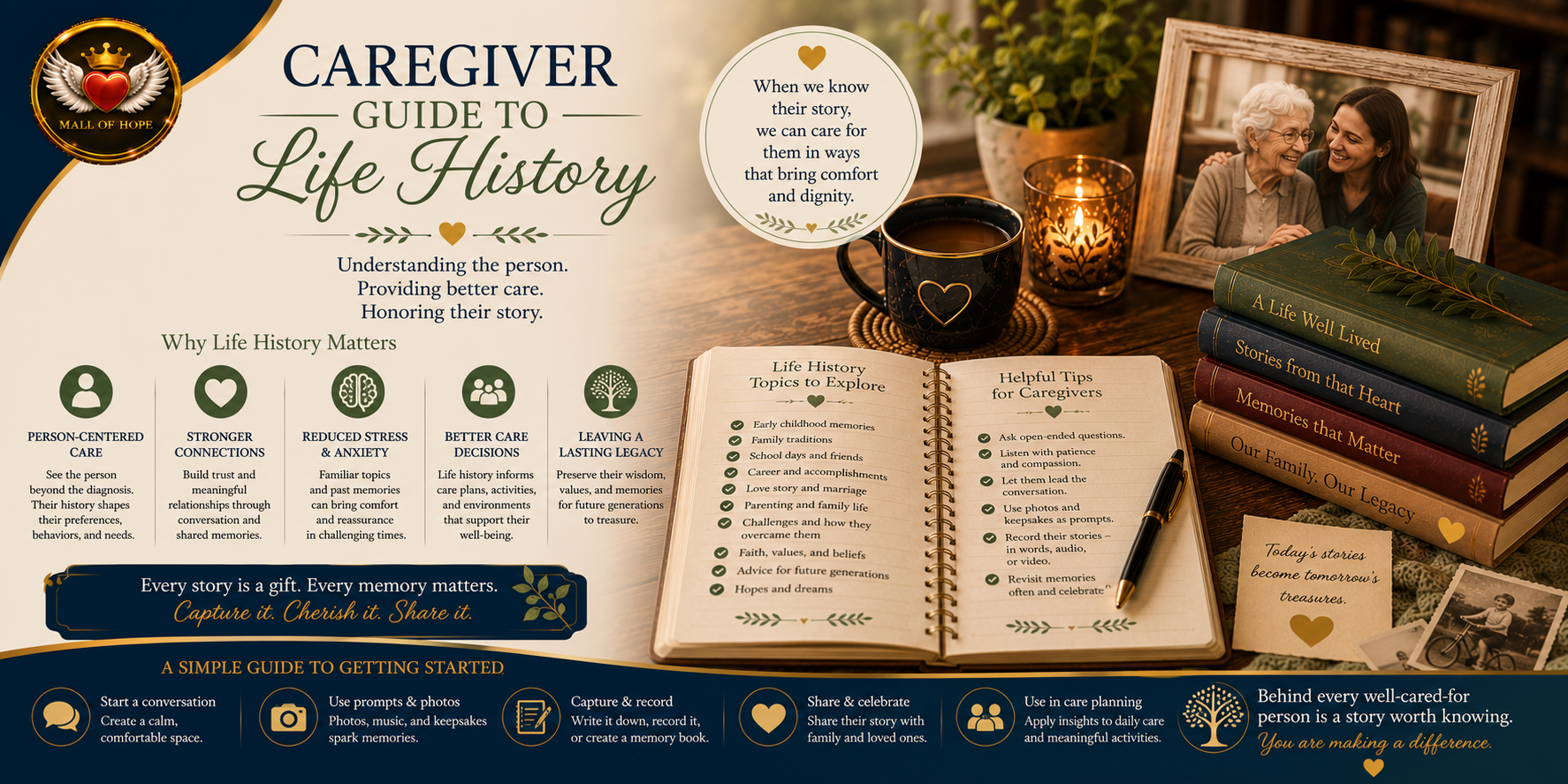

Every person has a story that extends far beyond a medical diagnosis. Before someone became a resident in a memory care community, received home care, or required assistance with daily activities, they were a parent, spouse, sibling, veteran, teacher, entrepreneur, caregiver, volunteer, artist, or friend. They built careers, celebrated milestones, raised families, practiced their faith, developed hobbies, and created traditions that shaped their identity. A caregiver guide to life history helps families and professional caregivers understand the whole person, allowing care to be guided by personal history rather than illness alone.
Life history is a cornerstone of person-centered care. Instead of focusing exclusively on symptoms, medications, or physical needs, life history provides valuable insight into an individual’s relationships, values, preferences, routines, interests, accomplishments, and experiences. This understanding helps caregivers communicate more effectively, reduce distress, encourage meaningful engagement, and preserve dignity throughout the caregiving journey.
For individuals living with Alzheimer’s disease or other forms of dementia, life history becomes even more important. As memory and communication change, caregivers often become the bridge between the person’s past and present. A well-documented life history enables family members, home health aides, nurses, assisted living staff, and memory care professionals to personalize care in ways that recognize the individual’s identity rather than defining them by their diagnosis.
Research consistently supports person-centered dementia care as a best practice. Understanding an individual’s biography improves communication, supports emotional well-being, and promotes meaningful relationships between caregivers and those they support (Fazio et al., 2018). Life review has also been shown to enhance emotional well-being by helping older adults integrate their experiences into a meaningful life narrative (Butler, 1963). Together, these approaches remind caregivers that preserving identity is just as important as managing physical health.
Whether you are a family caregiver, professional caregiver, home care agency, assisted living provider, or memory care specialist, using a life history guide helps transform caregiving into a more compassionate, individualized, and meaningful experience.
Why Life History Matters in Caregiving
Every behavior has a story behind it. Understanding someone’s background often explains preferences, routines, emotional responses, and communication styles that might otherwise be misunderstood.
For example, a former teacher may naturally enjoy helping others learn. A lifelong gardener may find peace outdoors. A military veteran may respond strongly to structured routines. A devoted parent may frequently ask about children or grandchildren because family has always been central to their identity.
Without understanding life history, caregivers may unintentionally overlook these important connections.
Person-centered care recognizes that individuals continue to possess identity, dignity, emotions, and meaningful preferences regardless of cognitive or physical changes (Kitwood, 1997). Learning about someone’s life allows caregivers to build trust while creating care plans that reflect the person’s unique experiences rather than applying a one-size-fits-all approach.
Research also demonstrates that people who know more about their family history often experience stronger resilience and emotional well-being because identity is closely connected to personal narrative (Duke et al., 2008). Preserving life history therefore benefits both the individual receiving care and the family members who continue sharing those stories.
Life history information can also reduce caregiver stress by providing practical strategies for communication and engagement. Knowing what brings comfort, purpose, or familiarity often helps caregivers respond more effectively during challenging moments.
Ultimately, caregiving becomes more meaningful when caregivers understand not only what assistance someone needs, but also who that person has always been.
What Should a Life History Guide Include?
A comprehensive life history guide should provide caregivers with practical information that supports everyday interactions while honoring the individual’s identity.
Important sections often include:
Personal Background
- Full name and preferred nickname
- Birthplace
- Family members
- Significant relationships
- Cultural background
- Languages spoken
Childhood and Family
- Childhood memories
- Parents and grandparents
- Family traditions
- Siblings
- Important life events
Education and Career
- Schools attended
- Occupations
- Military service
- Volunteer work
- Professional accomplishments
Family Life
- Marriage
- Children and grandchildren
- Parenting experiences
- Family celebrations
- Favorite holidays
Personal Preferences
- Favorite foods
- Music
- Hobbies
- Books
- Television programs
- Daily routines
- Pets
- Clothing preferences
Faith and Values
- Religious affiliation
- Church involvement
- Prayer practices
- Spiritual beliefs
- Important values
Meaningful Activities
- Gardening
- Cooking
- Crafts
- Sports
- Travel
- Music
- Reading
- Community involvement
Care Preferences
- Preferred communication style
- Sources of comfort
- Common anxieties or fears
- Calming techniques
- Sensory preferences
- Important routines
Whenever possible, include photographs, favorite music, family recipes, military memorabilia, awards, letters, journals, legacy videos, and voice recordings. These materials enrich the guide while helping caregivers connect more personally with the individual.
Using Life History in Dementia Care
Life history becomes especially valuable for people living with Alzheimer’s disease or other forms of dementia. As cognitive changes progress, long-term memories and emotional associations often remain meaningful even when recent events become difficult to recall.
Person-centered dementia care emphasizes seeing the person before the diagnosis (Kitwood, 1997). Life history supports this philosophy by helping caregivers understand why certain activities, conversations, or environments may bring comfort or distress.
For example:
- A retired nurse may enjoy helping fold towels or organize supplies.
- A lifelong musician may respond positively to familiar hymns or favorite songs.
- A former farmer may enjoy conversations about nature and seasons.
- A parent may find reassurance when shown labeled family photographs.
- Someone who values hospitality may enjoy helping set the table.
Understanding these personal experiences allows caregivers to replace generic activities with meaningful engagement that reflects lifelong interests and abilities.
Research supports life story work and reminiscence as evidence-based approaches that may improve communication, emotional well-being, and quality of life for many individuals living with dementia (Woods et al., 2018). Looking through memory books, watching legacy videos, listening to familiar voice recordings, or discussing family photographs often encourages conversation while reinforcing personal identity.
Families are encouraged to complete a life history guide soon after a diagnosis of mild cognitive impairment or early-stage dementia while detailed memories remain relatively accessible. This information becomes an invaluable resource throughout the progression of the condition.
Creating and Sharing a Life History Guide
A life history guide is most effective when it is easy to update and share among everyone involved in care.
Many families choose to create both printed and digital versions that include written information alongside photographs, life story interviews, voice recordings, and legacy videos. Digital family archives allow caregivers, relatives, and healthcare professionals to access important information while maintaining appropriate privacy protections.
Professional life story interviews often become the foundation of a life history guide because they preserve personality, voice, humor, values, and firsthand storytelling. Families may also include genealogy research, autobiographies, journals, family recipes, milestone celebrations, and ethical wills to provide a richer understanding of the individual’s life.
The guide should be reviewed periodically as circumstances change. New caregivers, moves to assisted living, changing medical needs, or updated family information may require revisions. Encouraging family members to contribute memories and photographs also helps create a more complete picture of the person’s life.
Ultimately, a caregiver’s guide to life history is about preserving personhood. It reminds everyone involved in care that each individual is more than a diagnosis, care plan, or medical record. Behind every routine is a lifetime of experiences, relationships, accomplishments, and dreams. By documenting and sharing those stories, caregivers provide support that respects identity, strengthens relationships, and honors the whole person. In doing so, they create care that is not only clinically effective but also deeply compassionate, meaningful, and worthy of the life it seeks to support.
Frequently Asked Questions
What is a caregiver’s guide to life history?
A caregiver guide to life history is a document that summarizes an individual’s background, family, career, relationships, preferences, values, routines, hobbies, and personal experiences to help caregivers provide person-centered care.
Why is life history important in dementia care?
Life history helps caregivers understand the individual beyond their diagnosis, supports meaningful communication, encourages reminiscence, reduces distress, and promotes personalized, respectful care.
What information should be included in a life history guide?
Include personal background, family relationships, education, career, hobbies, favorite music and foods, religious beliefs, daily routines, important memories, communication preferences, and activities that bring comfort or joy.
Who should use a life history guide?
Family caregivers, home health aides, nurses, assisted living staff, memory care professionals, geriatric care managers, and hospice teams can all use a life history guide to better understand and support the individual.
When should a life history guide be created?
The best time is as early as possible, especially after a diagnosis of mild cognitive impairment or early-stage dementia, while the individual can actively participate in sharing their own story.
References
Brooker, D. (2007). Person-centred dementia care: Making services better. Jessica Kingsley Publishers.
Butler, R. N. (1963). The life review: An interpretation of reminiscence in the aged. Psychiatry, 26(1), 65–76.
Duke, M. P., Lazarus, A., & Fivush, R. (2008). Knowledge of family history is a clinically useful index of psychological well-being and prognosis. Journal of Family Life, 7(2), 133–140.
Fazio, S., Pace, D., Flinner, J., & Kallmyer, B. (2018). The fundamentals of person-centered care for individuals with dementia. The Gerontologist, 58(Suppl. 1), S10–S19.
Kitwood, T. (1997). Dementia reconsidered: The person comes first. Open University Press.
McCormack, B., & McCance, T. (2021). Person-Centred Practice in Nursing and Health Care (3rd ed.). Wiley-Blackwell.
Woods, B., O’Philbin, L., Farrell, E. M., Spector, A., & Orrell, M. (2018). Reminiscence therapy for dementia. Cochrane Database of Systematic Reviews, 3, CD001120.
World Health Organization. (2023). Dementia. https://www.who.int/news-room/fact-sheets/detail/dementia