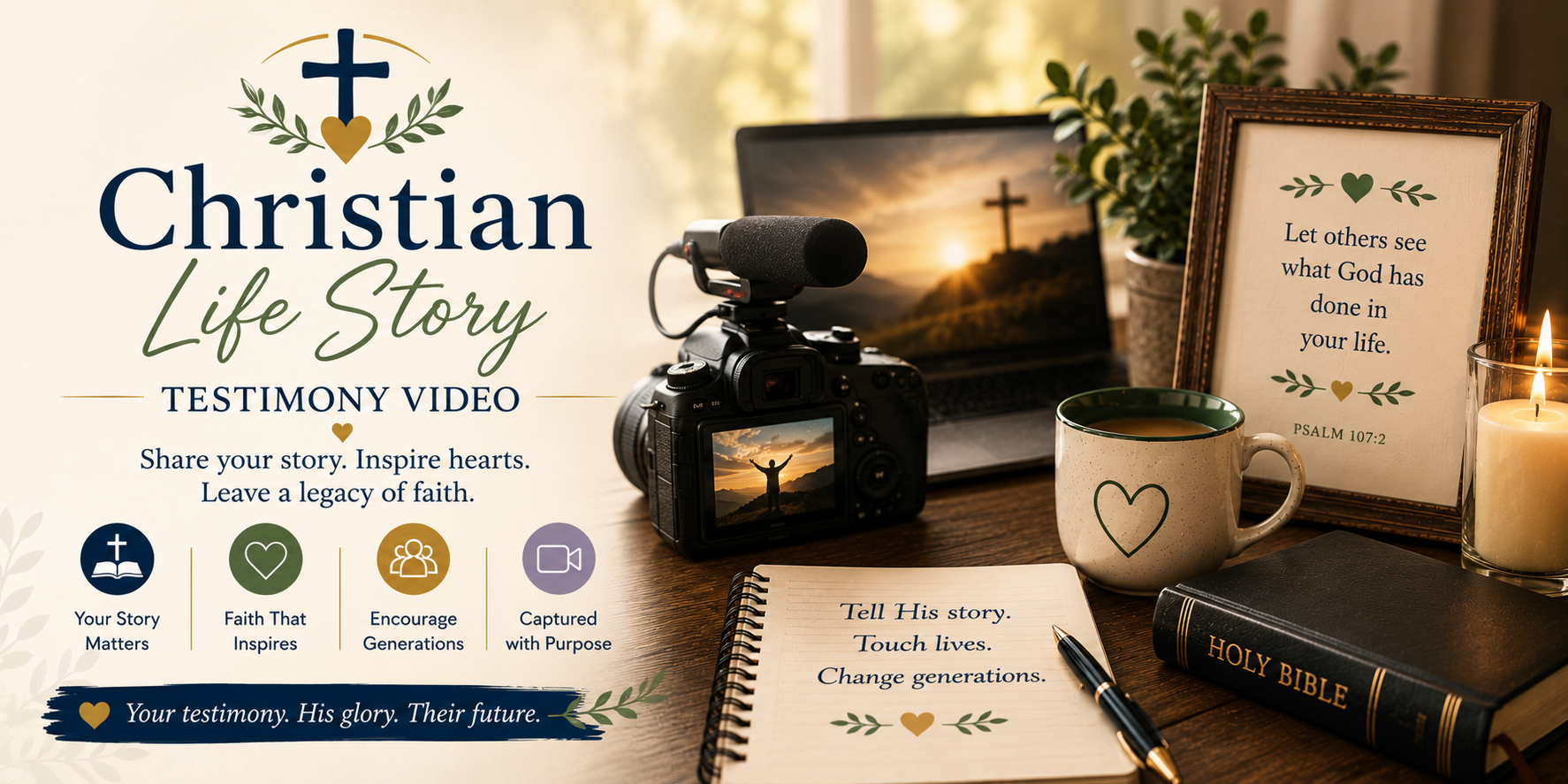

Every believer has a story of God’s faithfulness. Some came to Christ through the influence of faithful parents; others through seasons of hardship, answered prayer, or unexpected grace. Every testimony is unique, yet each one points to the same truth—that God continues to work in ordinary lives in extraordinary ways. A Christian life story testimony video preserves that testimony so children, grandchildren, churches, and future generations can hear it directly from the person who lived it.
A testimony video is much more than a family keepsake. It is a visual and spiritual legacy that captures your voice, your expressions, your memories, and your reflections on God’s work throughout your life. Through professionally guided interviews, families can preserve stories of faith, answered prayers, personal struggles, biblical wisdom, ministry, marriage, parenting, and the hope found in Jesus Christ.
Unlike a written testimony alone, video allows future generations to see your smile, hear your voice, and experience the emotion behind your words. Long after photographs fade and possessions are passed down, your children and grandchildren can still hear you speak about God’s goodness and the lessons that shaped your life.
Scripture repeatedly calls believers to share God’s faithfulness with future generations. Psalm 145:4 declares, “One generation commends your works to another; they tell of your mighty acts” (New International Version [NIV], 2011). Likewise, Deuteronomy 6:6–7 encourages God’s people to impress His commandments upon their children and speak of them throughout daily life. A Christian testimony video becomes one practical way to continue that biblical tradition.
These recordings are especially meaningful for older adults and families facing Alzheimer’s disease or other forms of dementia. Recording a testimony while communication remains strong preserves spiritual identity alongside personal history. Research suggests that life review promotes emotional well-being by helping older adults reflect upon and integrate their experiences into a meaningful life narrative (Butler, 1963). Person-centered care also recognizes that understanding an individual’s faith, values, and personal history contributes to compassionate, individualized care (Fazio et al., 2018).
Whether you are preserving your own testimony, honoring your parents, interviewing grandparents, or documenting the faith journey of a pastor or missionary, a Christian life story testimony video becomes an enduring gift of faith for generations to come.
Why Record a Christian Testimony?
Every Christian has experienced God’s faithfulness in different ways. Some stories involve dramatic life changes, while others reveal decades of quiet faithfulness through everyday obedience. Both are valuable because every testimony points to God’s grace.
Recording your testimony allows future generations to understand:
- How you came to know Christ
- Who influenced your faith
- How God answered prayers
- How Scripture guided your decisions
- How your faith shaped your marriage and family
- How God sustained you through suffering
- What lessons have you learned through life’s challenges
- What you hope your family will always remember
Many children and grandchildren know that their parents or grandparents attended church faithfully, but have never heard the deeper stories of God’s work throughout their lives. A testimony video preserves these experiences in the storyteller’s own words.
Research has shown that people who know more about their family’s history often develop greater resilience and a stronger sense of identity because they understand themselves as part of an ongoing family narrative (Duke et al., 2008). When that narrative includes stories of faith, perseverance, forgiveness, and hope, it becomes a powerful spiritual inheritance.
Recording your testimony also provides an opportunity to reflect on God’s faithfulness across every season of life. Many believers find that preparing for the interview deepens gratitude as they recognize ways God has guided, protected, and sustained them over many years.
Questions to Include in a Christian Life Story Testimony Video
The most meaningful testimony videos encourage authentic conversation rather than scripted speeches. Open-ended questions help people share stories naturally while revealing both personality and faith.
Topics often include:
Your Faith Journey
- What was your childhood like?
- Did you grow up in a Christian home?
- When did you place your faith in Jesus Christ?
- Who influenced your spiritual life?
- How has your relationship with God grown over the years?
God’s Faithfulness
- Can you describe a time when God answered prayer?
- What difficult season strengthened your faith?
- How have you experienced God’s provision?
- What Bible verses have carried you through life’s challenges?
Family and Legacy
- How has faith shaped your marriage?
- What values have you tried to teach your children?
- What traditions helped strengthen your family’s faith?
- What advice would you give your grandchildren about following Christ?
Service and Purpose
- What ministries have been most meaningful to you?
- How have you seen God work through serving others?
- What role has your church played in your life?
Looking Ahead
- What do you hope your family remembers most?
- If you could leave one final message for future generations, what would it be?
- What does the hope of eternal life mean to you?
These questions often lead naturally into stories of forgiveness, answered prayer, mission work, family milestones, personal growth, and the enduring grace of God.
Christian Testimony Videos and Dementia Care
Faith often remains a source of comfort and identity even as memory changes occur. Familiar hymns, Scripture passages, prayers, and lifelong spiritual practices can continue to provide reassurance for people living with Alzheimer’s disease or other forms of dementia.
Creating a testimony video before significant cognitive decline helps preserve spiritual memories while the individual can still actively share them.
Person-centered dementia care emphasizes understanding the whole person rather than focusing solely on symptoms (Kitwood, 1997). A Christian testimony video provides caregivers with valuable insight into:
- Church involvement
- Favorite hymns
- Meaningful Bible passages
- Prayer routines
- Ministry experiences
- Religious traditions
- Spiritual values
- Sources of comfort and hope
This understanding allows caregivers to support spiritual well-being through prayer, worship music, Scripture reading, pastoral visits, and familiar faith practices that remain meaningful throughout the progression of dementia.
Research supports life story work and reminiscence as evidence-based approaches that may improve communication, emotional well-being, and quality of life for many individuals living with dementia (Woods et al., 2018). Watching portions of a testimony video or listening to familiar faith stories often encourages conversation while reinforcing identity and hope.
Preserving Your Christian Legacy
A Christian life story testimony video becomes even more valuable when preserved alongside other family and faith resources.
Many families create legacy collections that include:
- Christian life story interviews
- Testimony videos
- Written faith memoirs
- Family Bibles
- Prayer journals
- Letters to children and grandchildren
- Church membership records
- Baptism and marriage certificates
- Family photographs
- Voice recordings
- Genealogy research
- Digital family archives
Store recordings in multiple secure locations, including encrypted cloud storage, external hard drives, and offline backups. Creating a written transcript also helps future generations search, read, and preserve the testimony even as technology changes.
Many churches, ministries, and Christian families also make testimony recording part of milestone celebrations, such as retirement, significant birthdays, anniversaries, or before mission transitions. These occasions provide natural opportunities to reflect on God’s faithfulness and preserve spiritual wisdom.
Ultimately, a Christian life story testimony video is more than a recording of the past. It is an expression of faith, gratitude, and hope. It tells future generations not only what happened throughout your life, but how God remained faithful through every season. Long after today’s conversations have ended, your children and grandchildren will still be able to hear your voice, witness your testimony, and be encouraged by the story of God’s work in your life. By recording your testimony today, you leave a lasting spiritual legacy that can continue pointing future generations toward Christ.
Frequently Asked Questions
What is a Christian life story testimony video?
A Christian life story testimony video is a recorded interview that preserves your faith journey, personal testimony, life experiences, family values, and spiritual legacy for future generations.
What should I include in a Christian testimony video?
Include your salvation story, childhood, answered prayers, favorite Bible verses, marriage, family, ministry experiences, challenges, lessons learned, and messages of encouragement for children and grandchildren.
Why should I record my testimony now?
Recording while you are healthy preserves your voice, personality, and detailed memories before aging or illness affects communication. It also allows you to intentionally pass your faith to future generations.
How can a testimony video help families affected by dementia?
A testimony video preserves spiritual identity, favorite Scriptures, hymns, prayer practices, and personal stories that can support person-centered care and provide comfort through familiar expressions of faith.
How should I preserve my testimony video?
Store multiple copies using secure cloud storage, external hard drives, and offline backups. Keep a written transcript and consider including the recording as part of a broader family legacy archive.
References
Butler, R. N. (1963). The life review: An interpretation of reminiscence in the aged. Psychiatry, 26(1), 65–76.
Duke, M. P., Lazarus, A., & Fivush, R. (2008). Knowledge of family history is a clinically useful index of psychological well-being and prognosis. Journal of Family Life, 7(2), 133–140.
Fazio, S., Pace, D., Flinner, J., & Kallmyer, B. (2018). The fundamentals of person-centered care for individuals with dementia. The Gerontologist, 58(Suppl. 1), S10–S19.
Holy Bible, New International Version. (2011). Zondervan.
Kitwood, T. (1997). Dementia Reconsidered: The Person Comes First. Open University Press.
Pargament, K. I. (2013). Spiritually Integrated Psychotherapy: Understanding and Addressing the Sacred. Guilford Press.
Woods, B., O’Philbin, L., Farrell, E. M., Spector, A., & Orrell, M. (2018). Reminiscence therapy for dementia. Cochrane Database of Systematic Reviews, 3, CD001120.
World Health Organization. (2023). Dementia. https://www.who.int/news-room/fact-sheets/detail/dementia