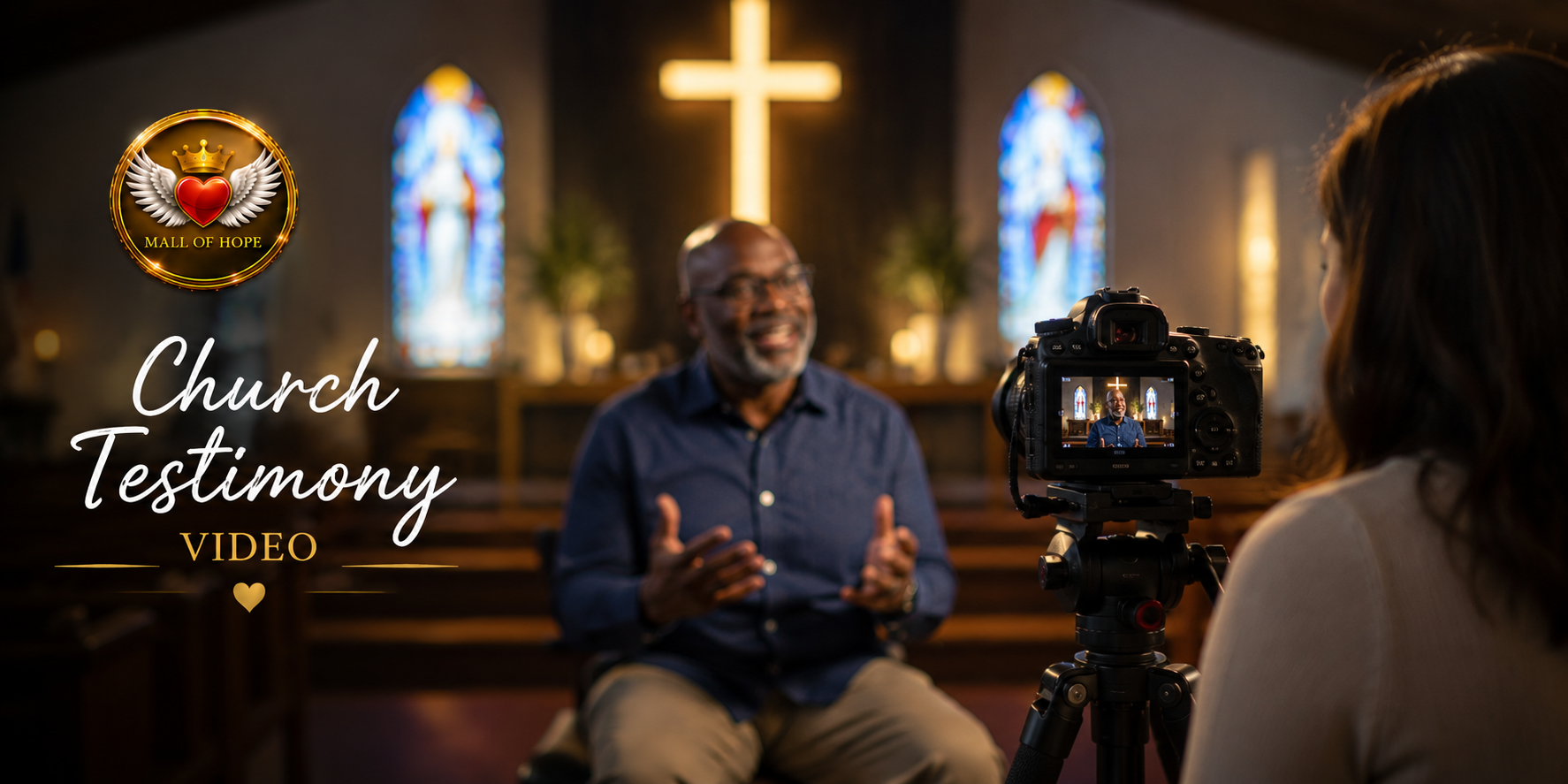

Every believer has a story of God’s faithfulness that deserves to be shared. Whether it is a dramatic conversion, a lifetime of faithful discipleship, an answered prayer, healing through hardship, or a quiet journey of trusting God through everyday life, each testimony reflects His work in unique and meaningful ways. Unfortunately, many of these powerful stories are never recorded, leaving future generations without the opportunity to hear firsthand how God moved in the lives of their parents, grandparents, church leaders, and loved ones. A church testimony video preserves these experiences, creating a lasting spiritual legacy that continues to encourage families, churches, and communities long into the future.
Throughout Scripture, believers are called to proclaim God’s goodness and remember His faithfulness across generations. Psalm 145:4 declares, “One generation commends your works to another; they tell of your mighty acts” (New International Version [NIV], 2011). Likewise, Psalm 78:4 encourages God’s people not to hide His works from future generations but to tell “the next generation the praiseworthy deeds of the Lord” (NIV, 2011). A church testimony video fulfills this biblical principle by capturing a personal witness of God’s grace, allowing future generations to hear these stories directly from those who experienced them.
Unlike written testimonies alone, video preserves voice, facial expressions, emotion, personality, and authenticity. It allows children, grandchildren, church members, and future believers to experience the storyteller in a deeply personal way. Whether created for a church anniversary, missionary farewell, memorial tribute, family archive, baptism celebration, or personal legacy project, a testimony video becomes an enduring witness of God’s faithfulness.
Church testimony videos also support older adults and families facing Alzheimer’s disease or other forms of dementia. Recording testimonies before significant memory changes occur preserves spiritual identity alongside personal history. Research suggests that life review promotes emotional well-being while helping individuals integrate their life experiences into a meaningful narrative (Butler, 1963). Person-centered care likewise recognizes that understanding an individual’s beliefs and spiritual practices contributes to compassionate, individualized care (Fazio et al., 2018).
Whether you are sharing your own testimony, preserving the faith journey of a parent or grandparent, or documenting the stories of longtime church members, a church testimony video creates an enduring gift that points others toward hope, faith, and God’s continuing work across generations.
Why Record a Church Testimony Video?
Faith has always been shared through stories. Long before digital technology, believers passed testimonies from one generation to another through conversation, worship, and community. Recording those testimonies on video ensures they are preserved with remarkable clarity while remaining accessible to future generations.
A church testimony video captures far more than words. It preserves:
- Voice and natural conversation
- Facial expressions and emotion
- Humor and personality
- Moments of reflection and gratitude
- Authentic expressions of faith
- Family values and spiritual wisdom
- Personal experiences of God’s faithfulness
Many believers discover that recording a testimony also strengthens their own faith. Reflecting upon God’s guidance throughout life often brings renewed gratitude while highlighting prayers answered, unexpected blessings, difficult seasons overcome, and relationships transformed.
Research demonstrates that individuals who know more about their family history often develop stronger resilience and a greater sense of identity because they understand themselves as part of an ongoing narrative (Duke et al., 2008). When those family stories include testimonies of God’s provision and faithfulness, they become powerful sources of encouragement for future generations.
Churches also benefit from preserving testimonies. Longtime members, pastors, missionaries, elders, volunteers, musicians, teachers, and ministry leaders possess experiences that document both personal faith and congregational history. Recording these stories preserves the spiritual heritage of the entire church community.
Whether shared during worship services, archived in church libraries, or preserved privately for family members, testimony videos become enduring reminders of God’s work in ordinary lives.
What Should Be Included in a Church Testimony Video?
Every testimony is unique because every person’s relationship with God follows its own path. The goal is not to produce a scripted presentation but to create an authentic conversation that reflects the individual’s personality, experiences, and faith journey.
Common interview topics include:
- Church Testimony Video
- Early church experiences
- Conversion or commitment to faith
- Baptism and spiritual milestones
- Influential pastors, mentors, or teachers
- Favorite Bible passages and why they matter
- Times when prayer brought comfort or direction
- Seasons of hardship and God’s faithfulness
- Marriage, parenting, and family life
- Ministry involvement and serving others
- Lessons learned throughout life
- Encouragement for children, grandchildren, and future believers
Interviewers often ask open-ended questions that encourage storytelling rather than short answers. Questions such as “How have you seen God work in your life?” or “What would you want your grandchildren to know about your faith?” invite thoughtful reflection while allowing personal stories to unfold naturally.
Many testimony videos also incorporate family photographs, church memorabilia, mission trip images, baptism certificates, handwritten journals, favorite hymns, meaningful Scriptures, or historical church photographs. These visual elements enrich the story while helping preserve important memories.
Professionally produced testimony videos may also include written captions, historical timelines, photographs, music, and edited highlights while maintaining the authenticity of the individual’s voice and message.
Church Testimony Videos and Person-Centered Care
For many older adults, faith remains central to identity throughout life. Even as physical health changes or memory becomes more challenging, long-established spiritual practices often continue providing comfort and reassurance. Recording a testimony before significant cognitive changes occur preserves this important part of the individual’s life story.
Person-centered care recognizes that beliefs, values, traditions, and spiritual practices contribute significantly to personal identity (Fazio et al., 2018). Understanding an individual’s faith journey enables caregivers to provide more compassionate and individualized support.
A recorded testimony may help caregivers learn about:
- Worship preferences
- Favorite hymns and worship music
- Meaningful prayers
- Church traditions
- Ministry experiences
- Personal values
- Sources of hope and encouragement
- Important relationships within the faith community
Families are encouraged to record testimony videos soon after a diagnosis of mild cognitive impairment or early-stage dementia while communication remains relatively strong. These recordings preserve voice, personality, humor, wisdom, and spiritual reflections that may later become more difficult to express.
Research supports life review and reminiscence as approaches that strengthen emotional well-being and reinforce identity among older adults (Butler, 1963). Discussing God’s faithfulness throughout life often becomes one of the most meaningful forms of reminiscence because it connects personal history with enduring hope.
Church communities also play an important role by visiting older adults, sharing communion, providing pastoral care, singing familiar hymns, and maintaining meaningful spiritual relationships throughout the aging process.
Preserving a Testimony That Continues to Inspire
A church testimony video becomes much more than a recording—it becomes a lasting witness of God’s faithfulness that continues speaking to future generations. Every interview preserves a unique voice that may encourage children, grandchildren, church members, caregivers, and believers for decades to come.
Many families combine testimony videos with broader legacy preservation projects that include life story interviews, written memoirs, genealogy research, family history books, legacy documentaries, photographs, journals, letters, devotional reflections, and secure digital archives. Together, these resources preserve both personal identity and spiritual heritage.
Modern technology allows testimony videos to be safely preserved using high-definition recording, searchable transcripts, encrypted cloud storage, secure digital archives, and external hard drive backups. Maintaining multiple copies ensures these invaluable family and church resources remain protected for future generations.
Churches can also create testimony ministries by inviting members to record their stories throughout the year. Pastors, missionaries, veterans, volunteers, choir members, Sunday school teachers, and longtime congregants all possess experiences that enrich the church’s collective history while encouraging others in their faith.
Ultimately, a church testimony video is about more than documenting the past. It is about sharing hope, demonstrating God’s faithfulness, preserving spiritual identity, and inspiring future generations to continue walking in faith. Every testimony reminds us that God works through ordinary people in extraordinary ways. By preserving your testimony today, you create an enduring legacy that allows your voice, your experiences, and your witness to continue pointing others toward hope and faith for generations to come.
Frequently Asked Questions
What is a church testimony video?
A church testimony video is a professionally or personally recorded interview that captures an individual’s faith journey, spiritual experiences, personal testimony, and reflections on God’s work throughout their life.
Why should I record my testimony on video?
Video preserves your voice, facial expressions, personality, and authentic storytelling, allowing future generations to experience your testimony in a deeply personal and meaningful way.
What questions are asked during a church testimony interview?
Common questions explore childhood faith experiences, conversion, favorite Bible passages, answered prayers, ministry involvement, challenges overcome through faith, family values, and advice for future generations.
How can a testimony video help families affected by dementia?
Recording testimonies before memory changes progress preserves spiritual identity, beliefs, values, and personal stories while helping caregivers understand meaningful faith practices and life experiences.
How should a church testimony video be preserved?
Videos should be stored in multiple secure locations, including encrypted cloud storage, external hard drives, written transcripts, and digital family or church archives, to ensure long-term preservation.
References
Butler, R. N. (1963). The life review: An interpretation of reminiscence in the aged. Psychiatry, 26(1), 65–76.
Duke, M. P., Lazarus, A., & Fivush, R. (2008). Knowledge of family history is a clinically useful index of psychological well-being and prognosis. Journal of Family Life, 7(2), 133–140.
Fazio, S., Pace, D., Flinner, J., & Kallmyer, B. (2018). The fundamentals of person-centered care for individuals with dementia. The Gerontologist, 58(Suppl. 1), S10–S19.
Holy Bible, New International Version. (2011). Zondervan. (Original work published 1973)
Kitwood, T. (1997). Dementia reconsidered: The person comes first. Open University Press.
McAdams, D. P. (2008). Personal narratives and the life story. In O. P. John, R. W. Robins, & L. A. Pervin (Eds.), Handbook of personality: Theory and research (3rd ed., pp. 242–262). Guilford Press.
Pargament, K. I. (2013). Spiritually integrated psychotherapy: Understanding and addressing the sacred. Guilford Press.
Woods, B., O’Philbin, L., Farrell, E. M., Spector, A., & Orrell, M. (2018). Reminiscence therapy for dementia. Cochrane Database of Systematic Reviews, 3, CD001120.
World Health Organization. (2023). Dementia. https://www.who.int/news-room/fact-sheets/detail/dementia