
Preserve Stories, Photos, and Family Legacy for Future Generations
What Is a Memory Book?
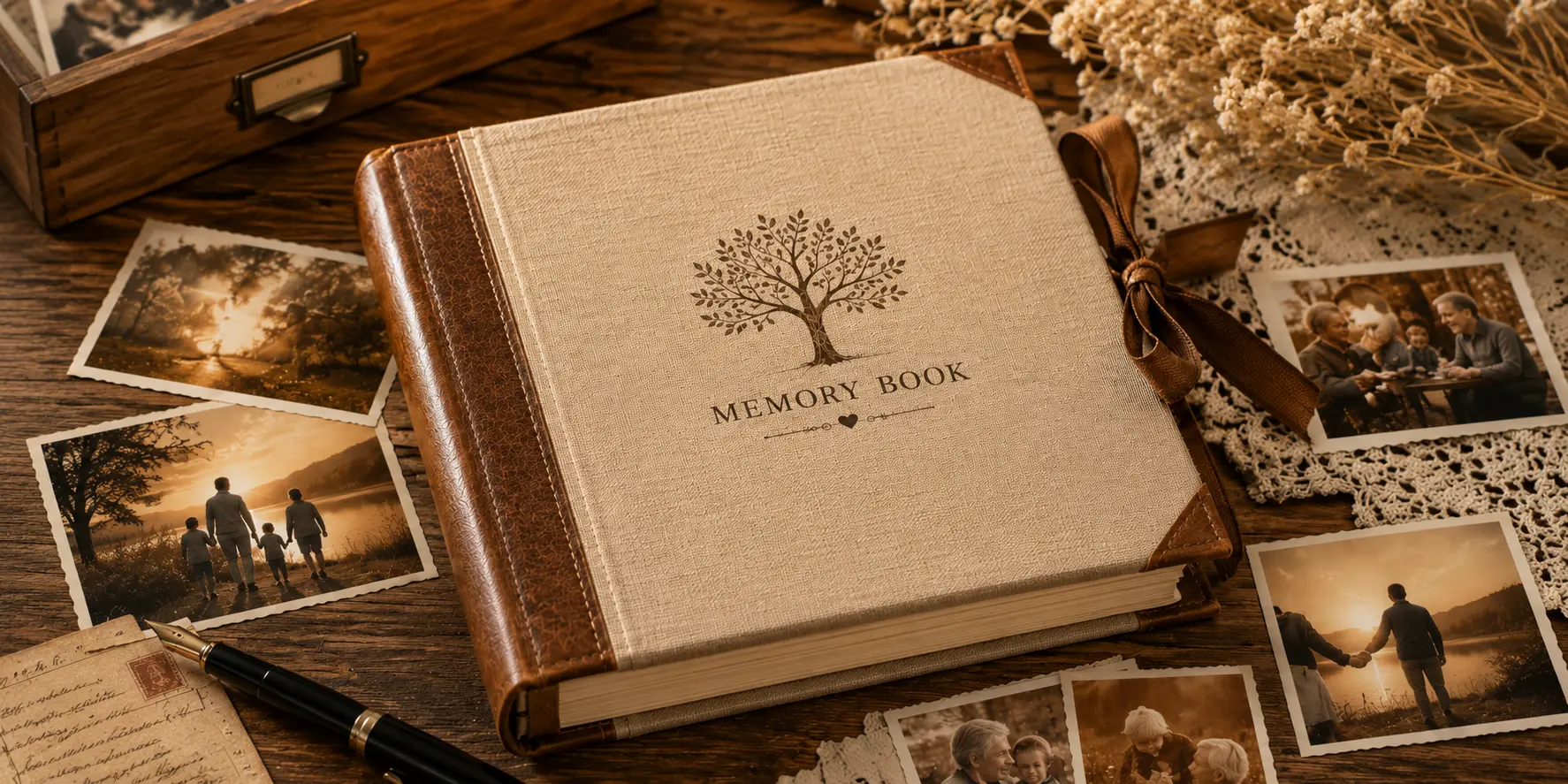
A memory book is a personalized collection of photographs, stories, life experiences, family history, milestones, and meaningful reflections that captures the essence of a person’s life. Unlike a traditional photo album, a memory book combines images with stories, memories, personal insights, family traditions, and historical context.
Memory books serve many purposes. They can help preserve family history, support individuals living with dementia, celebrate milestones, document life journeys, honor loved ones, strengthen family connections, and create lasting legacies that can be shared across generations.
Research suggests that life-story preservation and reminiscence activities contribute to identity continuity, emotional well-being, and person-centered care, particularly among older adults and individuals experiencing memory loss (McKeown et al., 2010).
A memory book is more than a collection of pages. It is a record of a life lived, relationships built, lessons learned, and memories worth preserving.
Why Create a Memory Book?
Many families discover too late that important stories were never recorded.
Creating a memory book helps preserve:
- Family stories
- Personal memories
- Cultural heritage
- Family traditions
- Life lessons
- Historical experiences
- Relationships
- Personal values
- Legacy messages
- Photographic memories
A memory book becomes a treasured resource for children, grandchildren, caregivers, and future generations.
Benefits of Creating a Memory Book
Preserves Personal Identity
Memory books help document the experiences, beliefs, relationships, and accomplishments that define a person.
Strengthens Family Connections
Sharing stories encourages meaningful conversations and deeper family understanding.
Supports Dementia and Memory Care
Research suggests that life-story resources can improve person-centered care and support communication for individuals living with dementia (McKeown et al., 2010).
Protects Family History
Important stories remain accessible long after they are told.
Creates a Lasting Legacy
Future generations gain access to wisdom, values, and family experiences.
Reduces Future Regret
Families often express gratitude for preserving stories before opportunities are lost.
What to Include in a Memory Book
1. Early Life and Childhood
Capture:
- Birth information
- Childhood photographs
- Family homes
- Early memories
- Favorite childhood activities
- School experiences
Questions to Include
- What is your earliest memory?
- What was your childhood home like?
- Who influenced you most growing up?
- What family traditions do you remember?
2. Family History
Document:
- Parents and grandparents
- Family origins
- Immigration stories
- Cultural traditions
- Family values
Questions to Include
- What family traditions should continue?
- What family story should never be forgotten?
- What values shaped your family?
3. Education and Career
Preserve:
- Educational achievements
- Professional accomplishments
- Career lessons
- Mentors and influences
Questions to Include
- What career accomplishment are you most proud of?
- What lessons did work teach you?
- What advice would you give young professionals?
4. Relationships and Family
Include:
- Marriage stories
- Parenting experiences
- Grandparent memories
- Friendships
Questions to Include
- How did you meet your spouse?
- What was your favorite family tradition?
- What does family mean to you?
5. Life Lessons and Wisdom
Document:
- Values
- Personal philosophies
- Advice
- Reflections
Questions to Include
- What advice would you give future generations?
- What challenge taught you the most?
- What are you most grateful for?
6. Photographs and Visual Memories
Add:
- Family photographs
- Vacation pictures
- Wedding photos
- Military service photos
- Career milestones
- Community involvement
Photographs often trigger memories and help preserve family stories.
7. Faith and Personal Beliefs
For many families, spiritual beliefs are a significant part of identity.
Include:
- Faith journeys
- Spiritual experiences
- Favorite scriptures or readings
- Personal beliefs
- Community service
Questions to Include
- What role has faith played in your life?
- What values guided your decisions?
- What message would you leave for your family?
8. Legacy Messages
Create a section specifically for future generations.
Topics may include:
- Hopes for descendants
- Family values
- Life lessons
- Encouragement
- Personal reflections
These pages often become the most treasured part of the book.
Memory Books for Dementia and Alzheimer’s Support
Memory books are widely used in dementia care because they help preserve identity and encourage meaningful communication.
Benefits may include:
- Enhanced reminiscence
- Improved caregiver communication
- Reduced anxiety
- Increased person-centered care
- Preservation of life history
Research suggests that life story work helps caregivers better understand the individual behind the diagnosis (McKeown et al., 2010).
For dementia families, memory books become both care tools and legacy resources.
Memory Book Ideas for Different Audiences
For Parents and Grandparents
Focus on:
- Family traditions
- Parenting lessons
- Historical experiences
- Advice for future generations
For Healthcare Professionals
Include:
- Career reflections
- Patient care lessons
- Leadership experiences
- Professional legacy
For Educators
Document:
- Teaching philosophies
- Student memories
- Educational contributions
- Community involvement
For Veterans
Preserve:
- Service experiences
- Leadership lessons
- Historical perspectives
- Family reflections
For Entrepreneurs
Capture:
- Business journeys
- Leadership insights
- Challenges overcome
- Family business stories
Digital Memory Books
Modern memory books can be preserved digitally through:
- PDF archives
- Online family collections
- Video interviews
- Audio recordings
- Digital scrapbooks
- Interactive family history projects
Digital preservation makes sharing and long-term access easier for geographically dispersed families.
How Our Memory Book Services Help
We help individuals and families create meaningful memory books that preserve identity, family history, and personal legacy.
Our services include:
- Life story interviews
- Oral history recording
- Biography writing
- Family storytelling projects
- Photo organization
- Legacy documentation
- Memory journal creation
- Digital memory archives
- Dementia life-story resources
Our mission is to help families preserve the stories, values, wisdom, and experiences that make every life unique.
Frequently Asked Questions
What is a memory book?
A memory book is a collection of stories, photographs, memories, and life experiences that preserves a person’s history and legacy.
Who should create a memory book?
Anyone who wants to preserve family history, personal memories, values, and experiences for future generations.
Can memory books help individuals with dementia?
Yes. Memory books can support reminiscence, communication, and person-centered care.
What should I include in a memory book?
Photos, family stories, life lessons, personal reflections, career experiences, traditions, and legacy messages.
How many pages should a memory book have?
Memory books vary widely. Many range from 20 to 100+ pages, depending on the depth of content.
Can a memory book be digital?
Yes. Many families choose digital formats alongside printed versions.
Why are memory books important?
They preserve identity, family history, personal wisdom, and meaningful memories.
When should I start creating a memory book?
The best time is now. Every story preserved today becomes part of tomorrow’s family legacy.
Key Takeaways
Creating a memory book is one of the most meaningful ways to preserve personal identity, family history, life lessons, and cherished memories. Whether created for legacy preservation, dementia support, family storytelling, or multigenerational connection, a memory book ensures that experiences, wisdom, values, and relationships remain accessible for future generations. Long after photographs fade and memories become difficult to recall, a thoughtfully created memory book continues telling the story of a life that mattered.
References
McKeown, J., Clarke, A., Ingleton, C., Ryan, T., & Repper, J. (2010). The use of life story work with people with dementia to enhance person-centred care. International Journal of Older People Nursing, 5(2), 148–158. https://doi.org/10.1111/j.1748-3743.2010.00219.x
McAdams, D. P., & McLean, K. C. (2013). Narrative identity. Current Directions in Psychological Science, 22(3), 233–238. https://doi.org/10.1177/0963721413475622
Westerhof, G. J., & Bohlmeijer, E. T. (2014). Celebrating fifty years of research and applications in reminiscence and life review: State of the art and new directions. Journal of Aging Studies, 29, 107–114. https://doi.org/10.1016/j.jaging.2014.02.003