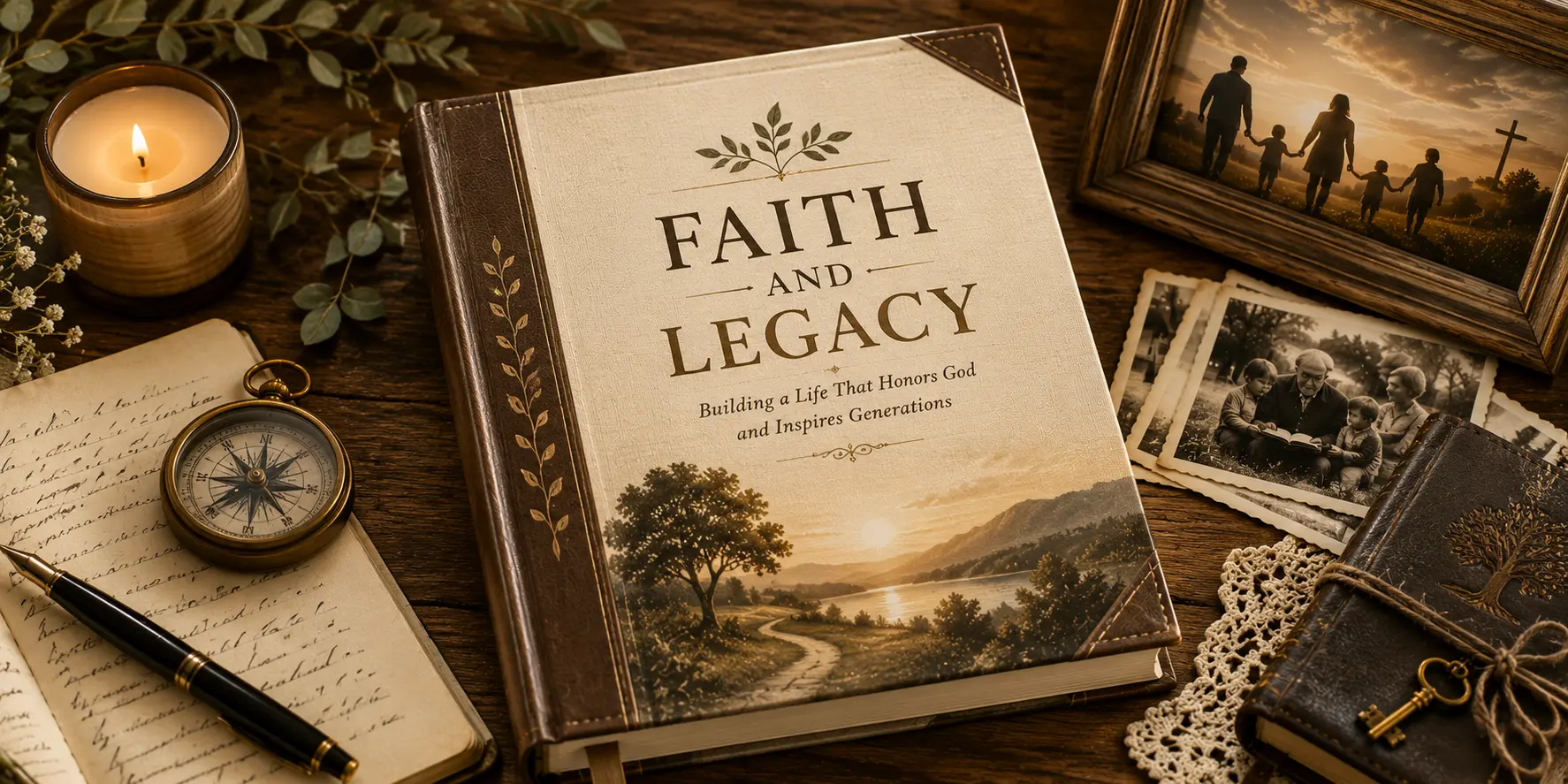

Preserving Spiritual Values, Life Lessons, and Family Heritage
Why Faith and Legacy Matter
Every person leaves a legacy. While many people think of legacy in terms of financial assets or material possessions, the most enduring inheritance often consists of values, beliefs, wisdom, character, and faith. These intangible gifts shape families long after physical possessions have been distributed.
Faith and legacy are deeply connected. Faith often influences how individuals make decisions, overcome challenges, build relationships, serve their communities, and view life’s purpose. Preserving these experiences allows future generations to understand not only what their loved ones believed but also how those beliefs guided their lives.
Unfortunately, spiritual stories and family values are often lost when they are never recorded. Many families inherit photographs, documents, and possessions, but never hear the stories behind them. They may know what a loved one owned but not what they stood for.
Research suggests that personal narratives help individuals create meaning, maintain identity, and transmit values across generations (McAdams & McLean, 2013). Documenting faith journeys and life experiences preserves both identity and spiritual heritage for future generations.
Faith and legacy preservation ensure that wisdom, beliefs, traditions, and life lessons continue inspiring families long into the future.
What Is Faith and Legacy Preservation?
Faith and legacy preservation involves documenting spiritual beliefs, life experiences, personal values, family traditions, and lessons learned throughout a person’s life.
This may include:
- Faith journey interviews
- Life-story recording
- Legacy letters
- Oral history projects
- Family storytelling
- Personal testimonies
- Ethical wills
- Memory journals
- Family history documentation
- Video messages for future generations
- Digital legacy archives
The goal is to preserve not only memories but also meaning.
Why Families Preserve Faith and Legacy
Families often choose faith and legacy projects because they want future generations to understand:
- Family values
- Spiritual beliefs
- Life lessons
- Personal experiences
- Cultural traditions
- Family history
- Moral principles
- Sources of resilience
- Important relationships
- Community contributions
These insights often become treasured family resources that provide guidance for decades.
Faith as Part of Personal Identity
Faith frequently influences:
- Decision-making
- Family relationships
- Community involvement
- Personal resilience
- Purpose and meaning
- Service to others
Research on narrative identity suggests that individuals often organize their life stories around deeply held beliefs and values (McAdams & McLean, 2013).
Documenting faith experiences helps preserve an important part of personal identity.
Why Spiritual Stories Matter
Many people can recall a grandparent’s favorite chair or a family heirloom. Fewer can explain:
- What sustained them through hardship
- What they believed about life
- What values guided their decisions
- How their faith influenced their actions
Spiritual stories often become some of the most meaningful aspects of family history.
They explain not just what happened, but why it mattered.
Faith and Legacy Across Generations
Research suggests that family narratives strengthen identity, resilience, and intergenerational connection (Fivush, Bohanek, & Duke, 2008).
When families preserve faith stories, they often pass down:
- Hope
- Perseverance
- Compassion
- Service
- Gratitude
- Forgiveness
- Courage
These values can influence generations long after the original storyteller is gone.
Faith and Legacy for Families Living With Dementia
For families affected by dementia or Alzheimer’s disease, documenting spiritual beliefs and life stories early can be especially meaningful.
Preserving:
- Faith experiences
- Personal testimonies
- Favorite scriptures
- Spiritual practices
- Family traditions
- Life lessons
helps maintain identity even when memory changes occur.
Research on life story work suggests that preserving personal history supports dignity, person-centered care, and identity continuity (McKeown et al., 2010).
Faith and Legacy for Family Caregivers
Caregiving often raises profound questions about meaning, purpose, hope, and resilience.
Legacy projects can help caregivers:
- Preserve family wisdom
- Record spiritual reflections
- Strengthen family bonds
- Create meaningful conversations
- Reduce future regret
Many caregivers discover that documenting a loved one’s beliefs becomes one of the most treasured aspects of the caregiving journey.
Faith and Legacy for Healthcare Professionals
Healthcare workers frequently witness life’s most significant moments.
Faith and legacy projects can help preserve:
- Professional values
- Service philosophies
- Compassionate care experiences
- Ethical reflections
- Leadership lessons
These stories provide guidance and inspiration for future generations of caregivers.
Faith and Legacy for Educators
Educators often influence students beyond academic instruction.
Documenting their legacy may preserve:
- Teaching philosophies
- Core values
- Leadership principles
- Community contributions
- Life lessons
These narratives become lasting educational legacies.
Faith and Legacy for Business Owners and Entrepreneurs
Entrepreneurs often build businesses based upon deeply held beliefs and principles.
Legacy projects may preserve:
- Leadership lessons
- Ethical values
- Business philosophies
- Community service experiences
- Family business traditions
Future generations often benefit from understanding the values behind professional success.
Ethical Wills: Passing Down Values Instead of Possessions
An ethical will is a non-financial document that communicates:
- Values
- Life lessons
- Beliefs
- Hopes for future generations
- Personal reflections
Unlike a legal will, an ethical will focuses on the inheritance of wisdom rather than property.
Ethical wills have been used for centuries across various faith traditions to pass spiritual guidance to descendants.
Faith-Based Legacy Questions
Meaningful questions often include:
- What role has faith played in your life?
- What life lesson has shaped you most?
- What values do you hope future generations will carry forward?
- How did you overcome difficult times?
- What are you most grateful for?
- What spiritual practices brought you comfort?
- What advice would you share with your grandchildren?
- How would you like to be remembered?
- What gives your life meaning?
- What message would you leave for future generations?
These conversations often reveal profound wisdom and insight.
Family Storytelling and Spiritual Heritage
Storytelling remains one of the most effective ways to preserve faith and values.
Stories help future generations understand:
- Family sacrifices
- Spiritual journeys
- Community involvement
- Acts of service
- Personal growth
- Life-changing experiences
Research indicates that family storytelling strengthens family identity and emotional resilience (Fivush et al., 2008).
Digital Faith and Legacy Preservation
Modern technology allows families to preserve:
- Video testimonies
- Audio recordings
- Digital journals
- Family histories
- Legacy letters
- Spiritual reflections
Digital preservation helps ensure accessibility for future generations regardless of geographic location.
Benefits of Faith and Legacy Preservation
Preserves Family Values
Future generations understand what mattered most.
Protects Spiritual Heritage
Faith traditions and beliefs remain accessible.
Strengthens Family Identity
Stories create continuity across generations.
Supports Dementia Care
Life stories help preserve identity and personhood.
Encourages Meaningful Conversations
Families engage in deeper discussions about life and purpose.
Creates Lasting Legacy Resources
Wisdom and experiences remain available long after they are shared.
Reduces Future Regret
Families preserve stories before opportunities disappear.
How Our Faith and Legacy Services Help
Our services help individuals and families preserve spiritual heritage, personal values, life stories, and family wisdom through professionally guided legacy projects.
We assist with:
- Life story recording
- Faith journey interviews
- Oral history projects
- Legacy letters
- Ethical wills
- Family storytelling
- Biography development
- Memory journals
- Digital legacy archives
- Family history preservation
Our mission is to help families preserve identity, faith, values, and wisdom so future generations inherit far more than possessions—they inherit meaning, purpose, and connection.
Frequently Asked Questions
What is faith and legacy preservation?
It is the process of documenting spiritual beliefs, life lessons, values, and personal experiences for future generations.
Why is preserving faith important?
Faith often shapes identity, decision-making, resilience, and family values. Preserving these experiences helps future generations understand their heritage.
What is an ethical will?
An ethical will is a document that passes down values, beliefs, wisdom, and life lessons rather than financial assets.
How can faith stories strengthen families?
They provide guidance, inspiration, historical context, and a stronger sense of family identity.
Can faith and legacy projects help families affected by dementia?
Yes. Life-story preservation helps maintain identity, dignity, and meaningful family connections.
What should be included in a faith legacy project?
Spiritual experiences, values, life lessons, family traditions, personal reflections, and messages for future generations.
Are faith and legacy projects only for older adults?
No. Adults of all ages can benefit from documenting their beliefs, values, and experiences.
How are faith stories preserved?
Through interviews, written narratives, audio recordings, video messages, memory journals, and digital archives.
Why do families regret not preserving stories?
Once a loved one is gone, their voice, perspective, and wisdom can be difficult or impossible to recover.
What is the greatest legacy someone can leave?
For many families, the most meaningful legacy consists of values, wisdom, faith, relationships, and stories that continue guiding future generations.
Key Takeaways
Faith and legacy preservation help families protect the beliefs, values, wisdom, and experiences that define who they are. Through life-story recording, oral histories, ethical wills, family storytelling, and digital preservation, individuals can ensure that future generations inherit more than material possessions. They inherit guidance, purpose, identity, and a deeper understanding of the people who came before them. In many cases, the most valuable inheritance is not what a person leaves behind—it is the meaning they pass forward.
References
Fivush, R., Bohanek, J. G., & Duke, M. P. (2008). The intergenerational self: Subjective perspective and family history. In F. Sani (Ed.), Individual and Collective Self-Continuity. Psychology Press.
McAdams, D. P., & McLean, K. C. (2013). Narrative identity. Current Directions in Psychological Science, 22(3), 233–238. https://doi.org/10.1177/0963721413475622
McKeown, J., Clarke, A., Ingleton, C., Ryan, T., & Repper, J. (2010). The use of life story work with people with dementia to enhance person-centred care. International Journal of Older People Nursing, 5(2), 148–158. https://doi.org/10.1111/j.1748-3743.2010.00219.x
Pargament, K. I. (2011). Spiritually Integrated Psychotherapy: Understanding and Addressing the Sacred. Guilford Press.