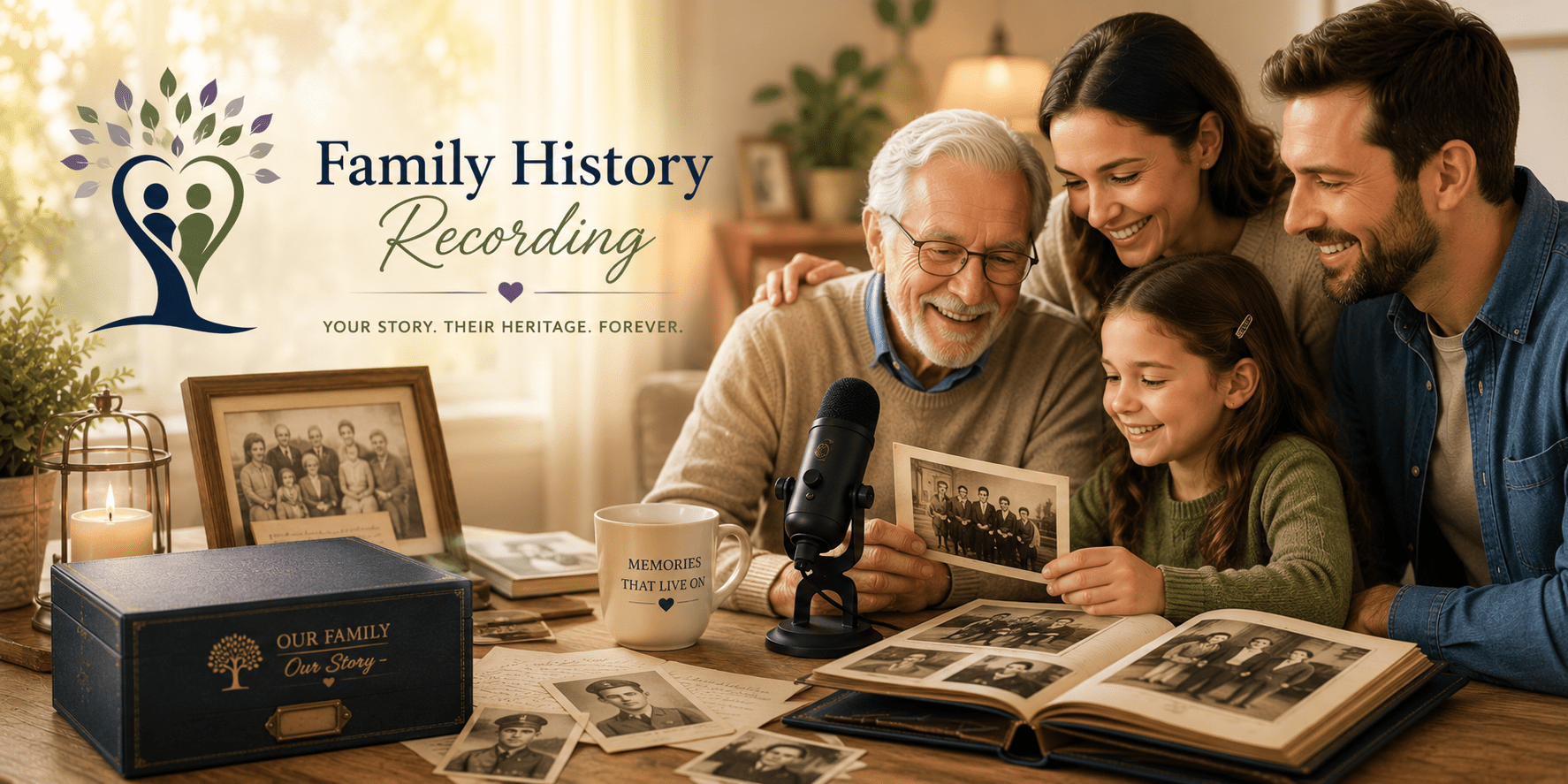

Every family has a history that deserves to be remembered. Long before official records were created, families passed their stories from one generation to the next through conversations, traditions, photographs, letters, and shared experiences. Today, however, many of these stories are at risk of being lost as older generations pass away and memories fade. Family history recording provides an opportunity to preserve not only names and dates but also the personalities, values, traditions, and life experiences that make every family unique.
Family history recording is the intentional process of documenting family stories through audio recordings, video interviews, written narratives, photographs, digital archives, and historical documents. Unlike genealogy, which primarily focuses on tracing family relationships and historical records, family history recording captures the lived experiences behind those records. It explains how ancestors lived, what they believed, the challenges they overcame, the traditions they celebrated, and the lessons they hoped future generations would remember.
For families affected by dementia, Alzheimer’s disease, or other memory-related conditions, recording family history becomes especially meaningful. Preserving stories before memories change helps maintain identity while creating lasting resources for caregivers, children, grandchildren, and future descendants. Research demonstrates that storytelling, reminiscence, and life review contribute to psychological well-being, reinforce personal identity, and strengthen family relationships (Butler, 1963; McAdams, 2008). Whether preserving the experiences of grandparents, documenting an immigration journey, recording military service, or creating a digital archive for future generations, family history recording ensures that a family’s legacy continues to inspire long after individual memories fade.
Why Family History Recording Matters
A family tree tells us who our ancestors were, but family history tells us who they truly became. Historical records document births, marriages, military service, occupations, and deaths, yet they rarely explain the people behind those events. Family history recording captures the conversations, emotions, traditions, humor, wisdom, and values that transform historical facts into meaningful human stories.
Many families discover too late that they never asked parents or grandparents about their childhoods, first jobs, wartime experiences, family traditions, religious beliefs, or the challenges that shaped their lives. Once those stories are gone, they cannot be fully recreated. Recording family history preserves these irreplaceable memories while allowing future generations to understand the experiences that shaped their family.
Research suggests that children who know more about their family history often demonstrate greater resilience, stronger self-confidence, and improved emotional well-being because they recognize themselves as part of a larger family narrative (Duke et al., 2008). Learning how previous generations navigated hardship, celebrated milestones, built careers, immigrated to new countries, served in the military, or raised families helps younger generations develop a deeper appreciation for their heritage and personal identity.
Family history recording also strengthens relationships in the present. The recording process encourages meaningful conversations between parents, grandparents, children, and grandchildren, often uncovering forgotten memories and stories that have never been shared before. These discussions foster empathy, understanding, and gratitude while creating opportunities for multiple generations to spend quality time together.
In addition to preserving personal memories, family history recording contributes to cultural preservation. Families often safeguard traditions, languages, recipes, religious practices, music, craftsmanship, and community customs that may not exist anywhere else. Recording these elements ensures cultural heritage remains accessible for future generations while enriching broader historical understanding.
How to Record Your Family History
Recording family history begins with a commitment to preserving stories before they disappear. The process does not require professional filmmaking equipment or advanced technical skills. Instead, it requires thoughtful planning, meaningful questions, and a willingness to listen with curiosity and compassion.
The first step is identifying whose stories will be recorded. Many families begin with parents or grandparents, but siblings, aunts, uncles, cousins, veterans, family friends, and community elders also possess valuable memories that contribute to a complete family history. Whenever possible, recording multiple perspectives creates a richer understanding of shared experiences.
Preparing interview questions helps guide conversations while leaving room for spontaneous storytelling. Effective questions encourage reflection rather than simple factual answers. Examples include:
- What are your earliest memories of your parents and grandparents?
- What family traditions were most important during your childhood?
- What historical events affected your life the most?
- What lessons did your parents teach you?
- How did your family celebrate holidays and special occasions?
- What challenges did your family overcome together?
- What advice would you like future generations to remember?
- Which family stories should never be forgotten?
Visual materials often stimulate memory and enrich interviews. Old photographs, military medals, journals, newspapers, family Bibles, heirlooms, recipes, school yearbooks, immigration papers, and genealogy charts provide meaningful prompts while adding historical context to recorded stories.
Families can preserve history in several formats. Audio recordings capture voices and conversations with minimal equipment. Video interviews preserve facial expressions, emotions, gestures, and personality. Written memoirs and transcripts organize stories into searchable narratives, while digital archives combine interviews with photographs, historical records, timelines, family trees, and scanned documents into comprehensive legacy collections.
Accuracy should remain important throughout the recording process. Whenever possible, family stories should be compared with historical documents, genealogy records, census information, military records, newspaper archives, and other reliable sources. Combining oral history with documentary evidence creates a richer and more accurate family history for future generations.
Family History Recording for Dementia Care and Identity Preservation
Family history recording has become an important resource for person-centered dementia care because it preserves identity while helping caregivers understand the individual’s life beyond a medical diagnosis. Although dementia may affect memory and communication, it does not erase the experiences, relationships, beliefs, occupations, or values that define a person’s identity.
Person-centered care recognizes that understanding an individual’s history improves compassionate care and emotional connection (Kitwood, 1997). Family history recordings provide caregivers with valuable insight into childhood experiences, careers, military service, hobbies, cultural traditions, favorite music, religious practices, important relationships, and lifelong interests. This information allows care providers to tailor activities, conversations, and daily routines to reflect the individual’s personal history rather than relying solely on medical information.
Families often choose to begin recording stories soon after a dementia diagnosis while communication remains relatively strong. These conversations preserve the person’s voice, humor, personality, and life experiences before memory changes become more pronounced. Recordings also become treasured keepsakes for spouses, children, grandchildren, and future descendants.
For professional caregivers, understanding family history promotes empathy and individualized care. Knowing that a resident was once a teacher, farmer, musician, nurse, veteran, business owner, or artist can shape meaningful conversations and recreational activities that reinforce identity while reducing anxiety. Familiar stories, songs, traditions, and photographs frequently encourage reminiscence and emotional comfort.
Digital technology has expanded opportunities for preserving family history. Secure cloud storage, genealogy software, multimedia storytelling platforms, digital memory books, and interactive family archives enable families to organize interviews, photographs, videos, letters, and historical documents into living collections that remain accessible across generations.
Importantly, family history recording is not solely about preserving the past. It strengthens present relationships by encouraging conversations that might otherwise never occur. Children learn directly from grandparents, caregivers gain a deeper understanding of loved ones, and families develop a stronger sense of continuity that extends beyond illness or aging.
Creating a Lasting Family Legacy
Family history recording transforms memories into a lasting legacy that future generations can continue exploring, expanding, and sharing. Unlike material possessions that may lose significance over time, family stories often become increasingly valuable as descendants seek to understand their roots and preserve their identity.
A comprehensive family history may include oral interviews, written biographies, photographs, home movies, military records, immigration documents, family recipes, letters, journals, newspaper articles, family trees, timelines, and personal reflections. Together, these materials create a multidimensional portrait of the people who shaped the family’s journey.
Genealogists recognize oral history as an essential complement to documentary research. While historical records establish relationships and timelines, recorded interviews explain motivations, emotions, traditions, and life experiences that official documents rarely capture. Future generations benefit from understanding not only who their ancestors were but also how they lived, what they believed, and how they contributed to their families and communities.
Proper preservation ensures that family history remains accessible for decades to come. Digital files should be stored in multiple secure locations, including encrypted cloud storage and external hard drives. Photographs and original documents should be scanned using archival-quality settings, while recordings should include transcripts, descriptive titles, dates, and names to improve searchability and accessibility.
Families should also revisit and expand their archives over time. New births, marriages, anniversaries, military service, educational achievements, community involvement, and personal milestones become additional chapters in an evolving family story. Recording memories regularly prevents valuable experiences from being forgotten while strengthening intergenerational relationships.
Ultimately, every family possesses a legacy worth preserving. Whether documenting extraordinary historical events or celebrating everyday moments of love, resilience, faith, sacrifice, and hope, family history recording honors the individuals whose lives built the foundation for future generations. By preserving voices, stories, traditions, and values, families ensure that their identity continues to guide, inspire, and connect those who come after them.
Frequently Asked Questions
What is family history recording?
Family history recording is the process of preserving family stories, memories, traditions, and personal experiences through interviews, audio recordings, video, written narratives, photographs, and digital archives.
How is family history recording different from genealogy?
Genealogy focuses on documenting family relationships through historical records, while family history recording captures the personal stories, values, traditions, and lived experiences that bring those records to life.
Who should participate in family history recording?
Anyone with meaningful family memories can participate, including parents, grandparents, siblings, aunts, uncles, cousins, veterans, and community elders. Recording multiple family members provides a richer and more complete family history.
How does family history recording support dementia care?
Recording family stories helps preserve identity before memory changes progress. It provides caregivers with valuable information about an individual’s life, preferences, relationships, and personal history, supporting person-centered care.
What is the best way to preserve recorded family history?
Maintain multiple digital backups using secure cloud storage and external hard drives, create written transcripts, organize files with descriptive labels, and preserve original photographs and documents using archival-quality methods to ensure long-term accessibility.
References
Butler, R. N. (1963). The life review: An interpretation of reminiscence in the aged. Psychiatry, 26(1), 65–76.
Duke, M. P., Lazarus, A., & Fivush, R. (2008). Knowledge of family history as a clinically useful index of psychological well-being and prognosis. Journal of Family Life, 7(2), 133–140.
Kitwood, T. (1997). Dementia reconsidered: The person comes first. Open University Press.
McAdams, D. P. (2008). Personal narratives and the life story. In O. P. John, R. W. Robins, & L. A. Pervin (Eds.), Handbook of personality: Theory and research (3rd ed., pp. 242–262). Guilford Press.
National Institute on Aging. (2024). Alzheimer’s disease fact sheet. https://www.nia.nih.gov/health/alzheimers-and-dementia/alzheimers-disease-fact-sheet
World Health Organization. (2023). Dementia. https://www.who.int/news-room/fact-sheets/detail/dementia