
Effective Communication Strategies That Build:
Trust, Preserve Dignity, and Strengthen Relationships
Why Learning How to Talk to Seniors Matters
Communication is one of the most important aspects of maintaining healthy relationships with older adults. Whether you are a family caregiver, healthcare professional, educator, self-employed professional caring for an aging parent, or simply someone who wants to connect more effectively with a senior loved one, understanding how to communicate respectfully and compassionately can significantly improve quality of life for everyone involved.
As people age, communication needs may change due to hearing loss, vision changes, cognitive decline, medical conditions, grief, social isolation, or generational differences. Unfortunately, many older adults report feeling ignored, dismissed, rushed, or spoken to as though they are children. These experiences can lead to frustration, withdrawal, loneliness, and decreased trust.
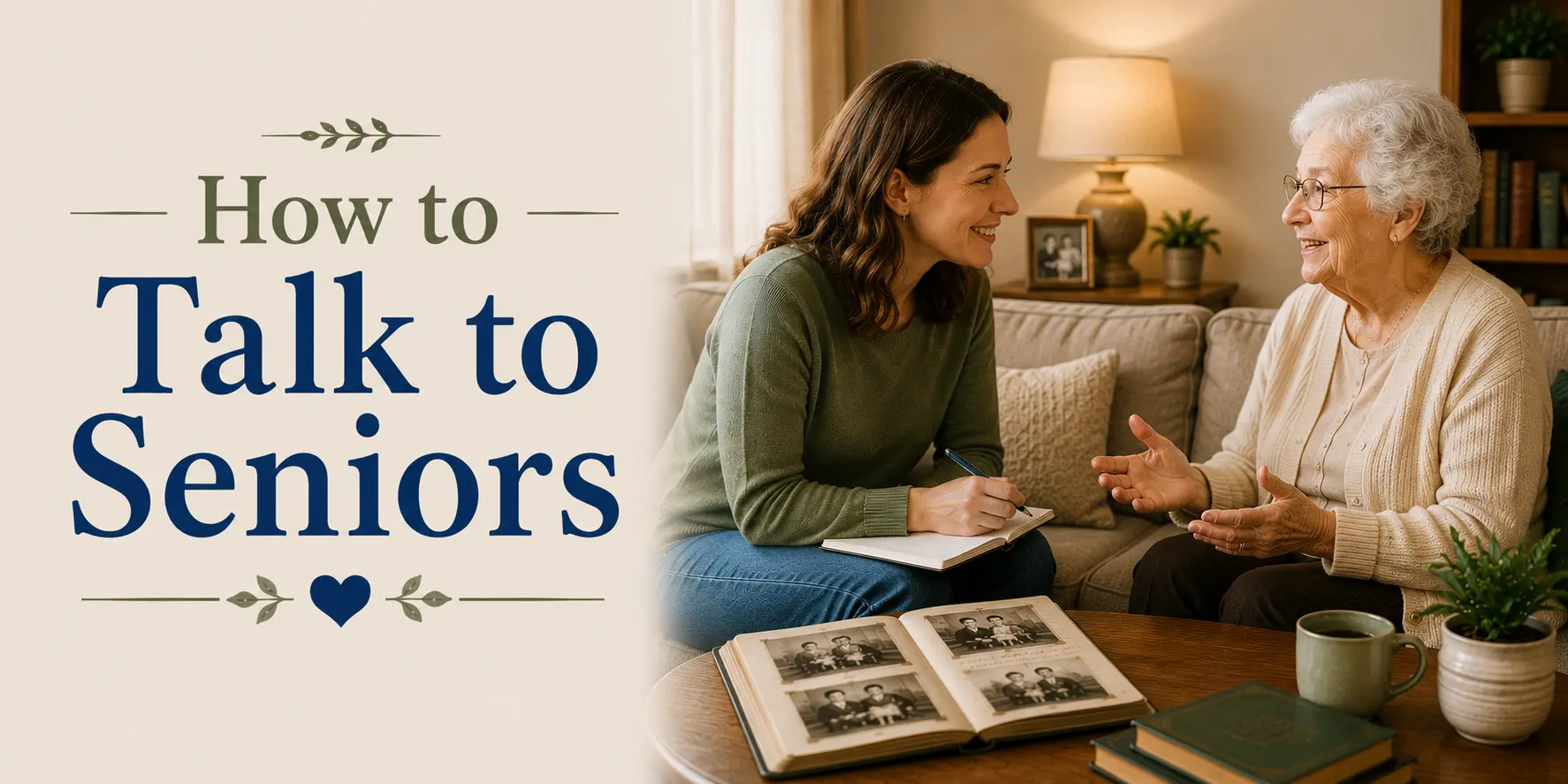
Effective communication with seniors is not simply about speaking more loudly or repeating information. It involves active listening, empathy, patience, respect, and a genuine interest in understanding the person’s experiences, values, preferences, and life story.
Research suggests that person-centered communication improves emotional well-being, strengthens relationships, supports dignity, and enhances care outcomes for older adults (Brooker, 2004). Learning how to talk to seniors effectively can help families and caregivers create more meaningful connections while preserving identity and independence.
Why Communication Changes as People Age
Aging can affect communication in several ways.
Common factors include:
Hearing Changes
Many older adults experience hearing loss that can make conversations difficult, especially in noisy environments.
Vision Changes
Reduced vision may affect the ability to read facial expressions, body language, or written materials.
Cognitive Changes
Conditions such as dementia, Alzheimer’s disease, or mild cognitive impairment may affect memory, language, and information processing.
Social Changes
Retirement, loss of friends, reduced mobility, and social isolation can affect emotional well-being and communication patterns.
Health Challenges
Chronic illness, medication side effects, fatigue, and pain can also influence communication.
Understanding these factors helps family members and caregivers communicate more effectively.
The Importance of Respectful Communication
One of the most common complaints among seniors is feeling patronized.
Older adults should never be treated as though they are incapable simply because they are older.
Respectful communication means:
- Speaking directly to the individual
- Avoiding baby talk
- Allowing time for responses
- Recognizing personal autonomy
- Listening without interrupting
- Valuing opinions and experiences
Person-centered care models emphasize preserving dignity and recognizing the individual behind the age, diagnosis, or care needs (Kitwood, 1997).
How to Start Meaningful Conversations With Seniors
Many people struggle with conversation because they are unsure what topics to discuss.
Some of the best conversations involve genuine curiosity.
Consider asking about:
- Childhood experiences
- Family traditions
- Career accomplishments
- Life lessons
- Historical events
- Hobbies and interests
- Travel experiences
- Personal achievements
Older adults often enjoy sharing stories that allow them to reflect on meaningful experiences and relationships.
Active Listening: The Most Important Communication Skill
Talking is only part of effective communication.
Listening is equally important.
Active listening involves:
- Maintaining eye contact
- Giving full attention
- Avoiding distractions
- Reflecting back what was said
- Asking follow-up questions
- Showing empathy
Research suggests that meaningful social interaction contributes to emotional well-being and quality of life among older adults.
When seniors feel heard, they are more likely to remain engaged and connected.
Communication Tips for Family Caregivers
Family caregivers often face unique communication challenges, especially when caring for aging parents or loved ones with cognitive changes.
Helpful strategies include:
Be Patient
Allow extra time for conversations and responses.
Focus on Understanding
Avoid rushing conversations or correcting minor details unnecessarily.
Validate Feelings
Even if facts are confused, emotions remain real and important.
Minimize Distractions
Reduce background noise from televisions, radios, or crowded environments.
Use Clear Language
Speak naturally and clearly without oversimplifying or sounding patronizing.
Preserve Independence
Whenever possible, involve seniors in decisions affecting their lives.
How to Talk to Seniors With Dementia or Alzheimer’s Disease
Communicating with individuals living with dementia requires additional patience and flexibility.
Research on person-centered dementia care emphasizes understanding the individual’s history, preferences, and identity (McKeown et al., 2010).
Helpful approaches include:
Speak Calmly
Use a reassuring tone of voice.
Ask One Question at a Time
Complex questions can feel overwhelming.
Avoid Arguing
Correcting memories often increases frustration.
Focus on Emotions
Respond to feelings rather than debating facts.
Use Memory Prompts
Photographs and life story materials can support conversation.
Be Flexible
Follow the person’s lead when possible.
Why Life Stories Improve Communication
One of the most effective communication tools is understanding a person’s life story.
Life story information helps caregivers and family members learn about:
- Important relationships
- Personal values
- Career experiences
- Family traditions
- Significant achievements
- Favorite activities
Studies indicate that life story work supports person-centered care and improves communication between caregivers and individuals living with dementia (McKeown et al., 2010).
Knowing someone’s story creates opportunities for richer and more meaningful conversations.
Conversation Topics Seniors Often Enjoy
Family and Relationships
Many seniors enjoy discussing children, grandchildren, parents, siblings, and family traditions.
Career Experiences
Professional accomplishments often remain important parts of personal identity.
Historical Events
Older adults have lived through significant historical moments and may enjoy sharing their perspectives.
Hobbies and Interests
Gardening, sports, music, travel, crafts, and community activities can spark engaging conversations.
Personal Wisdom
Many seniors appreciate opportunities to share lessons learned throughout life.
Faith and Values
Spiritual beliefs and personal values often become increasingly meaningful with age.
Questions That Encourage Meaningful Conversations
Examples include:
- What is your happiest childhood memory?
- What life lesson has helped you the most?
- What family tradition should continue?
- What accomplishment are you most proud of?
- What advice would you give younger generations?
- What historical event had the biggest impact on your life?
- What are you most grateful for?
- What story do you wish more people knew about you?
These questions often uncover valuable memories and strengthen emotional connections.
Communication Mistakes to Avoid
Speaking Too Quickly
Allow time for information processing.
Interrupting
Many seniors feel dismissed when interrupted.
Assuming Incompetence
Avoid making assumptions based solely on age.
Talking About the Person Instead of To Them
Always include the individual in conversations whenever possible.
Correcting Every Detail
Especially in dementia care, constant correction may create unnecessary frustration.
Using Patronizing Language
Respectful communication preserves dignity and trust.
Benefits of Better Communication With Seniors
Stronger Relationships
Meaningful conversations deepen emotional connections.
Reduced Loneliness
Regular engagement helps combat social isolation.
Improved Caregiving Outcomes
Better communication supports person-centered care.
Enhanced Emotional Well-Being
Feeling heard and valued contributes to the quality of life.
Preservation of Family History
Conversations often uncover important stories and memories.
Greater Understanding
Families gain insight into experiences that shaped previous generations.
How Our Services Help Families Connect With Seniors
Our services help families move beyond everyday conversation and preserve meaningful stories, memories, and life experiences.
We assist with:
- Guided life story interviews
- Family history documentation
- Memory preservation projects
- Life story recording
- Digital memory archives
- Legacy preservation planning
- Caregiver communication resources
- Identity-centered care support
These tools help families strengthen communication while ensuring that important stories and experiences are never lost.
Frequently Asked Questions
What is the best way to talk to seniors?
Speak respectfully, listen actively, maintain patience, and show genuine interest in their experiences and opinions.
How do you communicate with seniors who have hearing loss?
Face the person, speak clearly, reduce background noise, and avoid shouting.
What should you avoid saying to older adults?
Avoid patronizing language, dismissive comments, and assumptions about capability based solely on age.
How do you start conversations with seniors?
Ask open-ended questions about their life experiences, family, career, interests, and personal memories.
Why is active listening important when talking to seniors?
Active listening helps individuals feel respected, valued, and understood.
How can life story projects improve communication?
Life story materials provide meaningful conversation topics and help caregivers understand the individual better.
How do you communicate with someone who has dementia?
Use simple language, speak calmly, focus on emotions, and avoid arguing about remembered facts.
Why do seniors enjoy sharing stories?
Storytelling allows individuals to reflect on meaningful experiences, maintain identity, and connect with others.
Can communication reduce loneliness among seniors?
Yes. Meaningful conversations contribute to emotional well-being and social connection.
How can families preserve stories shared by seniors?
Through life story interviews, audio recordings, video recordings, memory journals, and family history projects.
Key Takeaways
Learning how to talk to seniors effectively is one of the most important ways to preserve dignity, strengthen relationships, and improve quality of life. Respectful communication involves patience, empathy, active listening, and a genuine interest in the person’s experiences and identity. Whether supporting an aging parent, communicating with a grandparent, caring for someone living with dementia, or simply building stronger intergenerational connections, meaningful conversations help preserve memories, honor life experiences, and ensure that every person feels heard, valued, and respected.
References
Brooker, D. (2004). What is person-centred care in dementia? Reviews in Clinical Gerontology, 13(3), 215–222. https://doi.org/10.1017/S095925980400108X
Kitwood, T. (1997). Dementia reconsidered: The person comes first. Open University Press.
McKeown, J., Clarke, A., Ingleton, C., Ryan, T., & Repper, J. (2010). The use of life story work with people with dementia to enhance person-centred care. International Journal of Older People Nursing, 5(2), 148–158. https://doi.org/10.1111/j.1748-3743.2010.00219.x
Westerhof, G. J., & Bohlmeijer, E. T. (2014). Celebrating fifty years of research and applications in reminiscence and life review: State of the art and new directions. Journal of Aging Studies, 29, 107–114. https://doi.org/10.1016/j.jaging.2014.02.003