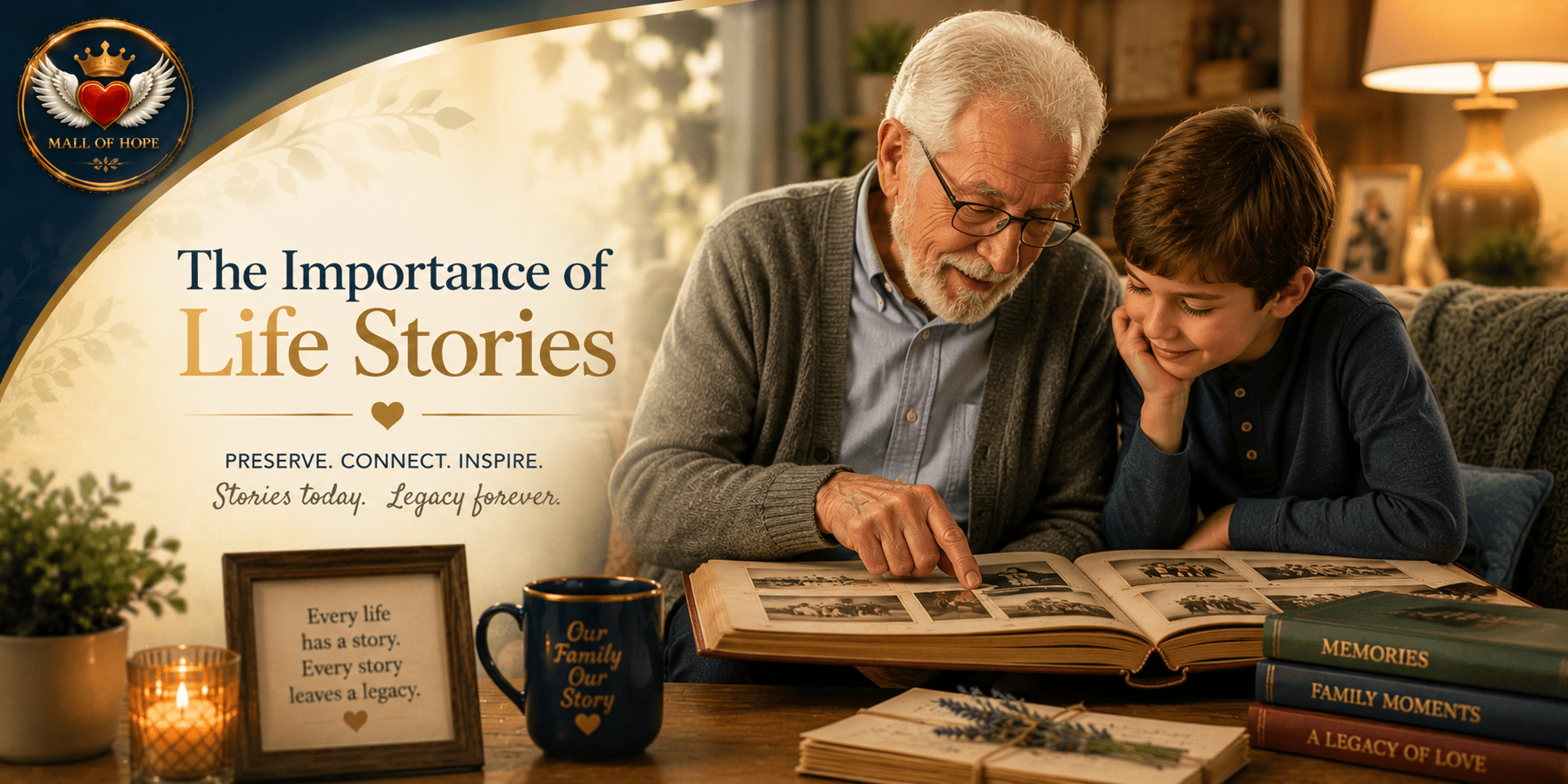

Every person has a story that deserves to be remembered. Long before there were photographs, videos, or digital archives, families preserved their history by telling stories from one generation to the next. These stories explained where a family came from, the challenges they overcame, the values they held, and the people who shaped their lives. Today, preserving life stories remains just as important. While technology has changed the way memories are recorded, the purpose remains the same—to protect identity, strengthen family connections, and ensure that future generations understand the people who came before them.
The importance of life stories extends far beyond documenting dates and events. A life story captures the experiences, relationships, beliefs, traditions, achievements, and lessons that define a person’s identity. It explains not only what happened throughout someone’s life but also why those experiences mattered and how they influenced future generations. Whether preserved through written memoirs, professional interviews, legacy videos, audio recordings, or family history projects, life stories create lasting connections between the past, present, and future.
Life stories have also become an essential component of person-centered healthcare, particularly for individuals living with Alzheimer’s disease and other forms of dementia. Understanding a person’s background, occupations, relationships, cultural traditions, and personal values enables caregivers to provide individualized support that honors dignity and identity. Research has shown that life review promotes emotional well-being while helping individuals integrate and reflect upon their life experiences (Butler, 1963). Life story work also improves communication and quality of care by focusing on the individual rather than the diagnosis (Kitwood, 1997).
Whether you are recording your own experiences, interviewing parents or grandparents, preserving family history, or supporting someone through aging or dementia, documenting life stories creates an enduring legacy that will continue educating, inspiring, and connecting generations.
Life Stories Preserve Identity Across Generations
One of the greatest gifts a person can leave behind is an authentic record of who they were. Birth certificates, census records, marriage licenses, military documents, and family trees provide important historical facts, but they rarely explain the personality, character, dreams, or life lessons behind those records. Life stories provide the context that transforms historical information into meaningful family history.
Every individual carries unique memories of childhood, education, careers, relationships, parenthood, faith, travel, military service, cultural traditions, and personal accomplishments. Recording these experiences allows future generations to understand not only what happened but also how those experiences shaped the family’s identity.
Research suggests that individuals who know more about their family’s history often demonstrate greater resilience, emotional well-being, and a stronger sense of identity because they understand themselves as part of a continuing family narrative (Duke et al., 2008). Children who hear stories about previous generations often gain confidence by recognizing that their family has successfully navigated challenges throughout history.
Life stories also preserve intangible aspects of family culture. Favorite recipes, holiday traditions, sayings, humor, values, spiritual beliefs, and acts of kindness often become defining characteristics that continue influencing future generations long after the storyteller is gone.
Many families discover that recording life stories strengthens relationships in the present as well. Adult children often hear stories they never knew about their parents’ early lives, while grandparents enjoy sharing experiences that may never have emerged during everyday conversations. These meaningful discussions become treasured memories in themselves while preserving history for the future.
The Role of Life Stories in Person-Centered Care
Life stories play a vital role in person-centered care because they help healthcare professionals understand the individual beyond their medical diagnosis. Traditional medical records describe symptoms, medications, and treatments, but they rarely explain what gives someone’s life meaning. Person-centered care recognizes that effective support requires understanding the person’s history, values, preferences, and relationships.
This approach is especially important for individuals living with Alzheimer’s disease and other forms of dementia. Although dementia gradually affects memory and communication, it does not erase a person’s identity, emotional needs, or lifelong experiences. Learning about the individual’s background enables caregivers to create more meaningful conversations, personalized routines, and supportive environments.
Life story information often includes:
- Childhood memories and family traditions
- Career history and professional achievements
- Military service or community involvement
- Religious beliefs and spiritual practices
- Cultural heritage and family customs
- Favorite music, books, and hobbies
- Daily routines and communication preferences
- Significant life events and meaningful relationships
- Personal accomplishments and life lessons
For example, knowing that someone spent decades as a teacher, farmer, musician, nurse, engineer, artist, entrepreneur, or veteran allows caregivers to design activities and conversations based on familiar experiences. Favorite songs, recipes, photographs, sports teams, gardening, or historical events often encourage reminiscence while promoting emotional comfort.
Tom Kitwood (1997) argued that preserving personhood should remain central to dementia care. Modern research continues to support person-centered approaches because they improve communication, strengthen emotional well-being, and promote dignity throughout the progression of dementia (Fazio et al., 2018).
Life stories, therefore, become practical caregiving tools that help professionals provide individualized support while honoring the whole person.
How Life Stories Strengthen Families and Communities
Life stories are not valuable only for the individual telling them—they become shared resources that strengthen entire families and communities. Every recorded memory contributes to a larger understanding of cultural history, local traditions, and family identity.
Families often use life stories to create:
- Legacy videos and documentary films
- Written autobiographies and memoirs
- Family history books
- Memory books with photographs
- Oral history collections
- Genealogy projects
- Digital legacy archives
- Educational resources for younger generations
Recording these stories helps preserve experiences that may otherwise disappear, including immigration journeys, military service, historical events, professional accomplishments, volunteer work, and community leadership. These firsthand accounts enrich historical understanding while helping younger generations appreciate the sacrifices and achievements of those who came before them.
The process of recording life stories also creates opportunities for meaningful family conversations. Children and grandchildren often ask questions they never considered before, leading to deeper understanding and stronger emotional connections. Families frequently report that interviewing parents or grandparents becomes one of the most rewarding experiences they have shared together.
Life stories can also support healing during times of grief. After someone dies, hearing their voice, watching a recorded interview, or reading a handwritten memoir provides comfort while helping preserve an ongoing sense of connection. These preserved memories often become treasured family heirlooms that continue offering guidance, encouragement, and inspiration.
Communities likewise benefit when elders share their stories. Veterans, educators, healthcare professionals, artists, first responders, farmers, entrepreneurs, and civic leaders all preserve valuable historical perspectives that contribute to local history and collective memory.
Creating and Preserving Life Stories for the Future
Creating a life story does not require extraordinary achievements or famous accomplishments. Every life contains experiences worth preserving because every individual contributes something unique to their family and community. The most meaningful stories often emerge from ordinary moments—raising children, building friendships, overcoming hardship, celebrating traditions, serving others, or sharing everyday wisdom.
Families can begin preserving life stories through simple conversations guided by thoughtful, open-ended questions. Topics may include childhood memories, family traditions, education, careers, relationships, military service, travel, faith, parenting, personal challenges, and advice for future generations. Recording these conversations through video or audio helps preserve personality, tone of voice, facial expressions, and emotion in addition to the stories themselves.
Many families expand these conversations into broader legacy projects by combining interviews with photographs, journals, letters, recipes, genealogy research, home movies, certificates, and historical documents. These collections provide a richer understanding of both individual lives and family history.
Long-term preservation is equally important. Digital recordings should be stored securely using encrypted cloud services and external hard drives, while photographs and printed materials should be protected with archival-quality storage. Creating written transcripts improves accessibility and ensures stories remain searchable for future generations.
Life stories should also be viewed as living records rather than one-time projects. Recording milestone birthdays, anniversaries, retirements, reunions, and significant life events allows families to continue documenting new chapters as they unfold.
Ultimately, the importance of life stories lies in their ability to preserve identity, strengthen relationships, and connect generations through shared experience. They remind us that every person has wisdom worth sharing, memories worth preserving, and values worth passing forward. By recording life stories today, families create lasting legacies that ensure future generations will not simply know their ancestors’ names—they will know their voices, understand their character, appreciate their sacrifices, and continue carrying their stories into the future.
Frequently Asked Questions
Why are life stories important?
Life stories preserve personal identity, family history, values, traditions, and life lessons. They help future generations understand the experiences and relationships that shaped their family while strengthening emotional connections across generations.
Who should record their life story?
Everyone can benefit from preserving their story, including parents, grandparents, veterans, community leaders, individuals living with dementia, caregivers, and anyone who wants to leave a meaningful legacy for family and future generations.
How do life stories support dementia care?
Life stories help caregivers understand the person’s background, preferences, occupations, relationships, and values. This information supports person-centered care, meaningful communication, and individualized activities while preserving identity.
What is the best way to preserve a life story?
Many families combine professional interviews, legacy videos, written memoirs, memory books, genealogy research, digitized photographs, audio recordings, and secure digital archives to create a comprehensive and lasting family legacy.
When is the best time to record a life story?
The best time is now. Recording stories while individuals are healthy and comfortable sharing their experiences helps preserve authentic memories, emotions, personality, and family history before age or illness affects communication.
References
Brooker, D. (2007). Person-centred dementia care: Making services better. Jessica Kingsley Publishers.
Butler, R. N. (1963). The life review: An interpretation of reminiscence in the aged. Psychiatry, 26(1), 65–76.
Duke, M. P., Lazarus, A., & Fivush, R. (2008). Knowledge of family history is a clinically useful index of psychological well-being and prognosis. Journal of Family Life, 7(2), 133–140.
Fazio, S., Pace, D., Flinner, J., & Kallmyer, B. (2018). The fundamentals of person-centered care for individuals with dementia. The Gerontologist, 58(Suppl. 1), S10–S19.
Kitwood, T. (1997). Dementia reconsidered: The person comes first. Open University Press.
McAdams, D. P. (2008). Personal narratives and the life story. In O. P. John, R. W. Robins, & L. A. Pervin (Eds.), Handbook of Personality: Theory and Research (3rd ed., pp. 242–262). Guilford Press.
Woods, B., O’Philbin, L., Farrell, E. M., Spector, A., & Orrell, M. (2018). Reminiscence therapy for dementia. Cochrane Database of Systematic Reviews, 3, CD001120.
World Health Organization. (2023). Dementia. https://www.who.int/news-room/fact-sheets/detail/dementia