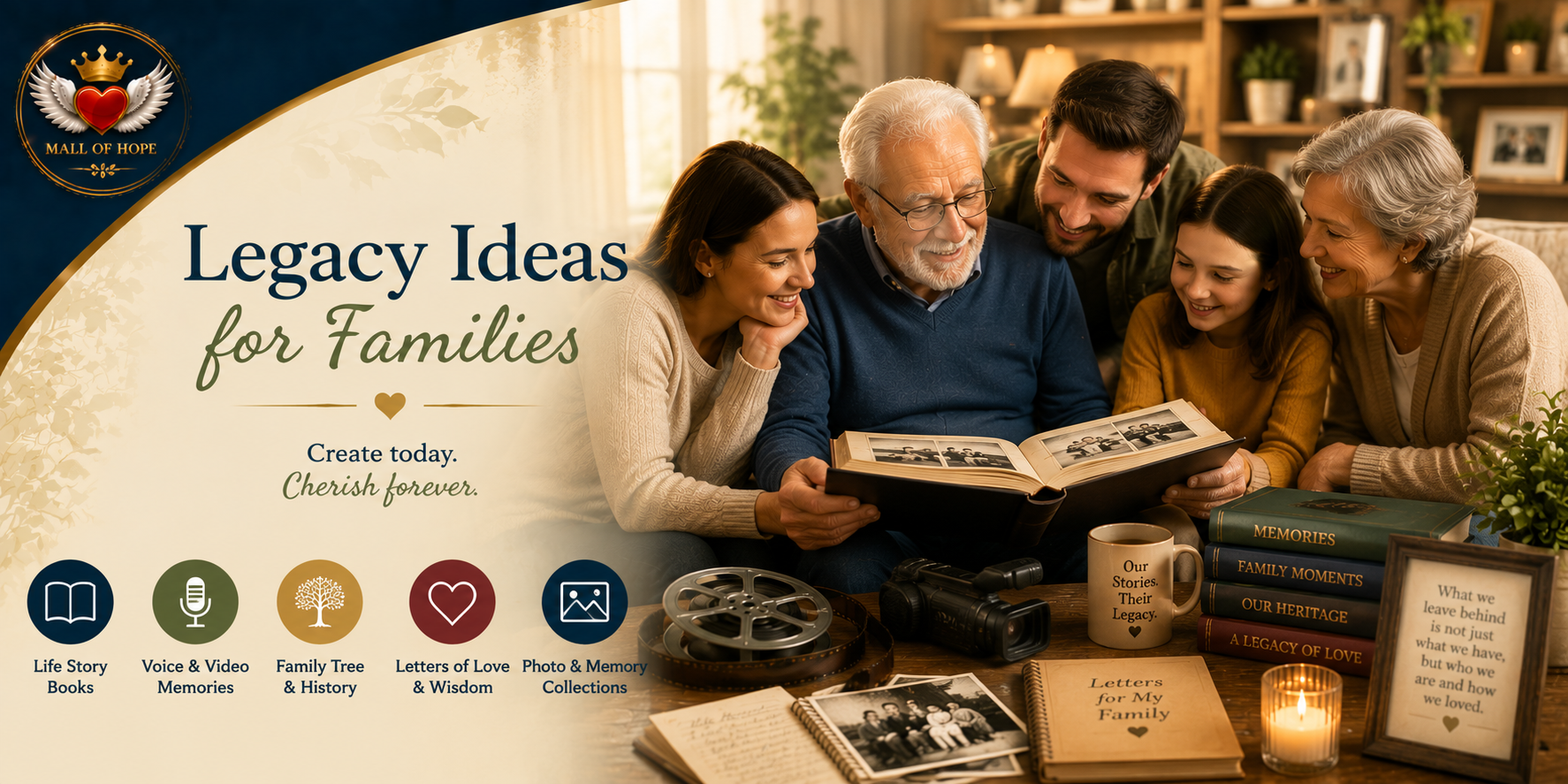

Every family leaves a legacy. Sometimes it is found in treasured photographs, handwritten recipes, family traditions, or heirlooms passed from one generation to the next. More often, however, a family’s greatest legacy is found in the stories they tell, the values they share, and the relationships they nurture throughout life. Unfortunately, many of these priceless memories are never recorded, leaving future generations with unanswered questions about the people who shaped their family. Exploring legacy ideas for families provides meaningful ways to preserve personal history, strengthen family connections, and ensure that stories, wisdom, and traditions continue for generations to come.
A family legacy extends far beyond financial inheritance. It includes the lessons learned through hardship, the laughter shared around dinner tables, the traditions celebrated during holidays, the faith that sustained difficult seasons, and the acts of kindness that shaped a family’s identity. These experiences become part of an enduring story that connects parents, grandparents, children, and future descendants.
Today, families have more opportunities than ever to preserve these memories. Professional life story interviews, legacy videos, family documentaries, memory books, digital archives, genealogy projects, oral histories, and autobiography recordings allow families to capture not only historical facts but also voices, personalities, emotions, and values. These projects preserve identity while creating meaningful keepsakes that continue educating and inspiring future generations.
Legacy preservation has become increasingly important as populations age and awareness of Alzheimer’s disease and other forms of dementia continues to grow. Recording stories while communication remains strong protects family history before memory changes occur. Research suggests that life review supports emotional well-being and reinforces identity during later adulthood (Butler, 1963). Person-centered approaches also recognize that preserving personal history improves dementia care by helping caregivers understand the individual beyond their diagnosis (Kitwood, 1997).
Whether you are honoring parents, documenting grandparents, creating memories with children, or preserving your own experiences, meaningful family legacy projects ensure that the people you love will continue to be known long into the future.
Why Creating a Family Legacy Matters
Families often preserve birth certificates, marriage licenses, military records, and family photographs, yet these records tell only part of the story. Future generations may know dates and names without understanding the personalities, sacrifices, dreams, relationships, and values behind them. Legacy preservation gives meaning to those historical records by documenting the lived experiences that shaped each generation.
Recording family stories also strengthens identity. Research demonstrates that individuals who know more about their family history often develop greater resilience, emotional well-being, and a stronger sense of belonging because they recognize themselves as part of an ongoing family narrative (Duke et al., 2008). Knowing how grandparents overcame adversity, why parents made important decisions, or what values guided previous generations helps younger family members understand where they come from and what they have inherited beyond genetics.
Creating a family legacy also strengthens relationships today. Sitting together to ask meaningful questions, review old photographs, record interviews, and share forgotten memories often becomes one of the most valuable experiences a family can have. Adult children frequently discover stories they had never heard, while grandparents appreciate the opportunity to share wisdom that may otherwise have remained unspoken.
Legacy projects can also provide comfort during periods of illness or grief. Hearing a loved one’s voice, watching a recorded interview, or reading a handwritten memory offers an enduring connection that remains meaningful long after someone has passed away. These preserved stories become treasured gifts that continue supporting families through future generations.
Ultimately, preserving a family legacy is an investment in connection. It reminds future descendants not only of who came before them but also of the values, resilience, compassion, and traditions that helped shape their family.
Meaningful Legacy Ideas for Families
There are countless ways to preserve a family’s legacy, and the most meaningful projects often combine storytelling with photographs, historical records, and personal reflections. Every family can choose approaches that reflect their traditions, interests, and goals.
Popular family legacy ideas include:
- Record professional life story interviews
- Create legacy videos featuring parents or grandparents
- Produce a family documentary
- Write autobiographies or family memoirs
- Create memory books with photographs and captions
- Build a detailed family tree with genealogy research
- Record oral histories from older relatives
- Preserve handwritten letters, journals, and diaries
- Collect family recipes along with the stories behind them
- Digitize old photographs, home movies, and slides
- Record family holiday traditions and celebrations
- Create annual family history books
- Interview military veterans about their service
- Preserve cultural traditions, language, and immigration stories
- Record grandparents answering questions from grandchildren
- Develop a secure digital family archive
- Create a family values statement or ethical will
- Preserve favorite songs, prayers, poems, and readings
One of the most meaningful projects is a professional life story interview. Guided conversations encourage parents and grandparents to reflect on childhood, careers, marriage, parenting, faith, military service, community involvement, personal challenges, and life lessons. These interviews preserve personality, humor, voice, and emotion in ways that written records alone cannot.
Families can also organize legacy projects around specific themes, such as immigration journeys, military service, entrepreneurship, family businesses, community leadership, or traditions passed through multiple generations. These focused collections enrich both family history and local historical understanding.
The most valuable legacy projects are those that encourage authentic storytelling while preserving the unique personality of each family member.
Legacy Preservation and Person-Centered Care
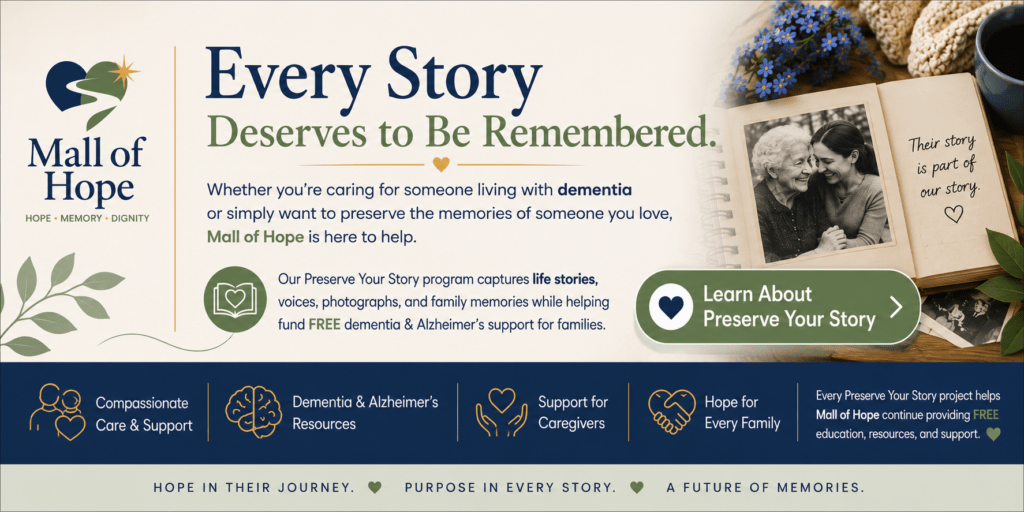
Legacy preservation is especially important for families affected by Alzheimer’s disease or other forms of dementia. As memory changes gradually affect communication, recording personal history helps preserve identity while supporting person-centered care. Although dementia influences memory, it does not erase a person’s values, relationships, beliefs, accomplishments, or emotional life.
Person-centered care emphasizes understanding who the individual has always been rather than focusing solely on the diagnosis (Kitwood, 1997). Legacy projects provide caregivers with practical knowledge about occupations, hobbies, favorite music, family traditions, cultural heritage, spiritual beliefs, and important relationships. This information supports individualized care while strengthening dignity and emotional connection.
For example, knowing that someone spent decades as a teacher, farmer, musician, nurse, engineer, artist, entrepreneur, or military veteran allows caregivers to create conversations and activities that reflect familiar experiences. Looking through family photographs, listening to favorite songs, preparing traditional recipes, or discussing cherished memories often encourages reminiscence while reducing anxiety.
Families are encouraged to begin legacy projects soon after a diagnosis of mild cognitive impairment or early-stage dementia. Recording stories during this period preserves detailed memories, humor, values, and personality while communication remains relatively strong.
Research supports life story work and reminiscence as evidence-based interventions that may improve communication, emotional well-being, and quality of life for many individuals living with dementia (Woods et al., 2018). Legacy projects become valuable tools not only for future generations but also for current caregivers seeking to provide compassionate, individualized support.
These projects remind everyone involved that the individual is far more than their medical condition—they are a person with a lifetime of meaningful experiences that deserve recognition and preservation.
Building a Legacy That Connects Future Generations
Creating a family legacy should be viewed as an ongoing journey rather than a single project. Every generation has new stories to contribute, from milestone birthdays and weddings to graduations, retirements, new family traditions, and everyday experiences that will become tomorrow’s treasured memories.
Many families create comprehensive legacy collections that include life story interviews, genealogy research, legacy videos, memory books, autobiography recordings, journals, family photographs, historical documents, recipes, audio recordings, and secure digital archives. Together, these resources preserve not only historical information but also voices, personalities, emotions, humor, and values.
Digital preservation has transformed the way families protect their history. Secure cloud storage, encrypted backups, interactive family websites, online family trees, and searchable digital archives allow multiple generations to contribute while ensuring important records remain protected. Families should also maintain offline backups on external hard drives and preserve original photographs and documents using archival-quality materials to maximize long-term accessibility.
Legacy projects are particularly meaningful when they become family traditions. Annual interviews, holiday storytelling sessions, birthday reflections, reunion recordings, and milestone celebrations allow each generation to add new chapters to the family’s shared history.
Ultimately, a family’s greatest legacy is not measured by possessions but by the lives they touch and the stories they preserve. Every recorded interview, labeled photograph, written memoir, family recipe, and shared memory becomes a bridge connecting generations. By preserving your family’s experiences today, you create an enduring gift that allows future children, grandchildren, and descendants to know where they came from, understand the values that shaped them, and continue the story with confidence, gratitude, and hope.
Frequently Asked Questions
What is a family legacy?
A family legacy includes the stories, traditions, values, beliefs, memories, life lessons, relationships, and historical experiences that are passed from one generation to the next, in addition to any financial or physical inheritance.
What are the best legacy ideas for families?
Popular legacy ideas include life story interviews, legacy videos, memory books, genealogy research, autobiography recordings, family documentaries, recipe collections, oral histories, digital archives, and preserving photographs with written stories.
When should families begin creating legacy projects?
The best time is now. Recording stories while loved ones are healthy and able to share detailed memories helps preserve authentic voices, experiences, and personal history before age or illness affects communication.
How do legacy projects help families affected by dementia?
Legacy projects preserve identity, family history, personal values, and meaningful experiences before memory changes progress. They also support person-centered dementia care by helping caregivers understand the individual’s background and preferences.
How can a family preserve its legacy for future generations?
Families should combine multiple preservation methods, including recorded interviews, written memoirs, memory books, genealogy research, digitized photographs, secure digital archives, and regular storytelling traditions to ensure memories remain accessible for generations.
References
Brooker, D. (2007). Person-centred dementia care: Making services better. Jessica Kingsley Publishers.
Butler, R. N. (1963). The life review: An interpretation of reminiscence in the aged. Psychiatry, 26(1), 65–76.
Duke, M. P., Lazarus, A., & Fivush, R. (2008). Knowledge of family history as a clinically useful index of psychological well-being and prognosis. Journal of Family Life, 7(2), 133–140.
Fazio, S., Pace, D., Flinner, J., & Kallmyer, B. (2018). The fundamentals of person-centered care for individuals with dementia. The Gerontologist, 58(Suppl. 1), S10–S19.
Kitwood, T. (1997). Dementia reconsidered: The person comes first. Open University Press.
McAdams, D. P. (2008). Personal narratives and the life story. In O. P. John, R. W. Robins, & L. A. Pervin (Eds.), Handbook of Personality: Theory and Research (3rd ed., pp. 242–262). Guilford Press.
Woods, B., O’Philbin, L., Farrell, E. M., Spector, A., & Orrell, M. (2018). Reminiscence therapy for dementia. Cochrane Database of Systematic Reviews, 3, CD001120.
World Health Organization. (2023). Dementia. https://www.who.int/news-room/fact-sheets/detail/dementia