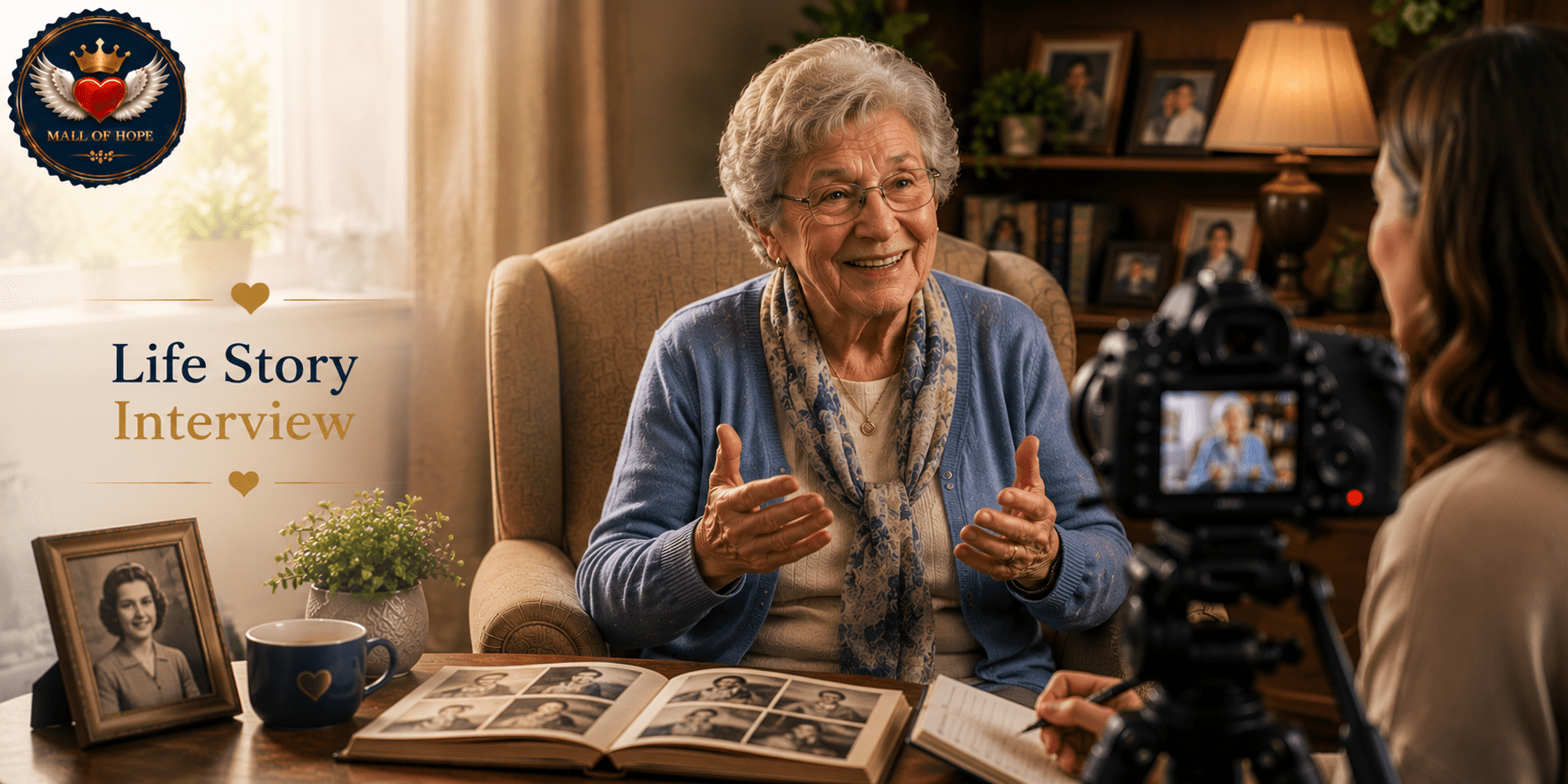

Every individual carries a lifetime of experiences, relationships, achievements, challenges, and wisdom that deserve to be remembered. A life story interview provides an opportunity to capture these memories through thoughtful conversations that preserve a person’s identity for family members, future generations, caregivers, and historians. Unlike a traditional interview focused on facts or accomplishments, a life story interview explores the meaning behind life’s experiences, documenting not only what happened but how those moments shaped the individual.
Life story interviews have become increasingly valuable for families seeking to preserve the voices and personalities of parents, grandparents, veterans, community leaders, and loved ones living with dementia or other age-related conditions. These interviews also play an important role in genealogy, digital legacy preservation, memoir writing, oral history projects, and person-centered dementia care. Research demonstrates that reflecting on one’s life experiences can promote psychological well-being, strengthen identity, and enhance intergenerational relationships (Butler, 1963; McAdams, 2008).
Whether recorded as an audio conversation, video interview, written transcript, or multimedia archive, a life story interview creates a lasting record of the memories, values, traditions, and lessons that define a person’s unique life. These conversations become treasured family resources that preserve identity long after memories begin to fade.
Why Life Story Interviews Are Important
Every family possesses stories that cannot be found in official documents. Birth certificates, census records, military files, and photographs provide important historical facts, but they rarely capture a person’s personality, emotions, motivations, or life lessons. A life story interview bridges this gap by preserving the human experiences that give family history its meaning.
For older adults, participating in a life story interview offers an opportunity to reflect on significant milestones while sharing memories with loved ones. Many individuals find comfort and satisfaction in knowing their experiences will continue to educate and inspire future generations. Butler (1963) described life review as a natural developmental process that supports emotional integration and psychological well-being during later adulthood.
Life story interviews also strengthen family relationships. Children and grandchildren often discover unknown stories about military service, immigration, careers, courtship, childhood adventures, family traditions, acts of kindness, and moments of resilience. These conversations deepen appreciation for previous generations while fostering stronger family identity. Research suggests that children who understand more about their family history often demonstrate greater resilience and emotional security because they recognize themselves as part of a larger family narrative (Duke et al., 2008).
Beyond the family, life story interviews preserve community and cultural heritage. Individuals who have witnessed historical events, social changes, technological advancements, or cultural traditions provide firsthand perspectives that enrich local history and contribute to collective memory. Recording these experiences ensures valuable knowledge is not lost over time.
Life story interviews are also increasingly recognized as valuable tools in healthcare and senior services. Understanding an individual’s personal history helps caregivers provide compassionate, person-centered care that respects personal identity, preferences, and lifelong values (Kitwood, 1997).
Preparing for a Meaningful Life Story Interview
Successful life story interviews begin with thoughtful preparation rather than complicated equipment. The primary goal is to create a comfortable environment where meaningful conversations can develop naturally.
Before beginning the interview, consider its purpose. Some families want to document an entire life chronologically, while others focus on themes such as military service, family traditions, faith, immigration, professional achievements, community involvement, or lessons learned throughout life. Establishing clear goals helps guide meaningful questions while allowing room for spontaneous storytelling.
Creating a relaxed atmosphere is equally important. Interviews are most successful when conducted in quiet, familiar settings where the individual feels comfortable speaking openly. Family photographs, heirlooms, journals, letters, recipes, music, and treasured keepsakes often stimulate memories and encourage detailed storytelling, particularly for older adults.
Open-ended questions generate richer conversations than simple factual inquiries. Instead of asking questions that produce one-word answers, interviewers should encourage reflection and storytelling. Examples include:
- What are your earliest childhood memories?
- Who influenced your life the most and why?
- What traditions did your family celebrate growing up?
- What challenges taught you the greatest lessons?
- How did you meet your spouse or closest friends?
- What accomplishments make you most proud?
- What advice would you like future generations to remember?
- How would you like your grandchildren to remember you?
Listening attentively is often more important than asking additional questions. Allowing pauses gives individuals time to recall memories without feeling rushed. Follow-up questions frequently uncover details that become the most meaningful parts of the interview.
Technology has made life story interviews easier than ever. Smartphones, digital voice recorders, video cameras, and online meeting platforms all provide effective ways to capture conversations. Families may also choose professional recording services to produce high-quality audio or video archives suitable for long-term preservation.
Regardless of the recording method, obtaining informed consent and discussing how interviews will be stored, shared, and preserved demonstrates respect for personal privacy and family preferences.
Life Story Interviews for Dementia Care and Person-Centered Support
Life story interviews have become an essential component of person-centered dementia care because they preserve identity while helping caregivers understand the individual beyond their diagnosis. Dementia affects memory, communication, and cognitive abilities, but it does not erase a person’s lifelong experiences, relationships, values, or sense of self.
Person-centered care emphasizes recognizing the whole person rather than focusing solely on symptoms or medical needs (Kitwood, 1997). Life story interviews provide valuable insight into occupations, hobbies, favorite music, religious beliefs, military service, family traditions, cultural practices, and significant life events that can guide individualized care planning.
For example, learning that an individual spent decades as a teacher, farmer, musician, nurse, or carpenter may influence daily conversations and recreational activities. Knowing favorite foods, cherished holidays, beloved pets, or meaningful places allows caregivers to create familiar and comforting experiences that reduce anxiety while promoting emotional well-being.
Families also benefit from conducting life story interviews soon after a dementia diagnosis. Recording memories during the early stages preserves personal stories while communication remains relatively strong. These interviews become treasured keepsakes for future generations and practical resources for professional caregivers, memory care communities, and healthcare providers.
Life story interviews often improve communication between family members and care teams. Rather than relying exclusively on medical records, caregivers gain a fuller understanding of the individual’s personality, preferences, coping strategies, and lifelong accomplishments. This knowledge supports compassionate care that honors dignity throughout every stage of dementia.
Digital technology further enhances life story preservation by allowing interviews to be combined with photographs, family trees, timelines, historical documents, videos, and audio recordings. These multimedia archives can be updated over time, creating living family histories that remain accessible across generations.
Preserving Family Legacy Through Life Story Interviews
A life story interview is more than a recorded conversation—it is an enduring legacy that connects generations through shared memories, values, and experiences. While financial inheritance may support future generations materially, personal stories often become the most treasured gifts families receive.
Comprehensive life story interviews preserve information that might otherwise disappear, including family traditions, cultural customs, religious practices, recipes, military experiences, immigration journeys, career accomplishments, parenting philosophies, volunteer service, community leadership, and personal reflections about life’s greatest lessons.
These interviews complement genealogy research by adding personal context to historical records. Birth certificates, census records, newspaper articles, and military documents establish timelines, but oral histories explain the people behind those records. Together, documentary evidence and personal storytelling create richer, more meaningful family histories.
Life story interviews also encourage intergenerational relationships. Children and grandchildren gain opportunities to ask questions they may never have considered, while older adults experience the satisfaction of knowing their wisdom and experiences will continue to influence future generations. These conversations strengthen family identity by demonstrating resilience, perseverance, compassion, and hope across decades.
Proper preservation ensures interviews remain accessible for years to come. Families should maintain multiple digital backups, organize recordings with descriptive titles and dates, and store copies using reliable cloud services alongside external storage devices. Written transcripts improve accessibility and make interviews searchable for future genealogy or historical research.
Ultimately, every person possesses a unique story that deserves to be preserved. Whether documenting an extraordinary life filled with historic experiences or celebrating the quiet impact of everyday love, work, faith, and family, a life story interview captures the essence of who someone truly is. These conversations preserve voices, personalities, values, and memories that continue shaping families long after a loved one is gone, ensuring that identity is carried forward across generations.
Frequently Asked Questions
What is a life story interview?
A life story interview is a structured or conversational discussion that records an individual’s memories, experiences, values, relationships, and personal history through audio, video, or written documentation for future generations.
Who should participate in a life story interview?
Anyone can benefit from a life story interview. Parents, grandparents, veterans, community leaders, caregivers, individuals living with dementia, and anyone wishing to preserve their personal history can participate.
When is the best time to conduct a life story interview?
The best time is before memories begin to fade. However, meaningful interviews can be conducted at any age or stage of life, with early planning providing the greatest opportunity to capture detailed memories.
How do life story interviews support dementia care?
Life story interviews preserve personal identity and help caregivers understand an individual’s background, interests, values, relationships, and preferences. This information supports person-centered care and strengthens communication between families and healthcare professionals.
What should I do with a completed life story interview?
Store multiple copies securely, create written transcripts, share recordings with family members, and consider incorporating them into genealogy projects, digital legacy archives, memory books, or family history collections to ensure long-term preservation.
References
Butler, R. N. (1963). The life review: An interpretation of reminiscence in the aged. Psychiatry, 26(1), 65–76.
Duke, M. P., Lazarus, A., & Fivush, R. (2008). Knowledge of family history as a clinically useful index of psychological well-being and prognosis. Journal of Family Life, 7(2), 133–140.
Kitwood, T. (1997). Dementia reconsidered: The person comes first. Open University Press.
McAdams, D. P. (2008). Personal narratives and the life story. In O. P. John, R. W. Robins, & L. A. Pervin (Eds.), Handbook of personality: Theory and research (3rd ed., pp. 242–262). Guilford Press.
National Institute on Aging. (2024). Alzheimer’s disease fact sheet. https://www.nia.nih.gov/health/alzheimers-and-dementia/alzheimers-disease-fact-sheet
World Health Organization. (2023). Dementia. https://www.who.int/news-room/fact-sheets/detail/dementia