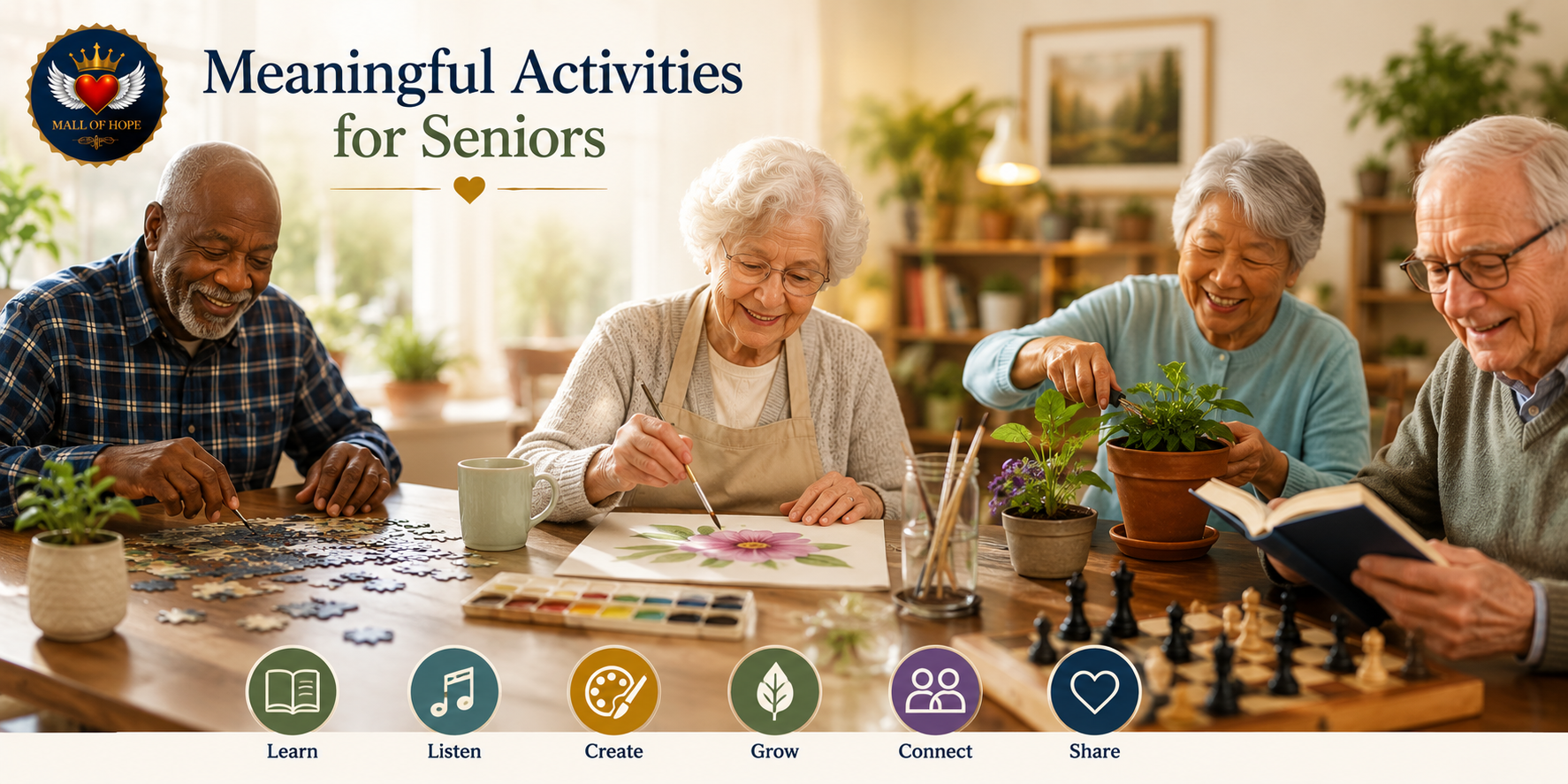

Growing older does not diminish a person’s need for purpose, connection, creativity, and meaningful engagement. Every individual continues to benefit from activities that reflect their interests, life experiences, personal values, and relationships. Meaningful activities for seniors are more than ways to pass the time—they help preserve identity, encourage social connection, stimulate cognitive function, support emotional well-being, and improve overall quality of life.
For older adults, particularly those living with Alzheimer’s disease or other forms of dementia, meaningful activities provide opportunities to maintain independence, express individuality, and remain connected to lifelong passions. The most effective activities are not chosen simply because they are appropriate for a certain age. Instead, they are based on the person’s history, abilities, preferences, culture, and life story. A retired teacher may enjoy reading with grandchildren, while a former gardener may find peace tending flowers or vegetables. Someone who spent decades cooking for family gatherings may enjoy baking favorite recipes or sharing culinary traditions.
Person-centered care recognizes that meaningful engagement is essential to healthy aging. Research suggests that individualized activities can improve mood, reduce behavioral symptoms associated with dementia, encourage social interaction, and enhance quality of life (Fazio et al., 2018). Life review and reminiscence activities also promote emotional well-being by reinforcing personal identity and encouraging reflection on meaningful life experiences (Butler, 1963).
Whether provided at home, in senior living communities, memory care facilities, adult day programs, or healthcare settings, meaningful activities allow seniors to continue contributing, learning, creating, and sharing their unique gifts with family and community.
Why Meaningful Activities Matter for Seniors
As people age, retirement, health changes, reduced mobility, or the loss of loved ones can affect opportunities for daily engagement. Without meaningful activities, many older adults experience loneliness, boredom, reduced confidence, or social isolation. According to the World Health Organization (2021), maintaining social participation and meaningful engagement contributes significantly to healthy aging and overall well-being.
Meaningful activities provide far-reaching benefits beyond entertainment. They encourage physical movement, cognitive stimulation, emotional expression, and social interaction while reinforcing a person’s sense of purpose. Participating in familiar activities also reminds seniors of their accomplishments, relationships, and lifelong interests, strengthening identity throughout the aging process.
For individuals living with dementia, activities based on personal history often reduce frustration because they draw upon long-term memories and familiar routines rather than emphasizing short-term recall. A former carpenter may enjoy sanding wood or organizing tools, while someone who loved music may respond positively to favorite songs from earlier decades.
Research has shown that individualized, person-centered activities may decrease agitation while improving mood and communication among people living with dementia (Brooker, 2007). Rather than focusing on limitations, these activities highlight remaining abilities and personal strengths.
Meaningful engagement also benefits families. Shared activities provide opportunities for conversation, laughter, storytelling, and emotional connection, helping family members create positive memories together regardless of health challenges. These experiences often strengthen relationships while reducing caregiver stress.
Professional caregivers likewise benefit because individualized activities encourage trust, improve communication, and create opportunities for more compassionate, relationship-centered care.
Types of Meaningful Activities for Seniors
There is no single activity that is meaningful for every older adult. The best activities reflect the individual’s personality, interests, cultural background, physical abilities, cognitive abilities, and life experiences. Person-centered planning helps ensure each activity remains enjoyable, achievable, and personally significant.
Examples of meaningful activities include:
- Life story interviews and oral history conversations
- Family photo albums and memory books
- Gardening and caring for plants
- Cooking favorite family recipes
- Baking with grandchildren
- Listening to favorite music or singing
- Reading books, newspapers, or poetry
- Arts, crafts, quilting, knitting, or woodworking
- Bird watching and spending time outdoors
- Walking, stretching, yoga, or chair exercises
- Volunteering or mentoring younger generations
- Faith-based activities, prayer, or attending religious services
- Genealogy research and family history projects
- Writing letters, journaling, or creating memoirs
- Watching classic films or home movies
- Playing card games, board games, or puzzles
- Pet therapy and animal companionship
- Celebrating cultural traditions and holidays
Creative activities encourage self-expression, while physical activities help maintain mobility, balance, and cardiovascular health. Cognitive activities such as reading, storytelling, and puzzles provide mental stimulation, and social activities strengthen relationships while reducing feelings of isolation.
Life story projects deserve special attention because they combine conversation, reminiscence, photographs, and storytelling into an activity that preserves both identity and family history. These projects benefit seniors while creating lasting keepsakes for future generations.
Successful activities are flexible and should be adapted to changing abilities rather than discontinued altogether. The goal is meaningful participation—not perfection.
Meaningful Activities for Seniors Living with Dementia
Meaningful activities become especially important when someone is living with Alzheimer’s disease or another form of dementia. Although memory and communication may change, individuals continue to experience emotions, relationships, creativity, and the desire for meaningful connection. Activities should therefore emphasize strengths rather than limitations.
Person-centered dementia care encourages caregivers to understand each individual’s personal history before selecting activities (Kitwood, 1997). Knowing someone’s occupation, hobbies, family traditions, favorite music, cultural heritage, and lifelong interests makes it easier to create experiences that feel familiar and comforting.
For example:
- A retired teacher may enjoy reading stories aloud or organizing books.
- A former gardener may enjoy watering plants or arranging flowers.
- A veteran may appreciate military music, photographs, or conversations about service.
- A musician may respond positively to singing familiar songs.
- A parent or grandparent may enjoy looking through family albums with loved ones.
- A former baker may enjoy mixing ingredients or decorating cookies.
Reminiscence activities often encourage meaningful conversation because long-term memories are frequently retained longer than recent events. Family photographs, familiar music, recipes, heirlooms, letters, and favorite objects help stimulate memories while reducing anxiety.
Research supports reminiscence therapy and life story work as evidence-based interventions that may improve communication, emotional well-being, and quality of life for many people living with dementia (Woods et al., 2018). These activities help caregivers engage individuals respectfully while preserving personal identity.
Professional caregivers frequently use memory books, personalized activity boxes, music playlists, communication profiles, and life story biographies to guide individualized programming. Families can contribute by sharing photographs, stories, favorite hobbies, and meaningful traditions that help create personalized experiences.
The most important measure of success is not completing a task but creating moments of joy, comfort, connection, and dignity.
Creating a Meaningful Lifestyle Through Person-Centered Activities
Meaningful activities are most effective when they become part of everyday life rather than occasional events. Families and caregivers should regularly explore what continues to bring joy, comfort, purpose, and connection as interests and abilities evolve.
Creating a person-centered activity plan often begins with a life story interview. Learning about someone’s childhood, education, career, hobbies, military service, family traditions, travel, volunteer work, favorite music, and spiritual beliefs helps identify activities that remain personally meaningful. This information can then be incorporated into individualized care plans used by family caregivers, home health aides, assisted living communities, and memory care facilities.
Technology also provides new opportunities for engagement. Digital photo albums, recorded family interviews, virtual family gatherings, online museum tours, music streaming, genealogy websites, and interactive memory books help seniors remain connected with family and lifelong interests regardless of physical location.
Meaningful activities should balance physical movement, cognitive stimulation, emotional expression, social interaction, creativity, and rest. Flexibility is essential because preferences, energy levels, and health conditions naturally change over time. Activities should always be adapted to support success rather than emphasize limitations.
Families should also recognize that everyday tasks can become meaningful activities when approached thoughtfully. Folding laundry, setting the table, watering plants, organizing photographs, preparing meals, writing birthday cards, or reading bedtime stories to grandchildren all provide opportunities for contribution, purpose, and connection.
Ultimately, meaningful activities help preserve what matters most—identity, dignity, and human connection. They remind us that every older adult continues to have gifts to share, wisdom to offer, and relationships to nurture. By choosing activities that reflect each person’s unique life story, caregivers create opportunities for joy, purpose, and belonging while honoring the individual beyond age or diagnosis. These moments not only enrich the lives of seniors but also strengthen families and preserve memories that will be treasured for generations.
Frequently Asked Questions
What are meaningful activities for seniors?
Meaningful activities are personalized experiences that reflect an individual’s interests, life history, abilities, relationships, and values. They promote purpose, social connection, emotional well-being, cognitive engagement, and physical health.
Why are meaningful activities important for older adults?
Meaningful activities help reduce loneliness, improve emotional well-being, encourage physical movement, strengthen cognitive engagement, preserve identity, and support healthy aging through continued participation in enjoyable experiences.
How do meaningful activities support people living with dementia?
Person-centered activities encourage reminiscence, improve communication, reduce anxiety, reinforce identity, strengthen relationships, and support emotional well-being by focusing on familiar interests and lifelong experiences.
How can families choose meaningful activities?
Families should consider the individual’s occupation, hobbies, favorite music, cultural traditions, faith, family history, physical abilities, cognitive abilities, and personal preferences. Life story interviews are an excellent way to identify meaningful activities.
Can meaningful activities be adapted as health needs change?
Yes. Activities should be modified to match changing physical and cognitive abilities while preserving the individual’s sense of purpose, enjoyment, and dignity. The goal is participation and connection rather than perfect performance.
References
Brooker, D. (2007). Person-centred dementia care: Making services better. Jessica Kingsley Publishers.
Butler, R. N. (1963). The life review: An interpretation of reminiscence in the aged. Psychiatry, 26(1), 65–76.
Fazio, S., Pace, D., Flinner, J., & Kallmyer, B. (2018). The fundamentals of person-centered care for individuals with dementia. The Gerontologist, 58(Suppl. 1), S10–S19.
Kitwood, T. (1997). Dementia reconsidered: The person comes first. Open University Press.
McCormack, B., & McCance, T. (2017). Person-centred practice in nursing and health care: Theory and practice (2nd ed.). Wiley-Blackwell.
World Health Organization. (2021). Decade of Healthy Ageing: Baseline report. https://www.who.int/publications/i/item/9789240017900
Woods, B., O’Philbin, L., Farrell, E. M., Spector, A., & Orrell, M. (2018). Reminiscence therapy for dementia. Cochrane Database of Systematic Reviews, 3, CD001120.