
Preserving Life Stories, Family History, & Personal Identity
What Is a Memory Journal?
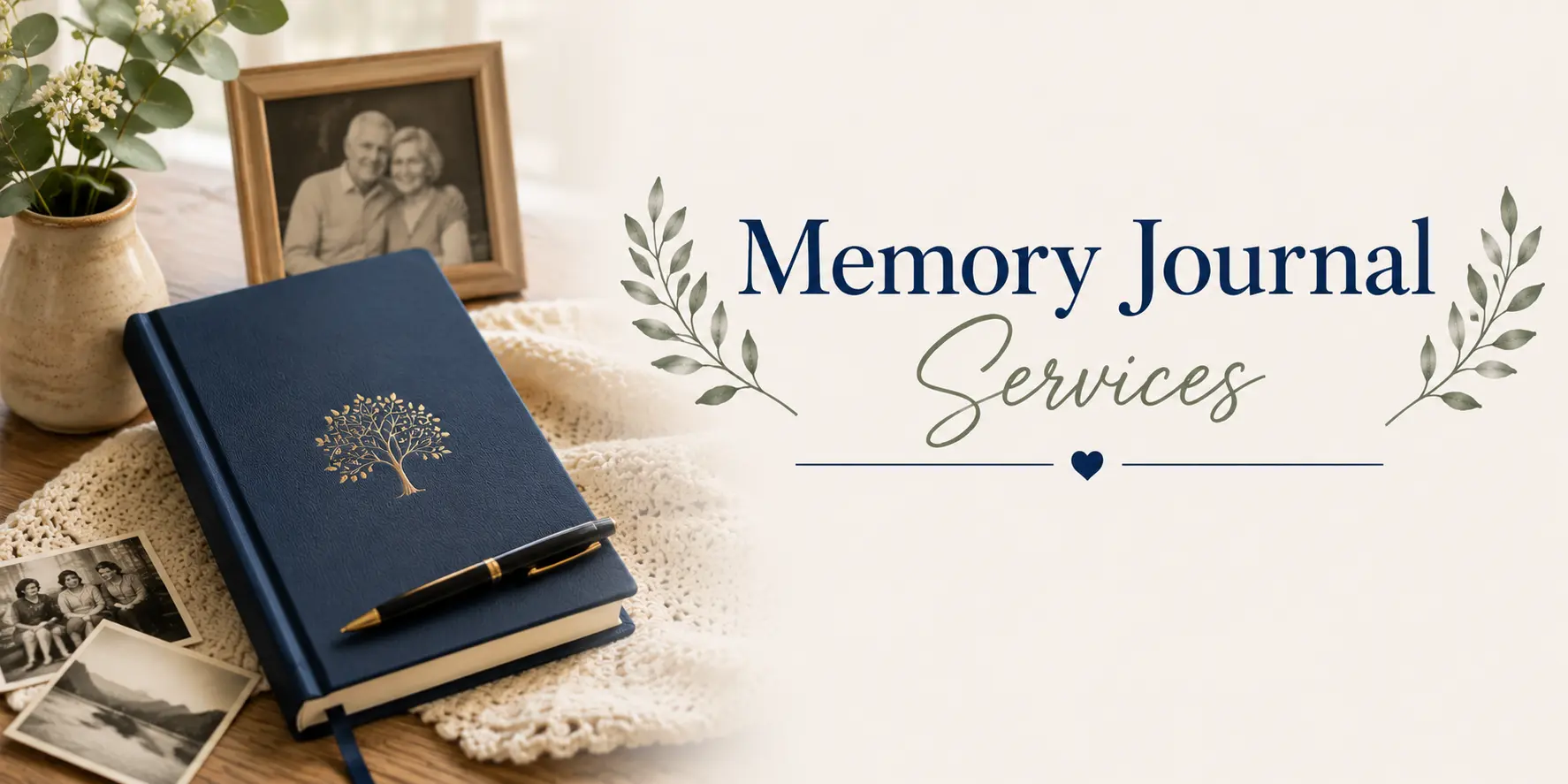
A memory journal is more than a notebook filled with stories. It is a living record of a person’s experiences, relationships, values, milestones, lessons, and reflections. Memory journals help individuals preserve the moments that shaped their lives while creating a meaningful legacy that future generations can learn from and cherish.
For many families, memories exist only in conversations, photographs, or personal recollections. Unfortunately, memories can fade over time due to aging, illness, dementia, Alzheimer’s disease, or the simple passage of years. A memory journal provides a structured way to capture these experiences before they are lost.
Whether documenting childhood memories, family traditions, career achievements, military service, caregiving experiences, faith journeys, or personal wisdom, memory journals transform life experiences into lasting resources that preserve identity and strengthen family connections.
Research suggests that life review and reminiscence activities can support emotional well-being, identity continuity, and meaning-making among older adults (Westerhof & Bohlmeijer, 2014). Memory journals help convert those reflections into a permanent record that benefits both the writer and future generations.
Why Memory Journals Matter
Every person carries a unique collection of stories that contribute to family identity and cultural heritage.
Memory journals help preserve:
- Personal experiences
- Family history
- Cultural traditions
- Values and beliefs
- Life lessons
- Important relationships
- Professional accomplishments
- Historical perspectives
Without documentation, many of these memories disappear over time.
A memory journal ensures that the stories behind the photographs, heirlooms, and family traditions remain available for future generations.
The Connection Between Memory and Identity
Memory plays a critical role in shaping identity.
People understand themselves through the stories they tell about:
- Childhood experiences
- Family relationships
- Educational journeys
- Career accomplishments
- Personal challenges
- Spiritual beliefs
- Life transitions
Research on autobiographical memory demonstrates that personal narratives help individuals maintain a coherent sense of self across the lifespan (Conway, Singer, & Tagini, 2004).
Memory journals preserve these narratives, helping future generations understand not only what happened but why it mattered.
Memory Journals for Seniors
Older adults possess a lifetime of experiences that deserve preservation.
A memory journal allows seniors to document:
- Childhood memories
- Historical events
- Family traditions
- Parenting experiences
- Career achievements
- Travel stories
- Life lessons
- Reflections on aging
Many seniors find that journaling encourages reflection, gratitude, and meaningful conversation with family members.
Memory Journals for Families Affected by Dementia
Families facing dementia or Alzheimer’s disease often recognize the importance of preserving memories while loved ones can still actively participate.
Memory journals can help document:
- Personal preferences
- Family relationships
- Life experiences
- Favorite traditions
- Important milestones
- Personal values
Research on life story work suggests that preserving personal history supports person-centered dementia care and helps maintain identity throughout cognitive decline (McKeown et al., 2010).
A memory journal becomes both a legacy resource and a caregiving tool.
Memory Journals for Family Caregivers
Caregivers often become the keepers of family stories.
A memory journal can help caregivers:
- Preserve meaningful conversations
- Record family history
- Capture life lessons
- Document caregiving experiences
- Reduce future regret
- Strengthen emotional connections
Many caregivers later describe these journals as some of their most treasured possessions.
Memory Journals for Healthcare Professionals
Healthcare workers spend their careers helping others through some of life’s most significant moments.
A memory journal can preserve:
- Professional experiences
- Patient care lessons
- Leadership insights
- Career milestones
- Personal reflections
- Community contributions
These stories often inspire future healthcare professionals while documenting a meaningful life of service.
Memory Journals for Educators
Teachers, professors, administrators, and educational leaders influence generations of students.
Memory journals help educators document:
- Teaching philosophies
- Memorable classroom experiences
- Professional accomplishments
- Community involvement
- Mentorship lessons
- Personal growth
Future generations gain insight into the values and experiences that shaped their educational legacy.
Memory Journals for Self-Employed Professionals
Entrepreneurs and business owners often accumulate unique experiences throughout their careers.
Memory journals can preserve:
- Business journeys
- Leadership lessons
- Entrepreneurial challenges
- Family business histories
- Professional achievements
- Personal reflections
These stories often become important components of both personal and family legacy.
What Should Be Included in a Memory Journal?
Every memory journal is unique, but many include several core categories.
Childhood Memories
- Early family life
- Schools attended
- Favorite childhood activities
- Important family traditions
Family History
- Parents and grandparents
- Cultural heritage
- Family milestones
- Significant family events
Education and Career
- Educational experiences
- Professional accomplishments
- Career lessons
- Mentorship experiences
Relationships
- Marriage stories
- Parenting experiences
- Friendships
- Community involvement
Values and Beliefs
- Faith traditions
- Personal principles
- Ethical lessons
- Life philosophies
Legacy Messages
- Advice for future generations
- Lessons learned
- Hopes and aspirations
Memory Journal Prompts
Many people find prompts helpful when getting started.
Examples include:
- What is your earliest memory?
- What family tradition means the most to you?
- What challenge changed your life?
- What accomplishment are you most proud of?
- What advice would you give your younger self?
- What lesson do you hope future generations remember?
- What historical event had the greatest impact on your life?
- What values guided your decisions?
- What memory always makes you smile?
- How would you like to be remembered?
These prompts encourage deeper reflection and storytelling.
Digital Memory Journals
Technology has expanded opportunities for memory preservation.
Digital memory journals may include:
- Written entries
- Audio recordings
- Video reflections
- Photographs
- Scanned documents
- Family history archives
Digital formats make journals easier to preserve, organize, and share across generations.
Benefits of Memory Journaling
Preserves Identity
Personal experiences remain accessible and meaningful.
Protects Family History
Future generations gain direct access to family stories.
Supports Dementia Care
Life story materials improve person-centered caregiving.
Encourages Emotional Well-Being
Reflective writing supports self-expression and meaning-making.
Creates Lasting Legacy Resources
Memory journals become treasured family heirlooms.
Strengthens Family Relationships
Shared stories encourage connection and understanding.
Reduces Future Regret
Families capture memories before opportunities are lost.
How Our Memory Journal Services Help
Our memory journal services help individuals and families transform memories into organized, lasting resources that preserve identity and family history.
We assist with:
- Guided memory journaling
- Life story interviews
- Family history documentation
- Biography development
- Digital memory archives
- Legacy preservation projects
- Oral history recording
- Caregiver reference systems
Our mission is to ensure that important stories, values, and experiences remain accessible for generations to come.
Frequently Asked Questions
What is a memory journal?
A memory journal is a collection of personal memories, reflections, experiences, and stories recorded for preservation and legacy purposes.
Why should someone keep a memory journal?
Memory journals help preserve identity, family history, personal wisdom, and meaningful life experiences.
Can memory journals support dementia care?
Yes. Memory journals provide valuable life story information that supports person-centered caregiving and identity preservation.
What should be written in a memory journal?
Childhood memories, family stories, career experiences, relationships, life lessons, personal values, and reflections are all excellent topics.
Are memory journals only for seniors?
No. Adults of all ages can benefit from documenting important experiences and preserving memories.
Can family caregivers create memory journals?
Absolutely. Many caregivers use memory journals to document conversations, family stories, and caregiving experiences.
What is the difference between a journal and a memory journal?
A traditional journal often focuses on daily events, while a memory journal emphasizes preserving significant life experiences and stories.
Can memory journals be digital?
Yes. Digital journals can include text, audio, video, photographs, and documents.
How do memory journals create a legacy?
They preserve personal experiences, wisdom, values, and family history for future generations.
When should someone start a memory journal?
The best time is now. Every memory preserved today helps protect family history and personal identity for tomorrow.
Key Takeaways
A memory journal is one of the most meaningful tools for preserving identity, protecting family history, and documenting the experiences that shape a life. Whether used for personal reflection, dementia support, caregiver documentation, family storytelling, or legacy creation, memory journals help ensure that important stories are never lost. Through thoughtful reflection and preservation, individuals can create a lasting record of their lives that informs, inspires, and connects future generations.
References
Conway, M. A., Singer, J. A., & Tagini, A. (2004). The self and autobiographical memory: Correspondence and coherence. Social Cognition, 22(5), 491–529. https://doi.org/10.1521/soco.22.5.491.50768
McKeown, J., Clarke, A., Ingleton, C., Ryan, T., & Repper, J. (2010). The use of life story work with people with dementia to enhance person-centred care. International Journal of Older People Nursing, 5(2), 148–158. https://doi.org/10.1111/j.1748-3743.2010.00219.x
Pennebaker, J. W., & Chung, C. K. (2011). Expressive writing: Connections to physical and mental health. In H. S. Friedman (Ed.), Oxford Handbook of Health Psychology. Oxford University Press.
Westerhof, G. J., & Bohlmeijer, E. T. (2014). Celebrating fifty years of research and applications in reminiscence and life review: State of the art and new directions. Journal of Aging Studies, 29, 107–114. https://doi.org/10.1016/j.jaging.2014.02.003