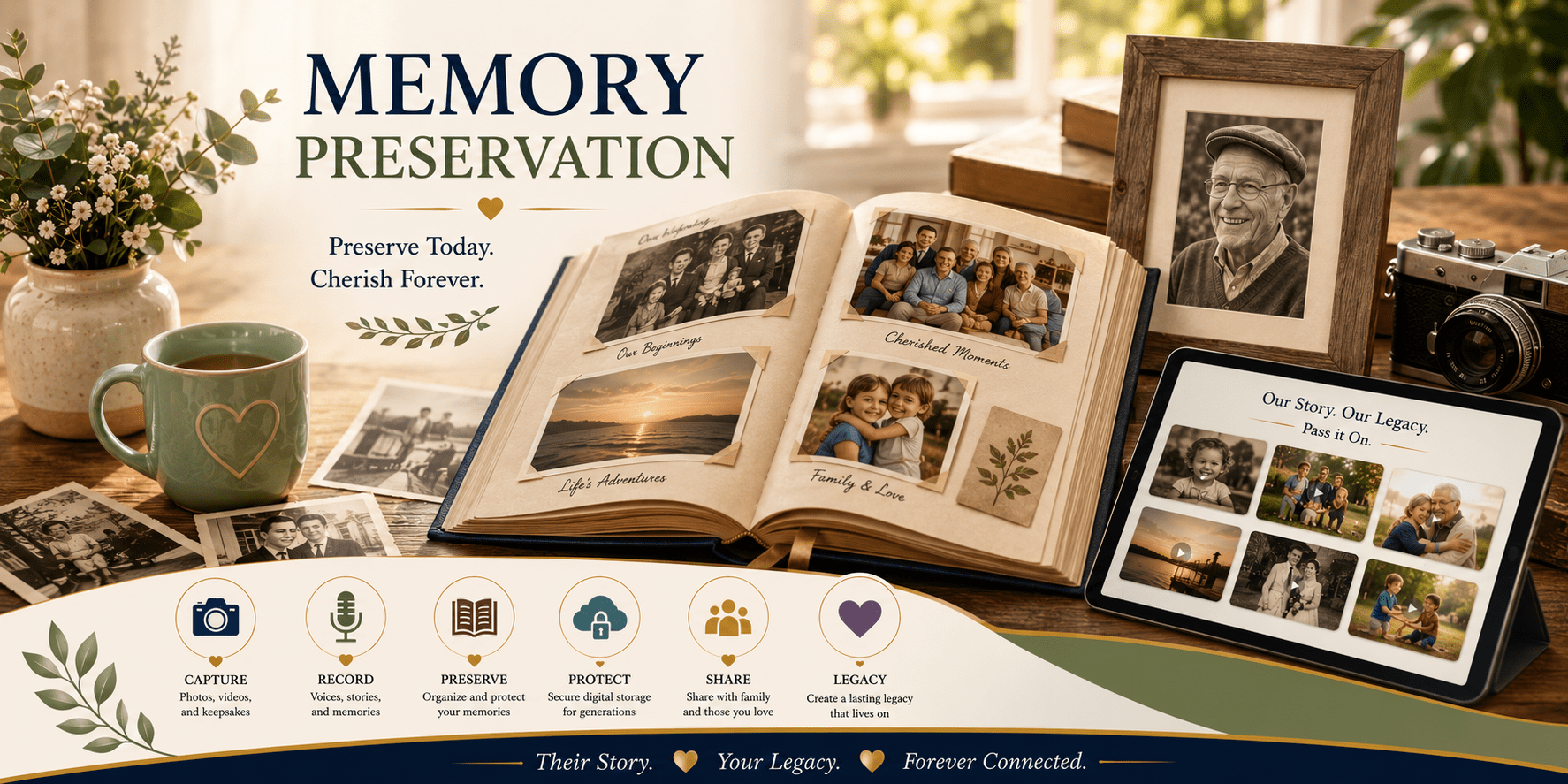

Memories are among our most valuable possessions. They shape our identity, strengthen family relationships, preserve cultural traditions, and connect generations through shared experiences. While photographs and official documents capture important moments in time, they rarely preserve the stories, emotions, wisdom, and personality that give those moments meaning. Memory preservation is the intentional process of protecting these experiences so they remain accessible to families today and for generations to come.
As people age, many families begin to recognize how fragile memories can be. Stories that have been told for decades may slowly fade, details become more difficult to recall, and valuable family history can disappear within a single generation. This reality becomes especially significant for individuals living with Alzheimer’s disease, dementia, or other cognitive conditions that affect memory. By preserving memories early through interviews, audio recordings, videos, written narratives, photographs, and digital archives, families create lasting records that celebrate identity rather than focusing solely on memory loss.
Memory preservation extends far beyond documenting historical facts. It captures laughter, values, beliefs, traditions, resilience, and personal experiences that define who someone truly is. Research suggests that reminiscing and life review promote psychological well-being, strengthen identity, and encourage meaningful reflection throughout adulthood (Butler, 1963). For families, preserved memories become enduring gifts that educate, comfort, and inspire future generations while ensuring that loved ones are remembered for the lives they lived rather than the illnesses they faced.
Whether preserving the voice of a grandparent, documenting family traditions, recording military service, organizing genealogy research, or creating a digital legacy archive, memory preservation honors the belief that every life deserves to be remembered and every story deserves to be told.
Why Memory Preservation Matters
Every family has stories that exist nowhere else. These stories explain how grandparents met, why families immigrated, what traditions were celebrated, what sacrifices were made, and which values shaped future generations. Without intentional preservation, many of these memories disappear over time, leaving descendants with names, dates, and photographs but little understanding of the people behind them.
Memory preservation protects these irreplaceable stories while strengthening family identity. Research has found that children and young adults who know more about their family history often develop greater resilience, stronger emotional well-being, and a deeper sense of belonging because they understand themselves as part of a continuing family story (Duke et al., 2008). Learning how previous generations overcame hardship, celebrated milestones, practiced their faith, served their communities, or raised families helps younger generations appreciate both their heritage and their own place within it.
For older adults, preserving memories offers opportunities to reflect on a lifetime of experiences. Sharing childhood memories, career achievements, military service, volunteer work, friendships, family traditions, travel experiences, and lessons learned often provides a sense of accomplishment while reinforcing personal identity. Butler (1963) described life review as a natural developmental process that supports emotional integration and life satisfaction during later adulthood.
Memory preservation also strengthens present-day relationships. Recording family interviews encourages meaningful conversations between parents, grandparents, children, and grandchildren. These discussions frequently uncover forgotten stories while creating new memories together. Many families report that the process of preserving memories becomes just as valuable as the recordings themselves because it encourages deeper communication and stronger emotional connections.
Beyond individual families, memory preservation contributes to cultural and community history. Oral histories preserve traditions, languages, recipes, religious practices, craftsmanship, migration stories, and firsthand accounts of historical events that might otherwise be lost. These personal narratives enrich historical understanding while celebrating the diversity of human experience.
Ways to Preserve Memories for Future Generations
Modern technology has made memory preservation more accessible than ever before. Families can choose from a variety of methods depending on their goals, available resources, and personal preferences. The most meaningful preservation projects often combine several approaches to create a comprehensive record of an individual’s life.
Life story interviews remain one of the most effective forms of memory preservation. Guided conversations encourage individuals to reflect on childhood, education, careers, marriage, parenting, military service, travel, faith, community involvement, favorite traditions, and advice for future generations. Open-ended questions allow authentic stories to emerge naturally while preserving the individual’s personality and perspective.
Video recordings capture facial expressions, gestures, and emotional moments that cannot be conveyed through text alone. Audio recordings preserve voices, laughter, and conversational warmth, making them especially meaningful for future family members who may never have met the individual personally.
Written memoirs, journals, and biographies provide structured narratives that organize memories chronologically or by theme. These written accounts often incorporate photographs, newspaper articles, letters, recipes, certificates, military records, and genealogy research to create comprehensive family histories.
Photograph preservation is equally important. Many families possess albums filled with unidentified photographs that gradually lose historical value because names, dates, and locations have been forgotten. Digitizing photographs, adding descriptive captions, and organizing them into searchable collections help preserve their significance for future generations.
Digital legacy platforms combine interviews, videos, scanned documents, family trees, historical timelines, and multimedia collections into secure online archives. These systems protect family history from physical deterioration while making memories accessible across multiple generations and geographic locations.
Regardless of the format selected, the most important element is authenticity. Honest conversations, spontaneous laughter, emotional reflections, and everyday experiences often become the memories families cherish most because they preserve the individual exactly as they were.
Memory Preservation and Dementia Care
Memory preservation has become an increasingly important component of person-centered dementia care because it protects identity before cognitive changes progress. Dementia affects memory and communication, but it does not erase a person’s values, relationships, life experiences, or emotional needs. Recording these elements early ensures they remain available to families and caregivers throughout the dementia journey.
Person-centered care emphasizes understanding the individual beyond the diagnosis (Kitwood, 1997). Memory preservation supports this philosophy by documenting occupations, hobbies, cultural traditions, favorite music, family relationships, spiritual beliefs, and personal accomplishments that help caregivers provide individualized support.
For example, learning that an individual spent decades as a teacher, nurse, musician, engineer, farmer, artist, or veteran helps caregivers create meaningful conversations and activities that reinforce identity. Familiar songs, cherished recipes, treasured photographs, military memorabilia, or stories about family traditions often promote comfort while encouraging reminiscence.
Life story books and recorded interviews also improve communication between family members and professional caregivers. Rather than relying solely on medical records, caregivers gain valuable insight into the person’s preferences, routines, achievements, and lifelong interests. This understanding encourages empathy while supporting care that respects dignity and individuality.
Families frequently describe preserved memories as priceless after a dementia diagnosis. Hearing a loved one’s voice, watching recorded interviews, and revisiting family stories provide emotional comfort while preserving personality and connection. These recordings become treasured resources for spouses, children, grandchildren, and future descendants who wish to understand the individual’s life beyond their illness.
Research supports the use of reminiscence therapy and life story work as evidence-based approaches that may improve communication, mood, and quality of life for individuals living with dementia (Woods et al., 2018). Memory preservation creates the foundation for these therapeutic activities while ensuring that personal identity remains central to care.
Creating a Legacy Through Memory Preservation
Memory preservation is ultimately about protecting identity across generations. While material possessions may lose significance over time, stories, values, traditions, and personal experiences continue shaping families for decades. Every conversation preserved today becomes part of tomorrow’s family history.
Comprehensive memory preservation often includes oral history interviews, legacy videos, family photographs, genealogy research, letters, journals, home movies, military records, recipes, family trees, timelines, and written memoirs. Together, these resources create a rich portrait of the individuals whose lives shaped future generations.
Genealogists increasingly recognize oral history as an essential companion to historical documentation. Census records, birth certificates, marriage licenses, military files, and newspaper articles establish historical facts, but recorded memories explain the emotions, motivations, and lived experiences behind those facts. Combining documentary research with personal storytelling creates a deeper and more meaningful understanding of family history.
Long-term preservation requires careful planning. Digital files should be stored in multiple secure locations, including encrypted cloud storage and external hard drives. Recordings should include descriptive file names, interview dates, locations, and written transcripts whenever possible. Original photographs and important documents should be scanned using archival-quality methods to protect them from deterioration.
Families should also view memory preservation as an ongoing tradition rather than a single project. Birthdays, anniversaries, reunions, retirements, holidays, and major life milestones provide natural opportunities to record additional interviews and document new chapters in the family’s story. Each generation contributes experiences that deserve preservation.
Ultimately, every individual leaves a legacy through the lives they touch, the values they share, and the memories they create. Memory preservation ensures these gifts are never lost. Whether capturing a parent’s life story, documenting a grandparent’s wisdom, preserving cultural traditions, or recording family history before dementia changes memory, preserving memories honors the people who came before us while strengthening the generations that follow. It is one of the most meaningful investments a family can make in preserving identity, connection, and love across time.
Frequently Asked Questions
What is memory preservation?
Memory preservation is the process of protecting personal stories, family history, photographs, videos, life experiences, and important documents so they remain accessible for future generations.
Why is memory preservation important before dementia develops?
Preserving memories before dementia allows individuals to share their stories while memory and communication remain strong. These recordings help maintain identity, support person-centered care, and provide lasting keepsakes for loved ones.
What are the best ways to preserve memories?
Families often combine life story interviews, legacy videos, audio recordings, written memoirs, digitized photographs, genealogy research, memory books, and secure digital archives to create comprehensive family histories.
How does memory preservation support caregivers?
Memory preservation helps caregivers understand an individual’s background, preferences, relationships, values, and interests, allowing them to provide more personalized and compassionate care.
Can memory preservation benefit future generations?
Yes. Preserved memories strengthen family identity, support genealogy research, preserve cultural heritage, and provide children and grandchildren with meaningful insights into the lives, values, and experiences of previous generations.
References
Brooker, D. (2007). Person-centred dementia care: Making services better. Jessica Kingsley Publishers.
Butler, R. N. (1963). The life review: An interpretation of reminiscence in the aged. Psychiatry, 26(1), 65–76.
Duke, M. P., Lazarus, A., & Fivush, R. (2008). Knowledge of family history as a clinically useful index of psychological well-being and prognosis. Journal of Family Life, 7(2), 133–140.
Kitwood, T. (1997). Dementia reconsidered: The person comes first. Open University Press.
McAdams, D. P. (2008). Personal narratives and the life story. In O. P. John, R. W. Robins, & L. A. Pervin (Eds.), Handbook of personality: Theory and research (3rd ed., pp. 242–262). Guilford Press.
National Institute on Aging. (2024). Alzheimer’s disease fact sheet. https://www.nia.nih.gov/health/alzheimers-and-dementia/alzheimers-disease-fact-sheet
Woods, B., O’Philbin, L., Farrell, E. M., Spector, A., & Orrell, M. (2018). Reminiscence therapy for dementia. Cochrane Database of Systematic Reviews, 3, CD001120.
World Health Organization. (2023). Dementia. https://www.who.int/news-room/fact-sheets/detail/dementia