
Every person is more than a diagnosis. Behind every medical record is a lifetime of experiences, relationships, beliefs, achievements, preferences, and memories that shape who that individual truly is. Person-centered care recognizes this reality by focusing on the whole person rather than simply treating symptoms or managing disease. Person-centered care tools help families, caregivers, healthcare professionals, and senior care organizations understand the individual beyond their medical condition, enabling compassionate, individualized support that honors dignity, identity, and personal choice.
As Alzheimer’s disease and other forms of dementia become increasingly common, healthcare professionals and families are recognizing that understanding a person’s life story is just as important as understanding their medical history. A care plan that includes personal history, favorite activities, meaningful relationships, cultural traditions, spiritual beliefs, and lifelong interests creates opportunities for more meaningful interactions while reducing distress and promoting emotional well-being.
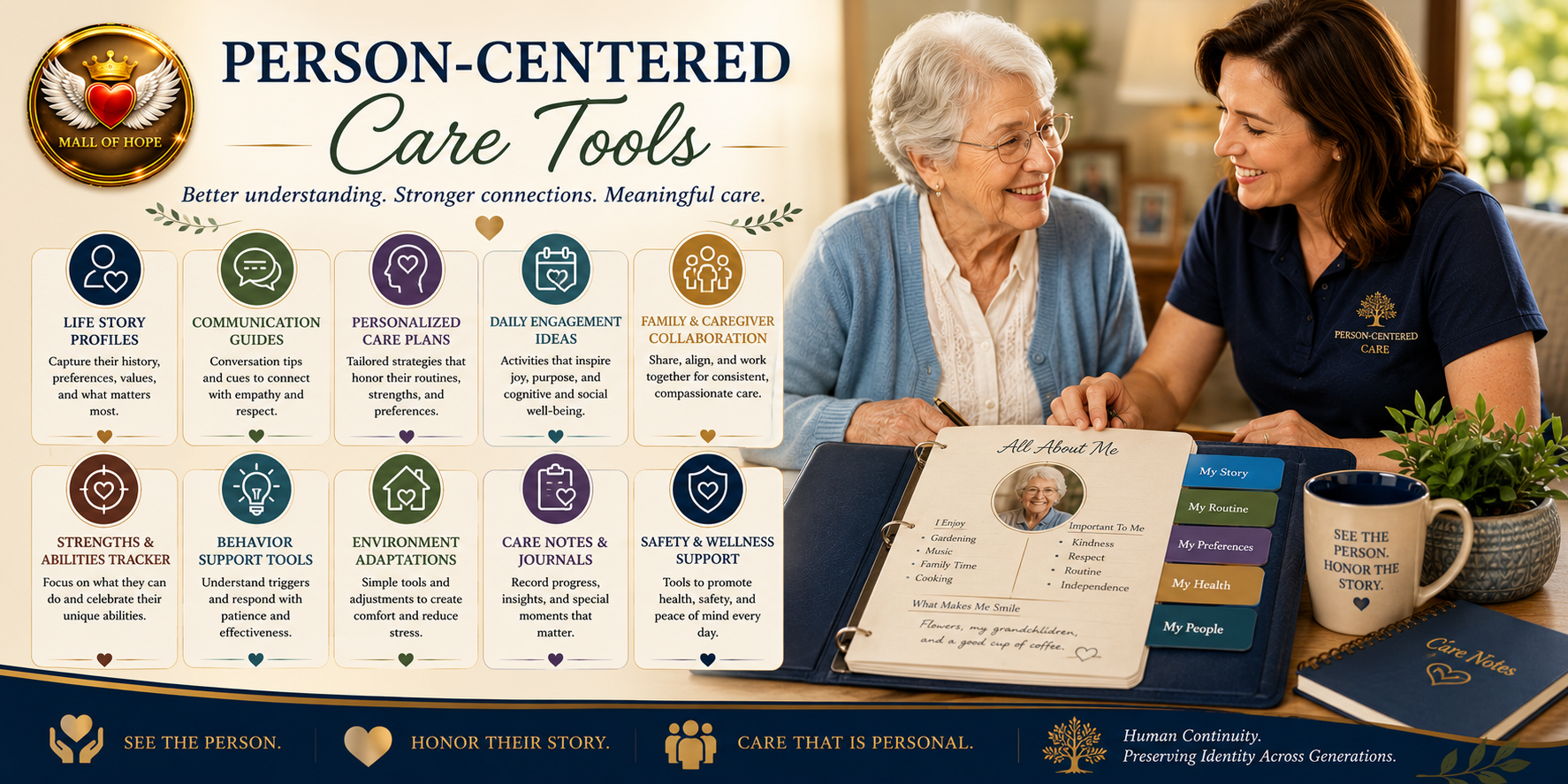
Person-centered care tools can include life story interviews, personal history profiles, memory books, communication guides, preference assessments, reminiscence materials, digital legacy archives, family biographies, sensory preference guides, and daily routine records. Together, these resources help caregivers deliver individualized care that respects each person’s unique identity while strengthening relationships with family members and care teams.
Research supports person-centered approaches as an essential component of high-quality dementia care. Kitwood (1997) argued that recognizing personhood is fundamental to improving dementia care, while reminiscence and life story work have been shown to support communication, emotional well-being, and quality of life for many individuals living with dementia (Woods et al., 2018). Person-centered care tools provide practical ways to apply these principles every day.
Whether used by family caregivers, home health aides, assisted living communities, memory care facilities, hospice providers, or healthcare professionals, person-centered care tools help ensure that every individual continues to be known as a person first—not a diagnosis.
Why Person-Centered Care Tools Matter
Traditional healthcare often emphasizes diagnoses, medications, and physical needs. While these elements are essential, they do not fully explain who a person is or what gives their life meaning. Two individuals with the same medical diagnosis may have completely different personalities, cultural backgrounds, interests, coping styles, family structures, and personal values. Person-centered care recognizes these differences and adapts support accordingly.
Person-centered care tools help caregivers understand questions such as:
- What occupations shaped this person’s identity?
- What hobbies brought them joy throughout life?
- Which family members are most important to them?
- What music, foods, or traditions provide comfort?
- What routines help them feel secure?
- What spiritual or cultural beliefs should be respected?
- How do they prefer to communicate?
- What achievements are they most proud of?
When caregivers know these answers, care becomes more individualized and meaningful. Rather than focusing solely on daily tasks, caregivers can engage in conversations that reflect the person’s interests, encourage familiar activities, and build trust through shared understanding.
Research has shown that individuals who maintain a strong sense of identity often experience greater emotional well-being and improved quality of life. Life story work encourages caregivers to recognize the individual’s strengths, accomplishments, relationships, and preferences rather than defining them by illness alone (Kitwood, 1997).
Person-centered care also benefits families. Adult children often worry that healthcare providers see only the diagnosis and never truly know the person they love. Sharing life story information helps families feel confident that caregivers understand their loved one’s personality, history, and values while supporting continuity of care across different healthcare settings.
Professional caregivers benefit as well. Understanding personal history strengthens empathy, improves communication, reduces misunderstandings, and often makes caregiving more rewarding by creating genuine human connections.
Essential Person-Centered Care Tools
Effective person-centered care relies upon practical resources that help caregivers understand the individual beyond medical information. These tools create a comprehensive picture of the person’s identity while improving communication between families and professional care teams.
Common person-centered care tools include:
- Life story interviews and biographies
- Personal history profiles
- Memory books with photographs and captions
- Communication preference guides
- Daily routine and lifestyle profiles
- Favorite music and reminiscence playlists
- Family relationship maps
- Cultural and spiritual preference records
- Comfort item and sensory preference lists
- Digital legacy archives containing interviews, photographs, and videos
Life story interviews document childhood memories, careers, military service, marriage, parenting, hobbies, faith, travel, volunteer work, and life lessons. These interviews often become the foundation for many other person-centered care tools because they provide rich historical context that informs individualized care.
Memory books combine photographs with captions and personal stories that stimulate meaningful conversations while encouraging reminiscence. Communication guides describe preferred names, conversational topics, communication styles, hearing or vision considerations, and techniques that reduce frustration during interactions.
Preference profiles record favorite meals, music, activities, routines, clothing choices, holidays, pets, hobbies, and recreational interests. These details may appear simple, yet they often have a significant impact on emotional comfort and quality of life.
Families increasingly use secure digital platforms to organize interviews, scanned photographs, genealogy records, medical history, advance care planning documents, and personal preferences in one accessible location. These digital legacy archives allow caregivers and family members to access important information quickly while preserving identity for future generations.
Together, these tools create a holistic understanding of the individual that supports compassionate, personalized care throughout every stage of aging.
Person-Centered Care Tools in Dementia Care
Person-centered care tools are particularly valuable for individuals living with Alzheimer’s disease and other forms of dementia because they preserve identity as memory changes occur. Although dementia gradually affects cognition and communication, it does not erase a person’s values, relationships, accomplishments, emotional life, or need for dignity and respect.
Tom Kitwood’s person-centered model emphasizes that dementia care should focus on preserving personhood rather than concentrating exclusively on neurological symptoms (Kitwood, 1997). Life story information becomes an essential part of this approach by helping caregivers understand who the individual has always been.
For example, learning that someone spent decades as a teacher, nurse, farmer, musician, engineer, artist, entrepreneur, or military veteran provides opportunities to build meaningful conversations and activities around familiar experiences. Favorite hymns, recipes, sports teams, family traditions, gardening, woodworking, painting, or historical events often encourage reminiscence while reducing anxiety and promoting emotional engagement.
Many families create person-centered care tools shortly after a diagnosis of mild cognitive impairment or early-stage dementia. Recording stories while communication remains relatively strong preserves memories, humor, values, and personality before cognitive changes progress further.
Professional caregivers benefit significantly from these resources. Instead of relying only on medical records, they gain meaningful insight into the person’s coping strategies, communication preferences, relationships, beliefs, and lifelong achievements. This understanding supports individualized care planning while strengthening trust between caregivers and families.
Research indicates that reminiscence therapy and life story work may improve communication, mood, and overall quality of life for many people living with dementia (Woods et al., 2018). Person-centered care tools provide practical ways to incorporate these evidence-based interventions into everyday caregiving while preserving emotional connection.
Building a Care System That Preserves Identity
Person-centered care is not a single intervention but an ongoing philosophy that recognizes every individual as a whole person throughout every stage of life. Person-centered care tools help translate that philosophy into everyday practice by ensuring caregivers understand the individual’s history, preferences, relationships, and values.
Many families combine these tools into comprehensive care portfolios that include life story interviews, memory books, communication guides, advance care planning documents, emergency contact information, medication lists, family photographs, genealogy records, digital legacy archives, and personal preference profiles. These portfolios provide continuity across hospitals, rehabilitation centers, home care agencies, assisted living communities, memory care facilities, and hospice organizations.
Technology has also expanded opportunities for person-centered care. Secure digital platforms now allow families to store photographs, videos, recorded interviews, written memoirs, music playlists, important documents, and caregiving notes in centralized archives that authorized caregivers can access when needed. These systems improve collaboration while preserving important personal information for future generations.
Families should regularly update person-centered care tools as new experiences, preferences, relationships, and health needs emerge. Birthdays, anniversaries, family reunions, milestone celebrations, and life transitions provide excellent opportunities to record additional stories and ensure care plans remain current.
Ultimately, person-centered care tools are about preserving identity as much as improving care. They remind everyone involved—family members, professional caregivers, clinicians, and support staff—that each individual has lived a rich and meaningful life that deserves to be understood and respected. By documenting personal history, honoring preferences, and celebrating individuality, these tools help create compassionate care environments where dignity remains central, relationships flourish, and every person continues to be recognized for who they truly are.
Frequently Asked Questions
What are person-centered care tools?
Person-centered care tools are resources that help caregivers understand an individual’s personal history, preferences, relationships, values, routines, and life experiences so care can be tailored to the whole person rather than focusing only on a medical diagnosis.
Who benefits from person-centered care tools?
Individuals living with dementia, older adults, family caregivers, home health aides, assisted living communities, memory care facilities, hospice providers, hospitals, and other healthcare professionals all benefit from using person-centered care tools.
What information should be included in a person-centered care profile?
A profile typically includes life history, family relationships, occupations, hobbies, favorite music, cultural traditions, religious beliefs, communication preferences, daily routines, important memories, personal values, and activities that provide comfort or enjoyment.
How do person-centered care tools help individuals living with dementia?
These tools preserve identity, improve communication, encourage reminiscence, reduce anxiety, support individualized care planning, and help caregivers better understand the person’s history, preferences, and emotional needs.
How can families create person-centered care tools?
Families can begin by conducting life story interviews, organizing photographs, documenting routines and preferences, creating memory books, recording videos, developing communication guides, and storing these materials securely in digital or printed formats that caregivers can easily access.
References
Brooker, D. (2007). Person-centred dementia care: Making services better. Jessica Kingsley Publishers.
Butler, R. N. (1963). The life review: An interpretation of reminiscence in the aged. Psychiatry, 26(1), 65–76.
Fazio, S., Pace, D., Flinner, J., & Kallmyer, B. (2018). The fundamentals of person-centered care for individuals with dementia. The Gerontologist, 58(Suppl. 1), S10–S19.
Kitwood, T. (1997). Dementia reconsidered: The person comes first. Open University Press.
McCormack, B., & McCance, T. (2017). Person-centred practice in nursing and health care: Theory and practice (2nd ed.). Wiley-Blackwell.
National Institute on Aging. (2024). Alzheimer’s disease fact sheet. https://www.nia.nih.gov/health/alzheimers-and-dementia/alzheimers-disease-fact-sheet
Woods, B., O’Philbin, L., Farrell, E. M., Spector, A., & Orrell, M. (2018). Reminiscence therapy for dementia. Cochrane Database of Systematic Reviews, 3, CD001120.
World Health Organization. (2023). Dementia. https://www.who.int/news-room/fact-sheets/detail/dementia