
Every individual is more than a diagnosis. A lifetime of experiences, relationships, values, traditions, accomplishments, and personal preferences shapes who a person is, and these qualities remain important even when memory or cognitive abilities change. Person-centered care is a philosophy of care that recognizes the individual before the disease, placing dignity, identity, independence, and meaningful relationships at the heart of every care decision. Rather than focusing solely on symptoms or medical needs, person-centered care seeks to understand the whole person—their life story, interests, beliefs, routines, strengths, and goals.
Person-centered care has become the gold standard for supporting individuals living with dementia, Alzheimer’s disease, and other chronic health conditions. Developed through the pioneering work of psychologist Tom Kitwood, this approach transformed dementia care by emphasizing that people living with dementia continue to experience emotions, relationships, purpose, and personhood throughout every stage of the disease (Kitwood, 1997). Today, healthcare professionals worldwide recognize that quality dementia care requires far more than medical treatment; it requires compassion, empathy, respect, and an understanding of each individual’s unique life.
Research consistently demonstrates that person-centered care improves quality of life, enhances communication, reduces behavioral distress, increases caregiver satisfaction, and promotes emotional well-being for both individuals living with dementia and their families (Brooker, 2007). By honoring identity and encouraging meaningful engagement, person-centered care helps individuals continue living with dignity while supporting families through every stage of the dementia journey.
Understanding the Principles of Person-Centered Care
Person-centered care begins with a simple yet profound belief: every individual deserves to be treated with dignity, respect, and compassion regardless of age, illness, or cognitive ability. Instead of defining someone by a diagnosis, caregivers seek to understand the experiences and relationships that have shaped that person’s life.
The foundation of person-centered care includes several core principles. First, every individual possesses inherent worth and deserves to participate in decisions affecting their life whenever possible. Maintaining autonomy, even through small daily choices such as selecting clothing, meals, or preferred activities, supports confidence and preserves independence.
Second, care should be individualized rather than standardized. Two individuals with the same medical diagnosis may have entirely different personalities, cultural backgrounds, occupations, hobbies, beliefs, and preferences. Understanding these differences allows caregivers to provide support that reflects the person’s unique identity rather than relying on generalized care routines.
Third, meaningful relationships remain central to well-being. Family members, friends, neighbors, professional caregivers, and healthcare providers all contribute to emotional security and quality of life. Open communication, empathy, active listening, and mutual respect strengthen these relationships while reducing feelings of isolation and anxiety.
Person-centered care also recognizes the importance of emotional needs. Behaviors commonly associated with dementia are often forms of communication expressing discomfort, fear, confusion, loneliness, pain, boredom, or unmet needs rather than intentional disruption. Responding with curiosity instead of correction encourages trust while reducing unnecessary distress (Alzheimer’s Association, 2024).
Finally, life history plays a vital role in care planning. Learning about an individual’s childhood, family, career, military service, cultural traditions, favorite music, hobbies, spiritual beliefs, and personal achievements provides valuable insight that guides meaningful interactions and individualized care.
How Person-Centered Care Improves Dementia Support
Person-centered care has transformed modern dementia care by shifting attention away from the disease itself and toward the individual experiencing it. Although dementia affects memory, communication, and thinking, it does not eliminate a person’s identity, emotions, or desire for meaningful relationships.
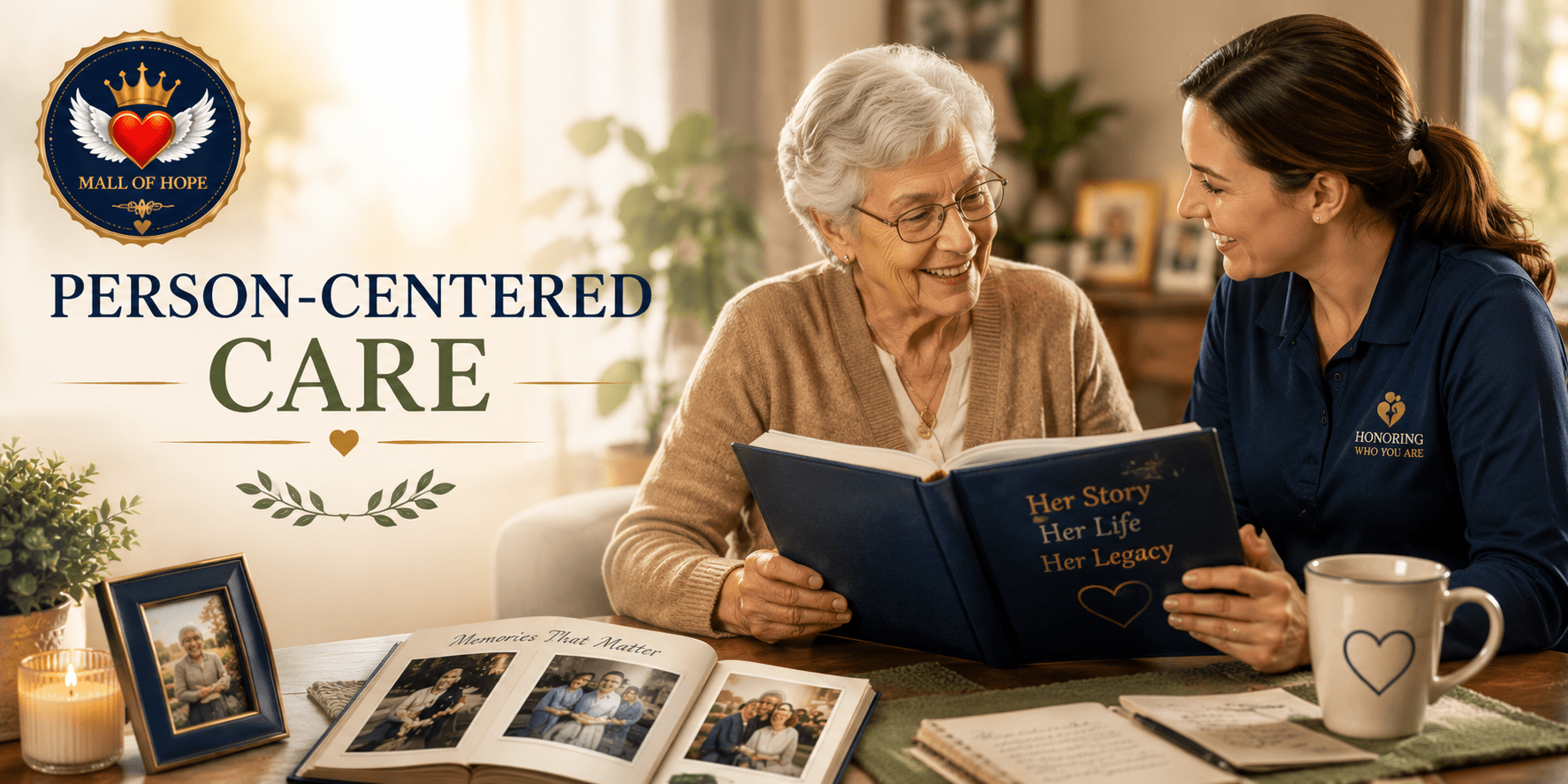
One of the most effective ways to provide person-centered dementia care is through life story work. Recording personal histories, family traditions, important milestones, favorite activities, occupations, and meaningful relationships helps caregivers understand who the individual is beyond their medical condition. Life story books, memory journals, legacy videos, and family interviews become valuable resources that support individualized care while preserving identity across generations.
Communication techniques also reflect person-centered principles. Caregivers are encouraged to speak calmly, maintain eye contact, use simple language, allow extra time for responses, and acknowledge emotions rather than focusing solely on factual accuracy. Validating how someone feels often proves more comforting than correcting forgotten details or challenging inaccurate memories.
Daily routines should promote independence whenever safely possible. Individuals living with dementia benefit from participating in familiar activities such as gardening, baking, folding laundry, listening to favorite music, attending religious services, caring for pets, or looking through family photographs. These activities reinforce purpose while reducing anxiety and promoting emotional well-being.
The physical environment also influences quality of care. Comfortable lighting, familiar furnishings, clearly labeled rooms, reduced background noise, and safe walking spaces help individuals navigate their surroundings with greater confidence. Personalized rooms displaying family photographs, treasured keepsakes, and meaningful objects further strengthen orientation and identity.
Research has shown that non-pharmacological interventions—including reminiscence therapy, music therapy, meaningful social engagement, and personalized activities—can improve mood, communication, and overall quality of life for many individuals living with dementia (Woods et al., 2018). Person-centered care incorporates these approaches while recognizing that every individual responds differently.
Supporting Families and Professional Caregivers
Person-centered care extends beyond the individual receiving care; it also supports family members and professional caregivers by fostering collaboration, communication, and shared decision-making. Families possess valuable knowledge about a loved one’s history, personality, preferences, routines, and relationships that cannot be found in medical records. Including families as partners in care leads to more individualized and compassionate support.
Professional caregivers benefit from understanding each resident’s life story before providing daily care. Learning that someone was a teacher, veteran, musician, farmer, nurse, engineer, or artist creates opportunities for meaningful conversations and personalized activities. These connections strengthen trust while improving caregiver satisfaction and reducing emotional burnout.
Education remains an essential component of person-centered care. Training programs help caregivers understand dementia progression, communication strategies, behavioral responses, ethical decision-making, and approaches for maintaining dignity during personal care activities. Continuous education ensures care practices evolve alongside emerging research and clinical recommendations.
Family caregivers also require ongoing emotional support. Caring for someone living with dementia often involves changing family roles, anticipatory grief, financial challenges, and physical exhaustion. Support groups, respite care, counseling, community programs, and caregiver education provide valuable opportunities to reduce stress while building confidence and resilience.
Open communication among healthcare professionals, family members, and caregivers strengthens continuity of care. Regular discussions about medical changes, emotional well-being, daily routines, nutrition, mobility, and personal preferences help ensure that care remains consistent across home care, hospitals, rehabilitation centers, assisted living communities, and memory care facilities.
Technology can further enhance collaboration. Secure digital care plans, family communication platforms, medication reminders, electronic health records, and digital life story archives allow caregivers to share important information while preserving an individual’s personal history and preferences.
Preserving Identity Through Person-Centered Care
Perhaps the greatest strength of person-centered care is its commitment to preserving identity. Dementia may affect memory, but it does not erase the significance of a person’s life, relationships, achievements, beliefs, or values. Every interaction presents an opportunity to honor that identity through respect, compassion, and meaningful engagement.
Identity preservation begins with listening. Recording life stories, conducting family interviews, creating memory books, preserving photographs, digitizing home videos, documenting family traditions, and building genealogy archives ensure that future caregivers understand the individual beyond their diagnosis. These resources guide care decisions while becoming treasured family legacies for future generations.
Meaningful activities should reflect lifelong interests and strengths. Someone who loved gardening may continue tending flowers. A former teacher may enjoy reading aloud or mentoring grandchildren. A musician may find comfort in familiar songs, while an avid cook may participate in meal preparation. Encouraging these activities reinforces purpose while supporting emotional well-being.
Cultural and spiritual traditions also deserve recognition. Respecting religious practices, language preferences, holiday celebrations, dietary customs, and family rituals contributes to emotional comfort while honoring lifelong beliefs. Inclusive, culturally responsive care strengthens trust between caregivers and families.
Person-centered care also encourages advance planning. Discussing healthcare preferences, legal documents, financial planning, and future care wishes while individuals can actively participate protects autonomy and ensures future decisions align with personal values. Combining advance care planning with life story preservation creates a comprehensive approach that supports both practical needs and emotional legacy.
Ultimately, person-centered care reminds us that every person deserves to be known, respected, and valued throughout every stage of life. A diagnosis should never overshadow a lifetime of experiences, relationships, accomplishments, and dreams. By preserving identity, encouraging meaningful relationships, and delivering compassionate individualized care, person-centered care enables individuals living with dementia to continue experiencing dignity, purpose, and human connection. It is not simply a method of providing care—it is a philosophy that recognizes the enduring value of every human life.
Frequently Asked Questions
What is person-centered care?
Person-centered care is an approach to healthcare that focuses on the individual’s unique needs, values, preferences, life history, and goals rather than treating only a medical condition. It emphasizes dignity, respect, independence, and meaningful relationships.
Why is person-centered care important for dementia?
Person-centered care recognizes that individuals living with dementia remain unique people with personal histories, emotions, relationships, and preferences. Understanding these qualities improves communication, reduces distress, and enhances quality of life.
How does life story work support person-centered care?
Life story work documents an individual’s memories, relationships, achievements, traditions, and personal preferences. Caregivers use this information to provide individualized support that reflects the person’s identity and values.
What are the core principles of person-centered care?
Key principles include respecting dignity, promoting independence, encouraging choice, involving families, recognizing emotional needs, preserving identity, and tailoring care to each individual’s unique life experiences and preferences.
How can families promote person-centered care at home?
Families can support person-centered care by learning about their loved one’s preferences, maintaining familiar routines, encouraging meaningful activities, preserving life stories, involving the individual in decisions whenever possible, and communicating with patience, empathy, and respect.
References
Alzheimer’s Association. (2024). 2024 Alzheimer’s disease facts and figures. https://www.alz.org/alzheimers-dementia/facts-figures
Brooker, D. (2007). Person-centred dementia care: Making services better. Jessica Kingsley Publishers.
Kitwood, T. (1997). Dementia reconsidered: The person comes first. Open University Press.
McCormack, B., & McCance, T. (2021). Person-centred practice in nursing and health care: Theory and practice (3rd ed.). Wiley-Blackwell.
National Institute on Aging. (2024). Alzheimer’s disease fact sheet. https://www.nia.nih.gov/health/alzheimers-and-dementia/alzheimers-disease-fact-sheet
Woods, B., O’Philbin, L., Farrell, E. M., Spector, A., & Orrell, M. (2018). Reminiscence therapy for dementia. Cochrane Database of Systematic Reviews, 3, CD001120.
World Health Organization. (2023). Dementia. https://www.who.int/news-room/fact-sheets/detail/dementia