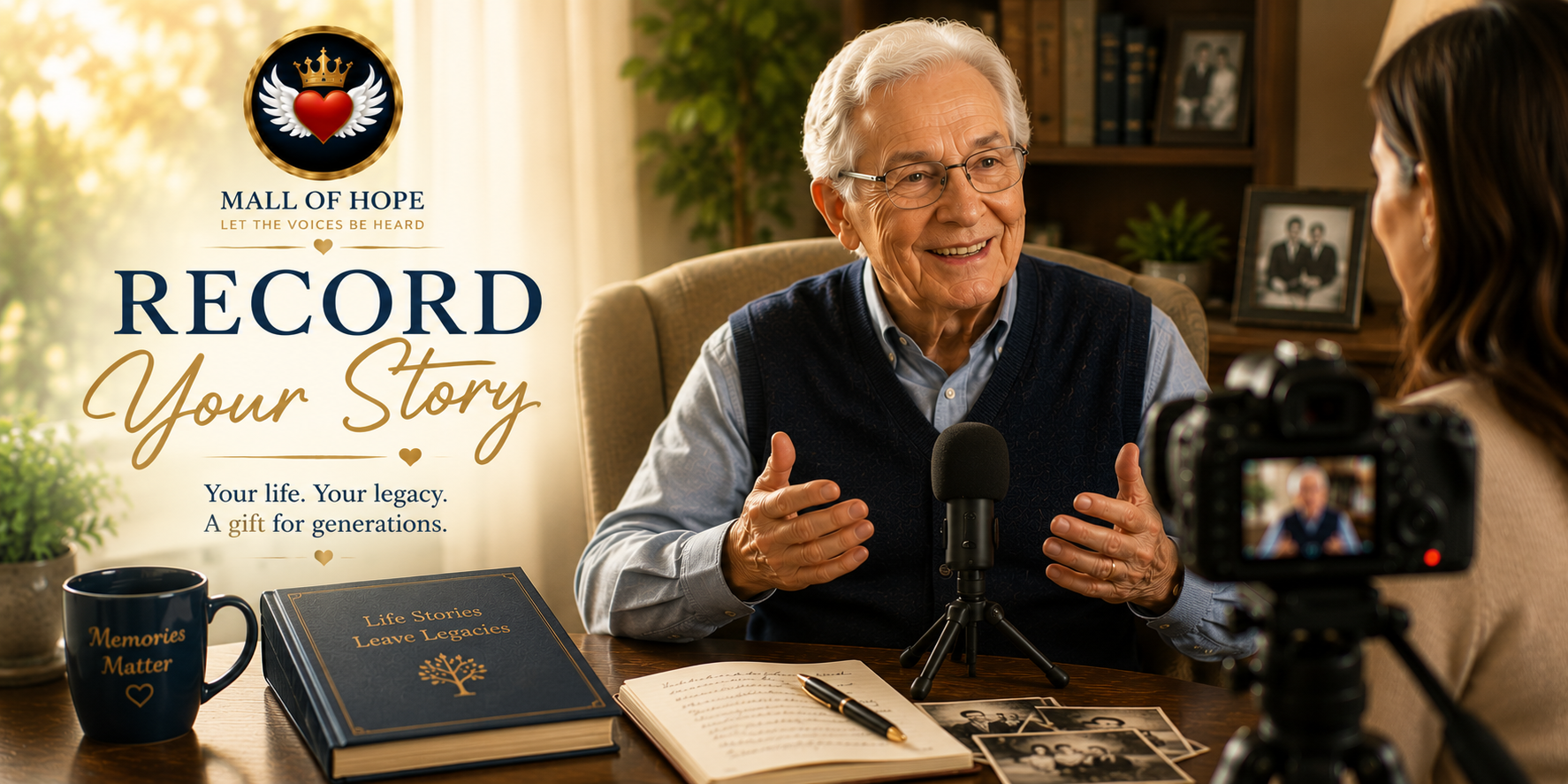

A photograph preserves how you looked. A letter preserves what you wrote. But only your voice preserves how you sounded when you laughed, told a favorite story, comforted a loved one, or shared your life’s wisdom. Long after memories fade, hearing a familiar voice can instantly reconnect children and grandchildren with the people they love. Choosing to record your voice for future generations is one of the most personal and meaningful gifts you can leave your family.
Your voice carries far more than words. It reflects your personality, emotions, humor, compassion, and unique way of telling a story. Future generations may inherit photographs, family heirlooms, or handwritten letters, but hearing your voice allows them to experience your presence in a way that no written record can provide. A simple recording can become a treasured family keepsake that grows more valuable with every passing year.
Modern technology has made preserving your voice easier than ever. Professional life story interviews, audio memoirs, legacy recordings, podcasts, voice letters, and secure digital archives allow families to preserve stories, life lessons, family history, and personal messages in high-quality audio formats. These recordings often accompany legacy videos, memoirs, family history books, genealogy research, and digital memory collections to create a comprehensive record of a person’s life.
Recording your voice is also especially valuable for families affected by Alzheimer’s disease or other forms of dementia. Preserving conversations while communication remains strong helps protect personal identity before memory changes progress. Research suggests that life review promotes emotional well-being by helping older adults integrate their experiences into a meaningful life narrative (Butler, 1963). Person-centered dementia care likewise recognizes that understanding an individual’s personal history, relationships, and values contributes to compassionate, individualized care (Fazio et al., 2018).
Whether you are recording your own memories, creating messages for your children, preserving your parents’ stories, or documenting your faith journey, your voice becomes a lasting gift that future generations can continue hearing for decades to come.
Why Recording Your Voice Matters
Every family treasures the sound of a loved one’s voice. A familiar greeting, a favorite bedtime story, words of encouragement, or laughter shared during conversation often become some of the most cherished memories after someone is gone.
Unlike photographs or written memoirs, voice recordings preserve personality in its most natural form. Future generations hear pauses, emotion, humor, and the rhythm of conversation that reveal far more than words alone.
Recording your voice also preserves stories that may never be written down. Childhood memories, family traditions, military service, career experiences, marriage, parenting, faith, travel, community service, and life lessons become richer when shared in your own words.
Research demonstrates that individuals who know more about their family history often develop greater resilience, emotional well-being, and a stronger sense of identity because they understand themselves as part of a continuing family narrative (Duke et al., 2008). Voice recordings strengthen that narrative by allowing descendants to hear stories directly from those who lived them.
For many people, recording also becomes an opportunity for reflection. Looking back across a lifetime often brings gratitude, renewed perspective, and appreciation for relationships that have shaped life’s journey.
Perhaps most importantly, recording your voice tells future generations, “I wanted you to know me.” That intention alone becomes an extraordinary gift.
What Should You Record?
There is no single correct way to preserve your voice. Some people create a complete audio memoir, while others record short reflections throughout the years. The most meaningful recordings are authentic and personal.
Popular topics include:
- Childhood memories
- Stories about parents and grandparents
- Family traditions
- Marriage and parenting
- Career experiences
- Military or community service
- Faith and spiritual journey
- Favorite memories
- Lessons learned
- Advice for children and grandchildren
- Stories behind family photographs
- Family recipes
- Gratitude and reflections
- Hopes for future generations
- Messages for milestone birthdays, weddings, or graduations
Many parents and grandparents also enjoy recording themselves reading favorite children’s books, family prayers, poems, Bible passages, holiday traditions, or letters written to future generations.
Professional life story interviews often organize these conversations into thoughtfully edited audio memoirs accompanied by written transcripts, photographs, and legacy videos. Together, these resources create a rich multimedia archive that preserves both historical information and emotional connection.
Some families choose to record annual reflections, allowing each generation to contribute new memories as the family story continues to grow.
Recording Your Voice Before Memory Changes
One of the most important reasons to record your voice is that memory and communication naturally change with age. For individuals diagnosed with mild cognitive impairment, Alzheimer’s disease, or another form of dementia, preserving conversations early helps protect stories before cognitive changes become more significant.
Although dementia gradually affects memory and communication, it does not erase a person’s identity, accomplishments, relationships, values, or lifelong experiences. Recording these stories while communication remains relatively strong preserves memories that only the individual can share.
Person-centered dementia care emphasizes understanding the whole person rather than focusing solely on symptoms (Kitwood, 1997). Voice recordings help caregivers learn about occupations, hobbies, family traditions, military service, favorite music, cultural heritage, religious beliefs, and personal values. This understanding supports individualized care while promoting dignity and meaningful engagement.
Research supports life story work and reminiscence as evidence-based approaches that may improve communication, emotional well-being, and quality of life for many individuals living with dementia (Woods et al., 2018). Listening to familiar recordings can encourage conversation, reinforce identity, and provide comfort to both the individual and family members.
Families are encouraged to begin recording as soon as possible following a diagnosis of mild cognitive impairment or early-stage dementia. Even for healthy adults, creating recordings now ensures that future generations hear authentic stories told in the storyteller’s own voice.
Preserving Your Voice for Generations to Come
Recording your voice is only the first step. Long-term preservation ensures these priceless memories remain available for children, grandchildren, and descendants for decades to come.
Families should maintain multiple copies using encrypted cloud storage, external hard drives, and offline backups stored in separate locations. Audio recordings should be labeled with dates, names, and brief descriptions to help future generations understand the context of each recording.
Many families combine voice recordings with larger legacy preservation projects that include professional life story interviews, legacy videos, memoirs, genealogy research, memory books, journals, photographs, family recipes, scanned letters, and digital family archives. Written transcripts further improve accessibility while making recordings searchable for future family historians.
Technology will continue to evolve, so reviewing and updating storage methods periodically helps ensure recordings remain accessible as file formats change. Maintaining both high-quality master recordings and easily shareable copies provides flexibility for future generations.
Recording your voice can also become a family tradition. Parents may leave birthday messages for their children, grandparents can record holiday memories, and each generation can contribute reflections that build an ongoing family archive. Over time, these recordings become a remarkable collection of voices that document the family’s history across generations.
Ultimately, recording your voice for future generations preserves far more than sound. It preserves your personality, laughter, wisdom, encouragement, faith, resilience, and love. Long after photographs have faded and possessions have changed hands, your children and grandchildren will still be able to hear your familiar voice telling the stories that shaped your life. By recording your voice today, you create a timeless legacy that continues comforting, teaching, and connecting your family for generations to come.
Frequently Asked Questions
Why should I record my voice for future generations?
Recording your voice preserves your personality, stories, life lessons, and emotional connection in a way that photographs and written documents cannot. It allows future generations to hear your voice and experience your memories firsthand.
What should I record for my family?
Many people record childhood memories, family history, life lessons, personal values, favorite stories, faith, advice for children and grandchildren, family traditions, and messages for future milestones.
When is the best time to record my voice?
The best time is now. Recording while you are healthy and able to communicate comfortably preserves authentic memories before age-related changes or illness affect recall or speech.
How do voice recordings help families affected by dementia?
Voice recordings preserve identity, support person-centered dementia care, encourage reminiscence, strengthen family relationships, and help caregivers better understand the individual’s life history, values, and personality.
How should I preserve voice recordings for the future?
Store recordings in multiple secure locations, including encrypted cloud storage, external hard drives, and offline backups. Create written transcripts and organize recordings with names, dates, and descriptions for long-term accessibility.
References
Brooker, D. (2007). Person-centred dementia care: Making services better. Jessica Kingsley Publishers.
Butler, R. N. (1963). The life review: An interpretation of reminiscence in the aged. Psychiatry, 26(1), 65–76.
Duke, M. P., Lazarus, A., & Fivush, R. (2008). Knowledge of family history as a clinically useful index of psychological well-being and prognosis. Journal of Family Life, 7(2), 133–140.
Fazio, S., Pace, D., Flinner, J., & Kallmyer, B. (2018). The fundamentals of person-centered care for individuals with dementia. The Gerontologist, 58(Suppl. 1), S10–S19.
Kitwood, T. (1997). Dementia reconsidered: The person comes first. Open University Press.
McAdams, D. P. (2008). Personal narratives and the life story. In O. P. John, R. W. Robins, & L. A. Pervin (Eds.), Handbook of Personality: Theory and Research (3rd ed., pp. 242–262). Guilford Press.
Woods, B., O’Philbin, L., Farrell, E. M., Spector, A., & Orrell, M. (2018). Reminiscence therapy for dementia. Cochrane Database of Systematic Reviews, 3, CD001120.
World Health Organization. (2023). Dementia. https://www.who.int/news-room/fact-sheets/detail/dementia