
Using Life Stories, Memories, & Personal History
to Support Well-Being and Connection
What Is Reminiscence Therapy?
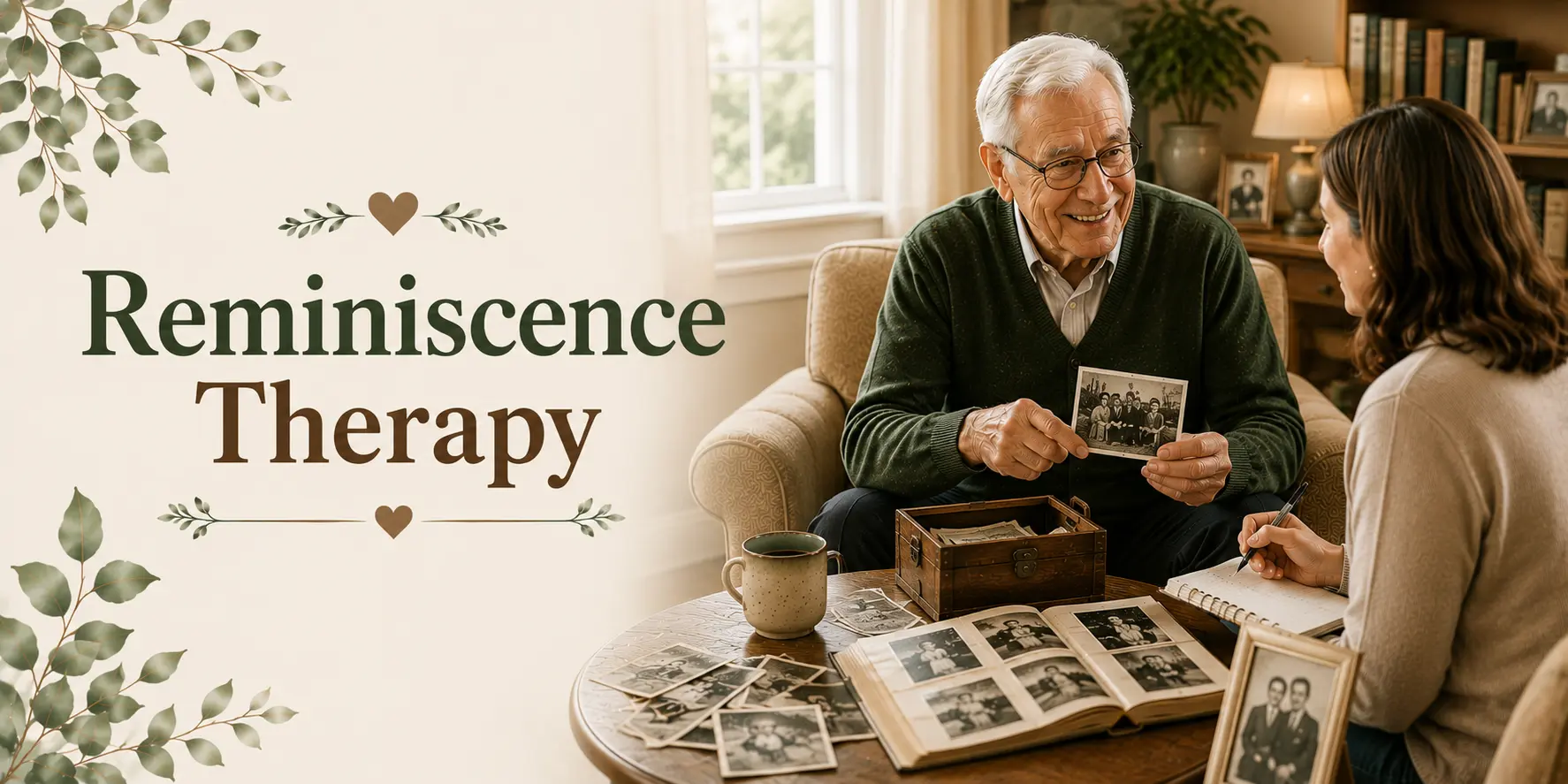
Reminiscence therapy is a structured approach that encourages individuals to recall, share, and reflect upon meaningful life experiences, personal memories, relationships, achievements, and significant events from their past. Through guided conversations, photographs, music, objects, storytelling, and life review activities, reminiscence therapy helps individuals reconnect with important aspects of their identity and personal history.
While reminiscence therapy is commonly associated with dementia care and aging populations, its benefits extend far beyond memory support. It can promote emotional well-being, strengthen relationships, encourage social engagement, and help individuals find meaning in their life experiences.
Research has shown that reminiscence-based interventions can improve mood, support communication, enhance quality of life, and contribute to person-centered care for older adults and people living with dementia (Woods et al., 2018).
At its core, reminiscence therapy recognizes a powerful truth: people are more than their diagnosis, age, or current limitations. Every person has a story worth remembering, sharing, and preserving.
Why Reminiscence Therapy Matters
As individuals age, many experience changes in health, mobility, social networks, and cognitive function. These changes can sometimes lead to isolation, reduced confidence, and feelings of disconnection.
Reminiscence therapy helps individuals:
- Reconnect with meaningful memories
- Preserve personal identity
- Strengthen self-esteem
- Improve communication
- Foster social interaction
- Reduce feelings of loneliness
- Encourage emotional expression
- Create opportunities for family connection
For families, reminiscence activities often reveal stories and experiences that might otherwise be lost forever.
How Reminiscence Therapy Works
Reminiscence therapy uses prompts that encourage individuals to recall and discuss life experiences.
Common tools include:
- Family photographs
- Music from earlier decades
- Personal keepsakes
- Historical artifacts
- Home videos
- Family recipes
- Memory journals
- Newspaper clippings
- Letters and postcards
- Oral history interviews
The focus is not on testing memory accuracy. Instead, the goal is meaningful engagement, emotional connection, and storytelling.
The Science Behind Reminiscence Therapy
Research suggests that autobiographical memories contribute significantly to identity, self-understanding, and emotional well-being (Conway, Singer, & Tagini, 2004).
Reminiscence activities may support:
- Self-continuity
- Emotional regulation
- Social connection
- Cognitive stimulation
- Meaning-making
A major Cochrane review found that reminiscence therapy can positively affect cognition, communication, mood, and quality of life among people living with dementia (Woods et al., 2018).
These findings have contributed to the widespread adoption of reminiscence approaches in memory care and senior care settings worldwide.
Reminiscence Therapy and Dementia Care
Reminiscence therapy is particularly valuable for individuals living with dementia.
Although recent memories may become difficult to access, many individuals retain strong memories from earlier periods of life.
Reminiscence activities can help:
- Stimulate conversation
- Reduce anxiety
- Support identity
- Encourage social interaction
- Improve caregiver relationships
- Promote positive emotional experiences
Research supports reminiscence as an important component of person-centered dementia care (Brooker, 2004).
Reminiscence Therapy and Alzheimer’s Disease
Individuals with Alzheimer’s disease often respond positively to familiar memories, music, photographs, and storytelling.
Activities may focus on:
- Childhood experiences
- School memories
- Family traditions
- Career accomplishments
- Community involvement
- Holidays and celebrations
These conversations help preserve dignity while encouraging meaningful engagement.
Life Story Work and Reminiscence Therapy
Life story work is closely connected to reminiscence therapy.
Life story projects may include:
- Biography creation
- Oral history interviews
- Memory books
- Legacy journals
- Family history documentation
- Digital memory archives
Research suggests that life story work enhances person-centered care by helping caregivers understand the individual’s experiences, values, and preferences (McKeown et al., 2010).
Benefits for Family Caregivers
Reminiscence therapy benefits caregivers as well as care recipients.
Benefits include:
Improved Communication
Shared memories often create more meaningful conversations.
Reduced Frustration
Focusing on strengths rather than losses encourages positive interactions.
Stronger Emotional Connections
Families often discover new stories and insights.
Preservation of Family History
Important memories can be documented and shared.
Research suggests that meaningful engagement can reduce caregiver stress while improving caregiving relationships (Adelman et al., 2014).
Reminiscence Therapy for Healthcare Professionals
Healthcare providers increasingly use reminiscence techniques to support person-centered care.
Benefits include:
- Better understanding of patient preferences
- Improved communication
- Enhanced relationship-building
- More individualized care planning
Knowing a person’s life story often leads to more compassionate and effective care.
Reminiscence Therapy in Senior Living Communities
Senior living and memory care communities frequently incorporate reminiscence activities into daily programming.
Examples include:
- Memory discussion groups
- Historical presentations
- Music sessions
- Story-sharing circles
- Family history workshops
- Photo-based conversations
These activities encourage social participation and community engagement.
Reminiscence Therapy for Educators and Community Programs
Educational programs often use reminiscence activities to connect generations.
Intergenerational projects may involve:
- Student interviews
- Oral history collection
- Community storytelling
- Family heritage projects
These initiatives preserve history while fostering meaningful relationships.
Reminiscence Therapy for Self-Employed Professionals and Retirees
Business owners, entrepreneurs, and retirees often enjoy opportunities to reflect on:
- Career achievements
- Leadership lessons
- Business experiences
- Personal growth
- Family traditions
Documenting these experiences creates valuable legacy resources.
Reminiscence Therapy Activities
Family Photo Discussions
Reviewing photographs often sparks memories and conversation.
Music and Memory Sessions
Songs associated with important life periods can evoke strong emotional responses.
Memory Journals
Recording stories preserves experiences for future generations.
Oral History Interviews
Structured interviews capture personal history and wisdom.
Family Storytelling
Shared storytelling encourages connection and remembrance.
Life Timeline Projects
Creating timelines helps organize and celebrate major life events.
Identity Preservation Through Reminiscence
One of the greatest strengths of reminiscence therapy is its ability to preserve identity.
Identity includes:
- Personal experiences
- Relationships
- Values
- Traditions
- Accomplishments
- Cultural heritage
Research suggests that maintaining identity contributes to dignity, emotional well-being, and person-centered care (Brooker, 2004).
Even when memory changes occur, identity remains important.
Benefits of Reminiscence Therapy
Improved Emotional Well-Being
Positive memories can promote comfort and happiness.
Enhanced Social Connection
Storytelling encourages meaningful interactions.
Greater Sense of Identity
Personal experiences remain visible and valued.
Support for Dementia Care
Activities focus on strengths and preserved memories.
Family History Preservation
Stories are documented before they are lost.
Improved Caregiver Relationships
Shared understanding strengthens communication.
Legacy Creation
Life stories become resources for future generations.
How Our Reminiscence Therapy and Life Story Services Help
Our services combine reminiscence therapy principles with identity preservation and family storytelling.
We assist with:
- Life story recording
- Oral history interviews
- Biography development
- Memory journals
- Family history preservation
- Digital memory archives
- Legacy projects
- Caregiver reference systems
- Dementia support resources
Our mission is to help individuals preserve identity, strengthen family connections, and ensure that important life stories continue to inspire future generations.
Frequently Asked Questions
What is reminiscence therapy?
Reminiscence therapy is a structured approach that encourages individuals to recall and share meaningful memories and life experiences.
Who benefits from reminiscence therapy?
Older adults, individuals living with dementia, family caregivers, healthcare professionals, and senior living communities.
Does reminiscence therapy help people with dementia?
Research suggests it can improve communication, mood, quality of life, and social engagement.
What activities are used in reminiscence therapy?
Photographs, music, storytelling, memory journals, oral histories, family discussions, and personal keepsakes.
What is the difference between reminiscence therapy and life review?
Reminiscence often focuses on sharing memories, while life review involves deeper reflection on life experiences and meaning.
Can reminiscence therapy preserve family history?
Yes. It often uncovers valuable stories, traditions, and historical information.
How does reminiscence therapy support caregivers?
It improves communication, strengthens relationships, and helps caregivers understand the individual’s identity.
Is reminiscence therapy evidence-based?
Yes. Multiple studies and systematic reviews support its effectiveness in dementia care and aging populations.
Can family members participate?
Absolutely. Family involvement often enhances both engagement and memory preservation.
Why is identity important in reminiscence therapy?
The goal is not simply recalling facts but preserving the person’s story, experiences, relationships, and sense of self.
Key Takeaways
Reminiscence therapy is a powerful, evidence-based approach that uses memories, storytelling, and personal history to support emotional well-being, communication, identity preservation, and meaningful connection. Whether used in dementia care, senior engagement programs, caregiving relationships, or family legacy projects, reminiscence therapy helps individuals reconnect with the experiences that shaped their lives. By preserving stories and honoring personal history, families and caregivers can ensure that identity remains visible, valued, and remembered across generations.
References
Adelman, R. D., Tmanova, L. L., Delgado, D., Dion, S., & Lachs, M. S. (2014). Caregiver burden: A clinical review. JAMA, 311(10), 1052–1060. https://doi.org/10.1001/jama.2014.304
Brooker, D. (2004). What is person-centred care in dementia? Reviews in Clinical Gerontology, 13(3), 215–222. https://doi.org/10.1017/S095925980400108X
Conway, M. A., Singer, J. A., & Tagini, A. (2004). The self and autobiographical memory: Correspondence and coherence. Social Cognition, 22(5), 491–529. https://doi.org/10.1521/soco.22.5.491.50768
McKeown, J., Clarke, A., Ingleton, C., Ryan, T., & Repper, J. (2010). The use of life story work with people with dementia to enhance person-centred care. International Journal of Older People Nursing, 5(2), 148–158. https://doi.org/10.1111/j.1748-3743.2010.00219.x
Woods, B., O’Philbin, L., Farrell, E. M., Spector, A. E., & Orrell, M. (2018). Reminiscence therapy for dementia. Cochrane Database of Systematic Reviews, 3(3), CD001120. https://doi.org/10.1002/14651858.CD001120.pub3