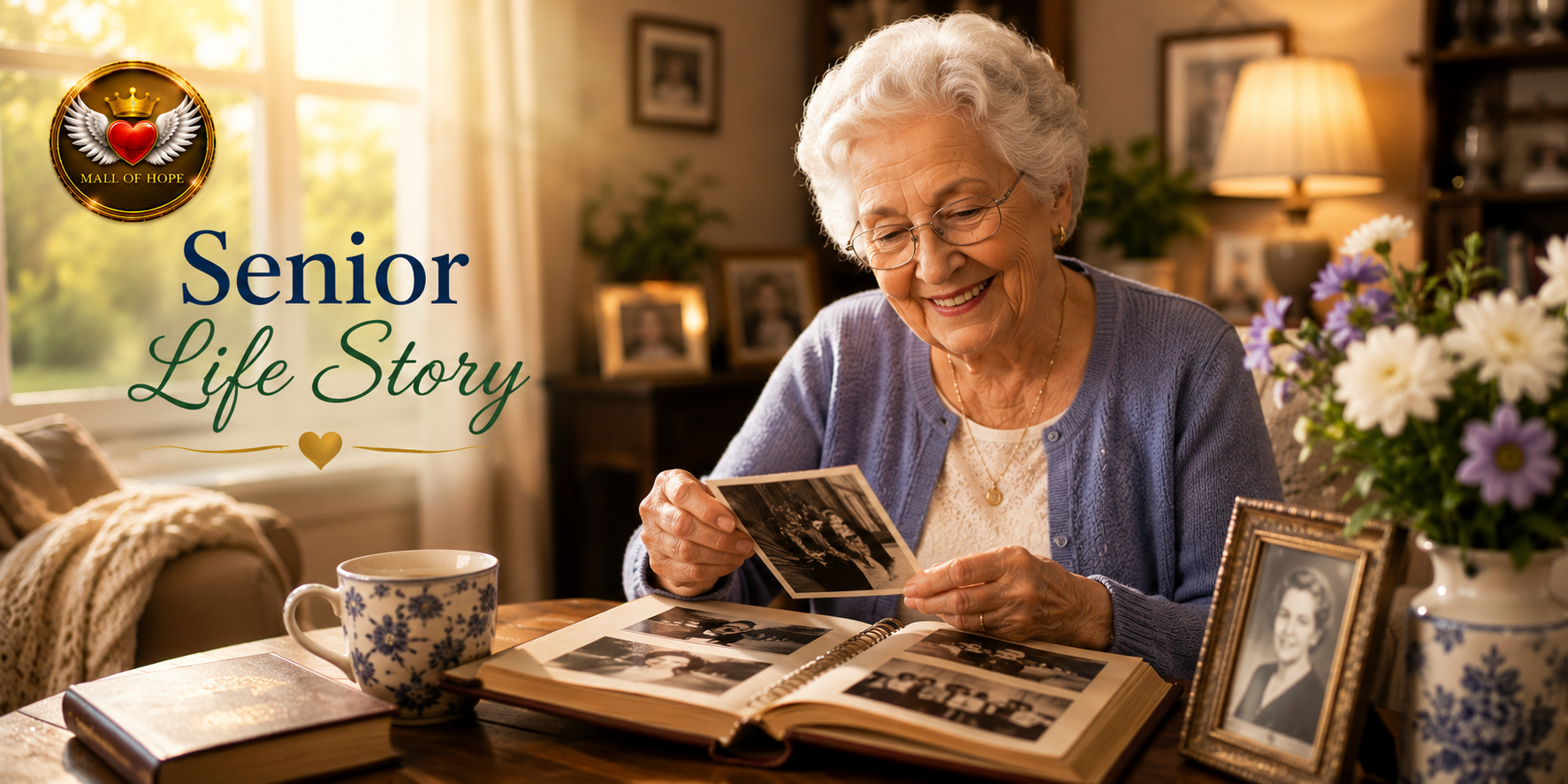

Every older adult has a lifetime of experiences that deserve to be remembered. The memories of childhood, family traditions, careers, military service, friendships, marriage, parenting, travel, faith, and personal achievements create a story unlike any other. Yet too often, these memories remain untold until it is too late to preserve them. A senior life story captures these experiences in the storyteller’s own words, ensuring that future generations understand not only the events of a person’s life but also the values, wisdom, and character that shaped who they became.
A senior life story is much more than a written biography or collection of dates. It is a comprehensive record of identity that preserves voice, personality, emotions, humor, and life lessons. Whether documented through professional interviews, legacy videos, written memoirs, audio recordings, or digital archives, a life story allows children, grandchildren, and future descendants to know their loved one personally, even years after they are gone.
Preserving life stories has become increasingly important as populations age and awareness of Alzheimer’s disease and other forms of dementia continues to grow. Recording memories before significant cognitive changes occur helps protect personal identity while creating valuable resources for families and caregivers. Research has shown that life review supports psychological well-being by helping older adults reflect upon and integrate their experiences throughout later life (Butler, 1963). Person-centered care also emphasizes understanding the individual’s life history to improve communication, preserve dignity, and enhance quality of care (Kitwood, 1997).
Whether you are recording your own memories, helping a parent preserve their story, or interviewing a grandparent for future generations, creating a senior life story becomes one of the most meaningful gifts a family can leave behind.
Why Every Senior Life Story Matters
Every person’s life contains experiences that future generations will value, even if they seem ordinary today. Children often wish they knew more about their parents’ early lives, while grandchildren become curious about family traditions, historical events, immigration stories, military service, careers, and the lessons learned through decades of living. Recording these memories transforms family history into a living legacy.
Unlike official records, a life story explains the emotions behind important events. Birth certificates, marriage licenses, photographs, and military records document facts, but they rarely capture personal reflections, humor, motivations, relationships, or the wisdom gained through experience. A senior life story fills this gap by preserving the individual’s perspective in their own voice.
Research demonstrates that individuals who know more about their family history often develop greater resilience, stronger emotional well-being, and a deeper sense of identity because they recognize themselves as part of an ongoing family narrative (Duke et al., 2008). Recording a senior’s life story strengthens that narrative while creating a bridge between generations.
The storytelling process also benefits the individual sharing their memories. Reflecting on childhood, education, careers, marriage, parenting, friendships, challenges, and accomplishments often encourages gratitude, personal insight, and emotional fulfillment. Butler (1963) described life review as a natural developmental process that supports healthy aging by helping older adults organize their experiences into a meaningful life narrative.
Families frequently discover stories they had never heard before. Conversations about grandparents, first jobs, wartime experiences, cultural traditions, family recipes, acts of kindness, or unexpected adventures often become treasured memories that strengthen relationships while preserving family history.
What Is Included in a Senior Life Story?
Every senior life story is unique because every life follows its own path. Professional life story interviews and legacy projects are designed to encourage natural storytelling while ensuring important aspects of the individual’s life are thoughtfully documented.
Common topics include:
- Childhood memories and family traditions
- Parents, grandparents, and family heritage
- Education and early life experiences
- Careers, professions, and retirement
- Military service and community involvement
- Marriage, parenting, and family relationships
- Cultural traditions and immigration stories
- Faith, spirituality, and personal beliefs
- Hobbies, travel, and lifelong interests
- Personal challenges and how they were overcome
- Greatest accomplishments and proudest moments
- Advice and messages for children, grandchildren, and future generations
Families often enrich these stories by including photographs, journals, handwritten letters, recipes, military medals, certificates, genealogy research, newspaper articles, artwork, awards, and treasured heirlooms. These materials help stimulate memories while providing historical context that enhances the storytelling process.
Completed senior life story projects may include professionally edited legacy videos, printed memoirs, written autobiographies, documentary films, searchable transcripts, audio memoirs, digital archives, or interactive family history collections. Combining multiple formats ensures the preserved story remains accessible for generations regardless of technological change.
Authenticity is central to every life story. Genuine laughter, thoughtful pauses, emotional reflections, and spontaneous memories often become the most treasured moments because they preserve the individual’s personality exactly as family members remember it.
Senior Life Stories and Person-Centered Dementia Care
Senior life stories have become an essential component of person-centered dementia care because they preserve identity before memory changes progress. Although Alzheimer’s disease and other forms of dementia gradually affect memory, language, and thinking, they do not erase a person’s values, accomplishments, relationships, beliefs, or emotional life. Recording these experiences early helps ensure those defining aspects of identity remain available to both families and caregivers.
Person-centered care emphasizes understanding the individual beyond their diagnosis (Kitwood, 1997). A documented life story provides caregivers with valuable insight into occupations, hobbies, military service, favorite music, family traditions, cultural heritage, religious beliefs, communication preferences, and lifelong interests. This knowledge helps caregivers create individualized care plans while promoting dignity and meaningful engagement.
For example, understanding that someone spent decades as a teacher, nurse, musician, veteran, engineer, artist, entrepreneur, or farmer allows caregivers to tailor conversations and activities around familiar experiences. Favorite songs, treasured recipes, historical events, gardening, family photographs, and meaningful traditions often encourage reminiscence while reducing anxiety and strengthening emotional connection.
Families are encouraged to record life stories soon after a diagnosis of mild cognitive impairment or early-stage dementia. Preserving memories while communication remains relatively strong captures detailed stories, humor, wisdom, personality, and values that may become more difficult to express later.
Professional caregivers also benefit because life stories improve individualized care planning. Rather than relying solely on clinical records, caregivers gain practical knowledge about the person’s coping strategies, daily routines, relationships, preferences, and emotional needs.
Research supports life story work and reminiscence as evidence-based interventions that may improve communication, mood, and quality of life for many individuals living with dementia (Woods et al., 2018). A senior’s life story becomes both a legacy for future generations and a practical caregiving resource today.
Preserving Your Senior Life Story for Future Generations
Recording a senior’s life story is not simply about documenting the past—it is about creating an enduring connection with the future. Every interview, memoir, photograph, and recorded memory becomes part of a family’s collective identity, helping descendants understand where they came from and the people who shaped their lives.
Many families combine senior life stories with broader legacy preservation projects that include genealogy research, autobiography recordings, family history books, memory books, legacy documentaries, journals, home movies, recipes, historical documents, and secure digital archives. Together, these resources preserve both historical facts and the personal experiences that bring those facts to life.
Technology has expanded opportunities for long-term preservation. High-definition video interviews, searchable transcripts, encrypted cloud storage, secure digital archives, and external hard drive backups help ensure stories remain protected and accessible. Organizing files with descriptive names, dates, family relationships, and historical references makes it easier for future generations to explore and appreciate the collection.
A senior life story should also be viewed as an ongoing project rather than a one-time interview. Birthdays, anniversaries, family reunions, retirements, holidays, and major life milestones provide opportunities to record new reflections and preserve additional chapters of the family’s evolving story.
Ultimately, a senior life story is one of the greatest gifts a person can leave behind. It preserves far more than memories—it captures voice, personality, humor, resilience, faith, love, and wisdom. It allows children and grandchildren to continue learning from someone they love, even years into the future. By recording a senior life story today, families preserve identity, strengthen relationships, and create an enduring legacy that will continue educating, inspiring, and connecting generations for decades to come.
Frequently Asked Questions
What is a senior life story?
A senior life story is a recorded or written account of an older adult’s memories, family history, relationships, accomplishments, values, and life experiences preserved through interviews, memoirs, videos, or digital archives.
Why should seniors record their life stories?
Recording a life story preserves personal identity, family history, traditions, life lessons, and wisdom while creating a meaningful legacy that future generations can cherish and learn from.
What should be included in a senior life story?
A comprehensive life story often includes childhood memories, family history, careers, military service, marriage, parenting, hobbies, faith, personal challenges, achievements, favorite traditions, and advice for future generations.
How do life stories help people living with dementia?
Life stories preserve identity before memory changes progress, support person-centered care, improve communication, encourage reminiscence, and help caregivers understand the individual’s background, preferences, and values.
When is the best time to record a senior’s life story?
The best time is before significant health or memory changes occur. Recording stories while communication remains strong helps preserve authentic memories, personality, and life experiences in the individual’s own words.
References
Brooker, D. (2007). Person-centred dementia care: Making services better. Jessica Kingsley Publishers.
Butler, R. N. (1963). The life review: An interpretation of reminiscence in the aged. Psychiatry, 26(1), 65–76.
Duke, M. P., Lazarus, A., & Fivush, R. (2008). Knowledge of family history is a clinically useful index of psychological well-being and prognosis. Journal of Family Life, 7(2), 133–140.
Fazio, S., Pace, D., Flinner, J., & Kallmyer, B. (2018). The fundamentals of person-centered care for individuals with dementia. The Gerontologist, 58(Suppl. 1), S10–S19.
Kitwood, T. (1997). Dementia reconsidered: The person comes first. Open University Press.
McAdams, D. P. (2008). Personal narratives and the life story. In O. P. John, R. W. Robins, & L. A. Pervin (Eds.), Handbook of Personality: Theory and Research (3rd ed., pp. 242–262). Guilford Press.
Woods, B., O’Philbin, L., Farrell, E. M., Spector, A., & Orrell, M. (2018). Reminiscence therapy for dementia. Cochrane Database of Systematic Reviews, 3, CD001120.
World Health Organization. (2023). Dementia. https://www.who.int/news-room/fact-sheets/detail/dementia