
Preserve Your Memories, Share Your Wisdom, and Leave a Legacy
Why Your Family Needs Your Stories
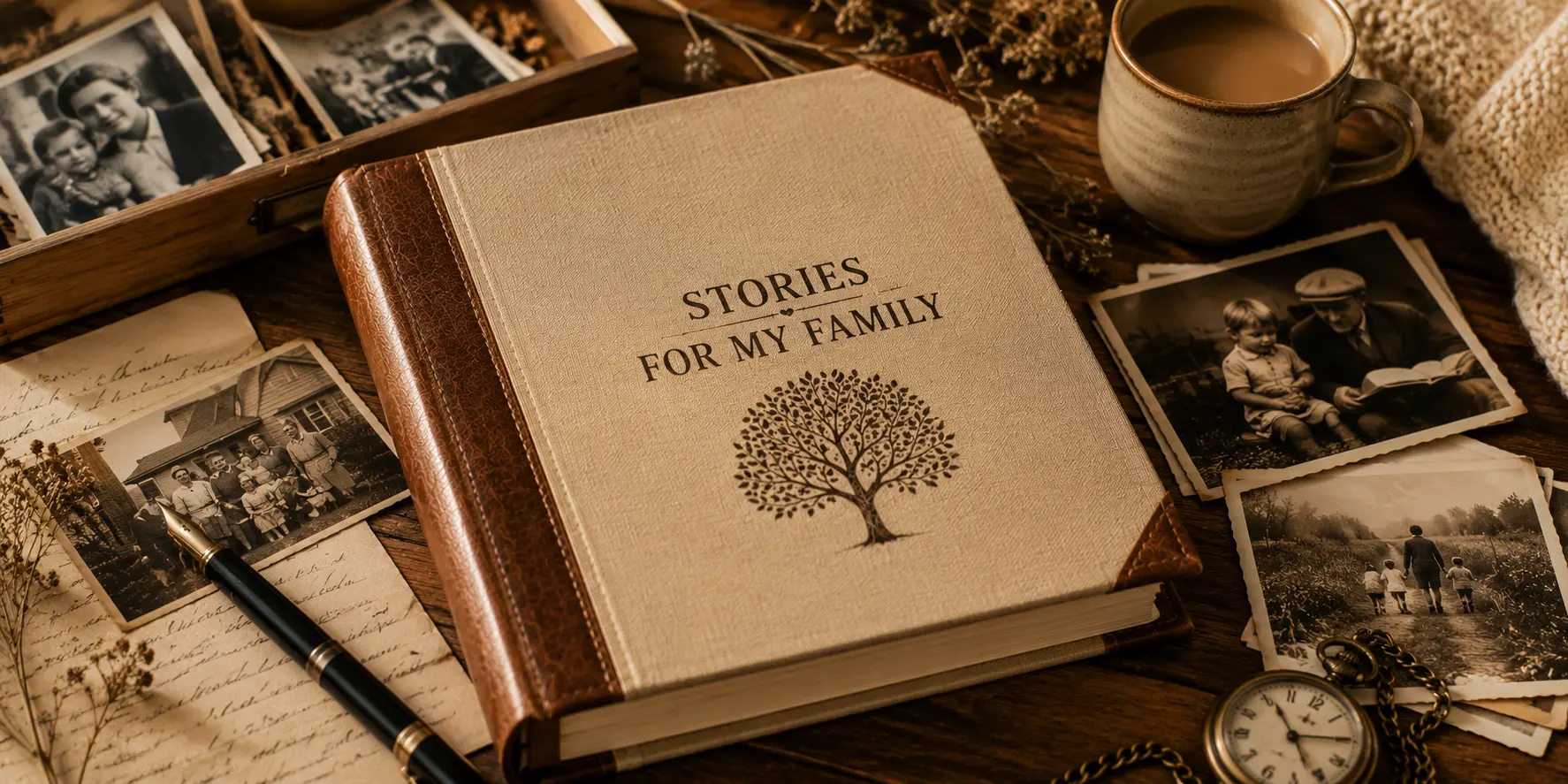
Every family has stories that deserve to be remembered. The moments that shaped your life, the lessons you learned, the challenges you overcame, the people you loved, and the values you carried forward are all part of a legacy that cannot be replaced.
Unfortunately, many families lose these stories forever.
Parents often assume their children already know their history. Grandparents may believe their experiences are ordinary. Caregivers frequently postpone documenting memories because daily responsibilities seem more urgent. Yet when loved ones are gone, families often discover that the stories they most wanted to hear were never recorded.
Research suggests that family storytelling strengthens identity, resilience, emotional well-being, and intergenerational connection (Fivush, Bohanek, & Duke, 2008). Stories help families understand where they came from, what they value, and how previous generations navigated life’s challenges.
Creating stories for your family is one of the most meaningful gifts you can leave behind. Unlike possessions that may eventually wear out or disappear, stories continue teaching, inspiring, and connecting future generations.
What Does “Stories for My Family” Mean?
Stories for your family are personal memories, experiences, lessons, reflections, and family histories intentionally preserved for future generations.
These stories may include:
- Childhood memories
- Family traditions
- Marriage stories
- Parenting experiences
- Career journeys
- Military service
- Faith experiences
- Historical events
- Life lessons
- Family values
- Personal reflections
- Messages for future generations
Together, these stories create a living record of identity and family heritage.
Why Families Regret Not Recording Stories
One of the most common regrets people express after losing a loved one is:
“I wish I had asked more questions.”
Families often wish they had recorded:
- Family history
- Childhood experiences
- Grandparents’ stories
- Personal wisdom
- Life lessons
- Family traditions
- Historical experiences
Once a voice is gone, it can never be recreated.
Preserving stories today prevents those memories from being lost tomorrow.
Stories Preserve More Than Memories
Stories preserve:
Identity
Who you are, what you believed, and what mattered most.
Family Values
The principles that guided your decisions and shaped your life.
Family History
Experiences that explain where your family came from.
Wisdom
Lessons learned through decades of living.
Relationships
The people who influenced your journey.
Legacy
The impact you hope to leave behind.
Research on narrative identity suggests that personal stories help individuals make sense of their lives and preserve meaning across generations (McAdams & McLean, 2013).
Why Stories Matter to Future Generations
Future generations often want answers to questions such as:
- What was your childhood like?
- What challenges did you face?
- How did you meet your spouse?
- What values guided your life?
- What advice would you give me?
- What family traditions should continue?
Stories provide context that photographs, documents, and family trees cannot.
They reveal the human experiences behind family history.
Stories for Families Living With Dementia
For families affected by dementia or Alzheimer’s disease, recording stories early can be especially meaningful.
Life-story preservation helps document:
- Personal memories
- Family relationships
- Career experiences
- Cultural traditions
- Personal preferences
- Life lessons
Research suggests that life story work supports person-centered care and identity preservation for individuals living with dementia (McKeown et al., 2010).
These stories often become valuable resources for caregivers and future generations.
Stories for Family Caregivers
Caregivers often discover that storytelling creates meaningful moments of connection.
Benefits include:
- Better understanding of loved ones
- Preservation of family history
- Stronger emotional bonds
- Reduced future regret
- Identity-centered caregiving
Storytelling allows families to focus not only on care needs but also on the person’s unique life journey.
Stories for Healthcare Professionals
Healthcare professionals dedicate their lives to helping others.
Their stories may preserve:
- Career experiences
- Leadership lessons
- Patient care insights
- Community contributions
- Personal values
Future generations benefit from understanding both professional accomplishments and personal experiences.
Stories for Educators
Teachers influence countless lives through education and mentorship.
Their stories may include:
- Classroom memories
- Educational philosophies
- Leadership experiences
- Community service
- Life lessons
Preserving these stories helps document an important educational legacy.
Stories for Business Owners and Entrepreneurs
Entrepreneurs often possess valuable experiences related to:
- Leadership
- Innovation
- Perseverance
- Business growth
- Family business traditions
Documenting these stories creates lasting resources for family members and future leaders.
Types of Stories Families Treasure Most
Childhood Stories
Family homes, traditions, friendships, and early memories.
Love Stories
How relationships began and grew over time.
Parenting Stories
Lessons learned while raising children.
Family Tradition Stories
Holiday customs, recipes, celebrations, and rituals.
Career Stories
Professional journeys, achievements, and challenges.
Faith Stories
Beliefs, spiritual experiences, and values.
Resilience Stories
Difficulties overcome and lessons learned.
Legacy Stories
Messages for future generations.
Questions to Help You Share Stories
Consider recording answers to questions such as:
- What is your earliest memory?
- What family tradition means the most to you?
- What accomplishment are you most proud of?
- What challenge taught you the most?
- What advice would you give your grandchildren?
- What values guided your life?
- What family story should never be forgotten?
- What are you most grateful for?
- How would you like to be remembered?
- What message would you leave for future generations?
These questions often inspire powerful and meaningful reflections.
Ways to Preserve Stories for Your Family
Life Story Interviews
Recorded conversations preserve memories in your own voice.
Oral History Projects
Structured interviews document personal experiences and family history.
Biography Writing
Written narratives create lasting records of life experiences.
Memory Journals
Regular reflections preserve stories and wisdom.
Video Messages
Video recordings capture personality, emotion, and communication style.
Digital Legacy Archives
Technology allows stories to be preserved and shared across generations.
The Connection Between Stories and Family Resilience
Research suggests that children and families who know their family history often demonstrate stronger resilience and emotional well-being (Fivush et al., 2008).
Stories help families understand:
- How previous generations overcame challenges
- The values that sustained the family
- The sacrifices that created opportunities
- The traditions worth preserving
These insights strengthen family identity and continuity.
Benefits of Creating Stories for Your Family
Preserves Identity
Future generations understand who you were.
Protects Family History
Important experiences are not lost.
Strengthens Relationships
Storytelling encourages meaningful conversations.
Supports Dementia Care
Life stories help preserve personhood and identity.
Creates Lasting Legacy Resources
Stories become treasured family heirlooms.
Preserves Family Values
Lessons and wisdom remain available.
Reduces Future Regret
Families capture stories before opportunities disappear.
How Our Life Story Services Help
Our services help individuals preserve stories, memories, values, and family history through professionally guided legacy projects.
We assist with:
- Life story recording
- Oral history interviews
- Family storytelling projects
- Biography development
- Memory journals
- Family history preservation
- Legacy letters
- Digital memory archives
- Caregiver reference systems
- Faith and values documentation
Our mission is to help families preserve identity, strengthen connections, and ensure that important stories continue inspiring future generations.
Frequently Asked Questions
Why should I record stories for my family?
Stories preserve memories, wisdom, family history, values, and personal experiences that future generations may otherwise lose.
What stories should I share?
Childhood memories, family traditions, life lessons, career experiences, relationships, faith journeys, and personal reflections are all valuable.
What is the best way to preserve family stories?
Life story interviews, oral histories, biographies, video recordings, and memory journals are highly effective methods.
Are my stories really important?
Yes. What feels ordinary to you may become priceless family history to future generations.
Can storytelling help families affected by dementia?
Yes. Life-story preservation supports identity, person-centered care, and meaningful family connections.
What if I don’t know where to begin?
Start with simple questions about childhood, family, relationships, and life lessons.
How do stories strengthen families?
Stories create connection, preserve values, and help future generations understand their roots.
Can family stories support genealogy research?
Yes. Stories often provide context and details unavailable in official records.
When should I start recording stories?
As soon as possible. Every story preserved today becomes part of tomorrow’s family legacy.
What legacy do stories leave behind?
Stories preserve identity, wisdom, values, and family history that can inspire generations.
Key Takeaways
Stories for your family are among the most valuable gifts you can leave behind. Through life-story recording, oral history interviews, family storytelling, memory journals, biographies, and digital preservation, you can ensure that your experiences, wisdom, values, and relationships continue to guide future generations. Long after possessions are forgotten, stories remain a powerful source of identity, connection, resilience, and love.
References
Fivush, R., Bohanek, J. G., & Duke, M. P. (2008). The intergenerational self: Subjective perspective and family history. In F. Sani (Ed.), Individual and Collective Self-Continuity. Psychology Press.
McAdams, D. P., & McLean, K. C. (2013). Narrative identity. Current Directions in Psychological Science, 22(3), 233–238. https://doi.org/10.1177/0963721413475622
McKeown, J., Clarke, A., Ingleton, C., Ryan, T., & Repper, J. (2010). The use of life story work with people with dementia to enhance person-centred care. International Journal of Older People Nursing, 5(2), 148–158. https://doi.org/10.1111/j.1748-3743.2010.00219.x
Westerhof, G. J., & Bohlmeijer, E. T. (2014). Celebrating fifty years of research and applications in reminiscence and life review: State of the art and new directions. Journal of Aging Studies, 29, 107–114. https://doi.org/10.1016/j.jaging.2014.02.003