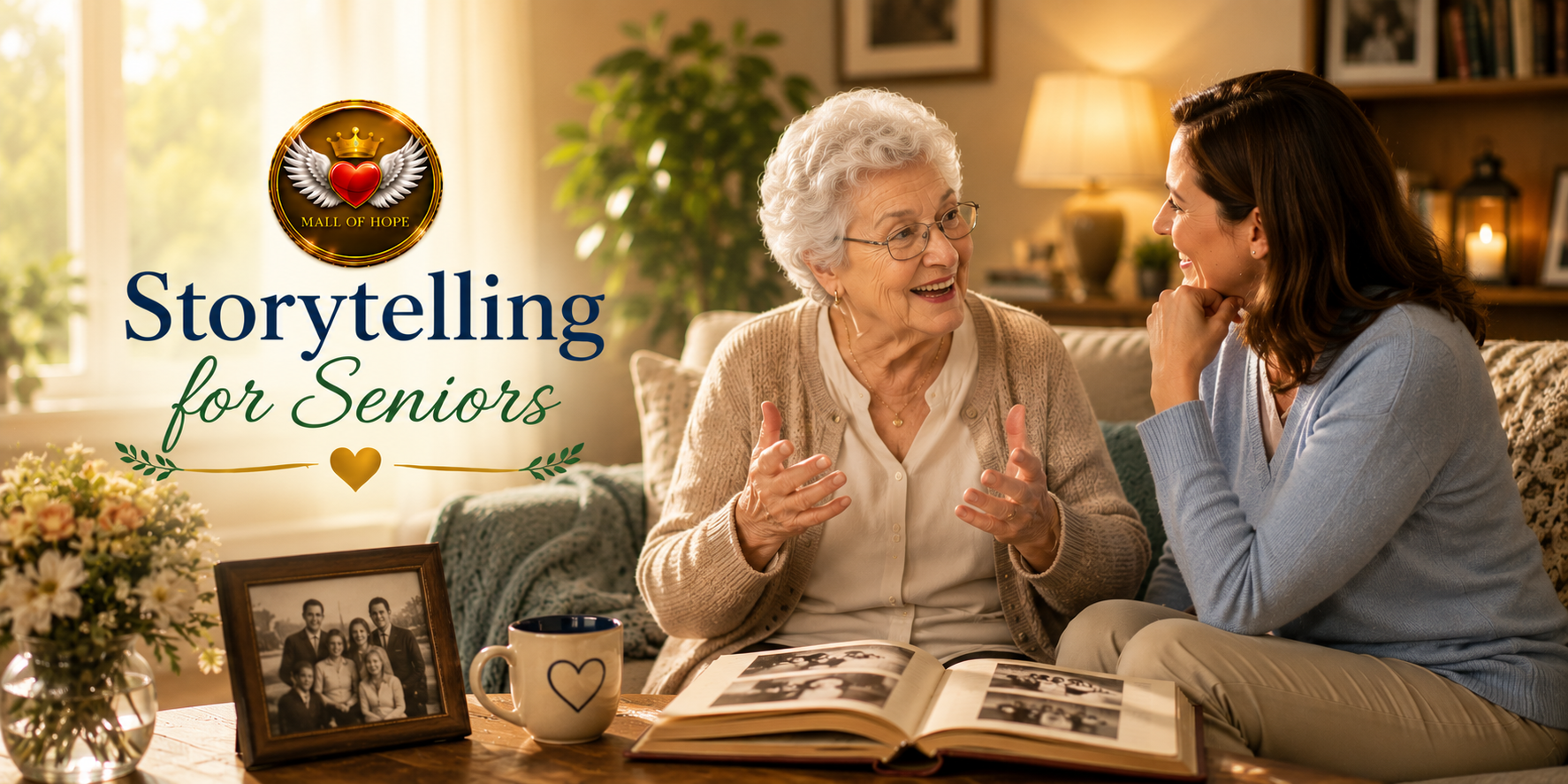

Every older adult carries a lifetime of stories that deserve to be heard. From childhood adventures and family traditions to careers, military service, parenting, friendships, travel, and life lessons, these experiences form the foundation of personal identity. Yet too often, these stories are shared only in passing—or not at all—leaving future generations with unanswered questions about the people who shaped their family. Provides an opportunity to preserve these priceless memories while strengthening relationships, promoting emotional well-being, and creating an enduring legacy.
Storytelling is one of humanity’s oldest traditions. Long before written history, people passed down knowledge, values, and cultural traditions through spoken stories. Today, storytelling continues to connect generations by preserving family history, personal experiences, and wisdom that cannot be captured through photographs or official records alone. Whether shared through conversations, professional life story interviews, memoirs, videos, podcasts, or digital archives, storytelling allows seniors to pass on far more than information—it preserves personality, values, humor, resilience, and identity.
Storytelling also plays an increasingly important role in healthy aging and dementia care. Research suggests that life review and reminiscence help older adults integrate life experiences, strengthen emotional well-being, and reinforce identity (Butler, 1963). For individuals living with Alzheimer’s disease and other forms of dementia, storytelling supports person-centered care by helping caregivers understand the individual’s history, preferences, relationships, and lifelong accomplishments (Kitwood, 1997).
Whether you are recording your own memories, interviewing a parent or grandparent, or encouraging storytelling in a senior living community, every conversation contributes to a richer understanding of the individual while creating meaningful keepsakes that will be treasured for generations.
Why Storytelling Is Important for Seniors
Growing older often brings opportunities for reflection. Retirement, becoming grandparents, celebrating milestone birthdays, and witnessing changing generations naturally encourage older adults to think about the experiences that have shaped their lives. Storytelling provides a healthy and meaningful outlet for this reflection while allowing seniors to share knowledge and wisdom accumulated over decades.
For many older adults, storytelling reinforces a sense of purpose. Sharing memories reminds them that their experiences continue to matter and that their lives have influenced children, grandchildren, friends, and communities. Rather than focusing on aging or physical limitations, storytelling emphasizes accomplishments, relationships, resilience, and personal growth.
Research has shown that life review contributes to psychological well-being by helping individuals organize and find meaning in their life experiences (Butler, 1963). Reflecting on both joyful and difficult moments often promotes gratitude, acceptance, and emotional integration.
Storytelling also benefits younger generations. Studies suggest that children and adolescents who know more about their family’s history often develop stronger resilience, greater self-confidence, and a deeper sense of identity because they understand themselves as part of an ongoing family story (Duke et al., 2008). Hearing firsthand accounts of challenges overcome, sacrifices made, and traditions preserved helps younger family members appreciate their heritage while learning valuable life lessons.
Families frequently discover that storytelling sessions strengthen relationships in the present. Conversations about childhood memories, courtship, careers, military service, immigration, or family traditions often reveal stories that relatives have never heard before, creating meaningful moments that become cherished memories themselves.
Ways Seniors Can Share Their Stories
There are many ways for seniors to preserve their memories, and the best approach depends on personal preferences, comfort level, and family goals. Some individuals enjoy writing, while others prefer speaking naturally during conversations or interviews.
Popular storytelling methods include:
- Professional life story interviews
- Legacy video recordings
- Audio memoirs and podcasts
- Written autobiographies or memoirs
- Family history books
- Oral history interviews
- Memory books with photographs
- Scrapbooks and journals
- Digital storytelling projects
- Family genealogy combined with personal stories
- Recorded conversations with grandchildren
- Community storytelling events
Professional life story interviews have become especially popular because experienced interviewers guide conversations using thoughtful questions that encourage natural storytelling. Topics often include childhood memories, education, careers, marriage, parenting, military service, travel, faith, community involvement, personal challenges, and life lessons.
Photographs, handwritten letters, recipes, home movies, military medals, family heirlooms, newspaper articles, and genealogy records often stimulate memories and provide visual context during storytelling sessions. These materials encourage deeper reflection while helping preserve historical details.
Many families also create themed storytelling projects focused on topics such as immigration, military service, entrepreneurship, family businesses, volunteer work, cultural traditions, or favorite holiday memories. These specialized collections become valuable historical resources while enriching family identity.
Combining written stories with photographs, audio recordings, and professionally edited videos creates a comprehensive legacy that future generations can explore in multiple ways.
Storytelling in Dementia Care and Healthy Aging
Storytelling is a cornerstone of person-centered dementia care because it helps preserve identity even as memory changes occur. Alzheimer’s disease and other forms of dementia gradually affect recent memory and communication, but many long-term memories remain accessible, particularly during the earlier stages of the disease. Encouraging storytelling allows individuals to reconnect with meaningful experiences while strengthening emotional well-being.
Tom Kitwood’s model of person-centered care emphasizes understanding the individual beyond the diagnosis (Kitwood, 1997). Storytelling helps caregivers learn about occupations, family relationships, cultural traditions, hobbies, favorite music, religious beliefs, military service, and lifelong interests. This knowledge enables caregivers to personalize conversations and activities while preserving dignity.
For example, someone who spent decades as a teacher may enjoy discussing students and education, while a retired gardener may find comfort talking about favorite flowers or seasons. A veteran may enjoy sharing stories of military service, and a lifelong cook may find joy in describing treasured family recipes. These familiar topics encourage meaningful engagement while reinforcing identity.
Families are encouraged to begin recording stories soon after a diagnosis of mild cognitive impairment or early-stage dementia. Capturing memories while communication remains relatively strong preserves humor, wisdom, values, and personality in the individual’s own words.
Research supports life story work and reminiscence as evidence-based interventions that may improve mood, communication, and quality of life for many people living with dementia (Woods et al., 2018). Storytelling also helps professional caregivers build stronger relationships because they gain insight into the person’s preferences, routines, coping strategies, and emotional needs.
Beyond dementia care, storytelling supports healthy aging by encouraging cognitive engagement, social interaction, creativity, and lifelong learning. Sharing stories keeps older adults actively connected to family and community while reinforcing their continuing role as valued contributors.
Creating a Lasting Legacy Through Storytelling
Storytelling does not end with a single conversation. Every story shared today can become part of a larger legacy that continues inspiring future generations. Families often combine storytelling with broader preservation projects that include life story interviews, autobiography recordings, genealogy research, memory books, legacy films, family photographs, journals, historical documents, and digital archives.
Technology has greatly expanded opportunities for preserving stories. High-quality video recordings, audio interviews, searchable transcripts, encrypted cloud storage, and interactive family history websites make it easier than ever to organize and protect memories for future generations. Multiple backups using secure digital storage and external hard drives help ensure these valuable family resources remain accessible over time.
Families should also think beyond major life events. Every day, stories about neighborhood friendships, favorite recipes, holiday traditions, first jobs, acts of kindness, and humorous moments often become the memories future generations treasure most. Encouraging storytelling during birthdays, anniversaries, family reunions, and holiday gatherings creates natural opportunities to capture these experiences.
Storytelling can also become an ongoing family tradition. Recording annual interviews, asking grandparents new questions each year, documenting milestone celebrations, or inviting grandchildren to conduct interviews creates a growing family archive that evolves across generations.
Ultimately, storytelling is one of the most powerful gifts a senior can offer. It preserves far more than historical facts—it captures the voice, character, wisdom, resilience, values, and love that define a person’s life. Every story shared strengthens family identity, enriches future generations, and reminds us that each life has lasting significance. By preserving stories today, families ensure that the experiences, lessons, and humanity of those they love will continue to inspire, comfort, and connect generations for many years to come.
Frequently Asked Questions
Why is storytelling important for seniors?
Storytelling helps seniors preserve personal memories, strengthen family relationships, reinforce identity, promote emotional well-being, and pass valuable life lessons to future generations.
What are the benefits of storytelling for people living with dementia?
Storytelling supports reminiscence, improves communication, reinforces identity, encourages meaningful engagement, and helps caregivers better understand the individual’s life history, preferences, and relationships.
What are the best ways for seniors to record their stories?
Popular methods include professional life story interviews, legacy videos, audio memoirs, written autobiographies, memory books, oral history interviews, family documentaries, and secure digital archives.
How can families encourage storytelling?
Families can ask open-ended questions, look through old photographs together, discuss family traditions, record conversations, create comfortable environments, and allow plenty of time for reflection without rushing the conversation.
When is the best time to preserve life stories?
The best time is as early as possible. Recording stories while seniors are healthy and able to communicate comfortably helps preserve detailed memories, personality, humor, and authentic life experiences.
References
Brooker, D. (2007). Person-centred dementia care: Making services better. Jessica Kingsley Publishers.
Butler, R. N. (1963). The life review: An interpretation of reminiscence in the aged. Psychiatry, 26(1), 65–76.
Duke, M. P., Lazarus, A., & Fivush, R. (2008). Knowledge of family history as a clinically useful index of psychological well-being and prognosis. Journal of Family Life, 7(2), 133–140.
Fazio, S., Pace, D., Flinner, J., & Kallmyer, B. (2018). The fundamentals of person-centered care for individuals with dementia. The Gerontologist, 58(Suppl. 1), S10–S19.
Kitwood, T. (1997). Dementia reconsidered: The person comes first. Open University Press.
McAdams, D. P. (2008). Personal narratives and the life story. In O. P. John, R. W. Robins, & L. A. Pervin (Eds.), Handbook of Personality: Theory and Research (3rd ed., pp. 242–262). Guilford Press.
Woods, B., O’Philbin, L., Farrell, E. M., Spector, A., & Orrell, M. (2018). Reminiscence therapy for dementia. Cochrane Database of Systematic Reviews, 3, CD001120.
World Health Organization. (2023). Dementia. https://www.who.int/news-room/fact-sheets/detail/dementia