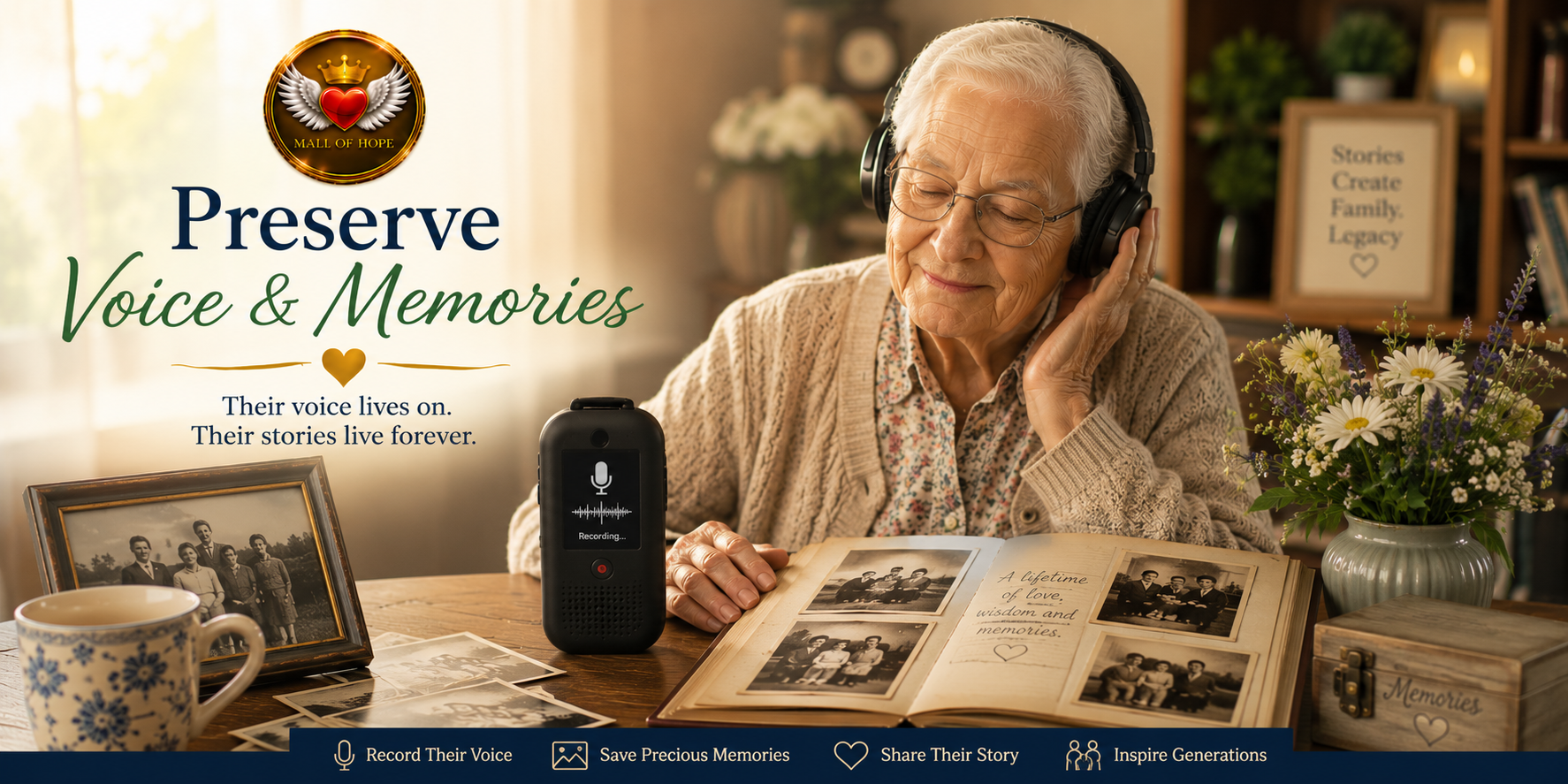

A person’s voice is one of the most recognizable and comforting parts of their identity. Long after photographs have faded and written memories have been tucked away, hearing the familiar voice of a parent, grandparent, spouse, or loved one can instantly bring back cherished moments. A laugh, a favorite saying, a bedtime story, or a heartfelt message carries emotions that words on a page alone cannot fully capture. Voice recording for family allows these irreplaceable moments to be preserved, creating a lasting connection that future generations can experience for years to come.
Voice recordings preserve far more than sound. They capture personality, emotion, humor, wisdom, storytelling, and the natural rhythm of conversation. Whether recording a complete life story, sharing family history, offering advice to children and grandchildren, reading favorite books, telling childhood memories, or leaving messages for future milestones, these recordings become treasured family heirlooms that strengthen identity and preserve relationships across generations.
Modern technology has made preserving voices easier than ever. High-quality digital audio, professional life story interviews, legacy recordings, podcasts, memoir narrations, and secure digital archives allow families to create organized collections that protect voices from being lost. These recordings can accompany photographs, family videos, genealogy research, written memoirs, and memory books to create a comprehensive legacy that future descendants can hear as well as read.
Voice recording has also become increasingly important as awareness grows about Alzheimer’s disease and other forms of dementia. Recording conversations while communication remains strong preserves an individual’s personality, memories, values, and life experiences before cognitive changes progress. Research suggests that life review contributes to emotional well-being by helping older adults integrate their experiences into a meaningful life narrative (Butler, 1963). Person-centered care likewise emphasizes understanding an individual’s life history because doing so supports compassionate, individualized caregiving (Fazio et al., 2018).
Whether you are recording your own memories, interviewing aging parents, preserving grandparents’ stories, or creating messages for future generations, a family voice recording becomes one of the most meaningful gifts you can leave behind.
Why Voice Recordings Matter
Photographs preserve how someone looked. Videos preserve movement and expression. Voice recordings preserve something equally powerful—the sound of a person’s presence.
Family members often say that hearing a loved one’s voice years later brings comfort unlike anything else. The tone, laughter, pauses, expressions, and familiar phrases immediately reconnect listeners with memories that might otherwise fade over time.
Unlike written memoirs, voice recordings communicate emotion naturally. Future generations can hear excitement while describing childhood adventures, gratitude when discussing family traditions, or tenderness when sharing advice with children and grandchildren.
Research demonstrates that individuals who know more about their family history often develop stronger resilience, emotional well-being, and a greater sense of identity because they understand themselves as part of a continuing family narrative (Duke et al., 2008). Voice recordings strengthen that narrative by allowing descendants to experience stories directly from the people who lived them.
Recording voices also preserves stories that may never have been written down. Parents and grandparents often remember details about childhood, military service, immigration, careers, marriage, faith, community involvement, and historical events that exist nowhere else. Without recording these conversations, much of that family history may disappear.
Many families discover that creating voice recordings also strengthens present-day relationships. Meaningful interviews encourage conversations that families may never have otherwise experienced, resulting in treasured memories long before the recordings are ever revisited.
What Should You Record for Your Family?
There is no single correct way to create a family voice recording. The most meaningful recordings reflect the individual’s personality and capture authentic conversations rather than scripted speeches.
Popular recording topics include:
- Childhood memories
- Parents and grandparents
- Family traditions
- School experiences
- Careers and retirement
- Military service
- Marriage and parenting
- Family recipes
- Immigration stories
- Faith and personal beliefs
- Life lessons
- Favorite memories
- Advice for children and grandchildren
- Stories behind family photographs
- Messages for future birthdays, weddings, or graduations
- Reflections on historical events
- Hobbies and lifelong interests
Many families also preserve bedtime stories, favorite poems, songs, holiday traditions, prayers, blessings, and handwritten letters read aloud. These recordings often become deeply meaningful because they preserve both the words and the warmth of the speaker’s voice.
Professional life story interviews frequently produce complete audio memoirs alongside written transcripts and legacy videos. Combining multiple formats ensures that both the information and the emotional connection remain available for future generations.
Families can also organize recordings into themed collections, making it easier for future descendants to explore different aspects of family history over time.
Voice Recording in Dementia Care and Healthy Aging
Voice recording becomes especially valuable as loved ones age. Many older adults naturally reflect upon their lives, relationships, accomplishments, and lessons learned. Recording these reflections preserves not only family history but also the individual’s unique personality and perspective.
For individuals living with Alzheimer’s disease or other forms of dementia, early voice recording is particularly important. Although dementia gradually affects memory and communication, recording conversations before significant cognitive changes occur captures stories, humor, wisdom, and personal reflections that may later become more difficult to express.
Person-centered dementia care emphasizes understanding the individual beyond medical diagnoses (Kitwood, 1997). Voice recordings help caregivers learn about occupations, hobbies, family relationships, military service, cultural traditions, faith, communication preferences, and personal values. This knowledge supports individualized care while promoting dignity and meaningful engagement.
Listening to familiar recordings may also encourage reminiscence. Hearing stories told in the individual’s own voice, or listening to messages from family members, can support emotional connection while reinforcing identity. Research supports life story work and reminiscence as evidence-based approaches that may improve communication, mood, and quality of life for many people living with dementia (Woods et al., 2018).
Families are encouraged to begin recording conversations soon after a diagnosis of mild cognitive impairment or early-stage dementia. Waiting until communication becomes significantly affected may result in the loss of valuable memories that only the individual can share.
Voice recordings also provide comfort for caregivers. Hearing familiar stories, laughter, and personal reflections often becomes a source of encouragement during the caregiving journey while helping future caregivers understand the person beyond their diagnosis.
Preserving Voice Recordings for Future Generations
Creating a voice recording is only the beginning. Long-term preservation ensures these treasured memories remain accessible to children, grandchildren, and future descendants for decades to come.
Families should maintain multiple copies of important recordings using encrypted cloud storage, external hard drives, and offline backups stored in separate locations. Audio files should be organized with descriptive names, recording dates, locations, and short summaries that explain the content of each recording.
Many families combine voice recordings with broader legacy preservation projects that include life story interviews, legacy videos, family photographs, genealogy research, memoirs, journals, memory books, recipes, scanned letters, and digital family archives. Together, these materials preserve both family history and the voices that bring those stories to life.
Written transcripts further enhance accessibility by making recordings searchable while preserving the content even if audio formats change over time. Future generations can read along while listening, helping them better understand names, places, and historical references.
Voice recording should also become an ongoing family tradition rather than a single event. Recording milestone birthdays, anniversaries, holiday reflections, family reunions, and annual interviews allows each generation to contribute to the family’s continuing story. Children can interview grandparents; parents can leave messages for future milestones, and every generation can preserve the memories that matter most.
Ultimately, a voice recording for family preserves something that cannot be replaced. It captures personality, laughter, love, wisdom, and identity in a way no photograph or written document ever could. Long after voices would otherwise have been forgotten, future generations will still be able to hear familiar stories, comforting words, and heartfelt messages. By recording your voice today, you create a timeless family keepsake that continues connecting generations through the sound of the people they love.
Frequently Asked Questions
Why should I create a voice recording for my family?
A voice recording preserves your personality, stories, life lessons, and natural voice, allowing future generations to hear your memories and feel a personal connection for years to come.
What should I record for future generations?
Many people record childhood memories, family history, advice, life lessons, favorite stories, recipes, prayers, messages for children and grandchildren, and reflections on important life events.
How do voice recordings help families affected by dementia?
Recording conversations before memory changes progress preserves identity, personal stories, communication style, and meaningful life experiences while supporting person-centered dementia care.
What is the best way to preserve family voice recordings?
Store recordings in multiple secure locations, including encrypted cloud storage, external hard drives, and digital family archives. Creating written transcripts also improves long-term accessibility.
Can professional life story interviews include voice recordings?
Yes. Professional life story interviews often produce high-quality audio recordings, written transcripts, legacy videos, and digital archives that preserve both the individual’s voice and their complete life story.
References
Brooker, D. (2007). Person-centred dementia care: Making services better. Jessica Kingsley Publishers.
Butler, R. N. (1963). The life review: An interpretation of reminiscence in the aged. Psychiatry, 26(1), 65–76.
Duke, M. P., Lazarus, A., & Fivush, R. (2008). Knowledge of family history is a clinically useful index of psychological well-being and prognosis. Journal of Family Life, 7(2), 133–140.
Fazio, S., Pace, D., Flinner, J., & Kallmyer, B. (2018). The fundamentals of person-centered care for individuals with dementia. The Gerontologist, 58(Suppl. 1), S10–S19.
Kitwood, T. (1997). Dementia reconsidered: The person comes first. Open University Press.
McAdams, D. P. (2008). Personal narratives and the life story. In O. P. John, R. W. Robins, & L. A. Pervin (Eds.), Handbook of personality: Theory and research (3rd ed., pp. 242–262). Guilford Press.
Woods, B., O’Philbin, L., Farrell, E. M., Spector, A., & Orrell, M. (2018). Reminiscence therapy for dementia. Cochrane Database of Systematic Reviews, 3, CD001120.
World Health Organization. (2023). Dementia. https://www.who.int/news-room/fact-sheets/detail/dementia